Loading...
Sukjong of Goryeo vs Sundiata Keita
Sundiata Keita leads by 15.3 pts · 2 figures compared
…

Sukjong of Goryeo
Emperor · Medieval
50.2Total
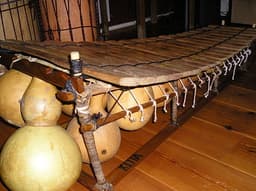
Sundiata Keita
Emperor · Medieval
65.5Total
Basic Information
Born
1054
1217
Died
1105
1255
Era
Medieval
Medieval
Nationality
Korea
Mali Empire
Occupation
Emperor
Emperor
Civilization
Eastern
Other
Score Comparison
Military (10%)
21.2
72.0
Political (20%)
68.0
70.0
Influence (20%)
54.9
40.0
Legacy (20%)
45.8
80.0
Leadership (15%)
68.0
72.0
Strategy (15%)
25.0
70.0
TOTAL
50.2
65.5
Sukjong of Goryeo — Complete Timeline
1102 AD
Introduction of bronze coinageReform◆ Major
King Sukjong ordered the minting and circulation of bronze coins, known as 'haedong tongbo', to replace barter and cloth currency. This reform aimed to standardize trade and strengthen the Goryeo economy, though adoption was slow and limited to certain regions.
Economic ReformCurrencyGoryeo
Impact: nationalconstructive
1104 AD
Construction of the Namgyeong (Southern Capital)Political Action
Sukjong initiated the construction of a new secondary capital at Namgyeong (modern Seoul) to strengthen royal authority and counterbalance the influence of the Kaesong aristocracy. The project included palaces and defensive walls, but was not completed during his reign.
Urban PlanningCapitalGoryeo
Impact: nationalconstructive
1105 AD
Suppression of the Yi Ja-gyeom rebellionWar◆ Major
Sukjong faced a rebellion led by the powerful aristocrat Yi Ja-gyeom, who opposed the king's centralizing reforms. The rebellion was suppressed, but Sukjong died shortly after, leaving the conflict unresolved.
RebellionAristocracyGoryeo
Impact: nationaldestructive
Sundiata Keita — Complete Timeline
1235 AD
Battle of KirinaWar
Sundiata Keita led the Mandinka coalition against Soumaoro Kant
BattleMali EmpireSosso
Impact: regional
Proclamation as MansaPolitical Action◆ Major
After the Battle of Kirina, Sundiata was proclaimed Mansa (emperor) of the Mali Empire at the Kouroukan Fouga assembly. He established a constitution and divided the empire into provinces, laying the administrative foundation of Mali.
CoronationConstitutionAdministration
Impact: regionalconstructive
1240 AD
Conquest of GhanaWar◆ Major
Sundiata conquered the remnants of the Ghana Empire, incorporating its territory into Mali. This gave Mali control over the trans-Saharan gold trade routes, significantly increasing its wealth and power.
ConquestGhana EmpireGold Trade
Impact: regional
Establishment of Niani as CapitalPolitical Action
Sundiata established Niani as the capital of the Mali Empire. The city became a center of trade and governance, located near gold fields and on trade routes, facilitating the empire's economic growth.
CapitalNianiTrade Center
Impact: regionalconstructive
1245 AD
Introduction of Cotton CultivationReform
Sundiata promoted the cultivation of cotton and the weaving of cloth, which became a major industry in Mali. This economic reform diversified the empire's economy and increased its self-sufficiency.
AgricultureCottonEconomic Reform
Impact: regionalconstructive
Expert Analysis
Origins
Sukjong of Goryeo (born 1054, reigned 1095–1105) was a member of the Wang dynasty, the ruling family of the Goryeo kingdom. His early life was shaped by the aristocratic factionalism that characterized Goryeo politics. He ascended the throne after the death of his predecessor, King Heonjong, and faced immediate challenges from powerful noble families.
Sundiata Keita (born c. 1217) was the son of Nare Fa Maghan, a Mandinka chief, and Sogolon Conde, a woman with a hunchback who was prophesied to bear a great ruler. Sundiata’s childhood was marked by physical weakness; he was unable to walk until age seven. After his father's death, his family was exiled by the usurper Dankaran Touman, and Sundiata spent years in exile in the kingdom of Mema.
Rise to Power
Sukjong came to power in 1095 after the death of King Heonjong. His reign was dominated by conflict with the aristocratic Yi Ja-gyeom faction, which opposed centralization. In 1097, Yi Ja-gyeom launched a rebellion, which Sukjong suppressed through a combination of military force and strategic alliances. The rebellion’s suppression allowed Sukjong to push forward his reforms, including the introduction of bronze coinage in 1102.
Sundiata’s rise began when the Sosso Empire under Soumaoro Kanté conquered the Mandinka lands. The Mandinka people appealed to Sundiata to return and lead them. At the Battle of Kirina (c. 1235), Sundiata’s coalition defeated Soumaoro’s forces, ending Sosso dominance. Sundiata was then proclaimed Mansa at the Kouroukan Fouga assembly, where he established a constitution and formalized the Mali Empire.
Leadership & Governance
Sukjong’s leadership focused on economic centralization. He introduced bronze coinage (haedong tongbo) to replace cloth and grain as mediums of exchange, aiming to strengthen royal control over the economy. He also built Namgyeong (southern capital) in modern Seoul to counterbalance the Gyeongju aristocracy. However, his political score of 68.0 reflects only limited success: the coinage reform faced resistance and was abandoned after his death.
Sundiata’s governance was expansive. He established a federal system at Kouroukan Fouga, dividing the empire into provinces ruled by loyal generals. He promoted agriculture (cotton cultivation) and trade, securing the trans-Saharan gold routes. His leadership score of 72.0 and political score of 70.0 indicate effective consolidation of a multi-ethnic empire.
Triumph & Tragedy
Sukjong’s greatest success was suppressing the Yi Ja-gyeom rebellion (1097), which preserved his throne and enabled reforms. His introduction of coinage was innovative but ultimately failed; it was discontinued after his death due to lack of adoption. His military score of 21.2 shows he was not a warrior king; his strength was administrative.
Sundiata’s triumph was the foundation of the Mali Empire, which became one of the wealthiest states in medieval Africa. His conquest of Ghana (c. 1240) gave Mali control over gold trade. However, his legacy is partly overshadowed by later rulers like Mansa Musa. Sundiata’s military score of 72.0 reflects his success at Kirina.
Character & Destiny
Sukjong was a cautious reformer, operating within the constraints of Goryeo’s aristocratic system. His decision to introduce coinage shows a forward-thinking economic mind, but he lacked the power to enforce lasting change. His character was shaped by the need to balance noble factions.
Sundiata was a charismatic warrior and diplomat. His early disability and exile instilled resilience. The Kouroukan Fouga constitution reflects his political acumen. His destiny was to unite the Mandinka and create an empire that would dominate West Africa for centuries.
Legacy
Sukjong is remembered in Korea as a reformer who tried to modernize the economy, but his coinage was a footnote. His legacy score of 45.8 is moderate. The Namgyeong construction set the stage for Seoul’s later importance.
Sundiata’s legacy is profound. He is the national hero of Mali, celebrated in the Epic of Sundiata. The Mali Empire’s gold trade and cultural achievements are directly traced to his foundation. His legacy score of 80.0 reflects this enduring impact.
Conclusion
Sundiata Keita had a greater historical impact than Sukjong of Goryeo. Sundiata’s total score of 65.5 versus Sukjong’s 50.2 reflects this. Sundiata founded an empire that shaped West African history for centuries, while Sukjong’s reforms were temporary and limited in scope. Sundiata’s military (72.0 vs 21.2) and legacy (80.0 vs 45.8) are decisive. Sukjong’s political and leadership scores (68.0 each) are respectable but insufficient to overcome Sundiata’s comprehensive achievements.
Rankings
🥇
Sundiata KeitaLeader
Mil: 72.0Pol: 70.0Inf: 40.0
65.5
🥈
Sukjong of Goryeo
Mil: 21.2Pol: 68.0Inf: 54.9
50.2
+15.3 behind
How This Comparison Works
Algorithm
Each figure is scored on 6 dimensions (0—100 scale) based on structured historical data: Military (10%), Political (20%), Influence (20%), Legacy (20%), Leadership (15%), Strategy (15%). The weighted total produces the final ranking.
Data Sources
Scores are computed from structured sub-indicators in the database. Scale factors adjust for era (Ancient ×0.85, Modern ×1.0) and civilization size (Eastern ×1.05, Other ×0.80) to account for differences in population and military scale.
Maximum 3 Figures
Comparisons are limited to 2—3 figures to ensure readability and statistical meaningfulness.
Error Margins
±5 points per dimension — Sub-scores are derived from historical records with inherent uncertainty. Two figures within 5 points on a dimension should be considered roughly equivalent in that area.
Total Score Accuracy
±3 points overall — The weighted combination of 6 dimensions produces a total score with approximately ±3 points of uncertainty. Differences of less than 3 points are not statistically significant— the figures are effectively tied.
Known Limitations
- Historical records are incomplete and uneven across civilizations
- Figures from oral-tradition societies may be underrepresented
- Occupation labels can misclassify multi-role figures
- Scores measure capability and impact, not moral character
- Quantitative scoring is a comparison tool, not absolute truth
Capability Radar
Military (10%) — Battles & Warfare
Battles
10
75
Win Rate
10
85
Expansion
10
90
Political (20%) — Governance & Reform
Reform
60
80
Diplomacy
50
75
Economy
70
80
Influence (20%) — Cultural & Global Reach
Cultural
40
85
Global
20
80
Legacy (20%) — Historical Impact
Historical
45
90
Longevity
30
85
Leadership (15%) — Power & Stability
Tenure
65
70
Stability
60
75
Strategy (15%) — Tactics & Innovation
Strategy
10
85
Tactics
10
80
Reform
15
70
Similar Comparisons
Comments & Discussion
No comments yet. Be the first to share your thoughts!