Loading...
Emperor Gaozong of Tang vs Julius Caesar
Julius Caesar leads by 22.4 pts · 2 figures compared
…
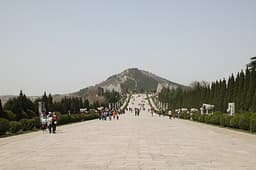
Emperor Gaozong of Tang
Emperor · Medieval
60.4Total

Julius Caesar
General · Ancient
82.8Total
Basic Information
Born
628
-100
Died
683
-44
Era
Medieval
Ancient
Nationality
China
Roman Republic
Occupation
Emperor
General
Civilization
Eastern
Western
Score Comparison
Military (10%)
72.5
88.0
Political (20%)
62.7
78.0
Influence (20%)
61.0
85.0
Legacy (20%)
50.0
82.0
Leadership (15%)
68.0
80.0
Strategy (15%)
57.5
85.0
TOTAL
60.4
82.8
Emperor Gaozong of Tang — Complete Timeline
657 AD
Conquest of the Western TurksWar◆ Major
Emperor Gaozong's general Su Dingfang defeated the Western Turkic Khaganate, bringing Central Asia under Tang control. This established Tang hegemony over the Silk Road and extended the empire's influence to the Caspian Sea.
ConquestExpansion
Impact: globalconstructive
660 AD
Illness and Regency of Wu ZetianPolitical Action
Emperor Gaozong suffered a stroke that left him partially incapacitated. His wife, Empress Wu Zetian, began to take an active role in governance, eventually becoming the de facto ruler. This marked the beginning of Wu Zetian's rise to power.
SuccessionRegency
Impact: regional
663 AD
Battle of BaekgangWar◆ Major
Tang and Silla forces defeated a combined Baekje-Yamato Japanese fleet at the Battle of Baekgang in Korea. This victory secured Tang control over the Korean peninsula and ended Japanese ambitions in Korea for centuries.
Naval BattleConquest
Impact: regionalconstructive
668 AD
Conquest of GoguryeoWar◆ Major
Emperor Gaozong, with the help of the Silla kingdom, conquered the Korean kingdom of Goguryeo. This victory expanded Tang territory into Manchuria and Korea, establishing a Tang protectorate over the region.
ConquestExpansion
Impact: regionalconstructive
Julius Caesar — Complete Timeline
58 BC
Gallic WarsWar◆ Major
Caesar, as proconsul of Gaul, launched a series of campaigns that conquered all of Gaul (modern France, Belgium, and parts of Switzerland). He fought numerous battles, including against the Helvetii, the Belgae, and the Gallic chieftain Vercingetorix. The wars brought immense wealth and a loyal army to Caesar.
Gallic WarsConquestRoman Expansion
Impact: regional
49 BC
Crossing the RubiconPolitical Action◆ Major
Caesar led Legio XIII across the Rubicon River into Italy, defying the Roman Senate's order to disband his army. This act triggered a civil war against Pompey and the Optimates, ultimately leading to Caesar's dictatorship and the end of the Roman Republic.
Roman Civil WarEnd of RepublicPower Struggle
Impact: global
48 BC
Battle of PharsalusWar◆ Major
Caesar's outnumbered army defeated the larger forces of Pompey the Great at Pharsalus in Greece. Caesar's tactical use of a reserve line to counter Pompey's cavalry charge proved decisive. Pompey fled to Egypt, where he was assassinated, leaving Caesar as the undisputed master of the Roman world.
Roman Civil WarBattleDecisive Victory
Impact: regional
44 BC
Appointment as Dictator for LifePolitical Action◆ Major
The Roman Senate appointed Caesar dictator perpetuo (dictator for life), granting him unprecedented personal power. This move concentrated military, legislative, and judicial authority in one person, effectively ending the Roman Republic's traditional system of checks and balances and alarming many senators.
DictatorshipEnd of RepublicPower Consolidation
Impact: regionaldestructive
Assassination on the Ides of MarchPolitical Action◆ Major
A group of Roman senators, led by Marcus Junius Brutus and Gaius Cassius Longinus, stabbed Caesar to death at a meeting of the Senate in the Theatre of Pompey. The assassination was intended to restore the Republic, but instead triggered another civil war that led to the rise of the Roman Empire.
AssassinationRoman PoliticsEnd of Republic
Impact: globaldestructive
Expert Analysis
emperor-gaozong-of-tang-vs-julius-caesar
# The Crossing and the Throne
On a January morning in 49 BCE, Julius Caesar stood at the banks of a small river in northern Italy. The Rubicon was little more than a stream, but Roman law was clear: no general could cross it with his army. Caesar hesitated. He knew that stepping into that water meant civil war, the destruction of the Republic he had sworn to serve, and quite possibly his own death. He crossed anyway. Four centuries later and half a world away, another ruler faced a different kind of crossing. Emperor Gaozong of Tang, lying in his sickbed after a stroke, watched his wife Wu Zetian take the imperial seal and begin issuing decrees in his name. He did not resist. Where Caesar chose to break the law, Gaozong chose to share power. That single difference—the instinct to dominate versus the willingness to delegate—shaped not only their reigns but the very civilizations they ruled.
Origins
Julius Caesar was born into a patrician family that had fallen on hard times. The Rome of his youth was a cauldron of ambition, where generals like Marius and Sulla had already shown that military loyalty could override constitutional order. Caesar learned early that in a republic rotting from within, the only currency that mattered was personal glory. He borrowed fortunes to sponsor games, bribed his way up the political ladder, and deliberately cultivated an image of reckless charm. His was a world where a man had to be ruthless to survive.
Emperor Gaozong of Tang was born into the opposite extreme. His father, Emperor Taizong, had already unified China and established the Tang Dynasty as the most powerful empire on earth. Gaozong was the ninth son, not the heir, and spent his early years in the shadow of a father so brilliant that history still calls him one of China’s greatest rulers. When his elder brothers were purged in a succession crisis, Gaozong found himself emperor almost by accident. He had never needed to fight for his position. He had never been tested by civil war or foreign invasion. He inherited stability, and stability shaped him into a cautious, dependent ruler.
Rise to Power
Caesar’s rise was a masterpiece of calculated risk. He allied with Pompey and Crassus in the First Triumvirate, used his consulship to push through land reforms that won him the loyalty of veterans, then spent eight years conquering Gaul. Every battle was a political investment. His Commentaries on the Gallic Wars were propaganda as much as history, designed to make his name synonymous with victory. When the Senate ordered him to disband his army, he knew that obeying meant prosecution and ruin. The Rubicon was not a leap of faith—it was the only move left.
Gaozong’s rise was almost passive. He became crown prince because his father chose him after the other candidates eliminated themselves. He ascended the throne at twenty-one, but real power remained with his father’s veteran ministers. For years, he was a ceremonial figurehead, signing documents prepared by others. The turning point came not through his own ambition but through his wife. Wu Zetian, a former concubine of his father, had already demonstrated extraordinary political intelligence. Gaozong relied on her to navigate the court intrigues that he could not manage alone. When he suffered a stroke in 660, the transition of power was almost seamless—she had been governing for him long before the illness.
Leadership & Governance
Caesar governed as he conquered: by force of personality and the threat of violence. As dictator, he reformed the calendar, granted citizenship to provincials, initiated public works, and centralized tax collection. But his reforms were always secondary to his need for absolute control. He packed the Senate with his supporters, minted coins with his own image, and accepted the title of dictator for life. His military genius lay in speed and surprise—the siege of Alesia, the crossing of the Rubicon, the lightning campaign at Pharsalus. He did not build institutions; he built himself.
Gaozong governed through delegation, and that delegation proved remarkably effective. His general Su Dingfang destroyed the Western Turkic Khaganate in 657, bringing Central Asia under Tang control. In 663, Tang and Silla forces crushed a combined Baekje-Yamato fleet at the Battle of Baekgang, securing dominance in Korea. In 668, they conquered Goguryeo. These were not Gaozong’s personal victories—he never led an army—but his willingness to trust capable generals allowed the Tang Empire to reach its greatest territorial extent. Politically, he relied on Wu Zetian, who proved a far more capable administrator than any of his ministers. The empire ran smoothly, but the emperor himself was increasingly irrelevant.
Triumph & Tragedy
Caesar’s triumph was absolute: he had conquered the known world and stood at the peak of human power. His tragedy was that he could not stop. The Ides of March came not because his enemies were strong but because he refused to share power. Sixty senators stabbed him to death in the Senate chamber, and his last words—according to legend—were not a curse but a shock: “Et tu, Brute?” He had trusted the wrong man.
Gaozong’s triumph was the Tang Empire at its zenith, an empire that stretched from the Caspian Sea to the Korean Peninsula. His tragedy was personal and quiet. He became a ghost in his own palace, his body failing while his wife governed. He died in 683, leaving the throne to his son, who was quickly deposed by Wu Zetian. She would go on to become China’s only female emperor, ruling in her own name for fifteen years. Gaozong’s greatest achievement was also his greatest failure: he created the conditions for his wife’s rise, and in doing so, he made himself forgettable.
Character & Destiny
Caesar was driven by an insatiable need for glory. He once said, “I would rather be first in a little Iberian village than second in Rome.” That hunger made him brilliant and doomed him. He could not imagine a world where he was not in control, and so he never built the alliances that might have saved him. His character was his destiny: he died because he could not stop conquering.
Gaozong was driven by the opposite need: a desire for stability. He had seen what happened when ambitious men fought for power—his brothers had been killed, his father had purged the court. He chose partnership over dominance, and that choice allowed the Tang Empire to flourish. But it also meant that his name would be forever linked to his wife’s. He was not a weak man, as some historians claim, but a pragmatic one who understood his own limitations. That pragmatism saved his empire but erased his individuality.
Legacy
Caesar’s legacy is the Roman Empire. His name became synonymous with absolute power—Kaiser, Tsar, Caesar. He transformed the Republic into a monarchy, and every European emperor who followed walked in his shadow. His writings survive, his battles are studied, and his assassination is one of history’s most famous moments. He is remembered as a genius and a tyrant, a reformer and a destroyer.
Gaozong’s legacy is more complex. The Tang Dynasty reached its peak under his reign, but history gives the credit to his generals and his wife. He is remembered as a transitional figure, the bridge between his father’s greatness and his wife’s ambition. In China, he is not vilified, but he is not celebrated. His name appears in textbooks, but it does not inspire. He was a good emperor in an age of great ones, and that is both his achievement and his limitation.
Conclusion
The difference between these two men is the difference between a river and a throne. Caesar crossed the Rubicon because he could not imagine any path but his own. Gaozong stayed on his sickbed because he could imagine a path through others. One chose glory and died for it. The other chose stability and was forgotten for it. Perhaps the historian’s judgment is unfair—Gaozong’s Tang Empire lasted longer than Caesar’s Rome. But history does not reward the cautious. It remembers the man who stepped into the water, not the man who watched from the shore.
Rankings
🥇
Julius CaesarLeader
Mil: 88.0Pol: 78.0Inf: 85.0
82.8
🥈
Emperor Gaozong of Tang
Mil: 72.5Pol: 62.7Inf: 61.0
60.4
+22.4 behind
How This Comparison Works
Algorithm
Each figure is scored on 6 dimensions (0—100 scale) based on structured historical data: Military (10%), Political (20%), Influence (20%), Legacy (20%), Leadership (15%), Strategy (15%). The weighted total produces the final ranking.
Data Sources
Scores are computed from structured sub-indicators in the database. Scale factors adjust for era (Ancient ×0.85, Modern ×1.0) and civilization size (Eastern ×1.05, Other ×0.80) to account for differences in population and military scale.
Maximum 3 Figures
Comparisons are limited to 2—3 figures to ensure readability and statistical meaningfulness.
Error Margins
±5 points per dimension — Sub-scores are derived from historical records with inherent uncertainty. Two figures within 5 points on a dimension should be considered roughly equivalent in that area.
Total Score Accuracy
±3 points overall — The weighted combination of 6 dimensions produces a total score with approximately ±3 points of uncertainty. Differences of less than 3 points are not statistically significant— the figures are effectively tied.
Known Limitations
- Historical records are incomplete and uneven across civilizations
- Figures from oral-tradition societies may be underrepresented
- Occupation labels can misclassify multi-role figures
- Scores measure capability and impact, not moral character
- Quantitative scoring is a comparison tool, not absolute truth
Capability Radar
Military (10%) — Battles & Warfare
Battles
55
95
Win Rate
60
92
Expansion
65
97
Political (20%) — Governance & Reform
Reform
60
90
Diplomacy
65
85
Economy
60
82
Influence (20%) — Cultural & Global Reach
Cultural
50
88
Global
45
94
Legacy (20%) — Historical Impact
Historical
55
95
Longevity
50
96
Leadership (15%) — Power & Stability
Tenure
70
75
Stability
55
60
Strategy (15%) — Tactics & Innovation
Strategy
55
94
Tactics
50
96
Reform
40
88
Similar Comparisons
Comments & Discussion
No comments yet. Be the first to share your thoughts!