Loading...
Emperor Gaozu of Han vs Shoshenq I
Emperor Gaozu of Han leads by 12.7 pts · 2 figures compared
…
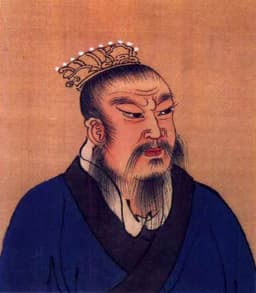
Emperor Gaozu of Han
Emperor · Ancient
69.7Total
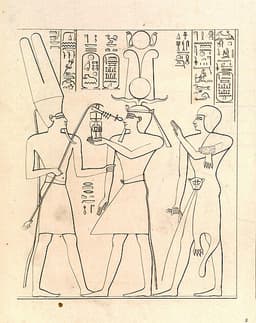
Shoshenq I
Emperor · Ancient
57.0Total
Basic Information
Born
-256
-943
Died
-195
-922
Era
Ancient
Ancient
Nationality
China
Third Intermediate Egypt
Occupation
Emperor
Emperor
Civilization
Eastern
Middle Eastern
Score Comparison
Military (10%)
78.0
70.0
Political (20%)
72.0
68.0
Influence (20%)
65.0
54.9
Legacy (20%)
65.0
49.2
Leadership (15%)
79.8
53.2
Strategy (15%)
66.3
57.5
TOTAL
69.7
57.0
Emperor Gaozu of Han — Complete Timeline
209 BC
Rebellion Against the Qin DynastyWar◆ Major
Liu Bang, a minor Qin official, led a revolt after a group of convicts he was escorting escaped. He gathered followers and joined the broader rebellion against the Qin dynasty, eventually becoming a key rebel leader.
Qin RebellionPeasant RevoltCivil War
Impact: national
202 BC
Battle of GaixiaWar
Liu Bang's Han forces, commanded by Han Xin, defeated Xiang Yu's Chu army at Gaixia. Xiang Yu committed suicide after the battle. This victory ended the Chu-Han Contention and allowed Liu Bang to proclaim himself emperor.
Chu-Han ContentionDecisive BattleHan Dynasty Founding
Impact: national
Abolition of Harsh Qin LawsReform◆ Major
Emperor Gaozu repealed the severe legal codes of the Qin dynasty, including collective punishment and harsh corporal penalties. He replaced them with a simplified legal system that reduced punishments, aiming to win popular support and stabilize the realm.
Legal ReformQin LegacyPopular Support
Impact: nationalprogressive
Proclamation of the Han DynastyPolitical Action
After defeating Xiang Yu, Liu Bang declared himself Emperor Gaozu of Han, founding the Han dynasty. He established the capital at Chang'an and began consolidating power, marking the start of one of China's longest-lasting dynasties.
Dynasty FoundingImperial ChinaChang'an
Impact: globalconstructive
Enfeoffment of Vassal KingsPolitical Action
To secure loyalty, Gaozu granted large territories to allied generals and relatives, creating semi-autonomous kingdoms. This policy initially stabilized the empire but later led to rebellions, forcing his successors to centralize power more firmly.
Feudal SystemVassalagePolitical Strategy
Impact: national
Shoshenq I — Complete Timeline
943 BC
Foundation of the 22nd DynastyPolitical Action
Shoshenq I, a Libyan chieftain, founded the 22nd Dynasty, ruling from Bubastis. This marked the rise of Libyan influence in Egypt, with Shoshenq consolidating power by appointing family members to key priestly and military positions.
Dynasty FoundationLibyan RuleBubastis
Impact: national
925 BC
Sack of JerusalemWar
Shoshenq I invaded the Kingdom of Judah and sacked Jerusalem, looting the Temple of Solomon and the royal palace. This campaign, recorded in the Hebrew Bible and on the Bubastite Portal at Karnak, brought immense wealth to Egypt and weakened Judah.
JerusalemTemple LootingBiblical Shishak
Impact: regionaldestructive
Campaign in Palestine and the NegevWar◆ Major
Shoshenq I led a major military campaign through Palestine and the Negev, attacking over 150 cities and towns. The campaign reasserted Egyptian dominance in the region and is documented on the Bubastite Portal at Karnak.
PalestineMilitary CampaignKarnak
Impact: regionalconstructive
Construction of the Bubastite PortalCultural◆ Major
Shoshenq I commissioned the Bubastite Portal at the Temple of Karnak, a monumental gateway recording his military victories in Palestine. The portal served as a propaganda tool, showcasing his achievements and legitimizing his Libyan dynasty.
KarnakMonumentPropaganda
Impact: nationalconstructive
Expert Analysis
Origins
Emperor Gaozu of Han, born Liu Bang in 256 BCE in Pei County (modern Jiangsu), was the son of a peasant family. He received minimal education but worked as a minor Qin official, responsible for escorting convicts. His early life was marked by poverty and hardship, which shaped his pragmatic and populist approach. In contrast, Shoshenq I was a Libyan chieftain of the Meshweh tribe, likely born around 950 BCE in the Nile Delta. His father, Nimlot, served as a military commander under the last pharaoh of the 21st Dynasty. Shoshenq grew up in a militarized environment, inheriting a tradition of Libyan mercenaries who had settled in Egypt. While Gaozu's origins were in the peasantry, Shoshenq's were in a warrior aristocracy.
Rise to Power
Liu Bang's rise began in 209 BCE when a group of convicts he was escorting escaped; rather than face punishment, he joined the rebellion against the Qin Dynasty. He gathered a small band of followers and allied with other rebel leaders, notably Xiang Yu. In 206 BCE, the Qin capital fell, and Liu Bang was granted the title King of Han by Xiang Yu. However, conflict erupted between them, leading to the Chu-Han Contention (206-202 BCE). Liu Bang's decisive victory at the Battle of Gaixia in 202 BCE forced Xiang Yu to commit suicide, clearing his path to power. That same year, Liu Bang proclaimed himself Emperor Gaozu of Han. Shoshenq I's ascent was more gradual. He served as a high-ranking general under Pharaoh Psusennes II, commanding the Libyan contingents. By leveraging his military influence and marrying his son to the daughter of Psusennes, Shoshenq secured the succession. Upon Psusennes' death around 943 BCE, Shoshenq declared himself pharaoh, founding the 22nd Dynasty. He consolidated power by placing family members in key priestly and administrative positions. Gaozu's rise was a military rebellion; Shoshenq's was a political and dynastic takeover.
Leadership & Governance
Emperor Gaozu implemented policies that contrasted sharply with the harsh Qin legalism. He abolished the draconian Qin laws, including collective punishment and corporal mutilation, and replaced them with a simplified legal code. He reduced taxes and corvée labor, promoting agricultural recovery. To secure loyalty, he enfeoffed vassal kings – a feudal system that initially stabilized but later led to rebellions. Gaozu also relied on capable advisors like Zhang Liang and Xiao He, who helped design a functional bureaucracy. His leadership style was inclusive, often consulting his generals and ministers. Shoshenq I, by contrast, ruled as a military pharaoh. He centralized power through family appointments: his son Osorkon became High Priest of Amun at Thebes, controlling the powerful priesthood. He launched a major building project, the Bubastite Portal at Karnak, to publicize his victories. His governance was more autocratic, relying on Libyan loyalists. While Gaozu's approach fostered long-term stability, Shoshenq's created a dynasty that eventually fragmented due to internal rivalries.
Triumph & Tragedy
Gaozu's greatest triumph was founding the Han Dynasty, which lasted 400 years and established the ethnic and cultural identity of China. His military victory at Gaixia is considered a masterpiece of strategy, where his general Han Xin executed a decisive encirclement. However, Gaozu's enfeoffment policy led to the Rebellion of the Seven Kingdoms in 154 BCE, a crisis that nearly toppled the dynasty. His later years were marred by paranoia, leading to the execution of loyal generals like Han Xin and Peng Yue. Shoshenq's crowning achievement was his campaign in Palestine around 925 BCE, where he sacked Jerusalem and looted the Temple of Solomon, as recorded in the Hebrew Bible (1 Kings 14:25-26). He also attacked over 150 cities, reasserting Egyptian dominance. His tragedy was the brevity of his dynasty's stability; after his death, the 22nd Dynasty faced internal splits and decline. Shoshenq's military gains were not sustained, and Egypt soon lost its Palestinian holdings.
Character & Destiny
Gaozu was pragmatic, cunning, and able to delegate. He famously said, "I am not as good as Zhang Liang in strategy, nor as good as Xiao He in logistics, nor as good as Han Xin in warfare, yet I can use them." This self-awareness allowed him to build a capable team. However, his peasant background made him suspicious of the aristocracy, leading to purges. His character – a mix of generosity and ruthlessness – shaped a dynasty that balanced centralization with local autonomy. Shoshenq was ambitious and militarily focused, but his reliance on Libyan elites created a power base that was inherently unstable. He lacked the institutional vision of Gaozu, and his dynasty soon fragmented into rival branches. His destiny was to be a brief restorer of Egyptian power, remembered more for his biblical sack of Jerusalem than for lasting reforms.
Legacy
Gaozu's legacy is immense: the Han Dynasty set the template for Chinese imperial governance, bureaucracy, and cultural norms. The term "Han Chinese" derives from this dynasty. His policies of tax reduction and legal leniency fostered economic growth and population recovery. The Han dynasty's expansion into Central Asia and Korea shaped China's borders. In contrast, Shoshenq's legacy is more limited. The Bubastite Portal remains a key archaeological source, and his campaign is a notable event in biblical history. However, the 22nd Dynasty did not produce lasting institutions; Egypt soon entered a period of fragmentation. Shoshenq's military score of 70.0 reflects his effective campaigns, but his political score of 68.0 and leadership of 53.2 indicate weaker governance. Gaozu's scores – military 78.0, political 72.0, leadership 79.8 – show a more balanced and effective ruler.
Conclusion
Emperor Gaozu of Han had a greater impact than Shoshenq I. Gaozu founded a dynasty that lasted four centuries and defined Chinese civilization, while Shoshenq's dynasty lasted only about two centuries and left no comparable cultural or political legacy. Gaozu's total score of 69.7 vs. Shoshenq's 57.0 reflects this disparity. Gaozu's leadership score of 79.8, significantly higher than Shoshenq's 53.2, underscores his superior ability to govern and build institutions. While Shoshenq's military campaign was impressive, it did not lead to enduring change. Gaozu's reforms in law, taxation, and administration created a stable state that influenced all subsequent Chinese dynasties. Therefore, by the metrics of enduring impact and institutional legacy, Emperor Gaozu of Han was the greater historical figure.
Rankings
🥇
Emperor Gaozu of HanLeader
Mil: 78.0Pol: 72.0Inf: 65.0
69.7
🥈
Shoshenq I
Mil: 70.0Pol: 68.0Inf: 54.9
57.0
+12.7 behind
How This Comparison Works
Algorithm
Each figure is scored on 6 dimensions (0—100 scale) based on structured historical data: Military (10%), Political (20%), Influence (20%), Legacy (20%), Leadership (15%), Strategy (15%). The weighted total produces the final ranking.
Data Sources
Scores are computed from structured sub-indicators in the database. Scale factors adjust for era (Ancient ×0.85, Modern ×1.0) and civilization size (Eastern ×1.05, Other ×0.80) to account for differences in population and military scale.
Maximum 3 Figures
Comparisons are limited to 2—3 figures to ensure readability and statistical meaningfulness.
Error Margins
±5 points per dimension — Sub-scores are derived from historical records with inherent uncertainty. Two figures within 5 points on a dimension should be considered roughly equivalent in that area.
Total Score Accuracy
±3 points overall — The weighted combination of 6 dimensions produces a total score with approximately ±3 points of uncertainty. Differences of less than 3 points are not statistically significant— the figures are effectively tied.
Known Limitations
- Historical records are incomplete and uneven across civilizations
- Figures from oral-tradition societies may be underrepresented
- Occupation labels can misclassify multi-role figures
- Scores measure capability and impact, not moral character
- Quantitative scoring is a comparison tool, not absolute truth
Capability Radar
Military (10%) — Battles & Warfare
Battles
75
55
Win Rate
70
60
Expansion
80
60
Political (20%) — Governance & Reform
Reform
85
50
Diplomacy
80
55
Economy
75
50
Influence (20%) — Cultural & Global Reach
Cultural
85
45
Global
85
45
Legacy (20%) — Historical Impact
Historical
90
55
Longevity
95
50
Leadership (15%) — Power & Stability
Tenure
70
65
Stability
72
55
Strategy (15%) — Tactics & Innovation
Strategy
78
55
Tactics
72
50
Reform
65
40
Similar Comparisons
Comments & Discussion
No comments yet. Be the first to share your thoughts!