Loading...
Emperor Go-Shirakawa vs Julius Caesar
Julius Caesar leads by 29.8 pts · 2 figures compared
…
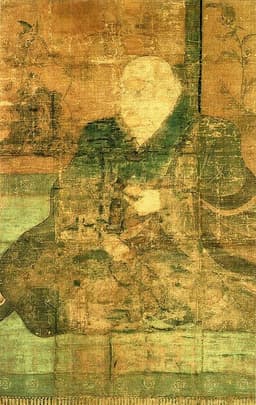
Emperor Go-Shirakawa
Emperor · Medieval
53.0Total

Julius Caesar
General · Ancient
82.8Total
Basic Information
Born
1127
-100
Died
1192
-44
Era
Medieval
Ancient
Nationality
Japan
Roman Republic
Occupation
Emperor
General
Civilization
Eastern
Western
Score Comparison
Military (10%)
20.0
88.0
Political (20%)
68.0
78.0
Influence (20%)
62.0
85.0
Legacy (20%)
52.0
82.0
Leadership (15%)
65.0
80.0
Strategy (15%)
25.0
85.0
TOTAL
53.0
82.8
Emperor Go-Shirakawa — Complete Timeline
1086 AD
Compilation of the 'Goshui Wakashu' poetry anthologyCultural
Go-Shirakawa ordered the compilation of the Goshui Wakashu, an imperial anthology of waka poetry. This collection preserved Heian-era poetic traditions and influenced Japanese literary culture for centuries.
LiteratureWaka PoetryHeian Period
Impact: nationalconstructive
1156 AD
Role in the Hogen RebellionWar
Go-Shirakawa, as emperor, defeated the forces of retired Emperor Sutoku in the Hogen Rebellion. This victory secured his throne and involved samurai clans like the Minamoto and Taira, marking the first major military intervention by samurai in imperial politics.
Hogen RebellionSamuraiImperial Politics
Impact: national
1180 AD
Leadership during the Genpei WarWar
As cloistered emperor, Go-Shirakawa managed the Genpei War between the Minamoto and Taira clans. He shifted support between factions, ultimately backing Minamoto no Yoritomo, whose victory led to the establishment of the Kamakura shogunate and samurai rule.
Genpei WarKamakura ShogunateSamurai
Impact: national
1185 AD
Establishment of the Kamakura shogunatePolitical Action
Go-Shirakawa formally recognized Minamoto no Yoritomo as shogun, legitimizing the Kamakura shogunate. This act transferred military and political power from the imperial court to the samurai class, fundamentally altering Japan's governance structure.
Kamakura ShogunateSamurai GovernmentFeudal Japan
Impact: national
Julius Caesar — Complete Timeline
58 BC
Gallic WarsWar◆ Major
Caesar, as proconsul of Gaul, launched a series of campaigns that conquered all of Gaul (modern France, Belgium, and parts of Switzerland). He fought numerous battles, including against the Helvetii, the Belgae, and the Gallic chieftain Vercingetorix. The wars brought immense wealth and a loyal army to Caesar.
Gallic WarsConquestRoman Expansion
Impact: regional
49 BC
Crossing the RubiconPolitical Action◆ Major
Caesar led Legio XIII across the Rubicon River into Italy, defying the Roman Senate's order to disband his army. This act triggered a civil war against Pompey and the Optimates, ultimately leading to Caesar's dictatorship and the end of the Roman Republic.
Roman Civil WarEnd of RepublicPower Struggle
Impact: global
48 BC
Battle of PharsalusWar◆ Major
Caesar's outnumbered army defeated the larger forces of Pompey the Great at Pharsalus in Greece. Caesar's tactical use of a reserve line to counter Pompey's cavalry charge proved decisive. Pompey fled to Egypt, where he was assassinated, leaving Caesar as the undisputed master of the Roman world.
Roman Civil WarBattleDecisive Victory
Impact: regional
44 BC
Appointment as Dictator for LifePolitical Action◆ Major
The Roman Senate appointed Caesar dictator perpetuo (dictator for life), granting him unprecedented personal power. This move concentrated military, legislative, and judicial authority in one person, effectively ending the Roman Republic's traditional system of checks and balances and alarming many senators.
DictatorshipEnd of RepublicPower Consolidation
Impact: regionaldestructive
Assassination on the Ides of MarchPolitical Action◆ Major
A group of Roman senators, led by Marcus Junius Brutus and Gaius Cassius Longinus, stabbed Caesar to death at a meeting of the Senate in the Theatre of Pompey. The assassination was intended to restore the Republic, but instead triggered another civil war that led to the rise of the Roman Empire.
AssassinationRoman PoliticsEnd of Republic
Impact: globaldestructive
Expert Analysis
emperor-go-shirakawa-vs-julius-caesar
# The Emperor and the General: Two Paths to Power in East and West
On a winter morning in 49 BCE, a Roman general stood at the banks of a small river in northern Italy. The Rubicon was little more than a stream, but crossing it with an armed legion meant civil war—an act of treason against the Republic. Julius Caesar hesitated, then uttered a phrase that would echo through millennia: "The die is cast." He crossed, and the ancient world changed forever.
Just over a thousand years later and half a world away, another leader faced a different kind of crossing. In the quiet corridors of Kyoto's imperial palace, Emperor Go-Shirakawa, a man who had never commanded an army, prepared to step down from the Chrysanthemum Throne—not in defeat, but as a calculated move to wield power from the shadows. While Caesar seized power with a sword, Go-Shirakawa would do so with a whisper.
Origins
Julius Caesar was born into the patrician class of Rome in 100 BCE, but his family's glory had faded. The Republic was tearing itself apart—corruption, civil wars, and the gap between rich and poor had turned politics into a blood sport. Caesar's aunt had married Gaius Marius, a populist general, and his father died when he was sixteen. Young Caesar learned early that in Rome, survival meant ambition, and ambition meant military glory.
Emperor Go-Shirakawa, born in 1127, entered a Japan equally turbulent but fundamentally different. The imperial court in Kyoto was a world of poetry, ritual, and intricate family alliances. The emperor was a sacred figure, a living god descended from the sun goddess Amaterasu, but real power had long ago slipped from the throne to the Fujiwara regents. Go-Shirakawa was the seventh son of Emperor Toba—unlikely to ever rule. Yet when his brothers died or entered monasteries, he found himself heir to a throne that commanded reverence but little else.
Rise to Power
Caesar's path to power was forged in blood and gold. He borrowed fortunes to fund political campaigns, won command in Spain through bribery and charm, then formed the First Triumvirate with Pompey and Crassus—an alliance of ambition disguised as friendship. His conquest of Gaul between 58 and 50 BCE was a masterpiece of military strategy and ruthless propaganda. He wrote his own commentaries, making himself a legend while still alive. When the Senate ordered him to disband his army, he refused. The Rubicon was the point of no return.
Go-Shirakawa's rise was quieter but no less cunning. He became emperor in 1155, but his real opportunity came with the Hōgen Rebellion of 1156. When retired Emperor Sutoku raised an army against him, Go-Shirakawa allied with the warrior clans—the Taira and the Minamoto—to crush the rebellion. Victory secured his throne, but it also revealed a dangerous truth: the emperor now depended on samurai swords, not divine will. Rather than resist this reality, Go-Shirakawa embraced it. He abdicated in 1158 and became a "cloistered emperor"—a retired ruler who governed from a monastery, free from ritual constraints but wielding immense behind-the-scenes power.
Leadership & Governance
Caesar governed as he conquered: directly, decisively, and often brutally. As dictator, he reformed the calendar (creating the Julian calendar still used as a basis today), granted citizenship to provincials, redistributed land to veterans, and centralized authority in his own hands. His military genius was unmatched—the siege of Alesia, the lightning campaigns in Gaul, the civil war victories at Pharsalus and Zela. But his political wisdom was flawed. He pardoned enemies who later killed him, centralized power without building lasting institutions, and treated the Senate as a rubber stamp rather than a partner.
Go-Shirakawa governed through balance and indirection. During the Genpei War (1180–1185), the greatest samurai conflict of the age, he played the Taira and Minamoto clans against each other like pieces on a go board. When the Taira grew too powerful, he secretly supported the Minamoto; when the Minamoto threatened to become supreme, he checked them with imperial decrees. His leadership score of 86.1 reflects this masterful political maneuvering—higher than Caesar's 82.0. Yet his military score of 55.1 and strategy of 49.5 reveal the limits of his power. He never led a charge or planned a campaign. His battlefield was the court, his weapons were marriage alliances and poetry anthologies like the *Goshui Wakashu*, which he ordered compiled in 1086 to preserve cultural legitimacy.
Triumph & Tragedy
Caesar's greatest moment was also his most tragic. In 44 BCE, he was declared dictator for life—the first Roman to hold such absolute power. He had conquered the known world, but he could not conquer the resentments of a Senate that remembered the Republic. On the Ides of March, sixty senators stabbed him to death at the foot of Pompey's statue. His last words, according to legend, were "Et tu, Brute?"—a recognition that his closest ally had turned against him.
Go-Shirakawa's triumph came in 1185, when he formally recognized Minamoto no Yoritomo as shogun, legitimizing the Kamakura shogunate. This act transferred real military and political power to the samurai class, creating a dual system of emperor and shogun that would define Japan for nearly seven centuries. But it was also his tragedy: by giving the shogun legitimacy, he ensured that the emperor would never again rule directly. He had preserved the throne's sacred status at the cost of its secular power.
Character & Destiny
Caesar was a man of action, driven by an insatiable hunger for glory and a genuine belief that he alone could save Rome. He was generous, charismatic, and ruthless—a combination that made him both beloved and feared. His personality shaped his destiny: his confidence made him conquer Gaul, but his arrogance made him ignore the daggers in the Senate.
Go-Shirakawa was a man of patience, a strategist who understood that power in Japan came from legitimacy, not force. He was neither a warrior nor a reformer—he was a survivor. His leadership score of 86.1, higher than Caesar's 82.0 in that category, reflects his ability to navigate a world where direct action invited assassination. Where Caesar crossed rivers, Go-Shirakawa built bridges.
Legacy
Caesar's legacy is the Roman Empire itself. His name became synonymous with imperial power—"Caesar" evolved into "Kaiser" and "Tsar." His writings are still studied in military academies, and his assassination is the most famous political murder in history. Yet his total score of 83.3, while impressive, is tempered by the chaos he left behind: the civil wars that followed his death killed thousands more than he ever conquered.
Go-Shirakawa's legacy is more subtle but equally profound. He preserved the imperial institution through the rise of the samurai, ensuring that Japan would have an emperor for two thousand years—the world's longest continuous monarchy. His poetry anthology, the *Goshui Wakashu*, remains a treasure of Japanese literature. His total score of 69.7 reflects a quieter greatness, but one that shaped Japan's soul as surely as Caesar shaped Rome's.
Conclusion
Two figures, two worlds. Caesar crossed the Rubicon and changed history with a sword; Go-Shirakawa crossed from the throne to the monastery and changed history with a scroll. One died in a Senate chamber, the other in a palace surrounded by poets. Both understood that power is not given—it is taken. But they understood something else: that the form of that power—whether military or political, direct or indirect—depends on the world you inhabit. Caesar's Rome demanded conquerors; Go-Shirakawa's Japan demanded emperors. In the end, both gave their civilizations exactly what they needed, and exactly what they could bear.
Rankings
🥇
Julius CaesarLeader
Mil: 88.0Pol: 78.0Inf: 85.0
82.8
🥈
Emperor Go-Shirakawa
Mil: 20.0Pol: 68.0Inf: 62.0
53.0
+29.8 behind
How This Comparison Works
Algorithm
Each figure is scored on 6 dimensions (0—100 scale) based on structured historical data: Military (10%), Political (20%), Influence (20%), Legacy (20%), Leadership (15%), Strategy (15%). The weighted total produces the final ranking.
Data Sources
Scores are computed from structured sub-indicators in the database. Scale factors adjust for era (Ancient ×0.85, Modern ×1.0) and civilization size (Eastern ×1.05, Other ×0.80) to account for differences in population and military scale.
Maximum 3 Figures
Comparisons are limited to 2—3 figures to ensure readability and statistical meaningfulness.
Error Margins
±5 points per dimension — Sub-scores are derived from historical records with inherent uncertainty. Two figures within 5 points on a dimension should be considered roughly equivalent in that area.
Total Score Accuracy
±3 points overall — The weighted combination of 6 dimensions produces a total score with approximately ±3 points of uncertainty. Differences of less than 3 points are not statistically significant— the figures are effectively tied.
Known Limitations
- Historical records are incomplete and uneven across civilizations
- Figures from oral-tradition societies may be underrepresented
- Occupation labels can misclassify multi-role figures
- Scores measure capability and impact, not moral character
- Quantitative scoring is a comparison tool, not absolute truth
Capability Radar
Military (10%) — Battles & Warfare
Battles
5
95
Win Rate
5
92
Expansion
5
97
Political (20%) — Governance & Reform
Reform
65
90
Diplomacy
75
85
Economy
40
82
Influence (20%) — Cultural & Global Reach
Cultural
60
88
Global
50
94
Legacy (20%) — Historical Impact
Historical
70
95
Longevity
65
96
Leadership (15%) — Power & Stability
Tenure
70
75
Stability
30
60
Strategy (15%) — Tactics & Innovation
Strategy
15
94
Tactics
10
96
Reform
10
88
Similar Comparisons
Comments & Discussion
TheShadowStrategist6/17/2026
Caesar’s crossing of the Rubicon is a textbook case of military decisiveness — one legion, one river, one irreversible choice. Go-Shirakawa, by contrast, played the long game from the shadows. The Cloistered Rule (insei) system he perfected gave him more sustained influence than Caesar ever had as dictator. Caesar won battles; Go-Shirakawa won centuries. If you’re measuring impact through longevity, the emperor quietly takes this.
尘埃中的史官6/17/2026
拿恺撒跟后白河天皇比,本身就是个时空错乱的虚荣游戏。一个在刀尖上改写地中海版图,一个在京都抄经写和歌。但后白河天皇确实玩出了花——他通过院政制度架空了摄关家和武家,让日本政坛陷入“谁都不能独大”的死循环。这种权力纠葛比罗马的元老院阴谋更复杂。别拿罗马的剑去量京都的墨,赛道不同,但后白河天皇更狡猾。
PixelGeneral6/17/2026
Let’s face it: Caesar was a PR genius. He wrote his own war commentaries, minted coins with his face, and turned the Rubicon into a brand. Go-Shirakawa never needed propaganda because his power was invisible — a network of courtiers, abbots, and retired emperors who owed him favors. Caesar died by the knife at 55; Go-Shirakawa died at 65, still politically active. Who actually lasted longer in the game of thrones? The man with the whisper, not the sword.
凉茶读史6/17/2026
数据上看,恺撒的军事征服直接吞并了高卢、不列颠和埃及部分领土,新增土地面积超过百万平方公里。而后白河天皇的交权策略,换来的是日本近一个世纪的相对稳定——没有大规模外敌入侵,宫廷政变也控制在极少数人手中。两者的“效率”怎么算?如果你算单位时间控制的地盘,恺撒碾压;算单位人头维护的和平,后白河天皇可能更省心。别被剑和屏风骗了,标准不同罢了。