Loading...
Emperor Go-Shirakawa vs Li Shi
Emperor Go-Shirakawa leads by 1.5 pts · 2 figures compared
…
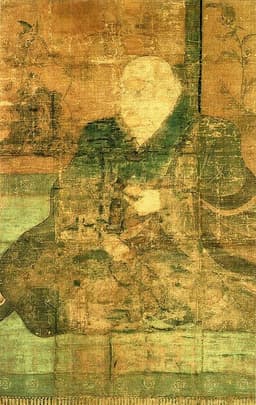
Emperor Go-Shirakawa
Emperor · Medieval
53.0Total
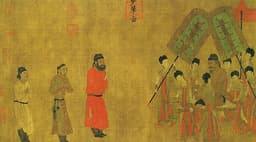
Li Shi
Emperor · Medieval
51.5Total
Basic Information
Born
1127
742
Died
1192
805
Era
Medieval
Medieval
Nationality
Japan
China
Occupation
Emperor
Emperor
Civilization
Eastern
Eastern
Score Comparison
Military (10%)
20.0
25.9
Political (20%)
68.0
68.0
Influence (20%)
62.0
51.8
Legacy (20%)
52.0
45.0
Leadership (15%)
65.0
72.0
Strategy (15%)
25.0
36.8
TOTAL
53.0
51.5
Emperor Go-Shirakawa — Complete Timeline
1086 AD
Compilation of the 'Goshui Wakashu' poetry anthologyCultural
Go-Shirakawa ordered the compilation of the Goshui Wakashu, an imperial anthology of waka poetry. This collection preserved Heian-era poetic traditions and influenced Japanese literary culture for centuries.
LiteratureWaka PoetryHeian Period
Impact: nationalconstructive
1156 AD
Role in the Hogen RebellionWar
Go-Shirakawa, as emperor, defeated the forces of retired Emperor Sutoku in the Hogen Rebellion. This victory secured his throne and involved samurai clans like the Minamoto and Taira, marking the first major military intervention by samurai in imperial politics.
Hogen RebellionSamuraiImperial Politics
Impact: national
1180 AD
Leadership during the Genpei WarWar
As cloistered emperor, Go-Shirakawa managed the Genpei War between the Minamoto and Taira clans. He shifted support between factions, ultimately backing Minamoto no Yoritomo, whose victory led to the establishment of the Kamakura shogunate and samurai rule.
Genpei WarKamakura ShogunateSamurai
Impact: national
1185 AD
Establishment of the Kamakura shogunatePolitical Action
Go-Shirakawa formally recognized Minamoto no Yoritomo as shogun, legitimizing the Kamakura shogunate. This act transferred military and political power from the imperial court to the samurai class, fundamentally altering Japan's governance structure.
Kamakura ShogunateSamurai GovernmentFeudal Japan
Impact: national
Li Shi — Complete Timeline
780 AD
Implementation of the Two-Tax SystemReform◆ Major
Li Shi adopted the Two-Tax System proposed by Chancellor Yang Yan. This reform replaced the equal-field system with a simplified tax based on land and property, collected twice a year. It increased revenue but also increased the burden on peasants.
Tax ReformTwo-Tax SystemFiscal Policy
Impact: nationalconstructive
783 AD
Suppression of the Jingyuan MutinyWar◆ Major
Troops from Jingyuan mutinied in Chang'an, forcing Li Shi to flee. The mutineers supported Zhu Ci as emperor. Li Shi's forces, with help from loyalist jiedushi, eventually suppressed the rebellion and recaptured the capital in 784.
MutinyRebellionCapital Recapture
Impact: nationaldestructive
785 AD
Reassertion of Central Authority over FanzhenPolitical Action
After the Jingyuan Mutiny, Li Shi attempted to reduce the power of military governors by appointing civil officials and rotating commanders. These efforts had limited success, as the fanzhen remained largely autonomous.
FanzhenCentralization AttemptMilitary Governors
Impact: national
805 AD
Death of Li ShiOther
Li Shi died in 805 after a reign marked by attempts at fiscal and administrative reform. His death led to a succession crisis and the brief reign of his son, who was soon deposed by eunuchs.
DeathSuccession Crisis
Impact: national
Expert Analysis
Origins
Emperor Go-Shirakawa (1127–1192) was the 77th emperor of Japan, born to Emperor Toba and Empress Dowager Fujiwara no Shimeko. He ascended the throne in 1155 at age 28, during a period of intense court factionalism. His early life was shaped by the cloistered rule system, where retired emperors wielded power behind the scenes. Li Shi (742–805), posthumously known as Emperor Dezong of Tang, was the ninth son of Emperor Daizong. Born in Chang'an, he was educated in Confucian classics and military strategy. He became crown prince in 779 and emperor in 779 at age 37, inheriting a Tang empire weakened by the An Lushan Rebellion and semi-autonomous military governors (fanzhen).
Rise to Power
Go-Shirakawa's rise came through the Hōgen Rebellion (1156), where he allied with the Taira and Minamoto clans to defeat the forces of retired Emperor Sutoku. This victory secured his throne and marked the first major intervention of samurai in imperial succession. He abdicated in 1158 but continued ruling as cloistered emperor, manipulating court politics. Li Shi's path to power was more direct: he became emperor upon his father's death in 779. However, his authority was immediately challenged by the fanzhen system. He attempted to consolidate power by reducing the influence of military governors, which led to the Jingyuan Mutiny (783) where mutineers forced him to flee Chang'an. He regained control with help from loyalist generals but never fully subdued the provinces.
Leadership & Governance
Go-Shirakawa's leadership was characterized by indirect rule through the cloistered emperor system. He skillfully played the Minamoto and Taira clans against each other during the Genpei War (1180–1185). Initially supporting the Taira, he later switched allegiance to Minamoto no Yoritomo, recognizing him as shogun in 1192. This legitimized the Kamakura shogunate, transferring military power to the samurai class while preserving the emperor's ceremonial role. Li Shi's governance focused on fiscal reform. He implemented the Two-Tax System (780), proposed by Chancellor Yang Yan, which simplified taxation based on land and property, replacing the outdated equal-field system. This reform increased central revenue but faced resistance from local elites. He also attempted to appoint civil officials to military posts, but these efforts largely failed due to entrenched interests.
Triumph & Tragedy
Go-Shirakawa's greatest triumph was navigating the Genpei War to establish a stable political structure that lasted centuries. His recognition of Yoritomo as shogun created the Kamakura shogunate, which endured until 1333. However, his manipulation also led to the destruction of the Taira clan at the Battle of Dan-no-ura (1185), a tragedy that cost thousands of lives. His legacy includes the Goshui Wakashu poetry anthology, which preserved Heian culture. Li Shi's triumph was the Two-Tax System, which remained the basis of Chinese taxation for centuries. His tragedy was the Jingyuan Mutiny, which exposed the weakness of central authority. He spent the rest of his reign in a defensive posture, unable to fully control the fanzhen. His death led to a succession crisis, with his son Shunzong ruling only briefly.
Character & Destiny
Go-Shirakawa was astute and pragmatic, with a talent for political manipulation. He was known for his love of poetry and culture, compiling the Goshui Wakashu. His character—patient, cunning, and willing to delegate military matters—allowed him to survive the turbulent Genpei War. However, his reliance on samurai ultimately diminished imperial power. Li Shi was determined but inflexible. He attempted to impose reforms without sufficient military backing, leading to rebellion. His character was marked by a desire to restore Tang authority, but his confrontational approach alienated powerful governors. Historians note his fiscal innovations were ahead of their time, but his failure to secure military control limited their impact.
Legacy
Go-Shirakawa's legacy is the establishment of the shogunate system, which defined Japanese governance for nearly 700 years. He scored 62.0 in influence and 52.0 in legacy, reflecting his role in empowering the samurai class. The Kamakura shogunate set a precedent for military rule that continued until the Meiji Restoration. Li Shi's legacy is the Two-Tax System, which influenced Chinese fiscal policy until the Ming dynasty. He scored 51.8 in influence and 45.0 in legacy, indicating a more limited long-term impact. His reforms were partially reversed after his death, and the Tang dynasty continued to decline.
Conclusion
Emperor Go-Shirakawa had a greater historical impact than Li Shi, despite a narrow total score gap of 1.5 points (53.0 vs 51.5). Go-Shirakawa's actions directly shaped Japan's political structure for centuries, creating the shogunate system that balanced imperial and military power. In contrast, Li Shi's reforms, while significant, did not prevent the Tang's eventual collapse. Go-Shirakawa's leadership score of 65.0 and political score of 68.0 highlight his effectiveness in a chaotic era, while Li Shi's similar political score of 68.0 was undermined by his lower military score of 25.9 and strategy score of 36.8. Thus, Go-Shirakawa's influence on Japan's trajectory was more profound and enduring.
Rankings
🥇
Emperor Go-ShirakawaLeader
Mil: 20.0Pol: 68.0Inf: 62.0
53.0
🥈
Li Shi
Mil: 25.9Pol: 68.0Inf: 51.8
51.5
+1.5 behind
How This Comparison Works
Algorithm
Each figure is scored on 6 dimensions (0—100 scale) based on structured historical data: Military (10%), Political (20%), Influence (20%), Legacy (20%), Leadership (15%), Strategy (15%). The weighted total produces the final ranking.
Data Sources
Scores are computed from structured sub-indicators in the database. Scale factors adjust for era (Ancient ×0.85, Modern ×1.0) and civilization size (Eastern ×1.05, Other ×0.80) to account for differences in population and military scale.
Maximum 3 Figures
Comparisons are limited to 2—3 figures to ensure readability and statistical meaningfulness.
Error Margins
±5 points per dimension — Sub-scores are derived from historical records with inherent uncertainty. Two figures within 5 points on a dimension should be considered roughly equivalent in that area.
Total Score Accuracy
±3 points overall — The weighted combination of 6 dimensions produces a total score with approximately ±3 points of uncertainty. Differences of less than 3 points are not statistically significant— the figures are effectively tied.
Known Limitations
- Historical records are incomplete and uneven across civilizations
- Figures from oral-tradition societies may be underrepresented
- Occupation labels can misclassify multi-role figures
- Scores measure capability and impact, not moral character
- Quantitative scoring is a comparison tool, not absolute truth
Capability Radar
Military (10%) — Battles & Warfare
Battles
5
20
Win Rate
5
15
Expansion
5
5
Political (20%) — Governance & Reform
Reform
65
65
Diplomacy
75
40
Economy
40
60
Influence (20%) — Cultural & Global Reach
Cultural
60
30
Global
50
20
Legacy (20%) — Historical Impact
Historical
70
40
Longevity
65
30
Leadership (15%) — Power & Stability
Tenure
70
70
Stability
30
30
Strategy (15%) — Tactics & Innovation
Strategy
15
15
Tactics
10
10
Reform
10
5
Similar Comparisons
Comments & Discussion
No comments yet. Be the first to share your thoughts!