Loading...
Emperor Go-Shirakawa vs Napoleon Bonaparte
Napoleon Bonaparte leads by 17.9 pts · 2 figures compared
…
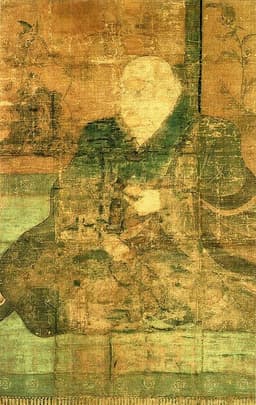
Emperor Go-Shirakawa
Emperor · Medieval
53.0Total

Napoleon Bonaparte
General · Modern
70.9Total
Basic Information
Born
1127
1769
Died
1192
1821
Era
Medieval
Modern
Nationality
Japan
France
Occupation
Emperor
General
Civilization
Eastern
Western
Score Comparison
Military (10%)
20.0
94.0
Political (20%)
68.0
72.0
Influence (20%)
62.0
40.0
Legacy (20%)
52.0
80.0
Leadership (15%)
65.0
78.0
Strategy (15%)
25.0
90.0
TOTAL
53.0
70.9
Emperor Go-Shirakawa — Complete Timeline
1086 AD
Compilation of the 'Goshui Wakashu' poetry anthologyCultural
Go-Shirakawa ordered the compilation of the Goshui Wakashu, an imperial anthology of waka poetry. This collection preserved Heian-era poetic traditions and influenced Japanese literary culture for centuries.
LiteratureWaka PoetryHeian Period
Impact: nationalconstructive
1156 AD
Role in the Hogen RebellionWar
Go-Shirakawa, as emperor, defeated the forces of retired Emperor Sutoku in the Hogen Rebellion. This victory secured his throne and involved samurai clans like the Minamoto and Taira, marking the first major military intervention by samurai in imperial politics.
Hogen RebellionSamuraiImperial Politics
Impact: national
1180 AD
Leadership during the Genpei WarWar
As cloistered emperor, Go-Shirakawa managed the Genpei War between the Minamoto and Taira clans. He shifted support between factions, ultimately backing Minamoto no Yoritomo, whose victory led to the establishment of the Kamakura shogunate and samurai rule.
Genpei WarKamakura ShogunateSamurai
Impact: national
1185 AD
Establishment of the Kamakura shogunatePolitical Action
Go-Shirakawa formally recognized Minamoto no Yoritomo as shogun, legitimizing the Kamakura shogunate. This act transferred military and political power from the imperial court to the samurai class, fundamentally altering Japan's governance structure.
Kamakura ShogunateSamurai GovernmentFeudal Japan
Impact: national
Napoleon Bonaparte — Complete Timeline
1799 AD
Coup of 18 BrumaireOther◆ Major
Napoleon Bonaparte, with support from his brother Lucien and key political figures, overthrew the Directory in a bloodless coup. He established the Consulate with himself as First Consul, effectively becoming the ruler of France. This event ended the French Revolution's most unstable period.
French RevolutionCoupRise to Power
Impact: regional
1804 AD
Promulgation of the Napoleonic CodeOther◆ Major
Napoleon enacted the Civil Code of the French, known as the Napoleonic Code, a comprehensive set of laws that replaced the fragmented feudal legal systems. The code established legal equality, protected property rights, and secularized law. It became the basis for legal systems in many European and world countries.
Legal ReformNapoleonic CodeCivil Law
Impact: globalconstructive
1805 AD
Battle of AusterlitzWar◆ Major
Napoleon's Grande Arm
Napoleonic WarsBattleDecisive Victory
Impact: global
1812 AD
Invasion of RussiaWar◆ Major
Napoleon led the Grande Arm
Napoleonic WarsInvasionDisaster
Impact: globaldestructive
1815 AD
Battle of WaterlooWar◆ Major
Napoleon's French army was defeated by the combined forces of the Duke of Wellington's Anglo-Allied army and Gebhard Leberecht von Bl
Napoleonic WarsBattleFinal Defeat
Impact: globaldestructive
Expert Analysis
emperor-go-shirakawa-vs-napoleon-bonaparte
# The Emperor and the General: Go-Shirakawa and Napoleon, Two Paths to Power
In the winter of 1185, a cloistered emperor in Kyoto performed an act that would reshape Japan for centuries: he formally recognized a military commander as shogun, handing over the real reins of power to a warrior class that would rule for nearly 700 years. Less than six hundred years later and half a world away, a Corsican artillery officer crowned himself Emperor of the French in Notre-Dame Cathedral, seizing the scepter from the hands of the Pope himself. One man surrendered power to survive; the other grasped it to conquer the world. What drove these two figures—Emperor Go-Shirakawa of Japan and Napoleon Bonaparte of France—to such opposite fates?
Origins
Go-Shirakawa was born in 1127 into the chrysanthemum throne, the fourth son of Emperor Toba. The Japanese imperial court of the 12th century was a world of poetry, ritual, and subtle intrigue, where power flowed not through armies but through family connections, land grants, and the careful manipulation of retired emperors who ruled from behind the screen. Go-Shirakawa grew up in a system where the true sovereign was often the one who had abdicated—the "cloistered emperor" who pulled strings from a monastery.
Napoleon, born in 1769 on the island of Corsica, entered a very different world. His family was minor nobility in a backwater recently annexed by France. He spoke Italian before French, and his childhood was shaped by the Corsican resistance against French rule. While Go-Shirakawa was born into the apex of a thousand-year-old hierarchy, Napoleon was an outsider, a provincial who would have to claw his way up through merit and ambition.
Rise to Power
Go-Shirakawa became emperor in 1155, but his real ascent began with the Hōgen Rebellion of 1156. When his brother, retired Emperor Sutoku, raised arms against him, Go-Shirakawa did something unprecedented: he called upon samurai clans—the Taira and the Minamoto—to fight his battles. He defeated Sutoku, but in doing so, he opened a door he could never close. The warriors had tasted political power, and they would demand more.
Napoleon's rise was faster and more dramatic. In 1793, at age 24, he drove the British out of Toulon with a brilliant artillery strategy. By 1796, he was commanding the Army of Italy, winning battle after battle against the Austrians. His Egyptian campaign of 1798 was a disaster in military terms but a triumph of self-promotion. When he returned to France in 1799, the government was weak, the people were restless, and Napoleon was ready. In the coup of 18 Brumaire, he seized power as First Consul. He was 30 years old.
Leadership & Governance
Go-Shirakawa ruled not through conquest but through balance. During the Genpei War (1180–1185), he shifted support between the Taira and Minamoto clans like a man walking a tightrope, ensuring that neither side became powerful enough to ignore him. His political wisdom was extraordinary: he knew that his power depended on the warriors fighting each other, not uniting against the throne. When Minamoto no Yoritomo finally triumphed, Go-Shirakawa did not resist. He recognized the new shogun, legitimized the Kamakura government, and preserved the imperial institution—hollowed out but alive.
Napoleon governed through force and reform. He reorganized France into departments, established the Bank of France, and created a centralized education system. But his greatest achievement was the Napoleonic Code of 1804, a legal framework that abolished feudal privileges, protected property rights, and established equality before the law. It was a revolutionary document, and it spread across Europe behind his armies. Yet Napoleon was also a conqueror who placed his brothers on thrones, suppressed dissent, and built an empire that bled France dry.
Triumph & Tragedy
Go-Shirakawa's greatest triumph was survival. He outlived his enemies, managed the most devastating civil war in Japanese history, and ensured that the imperial line continued. His tragedy was that he presided over the end of imperial power. The Genpei War destroyed the old order, and the Kamakura shogunate that followed was a military dictatorship. Go-Shirakawa died in 1192, the same year Yoritomo was formally named shogun—the symbol of everything the emperor had lost.
Napoleon's triumph was Austerlitz, December 2, 1805, where he destroyed the combined armies of Russia and Austria in a single day. His tragedy was Moscow, 1812, where he lost half a million men to the Russian winter. He was exiled to Elba in 1814, returned for a hundred days, and met his final defeat at Waterloo on June 18, 1815. He died on Saint Helena in 1821, a prisoner of the British.
Character & Destiny
Go-Shirakawa was a master of indirection. He was known for his love of poetry—he ordered the compilation of the *Goshūi Wakashū* anthology in 1086, preserving Japanese literary tradition—and for his cunning. He understood that in Kyoto, a word spoken in the wrong ear could be more dangerous than a sword. His personality was suited to a world where power was invisible, exercised through whispers and alliances.
Napoleon was a man of action, of grand gestures and decisive strokes. "I am sometimes a fox, sometimes a lion," he said. "The whole secret of government lies in knowing when to be the one or the other." But he was also consumed by ambition. "Power is my mistress," he admitted. His personality demanded conquest, and that demand ultimately destroyed him.
Legacy
Go-Shirakawa left behind a Japan where the emperor reigned but did not rule—a system that would last until the Meiji Restoration of 1868. His decision to recognize the shogunate shaped Japanese history for seven centuries. He is remembered not as a great warrior or reformer, but as a survivor who preserved the imperial institution through the most turbulent period of medieval Japan.
Napoleon left behind a transformed Europe. The Napoleonic Code influenced legal systems from Latin America to the Middle East. He redrew the map of Europe, ended the Holy Roman Empire, and spread the ideals of the French Revolution—even as he betrayed them. He is remembered as one of history's greatest generals, a flawed genius whose ambition built and destroyed an empire.
Conclusion
Go-Shirakawa and Napoleon faced the same fundamental question: how to hold power in a world of violent change. The Japanese emperor answered by yielding, by bending, by preserving the form while surrendering the substance. The French emperor answered by grasping, by conquering, by bending the world to his will. One died in his bed, the last effective ruler of his line; the other died in exile, his empire scattered. Yet both shaped the future: Go-Shirakawa by letting go, Napoleon by holding on too tightly. In the end, perhaps the lesson is not about which path was wiser, but about how history rewards those who understand the limits of their age—and punishes those who try to transcend them.
Rankings
🥇
Napoleon BonaparteLeader
Mil: 94.0Pol: 72.0Inf: 40.0
70.9
🥈
Emperor Go-Shirakawa
Mil: 20.0Pol: 68.0Inf: 62.0
53.0
+17.9 behind
How This Comparison Works
Algorithm
Each figure is scored on 6 dimensions (0—100 scale) based on structured historical data: Military (10%), Political (20%), Influence (20%), Legacy (20%), Leadership (15%), Strategy (15%). The weighted total produces the final ranking.
Data Sources
Scores are computed from structured sub-indicators in the database. Scale factors adjust for era (Ancient ×0.85, Modern ×1.0) and civilization size (Eastern ×1.05, Other ×0.80) to account for differences in population and military scale.
Maximum 3 Figures
Comparisons are limited to 2—3 figures to ensure readability and statistical meaningfulness.
Error Margins
±5 points per dimension — Sub-scores are derived from historical records with inherent uncertainty. Two figures within 5 points on a dimension should be considered roughly equivalent in that area.
Total Score Accuracy
±3 points overall — The weighted combination of 6 dimensions produces a total score with approximately ±3 points of uncertainty. Differences of less than 3 points are not statistically significant— the figures are effectively tied.
Known Limitations
- Historical records are incomplete and uneven across civilizations
- Figures from oral-tradition societies may be underrepresented
- Occupation labels can misclassify multi-role figures
- Scores measure capability and impact, not moral character
- Quantitative scoring is a comparison tool, not absolute truth
Capability Radar
Military (10%) — Battles & Warfare
Battles
5
95
Win Rate
5
90
Expansion
5
95
Political (20%) — Governance & Reform
Reform
65
95
Diplomacy
75
80
Economy
40
85
Influence (20%) — Cultural & Global Reach
Cultural
60
85
Global
50
90
Legacy (20%) — Historical Impact
Historical
70
95
Longevity
65
90
Leadership (15%) — Power & Stability
Tenure
70
85
Stability
30
70
Strategy (15%) — Tactics & Innovation
Strategy
15
95
Tactics
10
98
Reform
10
92
Similar Comparisons
Comments & Discussion
CloisterAndCannon6/17/2026
Anyone comparing a palace schemer to a military genius is missing the point. Go-Shirakawa mastered the art of invisible rule from a monastery, using poetry, marriage alliances, and tactical abdications to control Japan for decades. Napoleon blasted his way across Europe with cannons and ambition. One preserved an imperial system through shadow manipulation; the other burned through coalitions. Give me the cloistered emperor—his power game lasted longer than Napoleon’s entire empire.
幕府先知6/17/2026
拿破仑的滑铁卢是1815年,而Go-Shirakawa的“滑铁卢”从未到来。他活着看到平家覆灭,源氏崛起,甚至亲自盖章认可了源赖朝的征夷大将军头衔——这是中世纪权力转移的教科书操作。拿破仑败在战略冒进,而这位法皇用三十六计玩活了整个时代。历史从来不看谁砍人头多,而是看谁留的印记深。
CorseOrKyoto6/17/2026
Let’s be real: Napoleon changed Europe’s legal systems, military tactics, and national borders permanently. What did Go-Shirakawa do? He played musical chairs with Japanese court factions and let the samurai take over. Napoleon’s Code remains law in much of the world. The cloistered emperor’s legacy? A system that ended with feudal warlords. There’s no debate—one man shaped modernity, the other shaped a museum piece.
戏说不是胡说6/17/2026
数据对比?行。拿破仑在1796年意大利战役中以4万法军击败18万联军,而Go-Shirakawa的“战功”是逃到比叡山躲源义仲。这位法皇最著名的军事行动是派兵打了一群闹事的僧兵——结果还输了。别拿诗人型政治家跟军事天才比策略,这就像比围棋和象棋的规则系统不同。真正的硬核历史是看谁能在战场上活下来并改写地图。
RisingSunEagle6/17/2026
The real parallel isn’t power—it’s survival through reinvention. Go-Shirakawa watched his family’s dynasty crumble and chose to become the shadow behind the sword. Napoleon watched his empire collapse and chose to return from Elba until Waterloo crushed him. One died in his bed as a retired emperor; the other died on a rock in the Atlantic. History respects the survivor, not the one who burned brightest.