Loading...
This comparison has not been analyzed yet.
One-time AI generation (~1 minute). Scores and timeline are already available below.
Emperor Go-Toba vs John I Albert
John I Albert leads by 2.5 pts · 2 figures compared
…
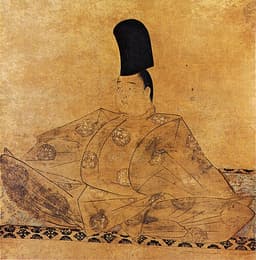
Emperor Go-Toba
Emperor · Medieval
40.9Total
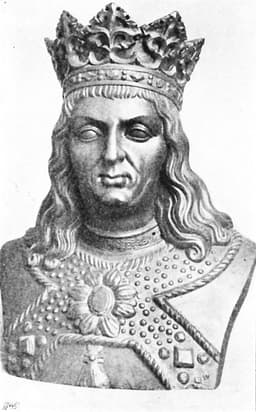
John I Albert
Emperor · Medieval
43.4Total
Basic Information
Born
1180
1459
Died
1239
1501
Era
Medieval
Medieval
Nationality
Japan
Poland
Occupation
Emperor
Emperor
Civilization
Eastern
Western
Score Comparison
Military (10%)
21.2
50.0
Political (20%)
27.9
35.1
Influence (20%)
53.3
47.9
Legacy (20%)
46.7
38.3
Leadership (15%)
34.6
48.4
Strategy (15%)
43.7
43.7
TOTAL
40.9
43.4
Emperor Go-Toba — Complete Timeline
1200 AD
Patronage of poetry and the artsCultural◆ Major
Go-Toba was a noted poet and patron of waka poetry, sponsoring the compilation of the Shin Kokin Wakashu, an imperial anthology. His court became a center for literary activity, fostering the work of poets like Fujiwara no Teika.
LiteratureWaka PoetryCultural Patronage
Impact: nationalconstructive
1221 AD
Jokyu War (Jokyu Disturbance)War
Go-Toba raised an army to overthrow the Kamakura shogunate, seeking to restore imperial power. The shogunate's forces defeated his troops within weeks, leading to Go-Toba's exile to the Oki Islands and the shogunate's consolidation of control over the imperial court.
Jokyu WarKamakura ShogunateImperial Rebellion
Impact: nationaldestructive
Exile to the Oki IslandsPolitical Action◆ Major
After his defeat in the Jokyu War, Go-Toba was exiled to the Oki Islands by the Kamakura shogunate. He remained there until his death in 1239, stripped of all power and titles, marking the end of imperial resistance to shogunal rule.
ExileKamakura ShogunateImperial Decline
Impact: nationaltragic
John I Albert — Complete Timeline
1496 AD
Attempt to Strengthen Royal PowerReform
John I Albert issued the Piotrk
NobilitySocial PolicyPeasants
Impact: nationaldestructive
1497 AD
Moldavian CampaignWar◆ Major
John I Albert led a military expedition into Moldavia to place his brother Sigismund on the Moldavian throne. The campaign ended in disaster at the Battle of the Cosmin Forest, where the Polish army was ambushed and defeated by Moldavian and Ottoman forces.
MoldaviaMilitary DefeatOttoman Empire
Impact: regionaldestructive
1501 AD
Conflict with the Teutonic OrderWar
John I Albert prepared for war against the Teutonic Order but died suddenly before any major engagement. His death left the conflict unresolved and weakened the Polish position in Prussia.
Teutonic OrderUnfinished CampaignDeath
Impact: regional
This comparison has not been analyzed yet.
One-time AI generation (~1 minute). Scores and timeline are already available below.
Rankings
🥇
John I AlbertLeader
Mil: 50.0Pol: 35.1Inf: 47.9
43.4
🥈
Emperor Go-Toba
Mil: 21.2Pol: 27.9Inf: 53.3
40.9
+2.5 behind
How This Comparison Works
Algorithm
Each figure is scored on 6 dimensions (0—100 scale) based on structured historical data: Military (10%), Political (20%), Influence (20%), Legacy (20%), Leadership (15%), Strategy (15%). The weighted total produces the final ranking.
Data Sources
Scores are computed from structured sub-indicators in the database. Scale factors adjust for era (Ancient ×0.85, Modern ×1.0) and civilization size (Eastern ×1.05, Other ×0.80) to account for differences in population and military scale.
Maximum 3 Figures
Comparisons are limited to 2—3 figures to ensure readability and statistical meaningfulness.
Error Margins
±5 points per dimension — Sub-scores are derived from historical records with inherent uncertainty. Two figures within 5 points on a dimension should be considered roughly equivalent in that area.
Total Score Accuracy
±3 points overall — The weighted combination of 6 dimensions produces a total score with approximately ±3 points of uncertainty. Differences of less than 3 points are not statistically significant— the figures are effectively tied.
Known Limitations
- Historical records are incomplete and uneven across civilizations
- Figures from oral-tradition societies may be underrepresented
- Occupation labels can misclassify multi-role figures
- Scores measure capability and impact, not moral character
- Quantitative scoring is a comparison tool, not absolute truth
Capability Radar
Military (10%) — Battles & Warfare
Battles
15
20
Win Rate
10
25
Expansion
5
20
Political (20%) — Governance & Reform
Reform
15
35
Diplomacy
20
30
Economy
10
25
Influence (20%) — Cultural & Global Reach
Cultural
40
15
Global
20
10
Legacy (20%) — Historical Impact
Historical
45
20
Longevity
35
10
Leadership (15%) — Power & Stability
Tenure
30
40
Stability
10
20
Strategy (15%) — Tactics & Innovation
Strategy
25
20
Tactics
20
20
Reform
10
15
Similar Comparisons
Comments & Discussion
No comments yet. Be the first to share your thoughts!