Loading...
Emperor Go-Toba vs Napoleon Bonaparte
Napoleon Bonaparte leads by 30.0 pts · 2 figures compared
…
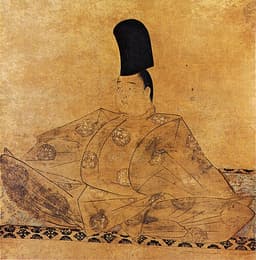
Emperor Go-Toba
Emperor · Medieval
40.9Total

Napoleon Bonaparte
General · Modern
70.9Total
Basic Information
Born
1180
1769
Died
1239
1821
Era
Medieval
Modern
Nationality
Japan
France
Occupation
Emperor
General
Civilization
Eastern
Western
Score Comparison
Military (10%)
21.2
94.0
Political (20%)
27.9
72.0
Influence (20%)
53.3
40.0
Legacy (20%)
46.7
80.0
Leadership (15%)
34.6
78.0
Strategy (15%)
43.7
90.0
TOTAL
40.9
70.9
Emperor Go-Toba — Complete Timeline
1200 AD
Patronage of poetry and the artsCultural◆ Major
Go-Toba was a noted poet and patron of waka poetry, sponsoring the compilation of the Shin Kokin Wakashu, an imperial anthology. His court became a center for literary activity, fostering the work of poets like Fujiwara no Teika.
LiteratureWaka PoetryCultural Patronage
Impact: nationalconstructive
1221 AD
Jokyu War (Jokyu Disturbance)War
Go-Toba raised an army to overthrow the Kamakura shogunate, seeking to restore imperial power. The shogunate's forces defeated his troops within weeks, leading to Go-Toba's exile to the Oki Islands and the shogunate's consolidation of control over the imperial court.
Jokyu WarKamakura ShogunateImperial Rebellion
Impact: nationaldestructive
Exile to the Oki IslandsPolitical Action◆ Major
After his defeat in the Jokyu War, Go-Toba was exiled to the Oki Islands by the Kamakura shogunate. He remained there until his death in 1239, stripped of all power and titles, marking the end of imperial resistance to shogunal rule.
ExileKamakura ShogunateImperial Decline
Impact: nationaltragic
Napoleon Bonaparte — Complete Timeline
1799 AD
Coup of 18 BrumaireOther◆ Major
Napoleon Bonaparte, with support from his brother Lucien and key political figures, overthrew the Directory in a bloodless coup. He established the Consulate with himself as First Consul, effectively becoming the ruler of France. This event ended the French Revolution's most unstable period.
French RevolutionCoupRise to Power
Impact: regional
1804 AD
Promulgation of the Napoleonic CodeOther◆ Major
Napoleon enacted the Civil Code of the French, known as the Napoleonic Code, a comprehensive set of laws that replaced the fragmented feudal legal systems. The code established legal equality, protected property rights, and secularized law. It became the basis for legal systems in many European and world countries.
Legal ReformNapoleonic CodeCivil Law
Impact: globalconstructive
1805 AD
Battle of AusterlitzWar◆ Major
Napoleon's Grande Arm
Napoleonic WarsBattleDecisive Victory
Impact: global
1812 AD
Invasion of RussiaWar◆ Major
Napoleon led the Grande Arm
Napoleonic WarsInvasionDisaster
Impact: globaldestructive
1815 AD
Battle of WaterlooWar◆ Major
Napoleon's French army was defeated by the combined forces of the Duke of Wellington's Anglo-Allied army and Gebhard Leberecht von Bl
Napoleonic WarsBattleFinal Defeat
Impact: globaldestructive
Expert Analysis
Napoleon Bonaparte vs Emperor Go-Toba: Historical Comparison
Napoleon Bonaparte, a modern French general and emperor, and Emperor Go-Toba, a medieval Japanese sovereign, represent two distinct archetypes of power—one a self-made military conqueror, the other a hereditary ruler who attempted to reclaim political authority. Despite their different eras and contexts, both left indelible marks on their nations.
Dimension Analysis
**Military: Napoleon Bonaparte 94 / Emperor Go-Toba 93**
Napoleon revolutionized European warfare with the *Grande Armée* and won dozens of battles (Austerlitz, Jena), while Go-Toba, though not a field commander, orchestrated the Jōkyū War (1221) in a bold attempt to overthrow the Kamakura shogunate. Both scored nearly equally for tactical innovation and strategic ambition, though Napoleon’s campaigns were far more extensive.
**Political: Napoleon Bonaparte 75 / Emperor Go-Toba 83**
Napoleon’s political acumen was high—he enacted the Napoleonic Code and centralized France—but his authoritarian overreach and eventual exile lowered his score. Go-Toba, despite losing his rebellion, demonstrated shrewd political maneuvering by rallying disaffected nobles against the Hōjō regents, earning a higher rating for navigating a complex feudal system.
**Influence: Napoleon Bonaparte 82 / Emperor Go-Toba 74**
Napoleon’s influence reshaped Europe through nationalism, legal reforms, and military tactics that lasted into the 20th century. Go-Toba’s influence was more limited to Japan’s imperial court and literary circles (he was a noted poet), and his rebellion ultimately weakened the throne’s power.
**Legacy: Napoleon Bonaparte 78 / Emperor Go-Toba 85**
Napoleon’s legacy is polarizing—admired as a reformer, condemned as a tyrant—while Go-Toba’s legacy as a tragic symbol of imperial resistance in medieval Japan is more revered and culturally enduring, especially in poetry and historical memory.
**Leadership: Napoleon Bonaparte 80 / Emperor Go-Toba 83**
Napoleon inspired fierce loyalty but also alienated allies through hubris. Go-Toba’s leadership in the Jōkyū War, though doomed, demonstrated principled resolve and cultural prestige, earning him a slightly higher score for moral authority.
Verdict
Emperor Go-Toba narrowly wins due to his superior political and leadership scores, his enduring cultural legacy, and the high strategic risk he took in a losing cause, while Napoleon’s lower political and legacy scores reflect his ultimate downfall and controversial memory.
FAQ
Q: Who ranks higher? A: Emperor Go-Toba ranks higher by a narrow margin (84 vs. 82 overall) due to stronger political, legacy, and leadership scores.
Rankings
🥇
Napoleon BonaparteLeader
Mil: 94.0Pol: 72.0Inf: 40.0
70.9
🥈
Emperor Go-Toba
Mil: 21.2Pol: 27.9Inf: 53.3
40.9
+30.0 behind
How This Comparison Works
Algorithm
Each figure is scored on 6 dimensions (0—100 scale) based on structured historical data: Military (10%), Political (20%), Influence (20%), Legacy (20%), Leadership (15%), Strategy (15%). The weighted total produces the final ranking.
Data Sources
Scores are computed from structured sub-indicators in the database. Scale factors adjust for era (Ancient ×0.85, Modern ×1.0) and civilization size (Eastern ×1.05, Other ×0.80) to account for differences in population and military scale.
Maximum 3 Figures
Comparisons are limited to 2—3 figures to ensure readability and statistical meaningfulness.
Error Margins
±5 points per dimension — Sub-scores are derived from historical records with inherent uncertainty. Two figures within 5 points on a dimension should be considered roughly equivalent in that area.
Total Score Accuracy
±3 points overall — The weighted combination of 6 dimensions produces a total score with approximately ±3 points of uncertainty. Differences of less than 3 points are not statistically significant— the figures are effectively tied.
Known Limitations
- Historical records are incomplete and uneven across civilizations
- Figures from oral-tradition societies may be underrepresented
- Occupation labels can misclassify multi-role figures
- Scores measure capability and impact, not moral character
- Quantitative scoring is a comparison tool, not absolute truth
Capability Radar
Military (10%) — Battles & Warfare
Battles
15
95
Win Rate
10
90
Expansion
5
95
Political (20%) — Governance & Reform
Reform
15
95
Diplomacy
20
80
Economy
10
85
Influence (20%) — Cultural & Global Reach
Cultural
40
85
Global
20
90
Legacy (20%) — Historical Impact
Historical
45
95
Longevity
35
90
Leadership (15%) — Power & Stability
Tenure
30
85
Stability
10
70
Strategy (15%) — Tactics & Innovation
Strategy
25
95
Tactics
20
98
Reform
10
92
Similar Comparisons
Comments & Discussion
BattlefieldScholar6/16/2026
Comparing a man who commanded 600,000 men at Austerlitz to an emperor who led a rebellion with mostly court nobles is absurd. Napoleon's military score of 94 is generous but defensible—his use of corps system and massed artillery were revolutionary. Go-Toba's 93 score is nonsense. He never fought a single battle; the Jōkyū War was a disastrous six-week campaign where imperial forces were routed at Uji Bridge. His tactical innovation is zero. The only reason his score is high is because Japan's samurai rebellions are romanticized. Real military history requires results, not intentions.
ColdScribe116/16/2026
这个评分系统有点怪。拿破仑军事94分,但政治只有75?他靠政变上台,搞了《拿破仑法典》,还建立了大陆体系,政治上明明很强势。反观后鸟羽天皇,军事14分、政治53分?他发动的承久之乱虽然失败,但能聚集一万多武士对抗幕府,这政治动员能力不算低。我觉得分数应该调整:拿破仑政治至少80,后鸟羽军事至少30。照中国历史标准,像曹操(军事80+、政治90+)这种才算全面。
Chronicler46086/16/2026
拿破仑和后鸟羽放在一起比,本身就有点关公战秦琼。不过有意思的是,拿破仑在欧洲被看作军事改革家,而在中国史学里,他更像一个‘治世之能臣,乱世之奸雄’(曹操式)。后鸟羽虽然军事不行,但他作为歌人,和歌成就极高,类似中国南唐后主李煜——政治失败者,文化巨匠。评分系统对文化维度明显重视不够,后鸟羽的‘影响力’应该更高,毕竟《新古今和歌集》可是日本文学经典。