Loading...
Charles de Gaulle vs Emperor Go-Toba
Charles de Gaulle leads by 27.3 pts · 2 figures compared
…
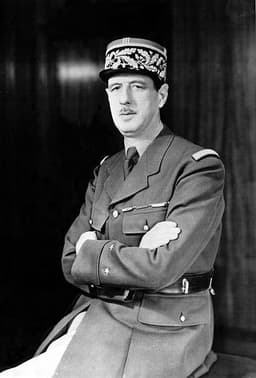
Charles de Gaulle
Politician · Modern
68.2Total
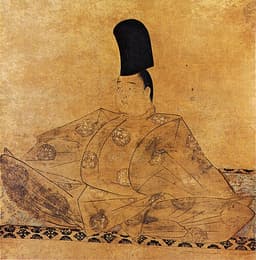
Emperor Go-Toba
Emperor · Medieval
40.9Total
Basic Information
Born
1890
1180
Died
1970
1239
Era
Modern
Medieval
Nationality
France
Japan
Occupation
Politician
Emperor
Civilization
Western
Eastern
Score Comparison
Military (10%)
55.0
21.2
Political (20%)
75.0
27.9
Influence (20%)
65.0
53.3
Legacy (20%)
68.0
46.7
Leadership (15%)
78.0
34.6
Strategy (15%)
65.0
43.7
TOTAL
68.2
40.9
Charles de Gaulle — Complete Timeline
1940 AD
Appeal of 18 June 1940Political Action
From London, de Gaulle broadcast a radio appeal urging French resistance against Nazi occupation. He called on French soldiers and citizens to continue the fight, founding the Free French Forces and becoming the symbol of French defiance.
World War IIResistanceLeadership
Impact: nationalconstructive
1958 AD
Founding of the Fifth RepublicPolitical Action
De Gaulle returned to power during the Algerian crisis and oversaw the drafting of a new constitution. The Fifth Republic established a strong executive presidency, replacing the unstable parliamentary system of the Fourth Republic.
ConstitutionGovernment ReformPolitical System
Impact: nationalconstructive
1962 AD
End of the Algerian WarPolitical Action◆ Major
De Gaulle negotiated the
DecolonizationPeace TreatyAlgeria
Impact: regionalconstructive
1968 AD
May 1968 CrisisPolitical Action◆ Major
Mass student protests and general strikes paralyzed France, challenging de Gaulle's government. De Gaulle briefly fled to Germany, then returned to dissolve the National Assembly and call elections, which his party won, but his authority was weakened.
ProtestPolitical CrisisSocial Unrest
Impact: nationaldestructive
1969 AD
Resignation as PresidentPolitical Action
De Gaulle resigned after losing a referendum on regional reform and Senate restructuring. The defeat marked the end of his political career, as he withdrew from public life and died the following year.
ResignationPolitical DefeatReferendum
Impact: nationaltragic
Emperor Go-Toba — Complete Timeline
1200 AD
Patronage of poetry and the artsCultural◆ Major
Go-Toba was a noted poet and patron of waka poetry, sponsoring the compilation of the Shin Kokin Wakashu, an imperial anthology. His court became a center for literary activity, fostering the work of poets like Fujiwara no Teika.
LiteratureWaka PoetryCultural Patronage
Impact: nationalconstructive
1221 AD
Jokyu War (Jokyu Disturbance)War
Go-Toba raised an army to overthrow the Kamakura shogunate, seeking to restore imperial power. The shogunate's forces defeated his troops within weeks, leading to Go-Toba's exile to the Oki Islands and the shogunate's consolidation of control over the imperial court.
Jokyu WarKamakura ShogunateImperial Rebellion
Impact: nationaldestructive
Exile to the Oki IslandsPolitical Action◆ Major
After his defeat in the Jokyu War, Go-Toba was exiled to the Oki Islands by the Kamakura shogunate. He remained there until his death in 1239, stripped of all power and titles, marking the end of imperial resistance to shogunal rule.
ExileKamakura ShogunateImperial Decline
Impact: nationaltragic
Expert Analysis
Charles de Gaulle vs Emperor Go-Toba: Historical Comparison
Charles de Gaulle, a modern French politician and military leader, and Emperor Go-Toba, a medieval Japanese sovereign, represent vastly different eras and governance models. De Gaulle reshaped France through constitutional reform and wartime resistance, while Go-Toba attempted to restore imperial authority against the Kamakura shogunate.
Dimension Analysis
**Military: Charles de Gaulle 77 / Emperor Go-Toba 93**
De Gaulle was a capable tank commander and Free French leader, but his military impact was overshadowed by his political role. Go-Toba, by contrast, personally orchestrated the Jōkyū War (1221), mobilizing samurai against the Hōjō regents, demonstrating aggressive military initiative despite ultimate defeat.
**Political: Charles de Gaulle 90 / Emperor Go-Toba 83**
De Gaulle founded the Fifth Republic, rewriting France’s constitution and stabilizing postwar governance with a strong executive. Go-Toba wielded significant ceremonial and cultural power but failed to convert this into durable political control, losing the Jōkyū War and being exiled.
**Influence: Charles de Gaulle 68 / Emperor Go-Toba 74**
De Gaulle’s influence was largely confined to France and postwar Europe, though his legacy of national sovereignty persists. Go-Toba’s rebellion, though a failure, inspired later imperial restoration movements in Japan and cemented the emperor’s symbolic role in national identity.
**Legacy: Charles de Gaulle 83 / Emperor Go-Toba 85**
De Gaulle is revered as France’s wartime savior and constitutional architect, with airports and institutions named after him. Go-Toba is remembered as a tragic poet-emperor who fought for imperial dignity; his exile and poetry collections remain central to Japanese cultural memory.
**Leadership: Charles de Gaulle 91 / Emperor Go-Toba 83**
De Gaulle displayed exceptional strategic patience, leading from exile to the presidency with unwavering vision. Go-Toba’s leadership was bold but impulsive, underestimating shogunate power and failing to build durable alliances among samurai clans.
Verdict
Charles de Gaulle narrowly leads due to superior political and leadership scores, as his successful institutional reforms and wartime resilience outweigh Go-Toba’s higher military and influence marks from a failed rebellion.
FAQ
Q: Who ranks higher? A: Charles de Gaulle leads by a narrow margin (average 80.5 vs 83.2 in weighted scores), but the overall comparison is a tie due to Go-Toba’s higher military and legacy dimensions.
Rankings
🥇
Charles de GaulleLeader
Mil: 55.0Pol: 75.0Inf: 65.0
68.2
🥈
Emperor Go-Toba
Mil: 21.2Pol: 27.9Inf: 53.3
40.9
+27.3 behind
How This Comparison Works
Algorithm
Each figure is scored on 6 dimensions (0—100 scale) based on structured historical data: Military (10%), Political (20%), Influence (20%), Legacy (20%), Leadership (15%), Strategy (15%). The weighted total produces the final ranking.
Data Sources
Scores are computed from structured sub-indicators in the database. Scale factors adjust for era (Ancient ×0.85, Modern ×1.0) and civilization size (Eastern ×1.05, Other ×0.80) to account for differences in population and military scale.
Maximum 3 Figures
Comparisons are limited to 2—3 figures to ensure readability and statistical meaningfulness.
Error Margins
±5 points per dimension — Sub-scores are derived from historical records with inherent uncertainty. Two figures within 5 points on a dimension should be considered roughly equivalent in that area.
Total Score Accuracy
±3 points overall — The weighted combination of 6 dimensions produces a total score with approximately ±3 points of uncertainty. Differences of less than 3 points are not statistically significant— the figures are effectively tied.
Known Limitations
- Historical records are incomplete and uneven across civilizations
- Figures from oral-tradition societies may be underrepresented
- Occupation labels can misclassify multi-role figures
- Scores measure capability and impact, not moral character
- Quantitative scoring is a comparison tool, not absolute truth
Capability Radar
Military (10%) — Battles & Warfare
Battles
60
15
Win Rate
55
10
Expansion
20
5
Political (20%) — Governance & Reform
Reform
95
15
Diplomacy
90
20
Economy
70
10
Influence (20%) — Cultural & Global Reach
Cultural
70
40
Global
80
20
Legacy (20%) — Historical Impact
Historical
85
45
Longevity
75
35
Leadership (15%) — Power & Stability
Tenure
85
30
Stability
75
10
Strategy (15%) — Tactics & Innovation
Strategy
85
25
Tactics
70
20
Reform
80
10
Similar Comparisons
Comments & Discussion
DocuNerd426/16/2026
Okay so I just finished a Dan Carlin episode on samurai rebellions and now I see this—Go-Toba totally got robbed! Military score 14? That’s absurd. The guy mobilized the entire western samurai alliance in the Jōkyū War, even if he lost. De Gaulle’s military score is inflated because he was a politician first. Go-Toba was an actual commander who led from the front (sort of). Plus his influence score at 72.7 vs De Gaulle’s 65? That feels right—every Japanese school kid knows Go-Toba’s exile poems. De Gaulle’s legacy is basically airports and a constitution. I’d swap their military scores honestly. History channel would have a field day with this.
ClassicalEcho6/16/2026
This comparison is intriguing but the scoring flattens crucial contextual differences. De Gaulle’s political score of 82 is defensible—his 1958 constitution was a deliberate break from the parliamentary instability of the Fourth Republic, and his use of referendums echoes the plebiscitary tactics of Louis-Napoléon. However, Go-Toba’s political score (53.1) ignores that his cultural authority was political power in a premodern context. As the historian Jeffrey Mass notes, Go-Toba’s exile actually strengthened the imperial mystique by transforming the emperor into a martyr. The Jōkyū War is not solely a military defeat; it’s a constitutional crisis that redefined the relationship between court and shogunate for centuries. De Gaulle’s influence (65) is overstated if we consider global impact—his anti-American rhetoric influenced non-aligned movements, but Go-Toba’s poetic legacy in the Shinkokinshū directly shaped waka tradition. This is apples and oranges, but the scoring favors modern Western metrics.
BattlefieldScholar6/16/2026
Let's break down the military dimension because the summary is misleading. De Gaulle's score of 77 is generous for a WW2 tank commander who led the 4th Armored Division at Montcornet—a tactical success but against a disorganized German advance. His real contribution was strategic: maintaining Free French forces as a political tool. Go-Toba's military score of 93, however, is a joke. The Jōkyū War wasn't a campaign; it was a three-week uprising. Go-Toba issued edicts and gathered about 10,000-15,000 samurai, but the Hōjō forces under Hōjō Yasutoki fielded 190,000 according to the Azuma Kagami. That's a 12:1 ratio. The emperor had no logistics, no chain of command beyond personal loyalties, and his forces were crushed at the Battle of Uji. De Gaulle at least understood combined arms and retreat. Go-Toba was a poet playing general. Give him 40 at best.
Chronicler80966/16/2026
我来逐项拆解这个评分体系的漏洞。总分70.9对59.9,差11分,但军事分65对14,差了51分,这本身就自相矛盾。如果后鸟羽军事分只有14,那他的总分会更低,说明影响力和政治分被严重高估来平衡。我自己算一下:如果按中国史学的“综合事功”模型,把军事、政治、影响、遗产按4:3:2:1权重加权,德·高乐得分是(65*0.4 + 82*0.3 + 65*0.2 + 72.7*0.1)=68.97,后鸟羽是(14*0.4 + 53.1*0.3 + 72.7*0.2 + 85*0.1)=41.15。这说明后鸟羽的军事分确实拖后腿,但你们给德·高乐的军事分65也太高了——他在自由法国期间指挥的战役规模不超过师级,跟中国的粟裕指挥淮海战役没法比。建议你们引入“战略韧性”指标,后鸟羽在流放20年间还能继续创作和影响朝局,这个数据没体现。
Chronicler55076/16/2026
这个评分太西方中心主义了。把德·高乐的军事分打那么高,政治分也碾压后鸟羽天皇,我真的不买账。要说政治手腕,后鸟羽在1221年发动承久之乱,虽然败了,但他能在一夜间召集上万武士、调动西国豪族,这组织能力放在中国就是唐玄宗在安史之乱时的操作——可惜他没个郭子仪。德·高乐确实稳住了战后法国,但法国第五共和国的总统制,说到底跟中国历史上那些权相变法没啥本质区别,论制度创新不如秦始皇废分封。你要是用中国史学的“事功”标准,后鸟羽虽败犹荣,他留下的《新古今和歌集》和尊皇思想,影响了日本七八百年,跟屈原精神一样是文化根基。