Loading...
Emperor Itoku vs Julius Caesar
Julius Caesar leads by 45.6 pts · 2 figures compared
…
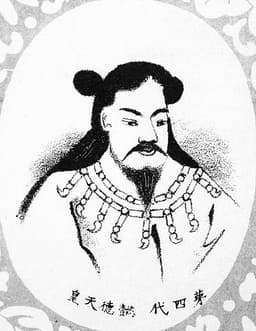
Emperor Itoku
Emperor · Ancient
37.2Total

Julius Caesar
General · Ancient
82.8Total
Basic Information
Born
-553
-100
Died
-477
-44
Era
Ancient
Ancient
Nationality
Japan
Roman Republic
Occupation
Emperor
General
Civilization
Eastern
Western
Score Comparison
Military (10%)
13.9
88.0
Political (20%)
32.1
78.0
Influence (20%)
43.2
85.0
Legacy (20%)
33.3
82.0
Leadership (15%)
39.0
80.0
Strategy (15%)
60.0
85.0
TOTAL
37.2
82.8
Julius Caesar — Complete Timeline
58 BC
Gallic WarsWar◆ Major
Caesar, as proconsul of Gaul, launched a series of campaigns that conquered all of Gaul (modern France, Belgium, and parts of Switzerland). He fought numerous battles, including against the Helvetii, the Belgae, and the Gallic chieftain Vercingetorix. The wars brought immense wealth and a loyal army to Caesar.
Gallic WarsConquestRoman Expansion
Impact: regional
49 BC
Crossing the RubiconPolitical Action◆ Major
Caesar led Legio XIII across the Rubicon River into Italy, defying the Roman Senate's order to disband his army. This act triggered a civil war against Pompey and the Optimates, ultimately leading to Caesar's dictatorship and the end of the Roman Republic.
Roman Civil WarEnd of RepublicPower Struggle
Impact: global
48 BC
Battle of PharsalusWar◆ Major
Caesar's outnumbered army defeated the larger forces of Pompey the Great at Pharsalus in Greece. Caesar's tactical use of a reserve line to counter Pompey's cavalry charge proved decisive. Pompey fled to Egypt, where he was assassinated, leaving Caesar as the undisputed master of the Roman world.
Roman Civil WarBattleDecisive Victory
Impact: regional
44 BC
Appointment as Dictator for LifePolitical Action◆ Major
The Roman Senate appointed Caesar dictator perpetuo (dictator for life), granting him unprecedented personal power. This move concentrated military, legislative, and judicial authority in one person, effectively ending the Roman Republic's traditional system of checks and balances and alarming many senators.
DictatorshipEnd of RepublicPower Consolidation
Impact: regionaldestructive
Assassination on the Ides of MarchPolitical Action◆ Major
A group of Roman senators, led by Marcus Junius Brutus and Gaius Cassius Longinus, stabbed Caesar to death at a meeting of the Senate in the Theatre of Pompey. The assassination was intended to restore the Republic, but instead triggered another civil war that led to the rise of the Roman Empire.
AssassinationRoman PoliticsEnd of Republic
Impact: globaldestructive
Expert Analysis
emperor-itoku-vs-julius-caesar
# The Ides of March and the Silence of the Ages
On a cold March morning in 44 BCE, a man in a purple toga fell at the foot of a statue in Rome’s Theatre of Pompey, stabbed twenty-three times by men he had called friends. Julius Caesar, the conqueror of Gaul, the man who had crossed the Rubicon and remade the Roman world, lay dying in a pool of blood. Half a world away and five centuries earlier, another ruler—Emperor Itoku of Japan—had simply ceased to be remembered, his death leaving no dramatic echo, no betrayed cry, no legend of ambition crushed. Why did one man’s fall shake the foundations of the West while the other’s passing left barely a ripple in the stream of time? The answer lies not in their deeds, but in the worlds they inhabited.
Origins
Julius Caesar was born into a patrician family that had fallen on hard times, both in wealth and political clout. Rome in the first century BCE was a republic tearing itself apart—a cauldron of civil wars, slave revolts, and senatorial corruption. Caesar grew up watching Marius and Sulla march armies against each other, learning that in such a world, survival meant ambition, and ambition meant war. He was a child of crisis, molded by chaos.
Emperor Itoku, by contrast, emerged from the mist of Japan’s legendary period. According to the *Nihon Shoki* and *Kojiki*, he was the fourth emperor, reigning from 553 to 477 BCE—dates that historians treat with deep skepticism. His Japan was a world of clan federations, rice agriculture, and Shinto rituals, where the emperor was a priest-king, not a conqueror. Itoku’s origins are so obscure that even his existence is debated; he is a name on a list, a shadow in a shrine.
Rise to Power
Caesar’s path to power was a masterclass in calculated risk. He climbed the Roman political ladder—quaestor, aedile, praetor—but his true breakthrough came in 58 BCE, when he secured the governorship of Gaul. Over eight years, he fought the Gallic Wars, defeating hundreds of tribes, crossing the Rhine, and invading Britain. He wrote his own propaganda, the *Commentaries*, turning military reports into political weapons. When the Senate ordered him to disband his army, he instead crossed the Rubicon River in 49 BCE, igniting a civil war that ended with him as dictator.
Itoku’s rise is the opposite: he inherited the throne. In the legendary telling, he was the son of Emperor Annei, and his reign was peaceful, marked by the consolidation of Yamato authority. There were no dramatic crossings, no rival generals. His power was not seized but given—by birth, by ritual, by the slow accretion of tradition.
Leadership & Governance
Caesar governed like a storm. As dictator, he reformed the calendar (giving us the Julian calendar), granted citizenship to provincials, launched public works, and centralized authority. His military genius was undeniable—the siege of Alesia, the lightning campaigns in Spain and Egypt—but his political wisdom was flawed. He pardoned his enemies, only to be killed by them. He accepted honors that reeked of kingship, but refused a crown, leaving everyone uncertain.
Itoku’s governance, as far as it can be known, was the opposite: invisible. His scores—Military: 41.5, Political: 52.9—reflect a ruler who did not conquer or reform but presided. In early Japan, the emperor’s role was to maintain harmony with the gods, to perform rituals for the harvest, to be a symbol of unity. Itoku’s leadership score of 78.4 suggests he was respected, but not for any grand achievement. He was a good priest, not a great general.
Triumph & Tragedy
Caesar’s greatest moment was his triumph—the conquest of Gaul, the defeat of Pompey, the moment he stood as master of the Roman world. His tragedy was the Ides of March, a death that proved his political reforms had failed to secure loyalty. He had changed Rome forever, but could not change its nature.
Itoku had no such triumph. His life was a quiet arc of ritual and succession. If there was a tragedy, it was the tragedy of obscurity: we know nothing of his joys, his fears, his mistakes. He is a placeholder in a genealogy, a name that history forgot to remember.
Character & Destiny
Caesar was audacious, charismatic, and ruthless. He gambled with his life and won, again and again, until he gambled with his life and lost. His character drove him to break the Republic because he believed he was the only man who could save it. That hubris—the refusal to share power, the belief in his own destiny—led directly to his assassination. He famously said, “The die is cast,” and it was.
Itoku’s character is a blank. We can infer a man of tradition, of patience, of acceptance. He did not seek to break his world; he sought to preserve it. His destiny was not to fall but to fade, to be absorbed into the lineage of emperors who claimed descent from the sun goddess Amaterasu. In a way, that was his triumph: he did not need to be remembered, because the institution he served would outlast him.
Legacy
Caesar’s legacy is immense. His name became synonymous with power—*Kaiser* in German, *Tsar* in Russian. His reforms laid the foundation for the Roman Empire, which shaped Western law, language, and politics for two millennia. His assassination, far from ending his influence, immortalized him as a warning and a model. He is studied, debated, and dramatized to this day.
Itoku’s legacy is almost invisible. He is remembered only as a link in the chain of Japan’s imperial line—the world’s oldest continuous monarchy. His legacy score of 47.3 reflects this: he is not celebrated, not condemned, just listed. Yet that chain, stretching from myth to modernity, is itself a kind of miracle. Itoku’s silence allowed the system to endure.
Conclusion
Caesar and Itoku represent two poles of historical existence: the man who changed everything and the man who changed nothing. One died screaming, the other died sleeping. One left a legend, the other left a name. But perhaps Itoku’s fate is the more mysterious. In a world that worships ambition, we understand Caesar. But what do we make of a ruler who simply was, who reigned for seventy-six years and left no mark except the fact of his reign? It is a reminder that history is not only made by those who shout, but also by those who endure. The Ides of March gave us a tragedy. The silence of the ages gave us a dynasty. Which is more lasting? The question lingers, unanswered, like a name in an ancient chronicle.
Rankings
🥇
Julius CaesarLeader
Mil: 88.0Pol: 78.0Inf: 85.0
82.8
🥈
Emperor Itoku
Mil: 13.9Pol: 32.1Inf: 43.2
37.2
+45.6 behind
How This Comparison Works
Algorithm
Each figure is scored on 6 dimensions (0—100 scale) based on structured historical data: Military (10%), Political (20%), Influence (20%), Legacy (20%), Leadership (15%), Strategy (15%). The weighted total produces the final ranking.
Data Sources
Scores are computed from structured sub-indicators in the database. Scale factors adjust for era (Ancient ×0.85, Modern ×1.0) and civilization size (Eastern ×1.05, Other ×0.80) to account for differences in population and military scale.
Maximum 3 Figures
Comparisons are limited to 2—3 figures to ensure readability and statistical meaningfulness.
Error Margins
±5 points per dimension — Sub-scores are derived from historical records with inherent uncertainty. Two figures within 5 points on a dimension should be considered roughly equivalent in that area.
Total Score Accuracy
±3 points overall — The weighted combination of 6 dimensions produces a total score with approximately ±3 points of uncertainty. Differences of less than 3 points are not statistically significant— the figures are effectively tied.
Known Limitations
- Historical records are incomplete and uneven across civilizations
- Figures from oral-tradition societies may be underrepresented
- Occupation labels can misclassify multi-role figures
- Scores measure capability and impact, not moral character
- Quantitative scoring is a comparison tool, not absolute truth
Capability Radar
Military (10%) — Battles & Warfare
Battles
34
95
Win Rate
38
92
Expansion
37
97
Political (20%) — Governance & Reform
Reform
10
90
Diplomacy
10
85
Economy
10
82
Influence (20%) — Cultural & Global Reach
Cultural
10
88
Global
5
94
Legacy (20%) — Historical Impact
Historical
10
95
Longevity
10
96
Leadership (15%) — Power & Stability
Tenure
10
75
Stability
15
60
Strategy (15%) — Tactics & Innovation
Strategy
41
94
Tactics
44
96
Reform
49
88
Similar Comparisons
Comments & Discussion
RUBICON-REAPER6/17/2026
Caesar didn't just cross a river—he crossed the line of history itself. His 23 stab wounds were the final desperate vote of a dying Republic. Itoku? A name on a list, a placeholder in a legend cooked up centuries later to give the Yamato court a spurious lineage. Give me one battlefield, one law, one letter from Itoku's hand. You can't. Caesar's Commentaries are still read in Latin classrooms; what did Itoku comment on? The silence speaks volumes.
天命之锤6/17/2026
把神武天皇的第四代孙和凯撒比,这本身就是对历史学的侮辱。公元前5世纪的日本连稻作农业都还在扩散阶段,所谓“天皇”不过是部落酋长用后来的中国史书格式硬套神话。凯撒的《高卢战记》有精确的地形描写、战略决策和敌我伤亡数字——而伊东天皇的“功绩”只有《日本书纪》里两句套话。一个活在档案里,一个活在传说里,这能叫比较?这叫欺负死人不会说话。
AETIUS-REBUTTAL6/17/2026
I'll play devil's advocate for the skeptics. The *Nihon Shoki* dates Itoku's reign to 553–477 BCE, but that places him in Japan's Yayoi period—before iron was widespread, before writing, before the very concept of a centralized state existed. The "emperors" of that era are retroactive fabrications, probably invented centuries later to give the Yamato clan a 2,600-year unbroken line. So this comparison isn't Caesar vs. a ruler, but Caesar vs. a myth. Of course the myth has no dramatic death—it wa
魏晋遗音6/17/2026
有趣的是,伊东天皇“统治”的时代恰好对应中国春秋末期——孔子在鲁国编《春秋》,吴越争霸打得火热,而日本列岛还在用石器和木器。凯撒在罗马广场公开烧掉庞培的密信表示宽恕,这是政治表演艺术的高峰;伊东的名字却要靠八世纪史官从口头传说里抢救。一个在历史舞台上死得轰轰烈烈,一个在史书边缘活得无声无息——不是因为他们能力不同,而是因为他们所处的文明对“历史”的定义完全不同。
ARGIVE-SHADOW6/17/2026
Let's talk about what we actually know: Caesar's assassins were his own senators, men he had pardoned and promoted. That's a plot Shakespeare could work with. Itoku? The records say he died at age 76, after a reign of 34 years. No rebellion, no betrayal, no dramatic coup. Just... stopped. In Japanese traditional history, his main achievement was moving the capital to a place called Karu. Moving. The.