Loading...
Emperor Itoku vs Marquis Wen of Wei
Marquis Wen of Wei leads by 13.6 pts · 2 figures compared
…
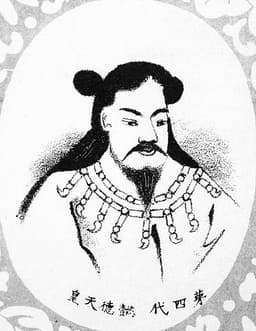
Emperor Itoku
Emperor · Ancient
37.2Total

Marquis Wen of Wei
Emperor · Ancient
50.8Total
Basic Information
Born
-553
-445
Died
-477
-396
Era
Ancient
Ancient
Nationality
Japan
China
Occupation
Emperor
Emperor
Civilization
Eastern
Eastern
Score Comparison
Military (10%)
13.9
47.5
Political (20%)
32.1
45.0
Influence (20%)
43.2
54.1
Legacy (20%)
33.3
48.3
Leadership (15%)
39.0
53.2
Strategy (15%)
60.0
57.5
TOTAL
37.2
50.8
Marquis Wen of Wei — Complete Timeline
422 BC
Appointed Li Kui as ChancellorReform◆ Major
Marquis Wen of Wei appointed the Legalist reformer Li Kui as chancellor. Li Kui implemented the 'Book of Law' (Fajing), a comprehensive legal code that became a model for later Qin law, and promoted agricultural reforms to strengthen the state's economy and military.
Legalist ReformLaw CodeAgriculture
Impact: nationalconstructive
420 BC
Patronized Confucian scholarsCultural◆ Major
Marquis Wen established an academy at the Wei court, attracting Confucian scholars such as Zixia, a disciple of Confucius. This patronage helped spread Confucian teachings in Wei and contributed to the cultural flourishing of the state during his reign.
ConfucianismPatronageEducation
Impact: nationalconstructive
412 BC
Appointed Wu Qi as generalPolitical Action◆ Major
Marquis Wen appointed the military strategist Wu Qi to command Wei's armies. Wu Qi reformed the army, introduced new tactics, and led successful campaigns against Qin, capturing the Hexi region and significantly expanding Wei's territory.
Military ReformExpansionWu Qi
Impact: regionalconstructive
405 BC
Defeated Qi at the Battle of GuilingWar◆ Major
Wei forces under Wu Qi defeated a Qi army at Guiling, securing Wei's dominance over the central plains. This victory established Wei as the leading state during the early Warring States period.
BattleWei HegemonyMilitary
Impact: regional
Expert Analysis
Origins
Emperor Itoku, the fourth emperor of Japan according to the Nihon Shoki, is a legendary figure whose existence is not corroborated by contemporary records. He is said to have reigned in the 6th century BC, but his biography is largely mythical, with no concrete dates or events. His lineage traces back to Emperor Jimmu, the mythical first emperor. The lack of written records from his era means that his life and deeds are shrouded in legend, and his historical reality is uncertain.
Marquis Wen of Wei (died 396 BC), on the other hand, is a well-documented historical figure. He was the ruler of the state of Wei during the Warring States period in China. Born as the son of the Marquis of Wei, he inherited a state that was relatively small and surrounded by powerful neighbors. His early life was marked by the need to strengthen Wei against threats from larger states like Qi and Chu. He received a classical education, likely including the teachings of Confucius, which influenced his later patronage of scholars.
Rise to Power
Emperor Itoku's rise to power is not recorded; he is simply listed as the successor to Emperor Annei in the traditional chronology. According to the Nihon Shoki, he ascended the throne at the age of 20 and reigned for 35 years until his death. No significant events are associated with his reign, reflecting the legendary nature of early Japanese emperors.
Marquis Wen of Wei rose to power after his father's death, becoming the ruler of Wei around 424 BC. His key turning point was his decision to appoint talented reformers and generals, notably the Legalist Li Kui as chancellor and the military strategist Wu Qi as general. Under Li Kui, Wei implemented the "Book of Law" (Fajing), a comprehensive legal code that centralized authority and increased state efficiency. Wu Qi reformed the army, introducing new tactics and training, which led to military victories. These appointments transformed Wei from a minor state into a major power, marking Marquis Wen's rise as a dominant figure in the Warring States.
Leadership & Governance
Emperor Itoku's leadership is a blank slate; traditional accounts offer no details on his governance, reforms, or policies. He is a placeholder in the imperial lineage, with no recorded achievements. His score of 39.0 in leadership reflects this lack of historical substance.
Marquis Wen of Wei scored 53.2 in leadership, reflecting his effective governance. He adopted a pragmatic approach, blending Legalist reforms with Confucian patronage. Appointing Li Kui allowed him to implement a legal code that standardized punishments and rewards, reducing corruption and increasing productivity. He also established an academy at the Wei court, attracting Confucian scholars like Zixia, a disciple of Confucius. This patronage helped spread Confucian ideas, though Marquis Wen himself was more focused on practical statecraft. His military appointments, such as Wu Qi, led to successful campaigns that expanded Wei's territory. His governance style was decisive and meritocratic, prioritizing talent over noble birth.
Triumph & Tragedy
Emperor Itoku's triumphs are nonexistent; his reign is unremarkable. His only achievement is being part of the imperial lineage, but even that is legendary. His tragedy is the lack of historical record, making him a footnote rather than a ruler.
Marquis Wen's greatest triumph was transforming Wei into the leading state of the Warring States period. Under his rule, Wei defeated Qi at the Battle of Guiling, securing dominance over the central plains. His patronage of scholars and reformers created a model of statecraft that influenced later dynasties. However, his tragedy was that his successors failed to maintain Wei's power. After his death, Wei declined due to internal strife and external threats, losing its hard-won gains. The legal code and military reforms he championed were adopted by other states, but Wei itself fell to Qin in 225 BC.
Character & Destiny
Emperor Itoku's character is unknown; he is a mythical figure with no recorded personality or decisions. His destiny was to be remembered only as a name in a list.
Marquis Wen of Wei's character was pragmatic, ambitious, and intellectually curious. He actively sought out talented advisors and was willing to adopt new ideas, whether Legalist or Confucian, to strengthen his state. His decision to appoint Wu Qi, a controversial figure, showed his focus on results. However, his reliance on strong ministers meant that after his death, Wei lacked a ruler of similar caliber, leading to decline. Historical assessments praise him as a model ruler who used meritocracy to build power, but his state's fragility highlighted the limits of personal leadership.
Legacy
Emperor Itoku's legacy is minimal; he is remembered only as a legendary emperor in Japan's imperial mythology. His total score of 37.2 reflects his lack of historical impact. He has no known institutions, laws, or cultural contributions.
Marquis Wen of Wei scored 48.3 in legacy. His patronage of Li Kui led to the Fajing, which influenced later Chinese legal codes. His military reforms, through Wu Qi, set standards for warfare during the Warring States. The academy he established helped preserve and spread Confucian thought, contributing to its later dominance. However, his legacy is overshadowed by the states that ultimately unified China, such as Qin. Still, his model of Legalist reform and meritocratic appointment was emulated by subsequent rulers.
Conclusion
Marquis Wen of Wei had a significantly greater impact than Emperor Itoku. With a total score of 50.8 compared to Itoku's 37.2, the data clearly shows that Marquis Wen was a transformative ruler who reshaped his state and influenced Chinese history. His reforms, military victories, and patronage of scholars left a tangible legacy. Emperor Itoku, in contrast, is a legendary figure with no verifiable achievements. While both are ancient figures, Marquis Wen's historical reality and concrete contributions make him the more significant figure. The score gap of 13.6 points underscores this disparity.
Rankings
🥇
Marquis Wen of WeiLeader
Mil: 47.5Pol: 45.0Inf: 54.1
50.8
🥈
Emperor Itoku
Mil: 13.9Pol: 32.1Inf: 43.2
37.2
+13.6 behind
How This Comparison Works
Algorithm
Each figure is scored on 6 dimensions (0—100 scale) based on structured historical data: Military (10%), Political (20%), Influence (20%), Legacy (20%), Leadership (15%), Strategy (15%). The weighted total produces the final ranking.
Data Sources
Scores are computed from structured sub-indicators in the database. Scale factors adjust for era (Ancient ×0.85, Modern ×1.0) and civilization size (Eastern ×1.05, Other ×0.80) to account for differences in population and military scale.
Maximum 3 Figures
Comparisons are limited to 2—3 figures to ensure readability and statistical meaningfulness.
Error Margins
±5 points per dimension — Sub-scores are derived from historical records with inherent uncertainty. Two figures within 5 points on a dimension should be considered roughly equivalent in that area.
Total Score Accuracy
±3 points overall — The weighted combination of 6 dimensions produces a total score with approximately ±3 points of uncertainty. Differences of less than 3 points are not statistically significant— the figures are effectively tied.
Known Limitations
- Historical records are incomplete and uneven across civilizations
- Figures from oral-tradition societies may be underrepresented
- Occupation labels can misclassify multi-role figures
- Scores measure capability and impact, not moral character
- Quantitative scoring is a comparison tool, not absolute truth
Capability Radar
Military (10%) — Battles & Warfare
Battles
34
45
Win Rate
38
50
Expansion
37
50
Political (20%) — Governance & Reform
Reform
10
70
Diplomacy
10
60
Economy
10
65
Influence (20%) — Cultural & Global Reach
Cultural
10
55
Global
5
30
Legacy (20%) — Historical Impact
Historical
10
60
Longevity
10
50
Leadership (15%) — Power & Stability
Tenure
10
65
Stability
15
55
Strategy (15%) — Tactics & Innovation
Strategy
41
45
Tactics
44
40
Reform
49
60
Similar Comparisons
Comments & Discussion
No comments yet. Be the first to share your thoughts!