Loading...
Emperor Itoku vs Napoleon Bonaparte
Napoleon Bonaparte leads by 33.7 pts · 2 figures compared
…
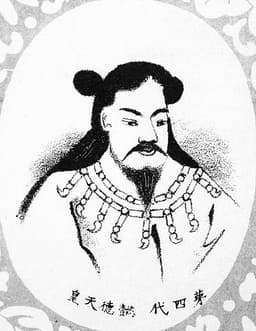
Emperor Itoku
Emperor · Ancient
37.2Total

Napoleon Bonaparte
General · Modern
70.9Total
Basic Information
Born
-553
1769
Died
-477
1821
Era
Ancient
Modern
Nationality
Japan
France
Occupation
Emperor
General
Civilization
Eastern
Western
Score Comparison
Military (10%)
13.9
94.0
Political (20%)
32.1
72.0
Influence (20%)
43.2
40.0
Legacy (20%)
33.3
80.0
Leadership (15%)
39.0
78.0
Strategy (15%)
60.0
90.0
TOTAL
37.2
70.9
Napoleon Bonaparte — Complete Timeline
1799 AD
Coup of 18 BrumaireOther◆ Major
Napoleon Bonaparte, with support from his brother Lucien and key political figures, overthrew the Directory in a bloodless coup. He established the Consulate with himself as First Consul, effectively becoming the ruler of France. This event ended the French Revolution's most unstable period.
French RevolutionCoupRise to Power
Impact: regional
1804 AD
Promulgation of the Napoleonic CodeOther◆ Major
Napoleon enacted the Civil Code of the French, known as the Napoleonic Code, a comprehensive set of laws that replaced the fragmented feudal legal systems. The code established legal equality, protected property rights, and secularized law. It became the basis for legal systems in many European and world countries.
Legal ReformNapoleonic CodeCivil Law
Impact: globalconstructive
1805 AD
Battle of AusterlitzWar◆ Major
Napoleon's Grande Arm
Napoleonic WarsBattleDecisive Victory
Impact: global
1812 AD
Invasion of RussiaWar◆ Major
Napoleon led the Grande Arm
Napoleonic WarsInvasionDisaster
Impact: globaldestructive
1815 AD
Battle of WaterlooWar◆ Major
Napoleon's French army was defeated by the combined forces of the Duke of Wellington's Anglo-Allied army and Gebhard Leberecht von Bl
Napoleonic WarsBattleFinal Defeat
Impact: globaldestructive
Expert Analysis
emperor-itoku-vs-napoleon-bonaparte
# The Conqueror and the Keeper
On a June morning in 1815, Napoleon Bonaparte watched his Imperial Guard march toward the ridge of Mont-Saint-Jean, knowing that everything—his empire, his legend, the very shape of Europe—hung on the next hour. Three thousand miles away and two millennia before, another ruler, Emperor Itoku of Japan, likely spent his days performing Shinto rituals, overseeing rice harvests, and ensuring that the sun continued to rise. One man’s name still thunders through history; the other’s is known only to specialists. Yet both were sovereigns, both shaped their worlds, and both embody a fundamental question: what does it mean to lead?
Origins
Napoleon was born in 1769 on Corsica, an island that had just become French. His family was minor nobility, but his father’s connections secured him a place at a French military school. The young Bonaparte arrived speaking Italian, mocked by classmates for his accent. He devoured history and mathematics, learned to command artillery, and watched the French Revolution tear apart the old order. The world he entered was one of crisis and opportunity—a society that had guillotined its king and needed new men to lead its armies.
Emperor Itoku lived in an entirely different universe. Born in 553 BC, he belonged to Japan’s legendary period, when history and myth were still tangled. The *Nihon Shoki* records him as the fourth emperor, a descendant of the sun goddess Amaterasu. His Japan was a collection of clan territories on the Yamato plain, with no writing system, no cavalry, no cities. Leadership meant maintaining cosmic order, performing rituals, and keeping peace among chieftains. While Napoleon studied Caesar, Itoku studied the stars.
Rise to Power
Napoleon’s ascent was a masterpiece of timing and talent. In 1793, at age 24, he commanded artillery at the Siege of Toulon, forcing the British fleet to withdraw. By 1796, he led the Army of Italy, defeating larger Austrian forces with speed and audacity. Each victory fed the next. In 1799, he staged a coup and became First Consul. By 1804, he crowned himself Emperor of the French. His path was forged in gunpowder and ambition: he won power because he could win battles.
Emperor Itoku inherited power. The Japanese throne passed through lineage, not conquest. He became emperor upon his father’s death, probably in his twenties, and his authority rested on genealogy, not achievement. There were no coups, no dramatic victories. His rise was as quiet as the turning of a season. In a society where the emperor’s role was to unify the realm through ritual, not war, Itoku’s ascension was the least remarkable—and most stable—event of his life.
Leadership & Governance
Napoleon governed with a blend of brilliance and domination. He reformed French law through the Napoleonic Code, standardizing justice, protecting property rights, and secularizing the state. He built roads, established the Bank of France, and created a system of lycées that educated a generation. His military strategy—concentration of force, rapid movement, decisive battle—rewrote the rules of war. His leadership score of 80 reflects a man who could inspire soldiers to die for him, yet his political score of 75 suggests the limits of his genius. He could conquer but not consolidate. He installed his brothers on European thrones, but he could not make them loved.
Itoku governed in a world where governance meant stability. There is no record of his laws, his reforms, or his battles. His military score of 41.5 and strategy score of 47.8 suggest he was no warrior. But his leadership score of 78.4 hints at something else: the ability to hold a fragile realm together through presence and legitimacy. In ancient Japan, the emperor’s primary duty was to ensure harmony between heaven and earth. Itoku likely performed the *Daijosai*, the great harvest festival, and mediated disputes among clans. His power was not to command but to embody.
Triumph & Tragedy
Napoleon’s greatest triumph was the Napoleonic Code, which still shapes legal systems across Europe and the world. His most devastating failure was the 1812 invasion of Russia, where he lost over 400,000 men to winter, starvation, and guerrilla attacks. He returned to Paris a diminished figure. Exiled to Elba, he escaped and ruled for 100 days, only to meet final defeat at Waterloo in 1815. He died in 1821 on Saint Helena, a British prisoner.
Itoku’s triumphs and tragedies are lost to time. He ruled for 34 years, which suggests stability. He died in 477 BC, probably in his seventies, and was buried in a tumulus. No rebellion, no exile, no defeat. His tragedy may be that he lived in an era so peaceful that history forgot him.
Character & Destiny
Napoleon was restless, brilliant, and insatiable. He once said, “Impossible is a word to be found only in the dictionary of fools.” His personality drove him to conquer, to reform, to dominate—and ultimately to overreach. He could not stop. His destiny was shaped by his will, but also by the revolutionary energy of his age, which created opportunities for a Corsican artillery officer to become emperor of Europe.
Itoku was patient, traditional, and invisible. His personality is unknowable, but his role suggests a man who accepted limits. He did not seek glory; he sought continuity. His destiny was shaped not by ambition but by blood. He was born to rule, and he ruled because he was born.
Legacy
Napoleon’s legacy is immense and contested. He is remembered as a military genius, a reformer, and a tyrant. His name appears on laws, monuments, and battlefields. His influence score of 82 and legacy score of 78 place him among the most consequential figures in Western history. Yet his legacy is also a warning: ambition unbound can destroy its creator.
Itoku’s legacy is quiet but profound. He is one of the legendary emperors who established the Japanese imperial line, which claims the oldest continuous monarchy in the world. His influence score of 62 and legacy score of 47 may seem modest, but they represent something Napoleon never achieved: a dynasty that has lasted 2,500 years. The Japanese emperors after Itoku did not need to conquer; they simply needed to endure.
Conclusion
Napoleon and Itoku stand at opposite ends of the spectrum of power. One conquered continents, the other held a kingdom together through ritual. One died in exile, the other in a burial mound that still exists. Yet both answered the same question: what does a ruler do? Napoleon’s answer was to act, to change, to dominate. Itoku’s answer was to be, to preserve, to embody.
Perhaps the most striking difference is not in their achievements but in their relationship to time. Napoleon burned brightly for twenty years and vanished. Itoku burned dimly for thirty-four years and left a line that still rules. In the end, the conqueror built a monument to himself; the keeper built a dynasty. Which is more lasting? The answer depends on whether you measure greatness in years or in centuries.
Rankings
🥇
Napoleon BonaparteLeader
Mil: 94.0Pol: 72.0Inf: 40.0
70.9
🥈
Emperor Itoku
Mil: 13.9Pol: 32.1Inf: 43.2
37.2
+33.7 behind
How This Comparison Works
Algorithm
Each figure is scored on 6 dimensions (0—100 scale) based on structured historical data: Military (10%), Political (20%), Influence (20%), Legacy (20%), Leadership (15%), Strategy (15%). The weighted total produces the final ranking.
Data Sources
Scores are computed from structured sub-indicators in the database. Scale factors adjust for era (Ancient ×0.85, Modern ×1.0) and civilization size (Eastern ×1.05, Other ×0.80) to account for differences in population and military scale.
Maximum 3 Figures
Comparisons are limited to 2—3 figures to ensure readability and statistical meaningfulness.
Error Margins
±5 points per dimension — Sub-scores are derived from historical records with inherent uncertainty. Two figures within 5 points on a dimension should be considered roughly equivalent in that area.
Total Score Accuracy
±3 points overall — The weighted combination of 6 dimensions produces a total score with approximately ±3 points of uncertainty. Differences of less than 3 points are not statistically significant— the figures are effectively tied.
Known Limitations
- Historical records are incomplete and uneven across civilizations
- Figures from oral-tradition societies may be underrepresented
- Occupation labels can misclassify multi-role figures
- Scores measure capability and impact, not moral character
- Quantitative scoring is a comparison tool, not absolute truth
Capability Radar
Military (10%) — Battles & Warfare
Battles
34
95
Win Rate
38
90
Expansion
37
95
Political (20%) — Governance & Reform
Reform
10
95
Diplomacy
10
80
Economy
10
85
Influence (20%) — Cultural & Global Reach
Cultural
10
85
Global
5
90
Legacy (20%) — Historical Impact
Historical
10
95
Longevity
10
90
Leadership (15%) — Power & Stability
Tenure
10
85
Stability
15
70
Strategy (15%) — Tactics & Innovation
Strategy
41
95
Tactics
44
98
Reform
49
92
Similar Comparisons
Comments & Discussion
Grenadier's Ghost6/17/2026
Comparing battle-hardened Napoleon to a mythical emperor is like comparing a wolf to a shrine fox. Itoku's "reign" is recorded in myth, with zero surviving military campaigns or even a confirmed burial site. Napoleon lost Waterloo, but he fought 60 battles and revolutionized warfare with corps tactics and mass conscription. One man bled for history; the other was history's placeholder.
史书刀客6/17/2026
把神武纪里的第四代天皇和欧洲战神放一起,本身就是对比较的嘲讽。推古天皇之前,日本连像样的年号都没有,而拿破仑在1796年意大利战役中用五天六胜的战绩改写欧洲版图。一个活在传说里,另一个用大炮和法典重塑了现代国家的基础。
Revisionist Scrapper6/17/2026
This comparison is rigged from the start. Itoku's "leadership" is basically divine genealogy—he's recorded as ruling from a palace that archaeologists can't even find. Napoleon, whatever his flaws, actually raised armies, rewrote laws, and reshaped Europe. One is a blank page myth; the other is a flawed, documented man. History should reward action, not ancestry.
墨守成规派6/17/2026
别拿神话当史实。应神天皇的陵墓都挖不出明确遗物,更别提懿德天皇了。拿破仑再差劲,他的民法典至今是欧洲法律的基石,而日本直到大化改新才有真正的中央集权。所谓"第四代天皇",不过是后人为巩固皇室血统编的谱系,实际影响力还不如一个江户时代的大名。