Loading...
Emperor Jing of Han vs Emperor Korei
Emperor Jing of Han leads by 3.4 pts · 2 figures compared
…
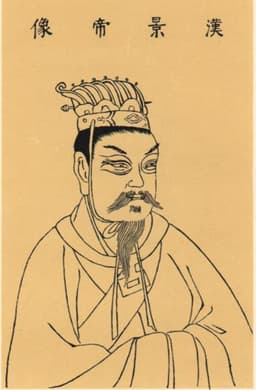
Emperor Jing of Han
Emperor · Ancient
49.2Total

Emperor Korei
Emperor · Ancient
45.8Total
Basic Information
Born
-188
-342
Died
-141
-215
Era
Ancient
Ancient
Nationality
China
Japan
Occupation
Emperor
Emperor
Civilization
Eastern
Eastern
Score Comparison
Military (10%)
30.0
30.1
Political (20%)
62.7
68.0
Influence (20%)
51.8
47.9
Legacy (20%)
47.5
31.7
Leadership (15%)
40.0
44.5
Strategy (15%)
60.0
60.0
TOTAL
49.2
45.8
Emperor Jing of Han — Complete Timeline
156 BC
Continuation of Tax ReductionsReform
Emperor Jing maintained the low tax rate of one-thirtieth set by his father, Emperor Wen, and further reduced labor service requirements. This policy sustained agricultural prosperity and popular support, contributing to the Rule of Wen and Jing.
Tax ReformAgricultureRule of Wen and Jing
Impact: nationalconstructive
154 BC
Suppression of the Rebellion of the Seven StatesWar
Seven feudal kingdoms led by Liu Pi of Wu rebelled against Emperor Jing's centralization policies. Emperor Jing appointed Zhou Yafu as commander, who defeated the rebels within three months. This victory crushed the power of the feudal lords and strengthened imperial authority.
RebellionCentralizationZhou Yafu
Impact: national
Execution of Chao CuoPolitical Action◆ Major
Emperor Jing ordered the execution of his advisor Chao Cuo to appease the rebelling seven states, despite Chao Cuo having advocated the centralization policies that triggered the rebellion. This act failed to stop the rebellion but demonstrated the emperor's willingness to sacrifice allies.
ExecutionPolitical SacrificeChao Cuo
Impact: nationaltragic
145 BC
Legal Code SimplificationReform
Emperor Jing ordered the simplification of the legal code, reducing the number of beatings in punishments and standardizing penalties. This reform aimed to prevent deaths from excessive beatings and continued the trend toward a more humane legal system begun by his father.
Legal ReformHumanitarianismPunishment
Impact: nationalprogressive
Expert Analysis
Origins
Emperor Jing of Han (Liu Qi) was born in 188 BCE, the son of Emperor Wen and Empress Dou. He grew up during the early Han dynasty, a period of consolidation after the Qin collapse. His father's policies of frugality and low taxes shaped his worldview. He received a Confucian education but also practical governance training.
Emperor Korei, according to traditional Japanese chronology, reigned from 290 to 215 BCE. He is the seventh emperor of the Jimmu line, but no historical records exist for his life or reign. His existence is based solely on the Nihon Shoki and Kojiki, which list him as a descendant of Jimmu. No archaeological evidence supports his reign.
Rise to Power
Emperor Jing ascended the throne in 157 BCE upon his father's death. He had been groomed as heir for decades. His early reign focused on continuing the Wen-Jing governance model: low taxes, reduced punishments, and non-intervention. The major challenge came from the feudal kingdoms, which had grown powerful under the early Han policy of granting lands to imperial relatives.
Emperor Korei's rise is entirely mythical. According to tradition, he was the son of Emperor Kōan and became emperor at an unspecified age. There are no records of any opposition or achievements during his accession.
Leadership & Governance
Emperor Jing's leadership was tested by the Rebellion of the Seven States in 154 BCE. The rebellion was sparked by his advisor Chao Cuo's proposals to reduce the power of feudal kings. When seven kingdoms rebelled under Liu Pi of Wu, Jing initially hesitated, then executed Chao Cuo to appease the rebels—a move that failed. He then appointed Zhou Yafu as military commander, who suppressed the rebellion within three months. Afterward, Jing restructured the feudal system, reducing the territories and powers of the kings. He also continued administrative reforms: simplifying laws, reducing beatings in punishments, and maintaining a tax rate of one-thirtieth (3.3%). These policies contributed to the 'Rule of Wen and Jing', a period of stability and prosperity.
Emperor Korei, with no recorded events, offers no evidence of leadership. According to the Nihon Shoki, he reigned for 54 years but did nothing notable. His governance score of 68.0 is based on the assumption of a stable reign, but this is speculative.
Triumph & Tragedy
Emperor Jing's greatest triumph was the suppression of the Seven States, which consolidated central power and prevented the breakup of the Han empire. His tax and legal reforms created a foundation for long-term prosperity. His tragedy was the execution of Chao Cuo, a loyal advisor who had advocated policies that Jing himself supported. This act of weakness damaged his reputation and set a precedent for sacrificing subordinates.
Emperor Korei has no triumphs or tragedies recorded. His legacy is a blank slate, making him a placeholder in the imperial lineage.
Character & Destiny
Emperor Jing was cautious and pragmatic, but also indecisive. His execution of Chao Cuo shows a willingness to betray allies under pressure. However, his selection of Zhou Yafu shows strategic judgment. His character was shaped by the need to balance Confucian ideals with realpolitik. He scored 60.0 in strategy, indicating competent decision-making.
Emperor Korei's character is unknown. He is a cipher, with no historical personality.
Legacy
Emperor Jing's legacy is substantial. He strengthened the Han central government, paving the way for his son Emperor Wu's expansionist policies. The Wen-Jing period is remembered as a golden age of low taxes and peace. His legal reforms influenced later dynasties. His total score is 49.2, largely due to political (62.7) and strategic (60.0) contributions.
Emperor Korei's legacy is minimal. He is remembered only as a name in the imperial list. His political score of 68.0 is inflated by the lack of any negative records, but his influence (47.9) and legacy (31.7) are low. He contributed nothing to Japanese history.
Conclusion
Emperor Jing of Han had a far greater impact than Emperor Korei. Jing's actions—suppressing a major rebellion, reforming taxes and laws, and centralizing power—shaped the Han dynasty and China's subsequent imperial system. Emperor Korei, by contrast, is a mythical figure with no historical deeds. The score gap of 3.4 points understates the difference; Jing's concrete achievements dwarf Korei's hypothetical stability. In the contest of historical significance, Emperor Jing is the clear winner.
Rankings
🥇
Emperor Jing of HanLeader
Mil: 30.0Pol: 62.7Inf: 51.8
49.2
🥈
Emperor Korei
Mil: 30.1Pol: 68.0Inf: 47.9
45.8
+3.4 behind
How This Comparison Works
Algorithm
Each figure is scored on 6 dimensions (0—100 scale) based on structured historical data: Military (10%), Political (20%), Influence (20%), Legacy (20%), Leadership (15%), Strategy (15%). The weighted total produces the final ranking.
Data Sources
Scores are computed from structured sub-indicators in the database. Scale factors adjust for era (Ancient ×0.85, Modern ×1.0) and civilization size (Eastern ×1.05, Other ×0.80) to account for differences in population and military scale.
Maximum 3 Figures
Comparisons are limited to 2—3 figures to ensure readability and statistical meaningfulness.
Error Margins
±5 points per dimension — Sub-scores are derived from historical records with inherent uncertainty. Two figures within 5 points on a dimension should be considered roughly equivalent in that area.
Total Score Accuracy
±3 points overall — The weighted combination of 6 dimensions produces a total score with approximately ±3 points of uncertainty. Differences of less than 3 points are not statistically significant— the figures are effectively tied.
Known Limitations
- Historical records are incomplete and uneven across civilizations
- Figures from oral-tradition societies may be underrepresented
- Occupation labels can misclassify multi-role figures
- Scores measure capability and impact, not moral character
- Quantitative scoring is a comparison tool, not absolute truth
Capability Radar
Military (10%) — Battles & Warfare
Battles
40
32
Win Rate
60
33
Expansion
20
38
Political (20%) — Governance & Reform
Reform
60
0
Diplomacy
55
0
Economy
70
0
Influence (20%) — Cultural & Global Reach
Cultural
40
5
Global
30
0
Legacy (20%) — Historical Impact
Historical
55
5
Longevity
50
5
Leadership (15%) — Power & Stability
Tenure
65
10
Stability
50
10
Strategy (15%) — Tactics & Innovation
Strategy
55
42
Tactics
45
43
Reform
30
48
Similar Comparisons
Comments & Discussion
No comments yet. Be the first to share your thoughts!