Loading...
Beopheung of Silla vs Emperor Jing of Han
Beopheung of Silla leads by 5.1 pts · 2 figures compared
…
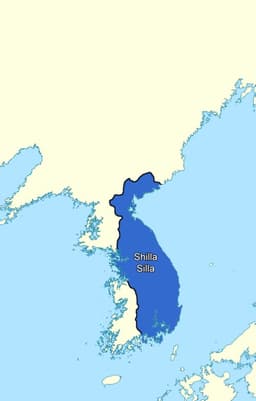
Beopheung of Silla
Emperor · Ancient
54.3Total
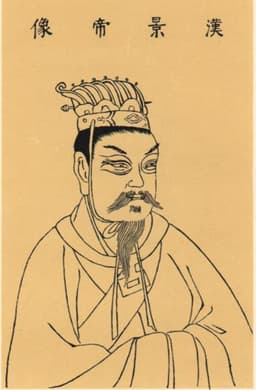
Emperor Jing of Han
Emperor · Ancient
49.2Total
Basic Information
Born
487
-188
Died
514
-141
Era
Ancient
Ancient
Nationality
Korea
China
Occupation
Emperor
Emperor
Civilization
Eastern
Eastern
Score Comparison
Military (10%)
25.9
30.0
Political (20%)
68.0
62.7
Influence (20%)
54.9
51.8
Legacy (20%)
52.0
47.5
Leadership (15%)
74.0
40.0
Strategy (15%)
36.8
60.0
TOTAL
54.3
49.2
Emperor Jing of Han — Complete Timeline
156 BC
Continuation of Tax ReductionsReform
Emperor Jing maintained the low tax rate of one-thirtieth set by his father, Emperor Wen, and further reduced labor service requirements. This policy sustained agricultural prosperity and popular support, contributing to the Rule of Wen and Jing.
Tax ReformAgricultureRule of Wen and Jing
Impact: nationalconstructive
154 BC
Suppression of the Rebellion of the Seven StatesWar
Seven feudal kingdoms led by Liu Pi of Wu rebelled against Emperor Jing's centralization policies. Emperor Jing appointed Zhou Yafu as commander, who defeated the rebels within three months. This victory crushed the power of the feudal lords and strengthened imperial authority.
RebellionCentralizationZhou Yafu
Impact: national
Execution of Chao CuoPolitical Action◆ Major
Emperor Jing ordered the execution of his advisor Chao Cuo to appease the rebelling seven states, despite Chao Cuo having advocated the centralization policies that triggered the rebellion. This act failed to stop the rebellion but demonstrated the emperor's willingness to sacrifice allies.
ExecutionPolitical SacrificeChao Cuo
Impact: nationaltragic
145 BC
Legal Code SimplificationReform
Emperor Jing ordered the simplification of the legal code, reducing the number of beatings in punishments and standardizing penalties. This reform aimed to prevent deaths from excessive beatings and continued the trend toward a more humane legal system begun by his father.
Legal ReformHumanitarianismPunishment
Impact: nationalprogressive
Expert Analysis
Origins
Beopheung of Silla (r. 514–540 CE) was born into the royal Kim clan of the Silla kingdom, one of the Three Kingdoms of Korea. His father was King Jijeung, who had begun centralizing reforms. Beopheung grew up in a court where aristocratic families held significant power, and the kingdom was transitioning from a tribal confederation to a centralized state. His early education emphasized Confucian classics and indigenous traditions, but he was also exposed to Buddhism through Chinese envoys.
Emperor Jing of Han (r. 157–141 BCE) was born Liu Qi, the fifth son of Emperor Wen of Han. His mother was Empress Dowager Dou, a powerful figure who favored Daoist philosophy. Jing was raised in the imperial palace of Chang'an and received a rigorous education in statecraft, law, and military strategy. His father's reign had consolidated Han power after the chaos of the early dynasty, but the feudal kingdoms remained a threat to central authority.
Rise to Power
Beopheung ascended the throne in 514 upon his father's death. His early reign focused on consolidating royal authority against the entrenched aristocracy. The turning point came in 527 when he issued an edict making Buddhism the state religion. To overcome opposition, he orchestrated the martyrdom of the Buddhist monk Ichadon, who claimed that after his execution, miraculous signs would occur. When Ichadon's severed head reportedly flew to the mountains, Beopheung used this to justify the new faith and purge conservative nobles. This event solidified his control and aligned Silla with the cultural sphere of China.
Emperor Jing became crown prince after his elder brothers died or were passed over. He inherited the throne in 157 BCE upon his father's death. His rise was smooth, but he faced immediate challenges from the feudal kings, who had grown wealthy and powerful under his father's lenient policies. Jing's advisor Chao Cuo advocated for reducing the kings' territories, which led to the Rebellion of the Seven States in 154 BCE. Jing initially faltered, executing Chao Cuo to appease the rebels, but then appointed Zhou Yafu as commander, who crushed the rebellion within three months. This victory allowed Jing to dismantle the feudal kingdoms and centralize power.
Leadership & Governance
Beopheung's leadership was defined by his religious revolution. He built Heungnyunsa Temple (the first Buddhist temple in Silla) and promoted Buddhist teachings as a unifying ideology. He also promulgated a comprehensive legal code, which standardized punishments and administrative procedures. This code reduced the power of local aristocrats by imposing royal law. Beopheung scored 74.0 in leadership, reflecting his decisive use of religion to legitimize his rule. However, his military score of 25.9 indicates that his reign was relatively peaceful, with no major wars.
Emperor Jing governed with a focus on stability and efficiency. He continued his father's policy of low taxes (one-thirtieth of crop yield) and reduced labor services. He also simplified the legal code, reducing beatings and standardizing penalties. His suppression of the Seven States rebellion was a masterstroke of political and military coordination, though he relied heavily on generals like Zhou Yafu. Jing's political score of 62.7 is lower than Beopheung's 68.0, partly because his execution of Chao Cuo was seen as a moral failure. His strategy score of 60.0 reflects his ability to plan and execute the rebellion's suppression.
Triumph & Tragedy
Beopheung's greatest triumph was the establishment of Buddhism as Silla's state religion, which permanently shaped Korean culture and facilitated unification with Goguryeo and Baekje centuries later. His legal code also laid the foundation for a centralized bureaucracy. However, his reliance on the Ichadon martyrdom was a calculated manipulation that could be seen as cynical. He also failed to fully subdue the aristocracy, as noble families retained influence. His total score of 54.3 is modest but reflects his transformative impact.
Emperor Jing's triumph was the decisive suppression of the Seven States rebellion, which ended the threat of feudal fragmentation and allowed the Han dynasty to centralize power. His tax and legal reforms improved the lives of commoners. His tragedy was the execution of Chao Cuo, a loyal advisor whom he sacrificed in a failed attempt to placate the rebels. This act damaged his reputation among historians. Jing's total score of 49.2 is lower than Beopheung's, partly due to his lower leadership score (40.0 vs. 74.0).
Character & Destiny
Beopheung was a visionary but pragmatic ruler. He understood the power of ideology and used religion to unify his kingdom. His willingness to execute Ichadon shows a ruthless streak, but he also demonstrated patience in building institutions. His character was shaped by the need to overcome aristocratic resistance, and he succeeded in transforming Silla's identity.
Emperor Jing was cautious and reactive. He initially tried to appease the rebels by sacrificing Chao Cuo, then acted decisively once Zhou Yafu took command. His character reflects the tension between his Daoist upbringing and the harsh realities of power. Historians often view him as a capable but uninspired ruler, overshadowed by his father Wen and his son Wu.
Legacy
Beopheung's legacy is immense: he made Silla a Buddhist kingdom, which later became a unifying force for the Korean peninsula. The temples he built became centers of learning, and his legal code influenced subsequent dynasties. He scored 52.0 in legacy and 54.9 in influence, reflecting his long-term cultural impact.
Emperor Jing's legacy is more administrative. He consolidated the Han centralization that enabled his son Emperor Wu to expand the empire. His tax and legal reforms set a precedent for later dynasties. However, his reign is often seen as a prelude to Wu's more famous one. He scored 47.5 in legacy and 51.8 in influence.
Conclusion
Beopheung of Silla had a greater impact on history than Emperor Jing of Han. His total score of 54.3 vs. Jing's 49.2 reflects this. While Jing suppressed a rebellion and maintained stability, Beopheung fundamentally transformed his kingdom's religion, law, and culture. His adoption of Buddhism shaped Korea for over a millennium, whereas Jing's centralization was part of a longer trend. Beopheung's leadership score of 74.0 dwarfs Jing's 40.0, indicating a more decisive and visionary ruler. The clear position is that Beopheung, despite reigning in a smaller kingdom, left a deeper and more enduring mark on world history.
Rankings
🥇
Beopheung of SillaLeader
Mil: 25.9Pol: 68.0Inf: 54.9
54.3
🥈
Emperor Jing of Han
Mil: 30.0Pol: 62.7Inf: 51.8
49.2
+5.1 behind
How This Comparison Works
Algorithm
Each figure is scored on 6 dimensions (0—100 scale) based on structured historical data: Military (10%), Political (20%), Influence (20%), Legacy (20%), Leadership (15%), Strategy (15%). The weighted total produces the final ranking.
Data Sources
Scores are computed from structured sub-indicators in the database. Scale factors adjust for era (Ancient ×0.85, Modern ×1.0) and civilization size (Eastern ×1.05, Other ×0.80) to account for differences in population and military scale.
Maximum 3 Figures
Comparisons are limited to 2—3 figures to ensure readability and statistical meaningfulness.
Error Margins
±5 points per dimension — Sub-scores are derived from historical records with inherent uncertainty. Two figures within 5 points on a dimension should be considered roughly equivalent in that area.
Total Score Accuracy
±3 points overall — The weighted combination of 6 dimensions produces a total score with approximately ±3 points of uncertainty. Differences of less than 3 points are not statistically significant— the figures are effectively tied.
Known Limitations
- Historical records are incomplete and uneven across civilizations
- Figures from oral-tradition societies may be underrepresented
- Occupation labels can misclassify multi-role figures
- Scores measure capability and impact, not moral character
- Quantitative scoring is a comparison tool, not absolute truth
Capability Radar
Military (10%) — Battles & Warfare
Battles
10
40
Win Rate
10
60
Expansion
10
20
Political (20%) — Governance & Reform
Reform
70
60
Diplomacy
50
55
Economy
40
70
Influence (20%) — Cultural & Global Reach
Cultural
60
40
Global
30
30
Legacy (20%) — Historical Impact
Historical
60
55
Longevity
60
50
Leadership (15%) — Power & Stability
Tenure
60
65
Stability
50
50
Strategy (15%) — Tactics & Innovation
Strategy
10
55
Tactics
10
45
Reform
10
30
Similar Comparisons
Comments & Discussion
No comments yet. Be the first to share your thoughts!