Loading...
Emperor Jito vs Julius Caesar
Julius Caesar leads by 34.0 pts · 2 figures compared
…
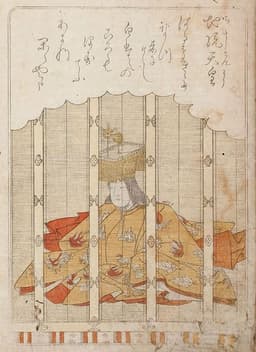
Emperor Jito
Emperor · Medieval
48.8Total

Julius Caesar
General · Ancient
82.8Total
Basic Information
Born
645
-100
Died
703
-44
Era
Medieval
Ancient
Nationality
Japan
Roman Republic
Occupation
Emperor
General
Civilization
Eastern
Western
Score Comparison
Military (10%)
54.3
88.0
Political (20%)
46.6
78.0
Influence (20%)
51.8
85.0
Legacy (20%)
48.3
82.0
Leadership (15%)
42.2
80.0
Strategy (15%)
50.0
85.0
TOTAL
48.8
82.8
Emperor Jito — Complete Timeline
694 AD
Establishment of the Fujiwara CapitalPolitical Action◆ Major
Empress Jito moved the imperial capital to Fujiwara-kyo in Yamato Province. This was Japan's first capital built on a Chinese grid pattern. The move symbolized the centralization of power and the adoption of Chinese-style governance.
CapitalFujiwara-kyoUrban Planning
Impact: nationalconstructive
697 AD
Abdication in Favor of Emperor MonmuPolitical Action
Empress Jito abdicated the throne in favor of her grandson, Emperor Monmu. She continued to wield influence as a retired emperor (daijo tenno). This set a precedent for retired emperors to maintain power behind the scenes.
AbdicationSuccessionMonmu
Impact: national
701 AD
Completion of the Taiho CodeReform◆ Major
Empress Jito oversaw the completion and promulgation of the Taiho Code, a comprehensive legal code that systematized the ritsuryo system. It defined administrative structure, penal laws, and court ranks. The code remained the basis of Japanese law for centuries.
Taiho CodeLegal SystemRitsuryo
Impact: nationalconstructive
Julius Caesar — Complete Timeline
58 BC
Gallic WarsWar◆ Major
Caesar, as proconsul of Gaul, launched a series of campaigns that conquered all of Gaul (modern France, Belgium, and parts of Switzerland). He fought numerous battles, including against the Helvetii, the Belgae, and the Gallic chieftain Vercingetorix. The wars brought immense wealth and a loyal army to Caesar.
Gallic WarsConquestRoman Expansion
Impact: regional
49 BC
Crossing the RubiconPolitical Action◆ Major
Caesar led Legio XIII across the Rubicon River into Italy, defying the Roman Senate's order to disband his army. This act triggered a civil war against Pompey and the Optimates, ultimately leading to Caesar's dictatorship and the end of the Roman Republic.
Roman Civil WarEnd of RepublicPower Struggle
Impact: global
48 BC
Battle of PharsalusWar◆ Major
Caesar's outnumbered army defeated the larger forces of Pompey the Great at Pharsalus in Greece. Caesar's tactical use of a reserve line to counter Pompey's cavalry charge proved decisive. Pompey fled to Egypt, where he was assassinated, leaving Caesar as the undisputed master of the Roman world.
Roman Civil WarBattleDecisive Victory
Impact: regional
44 BC
Appointment as Dictator for LifePolitical Action◆ Major
The Roman Senate appointed Caesar dictator perpetuo (dictator for life), granting him unprecedented personal power. This move concentrated military, legislative, and judicial authority in one person, effectively ending the Roman Republic's traditional system of checks and balances and alarming many senators.
DictatorshipEnd of RepublicPower Consolidation
Impact: regionaldestructive
Assassination on the Ides of MarchPolitical Action◆ Major
A group of Roman senators, led by Marcus Junius Brutus and Gaius Cassius Longinus, stabbed Caesar to death at a meeting of the Senate in the Theatre of Pompey. The assassination was intended to restore the Republic, but instead triggered another civil war that led to the rise of the Roman Empire.
AssassinationRoman PoliticsEnd of Republic
Impact: globaldestructive
Expert Analysis
emperor-jito-vs-julius-caesar
# Two Roads to Power
On a March morning in 44 BCE, Julius Caesar walked into the Senate chamber in Rome, ignoring a soothsayer's warning about the Ides of March. Within minutes, sixty senators had surrounded him with daggers. Six thousand miles and seven centuries away, in the year 697, Empress Jitō of Japan made a different choice: she voluntarily abdicated her throne to her grandson, retiring peacefully to a life of influence rather than clinging to power until death. These two rulers, both reformers who reshaped their civilizations, met utterly different fates—one carved into marble as a legend, the other fading into the quiet dignity of a legal code. What drove such divergent endings?
Origins
Caesar was born into the chaos of the late Roman Republic, a world of civil wars, crumbling traditions, and ambitious nobles clawing for dominance. His family, the Julii, claimed descent from the goddess Venus, but their political fortunes had dimmed. Young Caesar watched his uncle Marius fight Sulla, saw proscription lists posted in the Forum, and learned early that survival required cunning. His world was a knife fight of oratory, bribery, and military glory—a stage for men who wanted everything.
Empress Jitō emerged from a very different world. Born in 645, she was the daughter of Emperor Tenji during Japan's Asuka period, when the Yamato court was absorbing Chinese Confucianism, Buddhism, and bureaucratic models. Her Japan was not a republic of fractious senators but a hierarchical court where legitimacy flowed from lineage and ritual. Women could rule—several empresses reigned before her—but power was exercised through consensus, not conquest. Jitō's education steeped her in poetry, ceremony, and the art of indirect influence.
Rise to Power
Caesar's path was a sprint over corpses. He climbed the political ladder—quaestor, aedile, praetor—borrowing enormous sums to fund games and bribes. In 60 BCE, he formed the First Triumvirate with Pompey and Crassus, an alliance that let him secure a command in Gaul. From 58 to 50 BCE, he conquered modern France and Belgium, crossed the Rhine, and invaded Britain, building an army that worshipped him. When the Senate ordered him to disband, he crossed the Rubicon River in 49 BCE, triggering a civil war. By 45 BCE, he was dictator for life.
Jitō's ascent was a dance of patience. She became empress consort to Emperor Tenmu, her uncle-husband, and after his death in 686, she served as regent for their son. But when that son died, she took the throne herself in 690, at age 45—a mature ruler in a system that valued stability. Her rise came not through conquest but through careful navigation of court factions, Buddhist monasteries, and clan loyalties. She never commanded an army; she commanded respect.
Leadership & Governance
Caesar ruled like a storm. He reformed the calendar—creating the Julian calendar still used today—granted citizenship to provincials, initiated public works, and centralized power in his own hands. His military genius was undeniable: at Alesia in 52 BCE, he besieged 80,000 Gauls while simultaneously repelling a relief army, a feat of logistics and nerve. Yet his governance was transactional. He packed the Senate with his supporters, minted coins with his face, and accepted divine honors. "I have lived long enough," he once said, "both in years and in accomplishments." His reforms were brilliant, but they rested on his personal dominance.
Jitō governed like a gardener. Her greatest achievement, the Taihō Code of 701, was completed after her abdication, but she oversaw its creation. This legal framework—modeled on Tang China's codes—structured Japan's government into ministries, defined ranks and salaries, set tax rates, and codified land distribution. It was not a flashy conquest but a subtle revolution: it replaced clan-based rule with a bureaucratic state. In 694, she moved the capital to Fujiwara-kyō, the first planned Chinese-style capital in Japan, symbolizing order over tradition. She wielded power through edicts, not armies, and retired while still alive to guide her successor.
Triumph & Tragedy
Caesar's triumph was his assassination. In February 44 BCE, he was declared dictator perpetuo—dictator for life. He had crushed his enemies, reformed the state, and fathered a son, Caesarion, with Cleopatra. But his tragedy was that he could not stop. He refused a crown three times, but his contempt for the Senate's dignity sealed his fate. On the Ides of March, 44 BCE, he fell to twenty-three dagger wounds, bleeding out at the foot of Pompey's statue. His last breath was not a grand speech but a gasp.
Jitō's triumph was her abdication. In 697, she stepped down in favor of her grandson, Emperor Monmu, but continued to rule from behind the scenes as a retired empress. She lived to see the Taihō Code enacted in 701, dying peacefully in 703 at age 58. Her tragedy was not a violent end but a quiet one: her reforms were so foundational that they became invisible, absorbed into Japan's DNA. No epic poems celebrate her; no statues stand in her honor. She succeeded too well.
Character & Destiny
Caesar was a gambler who believed in his own star. "The die is cast," he said crossing the Rubicon, and he meant it. His personality—arrogant, generous to enemies, ruthless to rivals—drove him to remake Rome in his image. But that same personality made him impossible to tolerate. He could not share power because he saw himself as the state. His destiny was to be murdered by men he had pardoned.
Jitō was a steward who believed in systems. She wrote poetry—delicate verses about cherry blossoms and autumn leaves—and valued harmony over glory. Her personality—patient, ritualistic, shrewd—allowed her to build institutions that outlasted her. She could share power because she saw herself as a temporary caretaker. Her destiny was to be forgotten by name but remembered in every Japanese government ministry.
Legacy
Caesar's legacy is a detonation. His name became synonymous with emperor—Kaiser, Tsar, Caesar—and his conquests created the Roman Empire's foundation. He is Shakespeare's tragic hero, a schoolboy's first lesson in ambition, a warning about the price of greatness. His military tactics are still studied at West Point.
Jitō's legacy is a foundation. The Taihō Code shaped Japan's governance for centuries, structuring the ritsuryō system that lasted until the samurai era. Her capital at Fujiwara-kyō set the pattern for Nara and Kyoto. She is remembered by historians as a competent administrator, but not by the public. No films glorify her. No novels romanticize her. She is the quiet scaffolding behind a magnificent building.
Conclusion
Standing at the end of their stories, we see two faces of power. Caesar grabbed it with both hands and was destroyed by its weight. Jitō held it lightly and let it outlive her. Both transformed their worlds—one through conquest, the other through code. Perhaps the difference is not in talent or ambition but in what they loved. Caesar loved himself. Jitō loved the order that would remain when she was gone. In the end, the man who wanted everything left a corpse; the woman who wanted to serve left a system. History remembers the explosion, but it is the scaffolding that still holds.
Rankings
🥇
Julius CaesarLeader
Mil: 88.0Pol: 78.0Inf: 85.0
82.8
🥈
Emperor Jito
Mil: 54.3Pol: 46.6Inf: 51.8
48.8
+34.0 behind
How This Comparison Works
Algorithm
Each figure is scored on 6 dimensions (0—100 scale) based on structured historical data: Military (10%), Political (20%), Influence (20%), Legacy (20%), Leadership (15%), Strategy (15%). The weighted total produces the final ranking.
Data Sources
Scores are computed from structured sub-indicators in the database. Scale factors adjust for era (Ancient ×0.85, Modern ×1.0) and civilization size (Eastern ×1.05, Other ×0.80) to account for differences in population and military scale.
Maximum 3 Figures
Comparisons are limited to 2—3 figures to ensure readability and statistical meaningfulness.
Error Margins
±5 points per dimension — Sub-scores are derived from historical records with inherent uncertainty. Two figures within 5 points on a dimension should be considered roughly equivalent in that area.
Total Score Accuracy
±3 points overall — The weighted combination of 6 dimensions produces a total score with approximately ±3 points of uncertainty. Differences of less than 3 points are not statistically significant— the figures are effectively tied.
Known Limitations
- Historical records are incomplete and uneven across civilizations
- Figures from oral-tradition societies may be underrepresented
- Occupation labels can misclassify multi-role figures
- Scores measure capability and impact, not moral character
- Quantitative scoring is a comparison tool, not absolute truth
Capability Radar
Military (10%) — Battles & Warfare
Battles
45
95
Win Rate
50
92
Expansion
50
97
Political (20%) — Governance & Reform
Reform
70
90
Diplomacy
30
85
Economy
30
82
Influence (20%) — Cultural & Global Reach
Cultural
30
88
Global
20
94
Legacy (20%) — Historical Impact
Historical
50
95
Longevity
40
96
Leadership (15%) — Power & Stability
Tenure
11
75
Stability
40
60
Strategy (15%) — Tactics & Innovation
Strategy
52
94
Tactics
57
96
Reform
60
88
Similar Comparisons
Comments & Discussion
寒泉法典6/17/2026
别被“自愿退位”的浪漫叙事骗了。持统天皇的禅让本质上是一场精心计算的政治交易——她通过《大宝律令》将天皇权力法典化,才敢放权给孙子。没有这套律法框架,她怕早就像大友皇子一样被暗杀了。凯撒至死没学会:在罗马,法律是贵族的工具;在倭国,法律才是王权的盔甲。
BLOODY MARBLE6/17/2026
Caesar's assassination proves you can't reform a republic with a crown. The Ides weren't fate—they were the inevitable backlash against a man who collected titles like conquests. Jitō understood something Caesar never did: abdication isn't weakness, it's strategy. She left her grandson a stable throne; Caesar left Octavian a civil war. One became a god, the other a footnote—but which one actually won?
PAGAN STATISTICIAN6/17/2026
Let's crunch the numbers: Caesar ruled Rome effectively for barely four years before getting stabbed 23 times. Jitō reigned eight years, then lived another decade as a retired empress with full political sway. Survival rate of Roman dictators after crossing the Rubicon? Near zero. Japanese abdicating monarchs? Nearly all lived comfortably. The data screams: absolute power doesn't just corrupt—it kills you faster.
东洋镜鉴6/17/2026
你们都在比谁死得壮烈,我倒想问:凯撒征服高卢屠了百万生灵,持统天皇颁布的《净御原令》让倭国百年无大战。权力欲不是美德,恺撒的“我来我见我征服”不过是文明史上的癌症转移。日本女人用一部法典拴住武士的刀,罗马男人用血浇灌自己的雕像。谁更配称“伟大”,心里没数吗?
TRADUTTORE TRADITORE6/17/2026
Every Roman schoolboy knows Caesar's last words to Brutus were Greek, not Latin—"καὶ σὺ τέκνον." What gets lost? That's a line from Euripides' lost Medea, about betrayal within the family. Jitō abdicated to her grandson, her own blood without a blade in sight. Caesar couldn't read the signs even when his wife dreamed of his statue gushing blood. Two leaders, same ambition, radically different literacy in reading their own households.