Loading...
Emperor Kammu vs Nikephoros I
Emperor Kammu leads by 10.4 pts · 2 figures compared
…
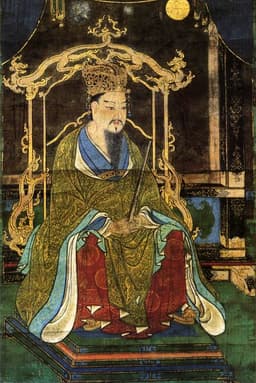
Emperor Kammu
Emperor · Medieval
64.9Total
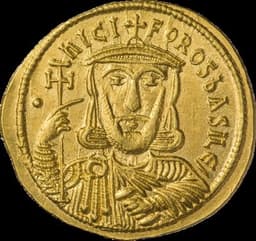
Nikephoros I
Emperor · Medieval
54.5Total
Basic Information
Born
737
750
Died
806
811
Era
Medieval
Medieval
Nationality
Japan
Byzantine Empire
Occupation
Emperor
Emperor
Civilization
Eastern
Western
Score Comparison
Military (10%)
21.2
45.0
Political (20%)
72.0
62.7
Influence (20%)
82.0
51.8
Legacy (20%)
68.0
45.0
Leadership (15%)
72.0
74.0
Strategy (15%)
36.8
52.5
TOTAL
64.9
54.5
Emperor Kammu — Complete Timeline
789 AD
Campaign against the EmishiWar◆ Major
Kammu launched a major military campaign to subdue the Emishi people in northern Honshu. The campaign was initially unsuccessful, with a defeat at the Battle of Koromo River, but later efforts under Sakanoue no Tamuramaro achieved victory.
Military CampaignEmishiExpansion
Impact: national
794 AD
Moved the capital to Heian-kyoPolitical Action
Emperor Kammu moved the imperial capital from Nara to Heian-kyo (modern Kyoto). This relocation was intended to escape the influence of powerful Buddhist monasteries in Nara and marked the beginning of the Heian period.
Capital MoveHeian PeriodJapan
Impact: nationalconstructive
800 AD
Patronage of Buddhist templesCultural
Kammu commissioned the construction of several Buddhist temples in Heian-kyo, including To-ji and Sai-ji. These temples were intended to protect the new capital and promote Buddhism as a state religion.
BuddhismArchitectureReligion
Impact: nationalconstructive
Nikephoros I — Complete Timeline
802 AD
Financial Reforms (802-811)Reform◆ Major
Nikephoros I implemented fiscal reforms to replenish the treasury depleted by Irene. He increased taxes, reorganized the tax system, and imposed new levies on the church and monasteries. These measures strengthened the state finances but caused resentment.
TaxationFiscal PolicyAdministration
Impact: regional
Accession as Emperor (802)Political Action◆ Major
Nikephoros I overthrew Empress Irene in a palace coup. As a former logothete (finance minister), he was experienced in administration. His accession marked a shift from the iconoclast policies of previous emperors.
CoupAccession
Impact: regional
811 AD
Campaign against the Bulgars (811)War◆ Major
Nikephoros I led a large expedition against the Bulgarian Khan Krum. Initially successful, he captured the Bulgarian capital Pliska and plundered it. However, the campaign ended in disaster when the Byzantine army was ambushed in a mountain pass.
Byzantine-Bulgarian WarsMilitary Campaign
Impact: regionaltragic
Death at the Battle of Pliska (811)War
Nikephoros I was killed in the Battle of Pliska, where the Byzantine army was annihilated by the Bulgars. His skull was reportedly made into a drinking cup by Khan Krum. This was one of the worst Byzantine military defeats.
BattleDeathDefeat
Impact: regionaltragic
Expert Analysis
Origins
Emperor Kammu (737–806) was born as Yamabe, the son of Emperor Konin. His mother was a descendant of a Korean immigrant clan, which may have influenced his openness to foreign ideas. He ascended the throne in 781 after his father's death. Kammu's early life was shaped by the political intrigues of the Nara court, dominated by Buddhist monasteries and the Fujiwara clan. He received a traditional education in Chinese classics and Buddhist texts.
Nikephoros I (c. 760–811) was born in Seleucia Sidera, likely of Arab descent. He rose from humble origins through the Byzantine bureaucracy, becoming logothete (finance minister) under Empress Irene. His administrative skills earned him a reputation as a capable fiscal manager. Unlike Kammu, Nikephoros had no imperial lineage; his path to power was through merit and opportunism.
Rise to Power
Kammu became emperor upon his father's death in 781. His early reign focused on consolidating power against the Buddhist establishment in Nara. In 784, he moved the capital to Nagaoka, and later to Heian-kyo (Kyoto) in 794, to escape monastic influence. This relocation was a decisive break from the past, centralizing authority under the emperor.
Nikephoros I seized power in a palace coup on October 31, 802, overthrowing Empress Irene. Irene had been unpopular due to her blinding of her son and fiscal mismanagement. Nikephoros, as logothete, had access to state finances and used his position to orchestrate a smooth transition. His rise was swift and pragmatic, relying on administrative networks rather than military might.
Leadership & Governance
Kammu's leadership focused on restructuring the state. He commissioned the construction of Heian-kyo as a planned capital, modeled after Chinese Chang'an. He also patronized Buddhist temples like To-ji and Sai-ji to protect the city. Politically, he appointed capable officials from various clans to reduce noble influence. His military campaigns against the Emishi in northern Honshu were costly and initially unsuccessful, suffering a defeat at the Battle of Sufuse in 789. However, he persisted, appointing Sakanoue no Tamuramaro as shogun, who eventually subdued the Emishi in 801.
Nikephoros I prioritized fiscal stability. He reformed the tax system, increased taxes, and imposed new levies on monasteries and the wealthy. He also reorganized the themes (military districts) to improve efficiency. His administrative experience gave him a strong grasp of state finances, but his tax hikes made him unpopular. He avoided major military commitments until his final campaign, preferring diplomatic and fiscal measures.
Triumph & Tragedy
Kammu's greatest triumph was the establishment of Heian-kyo, which remained the capital for over a millennium. His patronage of Buddhism and the arts fostered a cultural renaissance. However, his military campaigns drained the treasury and yielded mixed results. The Emishi campaign was costly and did not fully pacify the north. His political score of 72.0 reflects his success in centralizing power, but his military score of 21.2 indicates a weakness in warfare.
Nikephoros I's fiscal reforms replenished the Byzantine treasury, restoring state solvency. His political score of 62.7 shows competent administration. Yet his tragedy was total: in 811, he led a massive expedition against the Bulgarian Khan Krum. He captured Pliska and plundered it, but was ambushed in a mountain pass. The Byzantine army was annihilated, and Nikephoros was killed. His skull was made into a drinking cup, a humiliation that overshadowed his fiscal achievements.
Character & Destiny
Kammu was a visionary ruler with a long-term perspective. He understood the need to break from Nara's Buddhist dominance and build a new capital. His persistence in the Emishi campaign, despite setbacks, shows determination. However, his reliance on aristocratic generals limited his military success. His total score of 64.9 reflects a balanced but not exceptional ruler.
Nikephoros was a pragmatic administrator, skilled in finance but lacking military acumen. His coup against Irene demonstrated ambition, but his death at Pliska reveals a fatal overreach. He underestimated the Bulgars, leading to a catastrophic defeat. His skull cup became a symbol of Byzantine weakness. His total score of 54.5 reflects his administrative strengths overshadowed by military failure.
Legacy
Kammu's legacy is profound: Heian-kyo (Kyoto) became the cultural heart of Japan, and the Heian period (794–1185) is considered a golden age. His patronage of Buddhism influenced Japanese art and architecture. The shift of capital ended the political dominance of Nara monasteries. His influence score of 82.0 and legacy score of 68.0 indicate his lasting impact.
Nikephoros I's legacy is mixed. His fiscal reforms provided a template for later emperors, but his death at Pliska weakened the Byzantine Empire and encouraged Bulgar attacks. His skull cup story became a cautionary tale. His influence score of 51.8 and legacy score of 45.0 show his limited long-term impact compared to Kammu.
Conclusion
Emperor Kammu had a greater impact than Nikephoros I. Kammu's decision to move the capital shaped Japanese history for centuries, while Nikephoros's fiscal reforms were undone by his military disaster. Kammu's total score of 64.9 exceeds Nikephoros's 54.5 by 10.4 points. Kammu's influence and legacy scores are significantly higher (82.0 vs 51.8 and 68.0 vs 45.0). While Nikephoros was a capable administrator, his failure at Pliska overshadows his achievements. Kammu's long-term vision and cultural contributions make him the more consequential figure.
Rankings
🥇
Emperor KammuLeader
Mil: 21.2Pol: 72.0Inf: 82.0
64.9
🥈
Nikephoros I
Mil: 45.0Pol: 62.7Inf: 51.8
54.5
+10.4 behind
How This Comparison Works
Algorithm
Each figure is scored on 6 dimensions (0—100 scale) based on structured historical data: Military (10%), Political (20%), Influence (20%), Legacy (20%), Leadership (15%), Strategy (15%). The weighted total produces the final ranking.
Data Sources
Scores are computed from structured sub-indicators in the database. Scale factors adjust for era (Ancient ×0.85, Modern ×1.0) and civilization size (Eastern ×1.05, Other ×0.80) to account for differences in population and military scale.
Maximum 3 Figures
Comparisons are limited to 2—3 figures to ensure readability and statistical meaningfulness.
Error Margins
±5 points per dimension — Sub-scores are derived from historical records with inherent uncertainty. Two figures within 5 points on a dimension should be considered roughly equivalent in that area.
Total Score Accuracy
±3 points overall — The weighted combination of 6 dimensions produces a total score with approximately ±3 points of uncertainty. Differences of less than 3 points are not statistically significant— the figures are effectively tied.
Known Limitations
- Historical records are incomplete and uneven across civilizations
- Figures from oral-tradition societies may be underrepresented
- Occupation labels can misclassify multi-role figures
- Scores measure capability and impact, not moral character
- Quantitative scoring is a comparison tool, not absolute truth
Capability Radar
Military (10%) — Battles & Warfare
Battles
10
55
Win Rate
10
40
Expansion
10
55
Political (20%) — Governance & Reform
Reform
75
70
Diplomacy
60
50
Economy
65
65
Influence (20%) — Cultural & Global Reach
Cultural
70
30
Global
60
20
Legacy (20%) — Historical Impact
Historical
75
40
Longevity
75
30
Leadership (15%) — Power & Stability
Tenure
70
60
Stability
60
45
Strategy (15%) — Tactics & Innovation
Strategy
10
50
Tactics
10
45
Reform
10
60
Similar Comparisons
Comments & Discussion
No comments yet. Be the first to share your thoughts!