Loading...
Hulegu Khan vs Ivan Alexander
Hulegu Khan leads by 9.6 pts · 2 figures compared
…
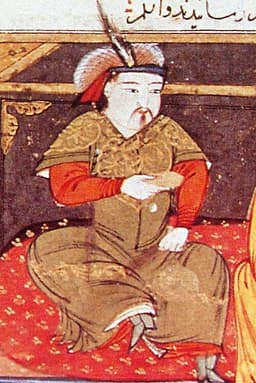
Hulegu Khan
Emperor · Medieval
64.3Total
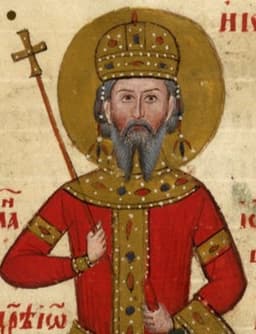
Ivan Alexander
Emperor · Medieval
54.7Total
Basic Information
Born
1217
1300
Died
1265
1371
Era
Medieval
Medieval
Nationality
Ilkhanate
Bulgaria
Occupation
Emperor
Emperor
Civilization
Middle Eastern
Western
Score Comparison
Military (10%)
85.0
10.0
Political (20%)
45.0
68.0
Influence (20%)
68.0
56.7
Legacy (20%)
55.0
50.0
Leadership (15%)
72.0
74.0
Strategy (15%)
75.0
57.5
TOTAL
64.3
54.7
Hulegu Khan — Complete Timeline
1256 AD
Destruction of the Ismaili FortressesWar◆ Major
Hulagu's army captured and destroyed the mountain fortresses of the Nizari Ismailis (Assassins), including Alamut. The Ismaili state was effectively eliminated, and their library and treasures were burned. This removed a major political and military force in Persia.
Mongol ConquestIsmailisAlamut
Impact: regionaldestructive
Founding of the IlkhanatePolitical Action◆ Major
Hulagu established the Ilkhanate as a Mongol khanate in Persia, with his capital at Maragheh. The state encompassed modern Iran, Iraq, Azerbaijan, and parts of Turkey and Syria, and it became a major power in the Middle East.
Mongol EmpireIlkhanatePersia
Impact: regional
1258 AD
Destruction of BaghdadWar
Hulagu's Mongol army besieged and sacked Baghdad, the capital of the Abbasid Caliphate. The city was systematically destroyed, with estimates of 100,000 to 1 million civilians killed. The last Abbasid caliph, Al-Musta'sim, was executed, ending the Islamic Golden Age.
Mongol ConquestBaghdadAbbasid Caliphate
Impact: globaldestructive
1260 AD
Battle of Ain JalutWar
Hulagu's forces, led by general Kitbuqa, were defeated by the Mamluk Sultanate at Ain Jalut in Palestine. This was the first major Mongol defeat in the Middle East, halting Mongol expansion into Syria and Egypt. Hulagu was unable to reinforce due to the Berke
Mongol DefeatMamluk SultanateSyria
Impact: regionaltragic
1262 AD
War with BerkeWar◆ Major
Hulagu fought a war against his cousin Berke, Khan of the Golden Horde, after Berke converted to Islam and opposed the destruction of Baghdad. The war involved battles in the Caucasus and weakened both khanates, preventing further Mongol expansion westward.
Mongol Civil WarCaucasusGolden Horde
Impact: regionaldestructive
Ivan Alexander — Complete Timeline
1331 AD
Coronation as TsarPolitical Action◆ Major
Ivan Alexander was crowned Tsar of Bulgaria after overthrowing his predecessor. His reign marked the last period of cultural and political flourishing before the Ottoman conquest.
CoronationReignBulgarian Empire
Impact: nationalconstructive
1340 AD
Compilation of the Law CodeReform◆ Major
Ivan Alexander oversaw the compilation of a comprehensive law code, the 'Zakonik' (Law of the Tsar). This codified Byzantine and Bulgarian legal traditions, strengthening central authority.
Law CodeReformLegal System
Impact: nationalconstructive
1350 AD
Patronage of the Tarnovo Literary SchoolCultural◆ Major
Ivan Alexander patronized the Tarnovo Literary School, which produced illuminated manuscripts like the 'Manasses Chronicle' and the 'Gospels of Tsar Ivan Alexander'. This was the peak of medieval Bulgarian culture.
CulturalManuscriptsTarnovo School
Impact: regionalconstructive
1355 AD
Division of the EmpirePolitical Action◆ Major
Ivan Alexander divided Bulgaria between his two sons, Ivan Shishman and Ivan Sratsimir, weakening the state. This fragmentation facilitated the later Ottoman conquest.
DivisionSuccessionWeakening
Impact: nationaldestructive
Expert Analysis
Origins
Hulagu Khan was born around 1217, grandson of Genghis Khan and brother of Kublai Khan. He was raised in the Mongol steppe tradition, trained in warfare from youth. Ivan Alexander was born in 1301, a descendant of the Asen dynasty of Bulgaria. He came from the ruling elite, but his early life is less documented; he likely received a Byzantine-style education.
Rise to Power
Hulagu's rise came through Mongol conquests. In 1253, his brother Möngke Khan appointed him to lead the campaign against the Islamic world. He destroyed the Nizari Ismaili fortresses in 1256, then sacked Baghdad in 1258, ending the Abbasid Caliphate. Ivan Alexander seized the throne in 1331 after overthrowing his predecessor, Ivan Stephen. He consolidated power through diplomacy and marriage alliances, such as marrying the daughter of the Wallachian prince.
Leadership & Governance
Hulagu ruled the Ilkhanate with a Mongol military aristocracy, but he also adopted Persian administrative practices. He tolerated Christianity and Buddhism, but his destruction of Baghdad showed ruthless conquest. Ivan Alexander governed Bulgaria as a centralized monarchy, compiling a law code (Zakonik) in 1340 that blended Byzantine and Slavic traditions. He patronized the Tarnovo Literary School, producing illuminated manuscripts like the Manasses Chronicle (1345). His leadership scored 74.0, higher than Hulagu's 72.0, reflecting more stable governance.
Triumph & Tragedy
Hulagu's greatest triumph was the destruction of Baghdad, scoring 85.0 in military. He also eliminated the Ismaili state. His tragedy was the defeat at Ain Jalut in 1260, which halted Mongol expansion into Egypt. He also fought a costly war with Berke of the Golden Horde. Ivan Alexander's triumph was the cultural flourishing of Bulgaria, with a 68.0 political score. His tragedy was dividing the empire between his sons in 1360, leading to fragmentation that facilitated the Ottoman conquest. His military score was only 10.0, showing weak defense.
Character & Destiny
Hulagu was decisive and ruthless, but also religiously tolerant. His character drove him to conquer, but overreach led to setbacks. Ivan Alexander was a patron and legislator, but his indecision in succession planning doomed Bulgaria. Both faced the limits of their power: Hulagu could not sustain his conquests, while Ivan Alexander could not protect his kingdom.
Legacy
Hulagu's Ilkhanate lasted until 1335, influencing Persian culture and Mongol rule. His sack of Baghdad ended the Islamic Golden Age. Ivan Alexander's cultural patronage left a legacy in Bulgarian art and law, but his political fragmentation led to Ottoman rule. Hulagu's total score is 64.3, Ivan Alexander's 54.7, a gap of 9.6.
Conclusion
Hulagu Khan had greater impact due to his military conquests and the destruction of Baghdad, which reshaped the Middle East. His actions directly led to the end of the Abbasid Caliphate and altered history. Ivan Alexander's achievements, while culturally significant, were ephemeral. Hulagu's 64.3 total score reflects a more transformative, albeit destructive, legacy.
Rankings
🥇
Hulegu KhanLeader
Mil: 85.0Pol: 45.0Inf: 68.0
64.3
🥈
Ivan Alexander
Mil: 10.0Pol: 68.0Inf: 56.7
54.7
+9.6 behind
How This Comparison Works
Algorithm
Each figure is scored on 6 dimensions (0—100 scale) based on structured historical data: Military (10%), Political (20%), Influence (20%), Legacy (20%), Leadership (15%), Strategy (15%). The weighted total produces the final ranking.
Data Sources
Scores are computed from structured sub-indicators in the database. Scale factors adjust for era (Ancient ×0.85, Modern ×1.0) and civilization size (Eastern ×1.05, Other ×0.80) to account for differences in population and military scale.
Maximum 3 Figures
Comparisons are limited to 2—3 figures to ensure readability and statistical meaningfulness.
Error Margins
±5 points per dimension — Sub-scores are derived from historical records with inherent uncertainty. Two figures within 5 points on a dimension should be considered roughly equivalent in that area.
Total Score Accuracy
±3 points overall — The weighted combination of 6 dimensions produces a total score with approximately ±3 points of uncertainty. Differences of less than 3 points are not statistically significant— the figures are effectively tied.
Known Limitations
- Historical records are incomplete and uneven across civilizations
- Figures from oral-tradition societies may be underrepresented
- Occupation labels can misclassify multi-role figures
- Scores measure capability and impact, not moral character
- Quantitative scoring is a comparison tool, not absolute truth
Capability Radar
Military (10%) — Battles & Warfare
Battles
85
45
Win Rate
80
40
Expansion
90
35
Political (20%) — Governance & Reform
Reform
70
55
Diplomacy
65
50
Economy
60
60
Influence (20%) — Cultural & Global Reach
Cultural
60
65
Global
75
30
Legacy (20%) — Historical Impact
Historical
80
55
Longevity
65
40
Leadership (15%) — Power & Stability
Tenure
75
60
Stability
55
45
Strategy (15%) — Tactics & Innovation
Strategy
85
55
Tactics
88
50
Reform
70
40
Similar Comparisons
Comments & Discussion
No comments yet. Be the first to share your thoughts!