Loading...
Emperor Murakami vs Julius Caesar
Julius Caesar leads by 32.6 pts · 2 figures compared
…
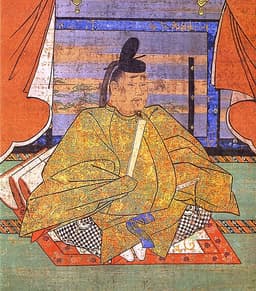
Emperor Murakami
Emperor · Medieval
50.2Total

Julius Caesar
General · Ancient
82.8Total
Basic Information
Born
926
-100
Died
967
-44
Era
Medieval
Ancient
Nationality
Japan
Roman Republic
Occupation
Emperor
General
Civilization
Eastern
Western
Score Comparison
Military (10%)
49.0
88.0
Political (20%)
32.2
78.0
Influence (20%)
50.2
85.0
Legacy (20%)
45.0
82.0
Leadership (15%)
67.0
80.0
Strategy (15%)
66.3
85.0
TOTAL
50.2
82.8
Emperor Murakami — Complete Timeline
946 AD
Peak of Fujiwara RegencyPolitical Action◆ Major
Emperor Murakami's reign saw the Fujiwara clan, led by Fujiwara no Saneyori, reach the height of their power as regents. The emperor's authority was largely ceremonial, with real power held by the Fujiwara. This period marked the consolidation of Fujiwara dominance.
FujiwaraRegencySaneyori
Impact: national
Maintenance of Peace and StabilityPolitical Action
Emperor Murakami's reign was relatively peaceful, with no major wars or rebellions. The central government maintained order, and the country enjoyed stability. This peace allowed the Fujiwara to consolidate their power and the court to focus on cultural pursuits.
PeaceStabilityHeian
Impact: nationalconstructive
950 AD
Promotion of Court Culture and CeremonyCultural
Emperor Murakami was a patron of courtly arts and ceremonies. He maintained elaborate rituals and festivals, including the Kamo Festival. His reign is noted for the refinement of Heian court culture, with an emphasis on elegance and protocol.
Court CultureCeremonyHeian
Impact: nationalconstructive
Julius Caesar — Complete Timeline
58 BC
Gallic WarsWar◆ Major
Caesar, as proconsul of Gaul, launched a series of campaigns that conquered all of Gaul (modern France, Belgium, and parts of Switzerland). He fought numerous battles, including against the Helvetii, the Belgae, and the Gallic chieftain Vercingetorix. The wars brought immense wealth and a loyal army to Caesar.
Gallic WarsConquestRoman Expansion
Impact: regional
49 BC
Crossing the RubiconPolitical Action◆ Major
Caesar led Legio XIII across the Rubicon River into Italy, defying the Roman Senate's order to disband his army. This act triggered a civil war against Pompey and the Optimates, ultimately leading to Caesar's dictatorship and the end of the Roman Republic.
Roman Civil WarEnd of RepublicPower Struggle
Impact: global
48 BC
Battle of PharsalusWar◆ Major
Caesar's outnumbered army defeated the larger forces of Pompey the Great at Pharsalus in Greece. Caesar's tactical use of a reserve line to counter Pompey's cavalry charge proved decisive. Pompey fled to Egypt, where he was assassinated, leaving Caesar as the undisputed master of the Roman world.
Roman Civil WarBattleDecisive Victory
Impact: regional
44 BC
Appointment as Dictator for LifePolitical Action◆ Major
The Roman Senate appointed Caesar dictator perpetuo (dictator for life), granting him unprecedented personal power. This move concentrated military, legislative, and judicial authority in one person, effectively ending the Roman Republic's traditional system of checks and balances and alarming many senators.
DictatorshipEnd of RepublicPower Consolidation
Impact: regionaldestructive
Assassination on the Ides of MarchPolitical Action◆ Major
A group of Roman senators, led by Marcus Junius Brutus and Gaius Cassius Longinus, stabbed Caesar to death at a meeting of the Senate in the Theatre of Pompey. The assassination was intended to restore the Republic, but instead triggered another civil war that led to the rise of the Roman Empire.
AssassinationRoman PoliticsEnd of Republic
Impact: globaldestructive
Expert Analysis
emperor-murakami-vs-julius-caesar
# The General and the Emperor: Two Paths to Power
On a March morning in 44 BCE, Julius Caesar fell beneath twenty-three dagger blows in the Senate chamber of Rome, his blood pooling on the marble floor where the Republic’s power had once been debated. A century later and half a world away, Emperor Murakami sat quietly in his Kyoto palace, presiding over a ceremony of chrysanthemums and poetry, while the Fujiwara regents made the real decisions of state. Both men ruled. Both shaped their civilizations. Yet one remade the world through war and reform, while the other perfected the art of ruling by receding. Why did their paths diverge so completely?
Origins
Caesar was born into the chaos of a dying republic. His family, the Julii, claimed descent from Venus herself, but their political fortunes had frayed. Rome in 100 BCE was a city of ambitious generals, populist tribunes, and a Senate that could no longer govern the Mediterranean empire it had won. Caesar’s father died when he was sixteen, leaving him to navigate a world where a man’s worth was measured by his sword and his silver. He learned early that in Rome, power came from armies, not ancestry.
Murakami came from a world where ancestry was everything. Born in 926 into the Japanese imperial line, he was the sixteenth son of Emperor Daigo—a prince so far from the throne that no one expected him to rule. His Japan was a court of whisper and ritual, where a man’s influence depended on his clan, his poetry, and his place in the endless ceremonies of the Heian period. The imperial family had long since ceded real authority to the Fujiwara regents, who married their daughters to emperors and governed in their names. Murakami grew up not in barracks or battlefields, but in the perfumed halls of Kyoto, where a misplaced bow could end a career.
Rise to Power
Caesar’s ascent was a masterclass in calculated risk. He borrowed fortunes to buy popularity, won command in Spain through political maneuvering, and formed the First Triumvirate with Pompey and Crassus to outflank the Senate. When he conquered Gaul between 58 and 50 BCE, he did not just pacify a province—he created a loyal army that would follow him anywhere. The Rubicon was not a river; it was a line between ambition and treason. By crossing it in 49 BCE, Caesar chose civil war over submission. He defeated Pompey, swept through Egypt and Asia Minor, and returned to Rome as dictator.
Murakami’s rise was quieter. When his older brothers died or were passed over, he found himself emperor in 946 at the age of twenty. But the Fujiwara regency was already at its peak under Fujiwara no Saneyori. Murakami did not conquer or conspire; he accepted his role. The court chronicles record no dramatic seizure of power, no midnight meetings with generals. Instead, he presided over a reign defined by peace and stability, where the central government maintained order without rebellion. Where Caesar forced history, Murakami let it flow around him.
Leadership & Governance
Caesar governed as he fought: decisively and ruthlessly. He reformed the calendar, granted citizenship to provincials, redistributed land to veterans, and centralized power in his own hands. His military genius was undeniable—he won battles against impossible odds, from the siege of Alesia to the victory at Pharsalus. But his political wisdom was more complex. He pardoned enemies, but he also packed the Senate with his supporters. He understood that the Republic was broken, but his solution—dictatorship for life—was too much for a society that still remembered liberty. The Ides of March was the price of his clarity.
Murakami governed through ritual. His Japan did not need military conquest; the Fujiwara had already pacified the provinces. What the court needed was legitimacy, and Murakami provided it by maintaining elaborate ceremonies, festivals, and cultural traditions. He was a patron of courtly arts, and his reign saw the flourishing of poetry, music, and the intricate aesthetics of Heian culture. His leadership score of 81.8 reflects a man who understood that in his world, power was not seized but performed. He did not legislate; he presided.
Triumph & Tragedy
Caesar’s greatest triumph was the conquest of Gaul, which added a vast, wealthy province to Rome and made him the most powerful man in the Mediterranean. His greatest tragedy was his own success: by destroying the Republic, he ensured his own murder. The tragedy was not that he was killed, but that he could not see how his ambition would consume him.
Murakami’s triumph was subtler. He presided over a golden age of peace and culture, a time when the imperial court was the center of Japanese civilization. His tragedy was that this peace was an illusion—the Fujiwara regency was not a partnership but a cage. He was an emperor in name only, his power circumscribed by the very rituals he maintained. He died in 967, likely of illness, his throne passing to another figurehead.
Character & Destiny
Caesar was a man of action and intellect, a writer as well as a warrior. He believed in his own destiny, and he was right—but destiny in Rome was a brutal mistress. His personality—arrogant, generous, calculating, and impulsive—drove him to remake the world, but it also blinded him to the limits of power. He once said, “I came, I saw, I conquered,” and that was both his strength and his flaw.
Murakami was a man of patience and duty. He accepted the constraints of his position and found meaning in the rituals he performed. The Japanese imperial ideal was not to rule but to embody the divine order of the cosmos. Murakami’s personality—reserved, cultured, obedient—made him a perfect figurehead but a powerless ruler. He did not conquer; he endured.
Legacy
Caesar’s legacy is the Roman Empire. His name became synonymous with absolute power—kaiser, tsar, Caesar—and his reforms shaped Western governance for millennia. But his legacy is also a warning: the man who destroys a republic to save it may not survive the wreckage.
Murakami’s legacy is quieter. He is remembered as a symbol of Heian court culture, a time when Japan defined itself through art and refinement. His reign is studied not for battles or laws, but for poetry and ceremony. In the long arc of history, his influence score of 68.3 reflects a man who mattered not for what he did, but for what he represented.
Conclusion
Standing beside the Tiber and the Kamo River, we see two men who answered the same question—how should a ruler rule?—in opposite ways. Caesar seized power with a sword and died by it. Murakami accepted power as a mask and lived in peace. One changed the world through force; the other preserved it through grace. Which was the greater leader? The answer depends on what you value: action or stability, conquest or harmony. But both men understood something profound: that power, in any form, demands a price. Caesar paid with his blood. Murakami paid with his freedom. History remembers both, but for very different reasons.
Rankings
🥇
Julius CaesarLeader
Mil: 88.0Pol: 78.0Inf: 85.0
82.8
🥈
Emperor Murakami
Mil: 49.0Pol: 32.2Inf: 50.2
50.2
+32.6 behind
How This Comparison Works
Algorithm
Each figure is scored on 6 dimensions (0—100 scale) based on structured historical data: Military (10%), Political (20%), Influence (20%), Legacy (20%), Leadership (15%), Strategy (15%). The weighted total produces the final ranking.
Data Sources
Scores are computed from structured sub-indicators in the database. Scale factors adjust for era (Ancient ×0.85, Modern ×1.0) and civilization size (Eastern ×1.05, Other ×0.80) to account for differences in population and military scale.
Maximum 3 Figures
Comparisons are limited to 2—3 figures to ensure readability and statistical meaningfulness.
Error Margins
±5 points per dimension — Sub-scores are derived from historical records with inherent uncertainty. Two figures within 5 points on a dimension should be considered roughly equivalent in that area.
Total Score Accuracy
±3 points overall — The weighted combination of 6 dimensions produces a total score with approximately ±3 points of uncertainty. Differences of less than 3 points are not statistically significant— the figures are effectively tied.
Known Limitations
- Historical records are incomplete and uneven across civilizations
- Figures from oral-tradition societies may be underrepresented
- Occupation labels can misclassify multi-role figures
- Scores measure capability and impact, not moral character
- Quantitative scoring is a comparison tool, not absolute truth
Capability Radar
Military (10%) — Battles & Warfare
Battles
42
95
Win Rate
48
92
Expansion
50
97
Political (20%) — Governance & Reform
Reform
20
90
Diplomacy
30
85
Economy
30
82
Influence (20%) — Cultural & Global Reach
Cultural
30
88
Global
10
94
Legacy (20%) — Historical Impact
Historical
40
95
Longevity
30
96
Leadership (15%) — Power & Stability
Tenure
40
75
Stability
50
60
Strategy (15%) — Tactics & Innovation
Strategy
53
94
Tactics
59
96
Reform
63
88
Similar Comparisons
Comments & Discussion
ImperialSkeptic6/17/2026
Comparing a military conqueror who literally rewired Western history through assassination and civil war to a poet-emperor who outsourced governance to in-laws is like comparing a hurricane to a bonsai tree. Caesar crossed the Rubicon with a legion at his back; Murakami crossed a palace corridor to write tanka. One changed the map of Europe. The other changed nothing except the color of silk robes at court. This isn't a comparison—it's category error dressed up as scholarship.
先史批判6/17/2026
拿一个被23刀捅死在元老院地板上的将军,跟一个在京都宫殿里赏菊写诗的皇帝比?滑天下之大稽。凯撒活着的时候把高卢打下来、把日历改了、把罗马从共和国生生掰成帝国。村上天皇呢?他最大的政治成可能就是没让藤原氏把位子直接抢走。真要论"统治者"三个字的分量,一个是熔炉里锻造的重剑,一个是屏风上画的金枝玉叶。别自欺欺人了。
ClassicistRebel6/17/2026
Oh please. Caesar's "greatness" was just genocide dressed as military reform. He slaughtered a million Gauls, enslaved another million, then had the audacity to write a book bragging about it. Meanwhile, Emperor Murakami presided over the peak of classical Japanese culture—the Tale of Genji's world was taking shape during his reign. Caesar left behind a civil war machine. Murakami left behind aesthetic refinement that still defines Japanese civilization. Measure power by something other than bod
数据稽查官6/17/2026
我们来算一笔硬账:凯撒统治时期,罗马人口约5000万,他发动的战争直接导致高卢人口减少三分之一,光他带过河的军团就有十几万人。村上天皇统治时期,日本人口约700万,朝廷养兵不过两三千,大部分还是仪仗队。一个靠征服和流血维持权力,一个靠仪式和联姻维持秩序。你说谁更"强大"?这就像问推土机和茶道哪个更厉害——得看你想建城市还是建文化。