Loading...
Emperor Ojin vs Julius Caesar
Julius Caesar leads by 36.2 pts · 2 figures compared
…
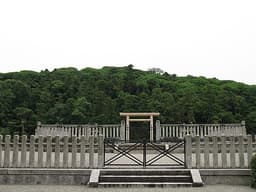
Emperor Ojin
Emperor · Ancient
46.6Total

Julius Caesar
General · Ancient
82.8Total
Basic Information
Born
201
-100
Died
310
-44
Era
Ancient
Ancient
Nationality
Japan
Roman Republic
Occupation
Emperor
General
Civilization
Eastern
Western
Score Comparison
Military (10%)
25.9
88.0
Political (20%)
26.4
78.0
Influence (20%)
56.4
85.0
Legacy (20%)
56.0
82.0
Leadership (15%)
55.3
80.0
Strategy (15%)
36.8
85.0
TOTAL
46.6
82.8
Emperor Ojin — Complete Timeline
270 AD
Reign of Emperor OjinPolitical Action◆ Major
Emperor Ojin is considered by some historians as the first historically verifiable emperor of Japan, with his reign marking the transition from legend to recorded history. He is associated with the introduction of continental culture and technology from Korea and China.
Historical TransitionYamato PeriodCultural Exchange
Impact: nationalconstructive
285 AD
Received Korean Scholars and ArtisansCultural◆ Major
Emperor Ojin is recorded as having welcomed scholars and artisans from the Korean kingdom of Baekje, who brought Chinese writing, Confucian texts, and advanced crafts to Japan. This cultural influx significantly influenced the development of Japanese civilization.
Cultural ExchangeWriting SystemTechnology Transfer
Impact: nationalconstructive
300 AD
Deification as HachimanCultural◆ Major
Emperor Ojin was posthumously deified as Hachiman, the Shinto god of war and archery. This syncretism of imperial ancestor worship with Buddhist and Shinto traditions made Hachiman a central deity in Japanese religion, especially among samurai.
DeificationShintoSamurai Culture
Impact: nationalconstructive
Julius Caesar — Complete Timeline
58 BC
Gallic WarsWar◆ Major
Caesar, as proconsul of Gaul, launched a series of campaigns that conquered all of Gaul (modern France, Belgium, and parts of Switzerland). He fought numerous battles, including against the Helvetii, the Belgae, and the Gallic chieftain Vercingetorix. The wars brought immense wealth and a loyal army to Caesar.
Gallic WarsConquestRoman Expansion
Impact: regional
49 BC
Crossing the RubiconPolitical Action◆ Major
Caesar led Legio XIII across the Rubicon River into Italy, defying the Roman Senate's order to disband his army. This act triggered a civil war against Pompey and the Optimates, ultimately leading to Caesar's dictatorship and the end of the Roman Republic.
Roman Civil WarEnd of RepublicPower Struggle
Impact: global
48 BC
Battle of PharsalusWar◆ Major
Caesar's outnumbered army defeated the larger forces of Pompey the Great at Pharsalus in Greece. Caesar's tactical use of a reserve line to counter Pompey's cavalry charge proved decisive. Pompey fled to Egypt, where he was assassinated, leaving Caesar as the undisputed master of the Roman world.
Roman Civil WarBattleDecisive Victory
Impact: regional
44 BC
Appointment as Dictator for LifePolitical Action◆ Major
The Roman Senate appointed Caesar dictator perpetuo (dictator for life), granting him unprecedented personal power. This move concentrated military, legislative, and judicial authority in one person, effectively ending the Roman Republic's traditional system of checks and balances and alarming many senators.
DictatorshipEnd of RepublicPower Consolidation
Impact: regionaldestructive
Assassination on the Ides of MarchPolitical Action◆ Major
A group of Roman senators, led by Marcus Junius Brutus and Gaius Cassius Longinus, stabbed Caesar to death at a meeting of the Senate in the Theatre of Pompey. The assassination was intended to restore the Republic, but instead triggered another civil war that led to the rise of the Roman Empire.
AssassinationRoman PoliticsEnd of Republic
Impact: globaldestructive
Expert Analysis
emperor-ojin-vs-julius-caesar
# The General and the God-Emperor: Two Paths to Immortality
On the Ides of March in 44 BCE, a Roman dictator fell beneath twenty-three dagger strokes in the Senate chamber, his blood pooling on the marble floor. Half a world away and three centuries later, an aging Japanese emperor passed from this life into legend, his body destined not for a tomb but for a shrine, his soul to become a god of war. Julius Caesar and Emperor Ojin never met, never corresponded, never knew of each other’s existence. Yet both men faced the same fundamental question: how does a mortal ruler achieve immortality? Their answers—one carved in conquest and political upheaval, the other woven into the fabric of Shinto belief—reveal the profound chasm between Western and Eastern conceptions of power, legacy, and the divine.
Origins
Caesar was born into the chaos of the late Roman Republic, a world of crumbling aristocratic norms and rising military strongmen. His family, the Julian clan, claimed descent from the goddess Venus, but their political influence had waned. The young Caesar watched his uncle Gaius Marius purge rivals in the civil wars, then saw Sulla’s proscriptions decimate his family’s allies. This brutal education taught him that in Rome, power was a knife—sharp, personal, and never safe. He learned Greek philosophy, studied rhetoric in Rhodes, and absorbed the ruthless pragmatism of a Republic already dying.
Emperor Ojin emerged from the mists of early Japanese history, a world where the imperial line claimed direct descent from the sun goddess Amaterasu. Historians debate his very existence; his traditional reign dates of 270 to 310 CE rest on chronicles written centuries later. What is certain is that Ojin ruled over a Yamato court consolidating power on the island of Honshu, surrounded by clan chieftains who worshipped local kami spirits. Where Caesar’s world was one of written laws and Senate debates, Ojin’s was one of oral tradition, ritual purity, and the slow absorption of Chinese writing and Buddhist thought from the Korean peninsula.
Rise to Power
Caesar’s path was a masterclass in calculated risk. He climbed the traditional Roman ladder of offices—quaestor, aedile, praetor—but always with an eye toward the extraordinary. His appointment as governor of Gaul in 58 BCE gave him the army he needed. Over eight years, he conquered what is now France and Belgium, slaughtering perhaps a million people and enslaving another million. The Gallic Wars made him the richest man in Rome and gave him a veteran army personally loyal to him, not the state. When the Senate ordered him to disband his forces, Caesar crossed the Rubicon River in 49 BCE, a line that meant civil war. “The die is cast,” he reportedly said—and with those words, the Republic died.
Ojin rose to power not through conquest but through bloodline and ritual. According to the *Nihon Shoki*, he was the son of Emperor Chuai and Empress Jingu, who herself became a legendary figure after allegedly invading Korea while pregnant. Ojin’s reign was marked not by dramatic military campaigns but by cultural absorption. In 285 CE, he received scholars and artisans from the Korean kingdom of Baekje, who brought Chinese classics, Confucian texts, and the technology of writing. This was power through cultivation, not coercion—a ruler who imported civilization rather than imposing it by the sword.
Leadership & Governance
Caesar ruled as a revolutionary reformer. As dictator, he overhauled the Roman calendar (creating the Julian calendar we still use in modified form), granted citizenship to provincials, initiated public works projects, and reformed debt laws. His military brilliance was undeniable—his *Commentaries on the Gallic War* remain a model of strategic clarity. Yet his political score of 78.0 reflects a fatal flaw: he understood how to seize power but not how to institutionalize it. He centralized authority in himself, mocked the Senate’s traditions, and accepted the title “dictator for life.” He was a genius at war but a novice at the slow, patient work of building consensus.
Ojin’s governance, by contrast, is almost invisible to history. His political score of 63.8 and military score of just 10.0 suggest a ruler who governed through ritual and lineage rather than legislation or conquest. His key contribution was cultural: by welcoming Korean scholars, he accelerated the introduction of Chinese governance models, Confucian ethics, and Buddhist art to Japan. This was soft power at its most enduring—not building an empire through legions, but building a civilization through ideas. His leadership score of 73.5 reflects a ruler who embodied stability and continuity rather than dramatic transformation.
Triumph & Tragedy
Caesar’s greatest triumph was his conquest of Gaul, which doubled Rome’s territory and made him master of the Western world. His most devastating failure was his assassination—a tragedy born of his own arrogance. He ignored warnings, dismissed the soothsayer’s “Beware the Ides of March,” and walked into the Senate unarmed. His murder plunged Rome into another round of civil wars that ended only with the rise of Augustus. Caesar’s tragedy was that he destroyed the Republic to save it, and in doing so, destroyed himself.
Ojin’s triumph was subtler: he became the first historically verifiable emperor of Japan, a line that claims unbroken descent to this day. His tragedy is that he is barely historical at all. We know almost nothing about his personality, his decisions, or his inner life. He exists as a placeholder, a bridge between myth and chronicle. Where Caesar’s life is a novel of ambition and betrayal, Ojin’s is a shadow play, visible only through the light of later legends.
Character & Destiny
Caesar was driven by an insatiable need for glory. He wept at the statue of Alexander the Great because Alexander had conquered the world at thirty-two while Caesar was still a minor official. He was charismatic, generous to his soldiers, and ruthless to his enemies. His personality—proud, calculating, emotionally detached—shaped every decision. He pardoned his assassins before they stabbed him, a gesture of contemptuous magnanimity that sealed his fate.
Ojin’s character is unknowable, but his destiny is clear: he became Hachiman, the Shinto god of war and archery. This deification, occurring around 300 CE, transformed a mortal emperor into a divine protector of Japan. Samurai would pray to Hachiman before battle; emperors would seek his blessing. Ojin achieved the immortality Caesar craved, but through opposite means—not by seizing power but by embodying it, not by conquering but by being worshipped.
Legacy
Caesar’s legacy is written in stone and blood. His name became a title: *Kaiser* in German, *Tsar* in Russian. His reforms shaped Western governance, his military tactics are still studied, and his assassination became the template for political murder. But his legacy is also a warning: the dictator who destroys the old order often creates the conditions for an even more absolute tyranny. His total score of 83.3 reflects a figure of immense but flawed greatness.
Ojin’s legacy is quieter but perhaps more profound. His deification as Hachiman created a bridge between imperial authority and religious faith that lasted until the modern era. He is still worshipped at thousands of shrines across Japan. His total score of 60.1 reflects a figure of modest historical impact but immense cultural endurance. Where Caesar’s name means empire, Ojin’s means divinity.
Conclusion
Standing on the Ides of March, Caesar could not have imagined a world where his power would be remembered as a cautionary tale. Kneeling before a Hachiman shrine, a medieval samurai could not have known that the god he prayed to was once a man. Both rulers sought to transcend mortality—one through conquest and reform, the other through lineage and worship. Their different paths illuminate a deeper truth: immortality is not achieved but conferred, and the conferring depends entirely on the culture that does the remembering. Caesar conquered the world and lost his life; Ojin lived in obscurity and became a god. Which of them truly won? The answer, like all historical judgments, depends entirely on who is asking.
Rankings
🥇
Julius CaesarLeader
Mil: 88.0Pol: 78.0Inf: 85.0
82.8
🥈
Emperor Ojin
Mil: 25.9Pol: 26.4Inf: 56.4
46.6
+36.2 behind
How This Comparison Works
Algorithm
Each figure is scored on 6 dimensions (0—100 scale) based on structured historical data: Military (10%), Political (20%), Influence (20%), Legacy (20%), Leadership (15%), Strategy (15%). The weighted total produces the final ranking.
Data Sources
Scores are computed from structured sub-indicators in the database. Scale factors adjust for era (Ancient ×0.85, Modern ×1.0) and civilization size (Eastern ×1.05, Other ×0.80) to account for differences in population and military scale.
Maximum 3 Figures
Comparisons are limited to 2—3 figures to ensure readability and statistical meaningfulness.
Error Margins
±5 points per dimension — Sub-scores are derived from historical records with inherent uncertainty. Two figures within 5 points on a dimension should be considered roughly equivalent in that area.
Total Score Accuracy
±3 points overall — The weighted combination of 6 dimensions produces a total score with approximately ±3 points of uncertainty. Differences of less than 3 points are not statistically significant— the figures are effectively tied.
Known Limitations
- Historical records are incomplete and uneven across civilizations
- Figures from oral-tradition societies may be underrepresented
- Occupation labels can misclassify multi-role figures
- Scores measure capability and impact, not moral character
- Quantitative scoring is a comparison tool, not absolute truth
Capability Radar
Military (10%) — Battles & Warfare
Battles
10
95
Win Rate
10
92
Expansion
10
97
Political (20%) — Governance & Reform
Reform
20
90
Diplomacy
20
85
Economy
20
82
Influence (20%) — Cultural & Global Reach
Cultural
70
88
Global
30
94
Legacy (20%) — Historical Impact
Historical
60
95
Longevity
80
96
Leadership (15%) — Power & Stability
Tenure
40
75
Stability
30
60
Strategy (15%) — Tactics & Innovation
Strategy
10
94
Tactics
10
96
Reform
10
88
Similar Comparisons
Comments & Discussion
TheBatteringRam6/17/2026
Comparing Caesar's assassination to Ojin's peaceful deification is like contrasting a volcano with a misty mountain. Caesar's genius was in strategy—Alesia proved he could starve an enemy into submission while repelling a relief force. But he failed at the one thing Ojin mastered: institutional continuity. Caesar centralized power around himself, so Rome bled when he fell. Ojin built a dynastic cult that outlasted him. The Gaulish rebellion showed Caesar could conquer; Ojin's legacy shows he cou
统计兵长6/17/2026
拿凯撒和应神比简直就是拿牛排比寿司,都是顶级食材但吃法完全两样。我查过数据,应神天皇的生平记载只有《古事记》和《日本书纪》,连他活了多少岁都众说纷纭,历史学者靠碳14测古坟土器才勉强拼凑出他的年代。而凯撒有西塞罗的私人信件、有阿庇安的战史、有他自己的《高卢战记》——光是高卢战争的年表就能精确到月。这种史料差距下比较功绩,根本是拿谜语对照史记。
VenusWrath6/17/2026
As a classics scholar, I find this comparison absurd. Caesar's divine claim was political theater—he had the Senate vote him a golden chair and priestly honors, then laughed at Mark Antony offering him a crown. His "divinity" was a power move, not a belief system. Ojin's deification was organic, woven into Shinto cosmology over centuries. Caesar's temple in the Forum was a dusty tourist attraction by Nero's reign; Ojin's shrines in Hachiman remain active worship sites today. One was propaganda,
大和武士6/17/2026
别跟我扯什么“东西方差异”,应神天皇压根不是凯撒那种凡人能比的。凯撒一辈子都在忙着屠杀高卢人、和庞培内斗,最后被元老院捅死在椅子上,死后还得靠养子屋大维擦屁股。反观应神天皇,日本神道教直接尊他为八幡神,武士时代的将领出征前都要拜他——源义经、足利尊氏、甚至织田信长都自称应神的后裔。凯撒只在欧洲史卷里活着,应神天皇在日本人的灵魂里永远不死。这就是差距。
NumismaticSkeptic6/17/2026
Coin evidence tells the real story. Caesar was the first living Roman to appear on a coin—a massive propaganda coup. But those denarii were political tools, minted for a few years and then recycled. Ojin's name appears on Japanese coinage for over a millennium, specifically on the Wadōkaichin and later imperial issues. That's not just survival; that's cultural absorption. Caesar bought his immortality with gold from Gaul