Loading...
Emperor Pedro I of Brazil vs Victor Emmanuel II
Victor Emmanuel II leads by 5.8 pts · 2 figures compared
…
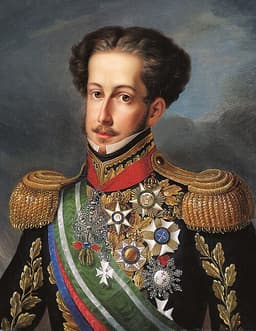
Emperor Pedro I of Brazil
Emperor · Modern
55.5Total
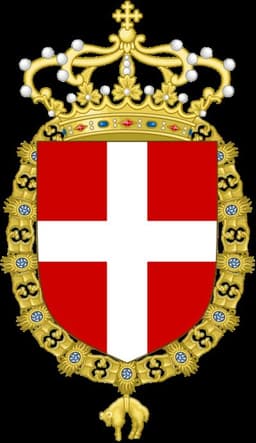
Victor Emmanuel II
Emperor · Modern
61.3Total
Basic Information
Born
1798
1820
Died
1834
1878
Era
Modern
Modern
Nationality
Brazil
Italy
Occupation
Emperor
Emperor
Civilization
Western
Western
Score Comparison
Military (10%)
55.0
47.5
Political (20%)
62.7
78.0
Influence (20%)
59.0
56.7
Legacy (20%)
50.0
52.0
Leadership (15%)
65.0
78.0
Strategy (15%)
35.7
60.0
TOTAL
55.5
61.3
Emperor Pedro I of Brazil — Complete Timeline
1822 AD
Declaration of Brazilian IndependencePolitical Action
Dom Pedro declared Brazil's independence from Portugal on September 7, 1822, at the Ipiranga River. He was acclaimed Emperor Pedro I of Brazil, establishing a constitutional monarchy separate from Portugal.
IndependenceFounding
Impact: globalprogressive
Coronation as Emperor of BrazilPolitical Action◆ Major
Pedro I was crowned Emperor of Brazil on December 1, 1822, in Rio de Janeiro. The coronation formalized his rule over the newly independent nation, with a constitution promulgated in 1824.
CoronationMonarchy
Impact: national
1825 AD
Cisplatine WarWar◆ Major
Brazil went to war with the United Provinces of the R
WarTerritorial Loss
Impact: regionaldestructive
1831 AD
Abdication of the Brazilian ThronePolitical Action
Facing political crisis and military unrest, Pedro I abdicated the Brazilian throne on April 7, 1831, in favor of his five-year-old son Pedro II. He then returned to Portugal to claim the Portuguese throne.
AbdicationPolitical Crisis
Impact: nationaltragic
Victor Emmanuel II — Complete Timeline
1848 AD
Promulgation of the Statuto AlbertinoReform◆ Major
As King of Sardinia, Victor Emmanuel II retained the Statuto Albertino, a constitution granted by his father. This constitution became the legal foundation of the Kingdom of Italy, establishing a constitutional monarchy with a parliamentary system.
ConstitutionMonarchyReform
Impact: nationalconstructive
1855 AD
Alliance with France in the Crimean WarWar◆ Major
Victor Emmanuel II sent Sardinian troops to fight alongside France and Britain in the Crimean War. This participation elevated Sardinia's diplomatic standing, leading to French support for Italian unification in the subsequent Plombi
Crimean WarDiplomacyItalian Unification
Impact: regionalconstructive
1861 AD
Proclaimed King of ItalyPolitical Action
Victor Emmanuel II was proclaimed King of Italy by the first Italian Parliament in Turin. This event formally unified most of the Italian peninsula under the House of Savoy, with the exception of Venetia and Rome, marking the birth of the Kingdom of Italy.
Italian UnificationRisorgimentoKingship
Impact: nationalconstructive
1866 AD
Annexation of VenetiaWar◆ Major
Following the Austro-Prussian War, Italy, allied with Prussia, annexed Venetia from Austria. Victor Emmanuel II's forces suffered defeats on land but gained the territory through the Treaty of Vienna, completing a key step in unification.
Italian UnificationVenetiaAnnexation
Impact: nationalconstructive
1870 AD
Capture of RomeWar
Italian troops under Victor Emmanuel II breached the Porta Pia in Rome, completing the unification of Italy. The Papal States were annexed, and Rome became the capital of the Kingdom of Italy, ending the temporal power of the Pope.
Italian UnificationRomePapal States
Impact: nationalconstructive
1878 AD
Death and LegacyOther◆ Major
Victor Emmanuel II died in Rome, having unified Italy under his rule. His death marked the end of the founding era of the Kingdom of Italy, and he was buried in the Pantheon, becoming a symbol of Italian unification.
DeathLegacyItalian Unification
Impact: national
Expert Analysis
Origins
Pedro I of Brazil was born on October 12, 1798, in Lisbon, Portugal, as the fourth child of King John VI of Portugal and Carlota Joaquina. The royal family fled to Brazil in 1807 during the Napoleonic invasions, giving Pedro a Brazilian upbringing. He received a military education but was more inclined to hunting and riding than books. Victor Emmanuel II was born on March 14, 1820, in Turin, Kingdom of Sardinia, as the eldest son of Charles Albert of Sardinia and Maria Theresa of Tuscany. He grew up in a strict court environment and received a military-oriented education, developing a pragmatic and cautious nature. Both were heirs to thrones but in vastly different colonial and regional contexts.
Rise to Power
Pedro I's rise came abruptly when his father, King John VI, returned to Portugal in 1821, leaving Pedro as regent of Brazil. Under pressure from Portuguese courts to reduce Brazilian autonomy, Pedro famously declared Brazil's independence on September 7, 1822, at the Ipiranga River. He was crowned Emperor of Brazil on December 1, 1822, consolidating his rule through military campaigns against Portuguese loyalists. Victor Emmanuel II ascended the throne of Sardinia in 1849 after his father's abdication following defeat by Austria. He retained the Statuto Albertino constitution and appointed Count Cavour as prime minister in 1852, forming a liberal alliance. Through diplomacy and war, he positioned Sardinia as the unifier of Italy, allying with France in the Crimean War (1853-1856) and orchestrating the Second Italian War of Independence (1859) against Austria. His political score of 78.0 reflects skilled maneuvering, while Pedro I scored 62.7, hindered by inexperience and constitutional conflicts.
Leadership & Governance
Pedro I governed Brazil as a constitutional emperor but frequently clashed with the General Assembly. He exerted strong executive power, dissolving the assembly in 1823 and imposing a constitution in 1824 that centralized authority. His leadership score of 65.0 shows decisive action but also authoritarian tendencies. He managed the costly Cisplatine War (1825-1828) over Uruguay, which ended in a stalemate and loss of the province, damaging his prestige. Victor Emmanuel II, with a leadership score of 78.0, was a constitutional monarch who delegated effectively to Cavour. He retained the Statuto Albertino, which became the foundation of unified Italy's legal system. He supported liberal reforms and economic modernization in Piedmont-Sardinia. While less involved in day-to-day governance, his symbolic role as king of a unified Italy was crucial, though his military strategy score of 60.0 exceeds Pedro's 35.7, reflecting better decision-making in war.
Triumph & Tragedy
Pedro I's greatest triumph was securing Brazil's independence and initial unity, but his tragedy was the failure to maintain popular support. He abdicated on April 7, 1831, after mounting political crises and military unrest, leaving his five-year-old son Pedro II. His legacy score of 50.0 reflects a mixed record: he founded an empire but could not sustain his rule. Victor Emmanuel II's triumph was the unification of Italy, proclaimed King of Italy in 1861 and completing unification with the capture of Rome in 1870. His tragedy was the incomplete nature of unification—Venetia was annexed only in 1866, and Rome was taken with French withdrawal. He also faced regional disparities and the Roman Question. His legacy score of 52.0 is slightly higher, as his reign established a unified state, though his personal influence was limited.
Character & Destiny
Pedro I was impulsive, romantic, and authoritarian, often making decisions based on personal loyalty rather than political calculation. His affair with the Marchioness of Santos and conflicts with his wife, Empress Leopoldina, undermined his moral authority. His character led to a volatile reign, ending in abdication. Victor Emmanuel II was pragmatic, shrewd, and cautious, known as "Il Re Galantuomo" (the Gentleman King). He prioritized stability and worked through constitutional channels, which enabled him to unify Italy under a monarchy. His character aligned with the Risorgimento's needs, though he remained a figurehead to actual nation-building by Cavour and Garibaldi. His total score of 61.3 is higher than Pedro's 55.5, reflecting greater political acumen and strategic patience.
Legacy
Pedro I is remembered as Brazil's liberator and founder, but his reign is overshadowed by his son Pedro II's long, stable rule. His legacy score of 50.0 acknowledges his foundational role but also the instability he left. Victor Emmanuel II's legacy is the unified Kingdom of Italy, which lasted until 1946. His legacy score of 52.0 is slightly higher, as he is a national symbol of Italian unification, with monuments like the Altare della Patria in Rome. However, his influence score of 56.7 versus Pedro's 59.0 shows Pedro's greater direct impact on Brazil's early identity.
Conclusion
Victor Emmanuel II achieved a greater impact on history than Pedro I, as evidenced by his higher total score (61.3 vs. 55.5). He successfully unified a fragmented nation into a major European power, while Pedro I, despite founding an independent Brazil, failed to secure his own rule and left a contested legacy. Victor Emmanuel II's political and leadership scores (78.0 each) far exceed Pedro's (62.7 and 65.0), demonstrating more effective governance. Although Pedro's declaration of independence was a pivotal event, his inability to consolidate power and his abdication reduce his long-term influence. Therefore, Victor Emmanuel II stands as the more successful empire-builder.
Rankings
🥇
Victor Emmanuel IILeader
Mil: 47.5Pol: 78.0Inf: 56.7
61.3
🥈
Emperor Pedro I of Brazil
Mil: 55.0Pol: 62.7Inf: 59.0
55.5
+5.8 behind
How This Comparison Works
Algorithm
Each figure is scored on 6 dimensions (0—100 scale) based on structured historical data: Military (10%), Political (20%), Influence (20%), Legacy (20%), Leadership (15%), Strategy (15%). The weighted total produces the final ranking.
Data Sources
Scores are computed from structured sub-indicators in the database. Scale factors adjust for era (Ancient ×0.85, Modern ×1.0) and civilization size (Eastern ×1.05, Other ×0.80) to account for differences in population and military scale.
Maximum 3 Figures
Comparisons are limited to 2—3 figures to ensure readability and statistical meaningfulness.
Error Margins
±5 points per dimension — Sub-scores are derived from historical records with inherent uncertainty. Two figures within 5 points on a dimension should be considered roughly equivalent in that area.
Total Score Accuracy
±3 points overall — The weighted combination of 6 dimensions produces a total score with approximately ±3 points of uncertainty. Differences of less than 3 points are not statistically significant— the figures are effectively tied.
Known Limitations
- Historical records are incomplete and uneven across civilizations
- Figures from oral-tradition societies may be underrepresented
- Occupation labels can misclassify multi-role figures
- Scores measure capability and impact, not moral character
- Quantitative scoring is a comparison tool, not absolute truth
Capability Radar
Military (10%) — Battles & Warfare
Battles
25
45
Win Rate
30
55
Expansion
35
65
Political (20%) — Governance & Reform
Reform
50
75
Diplomacy
45
80
Economy
30
60
Influence (20%) — Cultural & Global Reach
Cultural
45
65
Global
40
60
Legacy (20%) — Historical Impact
Historical
55
70
Longevity
50
65
Leadership (15%) — Power & Stability
Tenure
40
70
Stability
20
55
Strategy (15%) — Tactics & Innovation
Strategy
25
60
Tactics
20
40
Reform
15
50
Similar Comparisons
Comments & Discussion
No comments yet. Be the first to share your thoughts!