Loading...
Emperor Pedro I of Brazil vs Zayed bin Sultan Al Nahyan
Zayed bin Sultan Al Nahyan leads by 8.3 pts · 2 figures compared
…
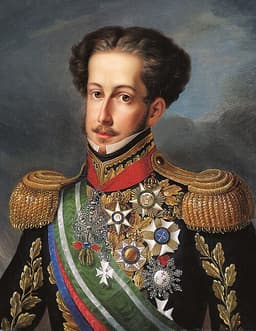
Emperor Pedro I of Brazil
Emperor · Modern
55.5Total
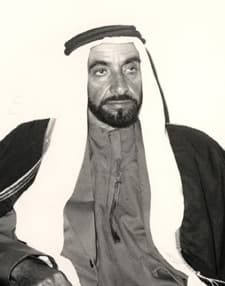
Zayed bin Sultan Al Nahyan
Emperor · Modern
63.8Total
Basic Information
Born
1798
1918
Died
1834
2004
Era
Modern
Modern
Nationality
Brazil
UAE
Occupation
Emperor
Emperor
Civilization
Western
Middle Eastern
Score Comparison
Military (10%)
55.0
11.3
Political (20%)
62.7
82.0
Influence (20%)
59.0
68.0
Legacy (20%)
50.0
72.0
Leadership (15%)
65.0
85.0
Strategy (15%)
35.7
25.7
TOTAL
55.5
63.8
Emperor Pedro I of Brazil — Complete Timeline
1822 AD
Declaration of Brazilian IndependencePolitical Action
Dom Pedro declared Brazil's independence from Portugal on September 7, 1822, at the Ipiranga River. He was acclaimed Emperor Pedro I of Brazil, establishing a constitutional monarchy separate from Portugal.
IndependenceFounding
Impact: globalprogressive
Coronation as Emperor of BrazilPolitical Action◆ Major
Pedro I was crowned Emperor of Brazil on December 1, 1822, in Rio de Janeiro. The coronation formalized his rule over the newly independent nation, with a constitution promulgated in 1824.
CoronationMonarchy
Impact: national
1825 AD
Cisplatine WarWar◆ Major
Brazil went to war with the United Provinces of the R
WarTerritorial Loss
Impact: regionaldestructive
1831 AD
Abdication of the Brazilian ThronePolitical Action
Facing political crisis and military unrest, Pedro I abdicated the Brazilian throne on April 7, 1831, in favor of his five-year-old son Pedro II. He then returned to Portugal to claim the Portuguese throne.
AbdicationPolitical Crisis
Impact: nationaltragic
Zayed bin Sultan Al Nahyan — Complete Timeline
1970 AD
Oil Revenue Investment in InfrastructureReform◆ Major
After the discovery of oil in Abu Dhabi in the 1950s, Zayed directed oil revenues toward building modern infrastructure: roads, hospitals, schools, and housing. This transformed Abu Dhabi from a poor region into a wealthy state.
OilDevelopmentInfrastructure
Impact: nationalconstructive
1971 AD
Formation of the United Arab EmiratesPolitical Action
Zayed bin Sultan Al Nahyan, as ruler of Abu Dhabi, played a key role in uniting seven emirates to form the United Arab Emirates on December 2, 1971. He became the first President, a position he held until his death.
UnificationUAEIndependence
Impact: regionalconstructive
1990 AD
Environmental Conservation InitiativesReform
Zayed established the Zayed International Prize for the Environment and implemented policies to protect wildlife and habitats, including the creation of nature reserves. He was a pioneer in environmentalism in the Gulf region.
EnvironmentConservationAwards
Impact: regionalconstructive
Women's Rights ReformsReform◆ Major
Zayed supported women's education and employment, appointing women to government positions and promoting their participation in the workforce. These reforms were progressive for the region at the time.
Women's RightsEducationReform
Impact: nationalprogressive
2004 AD
Death and LegacyOther◆ Major
Zayed died on November 2, 2004, after a long illness. His funeral drew massive crowds, and he was mourned as the founding father of the UAE. His legacy includes a stable, prosperous federation.
DeathLegacyFounding Father
Impact: nationaltragic
Expert Analysis
Emperor Pedro I of Brazil vs Zayed bin Sultan Al Nahyan
### The Desert Father and the Exiled Emperor
On the morning of November 2, 2004, the streets of Abu Dhabi fell silent. Thousands of mourners, their faces etched with grief, lined the route to the Grand Mosque. They had come to bid farewell to Sheikh Zayed bin Sultan Al Nahyan, the man who had conjured a nation from sand and sea. Half a world away, and 173 years earlier, another emperor had fled his throne in the dead of night. Dom Pedro I of Brazil, a man who had once shouted “Independence or Death!” to a cheering crowd, slipped away from Rio de Janeiro on a British warship, leaving behind a country he had birthed but could not govern. Both were founders. Both were emperors in all but name. Yet one died a father of his people, the other an exile in a foreign palace. What made the difference?
### Origins: Sand and Silver
Zayed bin Sultan Al Nahyan was born into a world of stark hardship. The year was 1918, in the oasis city of Al Ain, a speck of green in the vast Empty Quarter. The Trucial States, as the region was then known, were a collection of impoverished sheikhdoms, their economy built on pearl diving, fishing, and the thin margins of desert trade. Zayed grew up in the desert, learning the Bedouin arts of survival, falconry, and tribal diplomacy. His father, Sultan bin Zayed, was the ruler of Abu Dhabi, but the family’s power was fragile, contested by rival tribes and the slow decay of British imperial neglect. Zayed’s education was not in books but in the open air—a schooling in patience, observation, and the unspoken laws of honor.
Pedro I of Brazil, by contrast, was born with a silver spoon that was, in fact, a Portuguese crown. Born in 1798 in the Queluz Palace near Lisbon, he was the son of King John VI of Portugal and the Spanish infanta Carlota Joaquina. His childhood was a gilded cage of court intrigue. When Napoleon’s armies invaded Portugal in 1807, the entire royal family fled to Brazil, turning Rio de Janeiro into the capital of the Portuguese Empire. Young Pedro grew up in a tropical Versailles, surrounded by sycophants, soldiers, and the simmering resentments of a colony that knew it was richer than its motherland. He was impulsive, charming, and reckless—a prince trained for a throne he would have to seize.
### Rise to Power: The Declaration and the Unity
Zayed’s rise was slow, a matter of earned trust. He became the ruler of Abu Dhabi in 1966, after his brother was deposed by a family council. At that moment, the discovery of oil was transforming the Gulf. Zayed understood immediately that wealth was a tool, not a prize. He began pouring oil revenues into roads, schools, and hospitals, but his grand vision was political: to unite the seven squabbling emirates into a single nation. On December 2, 1971, the United Arab Emirates was born. Zayed was elected its first president, a role he would hold for 33 years. He did not conquer; he persuaded. He did not dictate; he distributed.
Pedro’s rise was faster and more dramatic. In 1821, when his father King John VI returned to Portugal, leaving Pedro as regent in Brazil, the Portuguese parliament (the Cortes) tried to reduce Brazil back to colonial status. They demanded Pedro return to Europe. Instead, on January 9, 1822, he defied them with the cry “Fico!” (“I will stay!”). Eight months later, on September 7, by the Ipiranga River, he drew his sword and declared Brazil independent. He was crowned Emperor on December 1, 1822, at the age of 24. It was a triumph of will, not of strategy.
### Leadership & Governance: The Builder and the Brawler
As a ruler, Zayed was a master of soft power. He governed not through decrees but through majlis—open councils where any citizen could speak. He used oil wealth to build a modern state from scratch: free education, universal healthcare, a network of highways and ports. But his deepest legacy was his environmental vision. In 1990, he established the Zayed International Prize for the Environment and launched massive reforestation projects, planting millions of trees in the desert. He also broke with tradition by supporting women’s rights, appointing the first female minister in the Gulf and promoting girls’ education. His leadership was patriarchal but benevolent, a Bedouin sheikh who saw his people as an extended family.
Pedro I was a brawler. He led his troops personally during the War of Independence, and later threw Brazil into the Cisplatine War (1825–1828) over what is now Uruguay—a costly, pointless conflict that drained the treasury and earned nothing. His political style was authoritarian and erratic. He dissolved the Constituent Assembly when it tried to limit his powers, then imposed a constitution that was, ironically, more liberal than he was. He married twice—first to the tragic Leopoldina, then to the scheming Amélie—and his personal life was a scandal of affairs and public quarrels. He was brave, but he was also brittle.
### Triumph & Tragedy: The Father and the Fugitive
Zayed’s greatest triumph was the UAE itself. He turned a collection of desert sheikhdoms into one of the world’s most stable and prosperous nations. His tragedy was personal: the long illness that slowly consumed him, and the knowledge that his sons would inherit a world of immense wealth and immense challenge.
Pedro’s triumph was the declaration of independence—a moment of pure, magnetic courage. His tragedy was everything that followed. By 1831, Brazil was in chaos: military revolts, economic collapse, and a bitter feud with his ministers. On April 7, 1831, he abdicated in favor of his five-year-old son, Pedro II, and sailed for Europe. He would die three years later in Portugal, at the age of 35, having won a brief civil war there but never returning to the land he had freed.
### Character & Destiny: Patience vs. Passion
Zayed was a man of deep, deliberate calm. He once said, “The real wealth is not in oil; it is in people.” His personality was shaped by the desert—a place where haste kills, and patience is survival. He did not seek glory; he sought stability. Pedro was a man of fire. He lived by the sword, loved by impulse, and ruled by whim. His motto might have been his own cry: “Independence or Death!” But he did not know how to live with the independence he had won. He was a liberator who could not govern, a revolutionary who could not build.
### Legacy: A Nation and a Footnote
Zayed is remembered as the father of the UAE. His face adorns currency, his name graces mosques and universities, and his vision defines a nation. His legacy score of 73.9 reflects the quiet endurance of his work. Pedro I is a more ambiguous figure. Brazilians honor him as the founder of their nation, but his legacy is overshadowed by his son, Pedro II, who reigned for 49 years and is considered the true architect of modern Brazil. Pedro I’s score of 70.0 is a testament to a moment, not a lifetime.
### Conclusion: The Two Roads
One emperor built a country from nothing and died loved. The other built a country from something and died alone. The difference was not in their ambition—both wanted greatness—but in their patience. Zayed understood that power is a trust, not a toy. Pedro believed it was a prize. In the end, the desert sheikh who had never seen a skyscraper left behind a skyline of glass and steel. The prince who had inherited a palace left behind a crown he could not hold. History remembers both, but it honors only one.
Rankings
🥇
Zayed bin Sultan Al NahyanLeader
Mil: 11.3Pol: 82.0Inf: 68.0
63.8
🥈
Emperor Pedro I of Brazil
Mil: 55.0Pol: 62.7Inf: 59.0
55.5
+8.3 behind
How This Comparison Works
Algorithm
Each figure is scored on 6 dimensions (0—100 scale) based on structured historical data: Military (10%), Political (20%), Influence (20%), Legacy (20%), Leadership (15%), Strategy (15%). The weighted total produces the final ranking.
Data Sources
Scores are computed from structured sub-indicators in the database. Scale factors adjust for era (Ancient ×0.85, Modern ×1.0) and civilization size (Eastern ×1.05, Other ×0.80) to account for differences in population and military scale.
Maximum 3 Figures
Comparisons are limited to 2—3 figures to ensure readability and statistical meaningfulness.
Error Margins
±5 points per dimension — Sub-scores are derived from historical records with inherent uncertainty. Two figures within 5 points on a dimension should be considered roughly equivalent in that area.
Total Score Accuracy
±3 points overall — The weighted combination of 6 dimensions produces a total score with approximately ±3 points of uncertainty. Differences of less than 3 points are not statistically significant— the figures are effectively tied.
Known Limitations
- Historical records are incomplete and uneven across civilizations
- Figures from oral-tradition societies may be underrepresented
- Occupation labels can misclassify multi-role figures
- Scores measure capability and impact, not moral character
- Quantitative scoring is a comparison tool, not absolute truth
Capability Radar
Military (10%) — Battles & Warfare
Battles
25
4
Win Rate
30
9
Expansion
35
12
Political (20%) — Governance & Reform
Reform
50
90
Diplomacy
45
95
Economy
30
90
Influence (20%) — Cultural & Global Reach
Cultural
45
70
Global
40
70
Legacy (20%) — Historical Impact
Historical
55
75
Longevity
50
65
Leadership (15%) — Power & Stability
Tenure
40
85
Stability
20
85
Strategy (15%) — Tactics & Innovation
Strategy
25
16
Tactics
20
16
Reform
15
18
Similar Comparisons
Comments & Discussion
No comments yet. Be the first to share your thoughts!