Loading...
Emperor Taizu of Jin vs Philip IV the Fair
Emperor Taizu of Jin leads by 4.2 pts · 2 figures compared
…
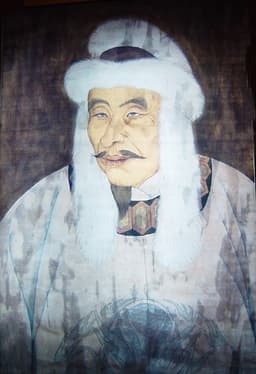
Emperor Taizu of Jin
Emperor · Medieval
63.5Total
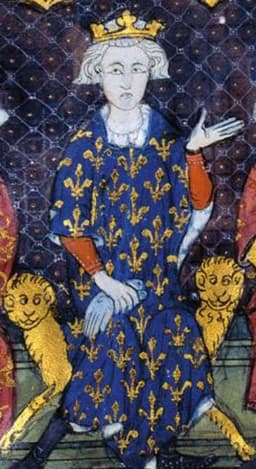
Philip IV the Fair
Emperor · Medieval
59.3Total
Basic Information
Born
1068
1268
Died
1123
1314
Era
Medieval
Medieval
Nationality
China
France
Occupation
Emperor
Emperor
Civilization
Eastern
Western
Score Comparison
Military (10%)
82.0
50.0
Political (20%)
65.0
72.0
Influence (20%)
55.0
60.0
Legacy (20%)
55.0
56.0
Leadership (15%)
72.0
68.0
Strategy (15%)
72.0
43.3
TOTAL
63.5
59.3
Emperor Taizu of Jin — Complete Timeline
1114 AD
Unification of the Jurchen tribesWar◆ Major
Wanyan Aguda led the Jurchen tribes in a rebellion against the Khitan-led Liao dynasty. He unified the Jurchen clans under his leadership, establishing a confederation that would form the basis of the Jin dynasty.
Jurchen unificationRebellionLiao dynasty
Impact: regionalconstructive
1115 AD
Battle of Hubu RiverWar◆ Major
Aguda's Jin forces defeated a Liao army at the Hubu River. This victory secured Jin control over the Liao's eastern territories and demonstrated the military effectiveness of the Jurchen cavalry against the Khitan.
BattleLiao-Jin WarMilitary victory
Impact: regional
Proclamation of the Jin dynastyPolitical Action◆ Major
Wanyan Aguda declared himself emperor, founding the Jin dynasty. He adopted the Chinese-style reign name Shouguo and established a centralized administration, marking the formal beginning of the Jin state.
Dynasty foundingImperial proclamationJin dynasty
Impact: regionalconstructive
1120 AD
Capture of the Liao Supreme CapitalWar◆ Major
Jin forces under Aguda captured the Liao dynasty's Supreme Capital (Shangjing). This conquest crippled the Liao state and forced the Liao emperor Tianzuo to flee, effectively ending Liao resistance in the region.
Capital captureLiao-Jin WarConquest
Impact: regional
Alliance with the Song dynastyPolitical Action◆ Major
Aguda negotiated the Alliance of the Sea with the Song dynasty, agreeing to jointly attack the Liao dynasty. The Song would receive the Sixteen Prefectures, while Jin would take the rest of Liao territory.
Diplomatic allianceSong-Jin relationsLiao partition
Impact: regional
Philip IV the Fair — Complete Timeline
1302 AD
Conflict with Pope Boniface VIIIPolitical Action◆ Major
Philip IV clashed with Pope Boniface VIII over taxation of clergy and royal authority. He sent troops to arrest the pope at Anagni, leading to Boniface's death. This conflict asserted French royal supremacy over papal power.
Papal ConflictPower StruggleCapetian
Impact: globaldestructive
Convocation of the Estates GeneralPolitical Action◆ Major
Philip IV convened the first Estates General of France, bringing together clergy, nobility, and commoners to gain support for his conflict with the papacy. This established a precedent for representative assemblies in France.
Estates GeneralGovernanceCapetian
Impact: nationalconstructive
1306 AD
Expulsion of the Jews from FrancePolitical Action◆ Major
Philip IV ordered the expulsion of Jews from France and confiscated their property. This action was motivated by financial need and religious intolerance, and it deprived the kingdom of a significant economic community.
ExpulsionAnti-SemitismCapetian
Impact: nationaldestructive
1307 AD
Suppression of the Knights TemplarPolitical Action
Philip IV ordered the mass arrest of Knights Templar in France on charges of heresy, blasphemy, and corruption. He pressured Pope Clement V to disband the order, seizing their wealth and lands, which enriched the French crown.
Knights TemplarPersecutionPower
Impact: globaldestructive
Expert Analysis
Origins
Emperor Taizu of Jin, born Wanyan Aguda in 1068, was a chieftain of the Wanyan clan among the Jurchen tribes in what is now northeastern China. The Jurchen were semi-nomadic peoples under the domination of the Khitan-led Liao dynasty. Aguda grew up in a warrior culture, learning horsemanship and archery. His father, Helibo, was a leader who fought to unify Jurchen clans. Aguda's early experiences in tribal warfare and his exposure to Chinese administrative practices through Liao influence shaped his ambitions.
Philip IV the Fair, born in 1268 at Fontainebleau, was the son of King Philip III of France and Isabella of Aragon. He was raised in the Capetian court, steeped in the traditions of French monarchy. His education emphasized theology, law, and administration. Philip inherited a kingdom already powerful but faced challenges from the papacy and feudal lords. His nickname 'the Fair' referred to his handsome appearance, not his policies.
Rise to Power
Aguda rose to prominence by leading a rebellion against the Liao dynasty in 1114. He unified the Jurchen tribes under his leadership, leveraging grievances against Khitan oppression. His first major victory was the Battle of Hubu River in 1114, where his forces defeated a Liao army despite being outnumbered. This victory galvanized support. In 1115, he proclaimed the Jin dynasty, taking the reign name Shouguo. He then captured the Liao Supreme Capital in 1120, crippling the Liao state. His alliance with the Song dynasty in 1120, known as the Alliance of the Sea, sealed Liao's fate.
Philip IV became king of France in 1285 at age 17. He inherited a stable kingdom but sought to expand royal authority. His rise was marked by conflicts with the papacy. In 1296, he clashed with Pope Boniface VIII over taxing clergy. Philip convened the first Estates General in 1302 to gain support. He sent troops to arrest Boniface at Anagni in 1303, leading to the pope's death. This assertion of royal power over the church was unprecedented.
Leadership & Governance
Aguda's leadership was direct and military-focused. He centralized Jurchen tribes into a state modeled on Chinese bureaucracy but retained tribal elements. He implemented a system of military registers (meng'an mouke) that organized society for war. His governance was pragmatic: he adopted Chinese writing for administration but preserved Jurchen customs. He scored 72.0 in leadership and 72.0 in strategy, reflecting his ability to combine military and political tools.
Philip IV's leadership was administrative and legalistic. He expanded royal justice and taxation, centralizing power through officials from the middle class rather than nobility. He used propaganda and legal maneuvers to justify his actions. His conflict with the papacy led to the Avignon Papacy, weakening papal authority. Philip scored 68.0 in leadership and 72.0 in political, but only 50.0 in military, as he rarely led armies himself.
Triumph & Tragedy
Aguda's greatest triumph was founding the Jin dynasty and destroying the Liao. He conquered the Liao Supreme Capital and forced the Liao emperor to flee. The Alliance of the Sea with Song was a diplomatic success. However, his tragedy was dying in 1123 before completing the conquest of Liao and facing the Song. His successors completed the work but also overextended, leading to later conflicts.
Philip IV's triumph was the destruction of the Knights Templar in 1307-1312, seizing their wealth and eliminating a rival power. He also forced the papacy to relocate to Avignon, establishing French influence over the church. His tragedy was financial instability; his persecution of Jews and Templars was driven by debt. His policies strained the economy and sowed resentment. He died in 1314 after a hunting accident, leaving a weakened monarchy.
Character & Destiny
Aguda was a warrior-king, decisive and charismatic. He led from the front in battles, earning loyalty. His character was shaped by tribal traditions but open to innovation. His destiny was to create a dynasty that ruled for a century. However, his early death meant his vision was incomplete.
Philip IV was cold, calculating, and secretive. He relied on legal experts like Guillaume de Nogaret. His character was inflexible and ruthless, leading to conflicts with the church and nobility. His destiny was to strengthen the French monarchy but at the cost of moral authority. His actions contributed to the later Hundred Years' War by straining resources.
Legacy
Aguda's Jin dynasty lasted until 1234, ruling northern China. His administrative and military systems influenced later dynasties. The Jurchen identity evolved into the Manchu, who later founded the Qing dynasty. His legacy is that of a state-builder who integrated tribal and Chinese elements. He scored 55.0 in influence and 55.0 in legacy.
Philip IV's legacy is the assertion of royal supremacy over the church and the establishment of the Estates General. His suppression of the Templars destroyed a major military order. He centralized French administration but left a legacy of fiscal problems. His influence on absolutism is noted, but his methods were controversial. He scored 60.0 in influence and 56.0 in legacy.
Conclusion
Emperor Taizu of Jin had greater impact due to his military and state-building achievements. His total score of 63.5 exceeds Philip IV's 59.3. Aguda founded a dynasty that reshaped East Asian politics, while Philip's actions, though significant, were more destructive than constructive. Aguda's unification of the Jurchen and conquest of Liao had lasting demographic and political effects, whereas Philip's legacy is tied to the decline of papal power and the rise of French absolutism, which was less transformative globally. Therefore, Aguda's impact as a founder outweighs Philip's as a consolidator.
Rankings
🥇
Emperor Taizu of JinLeader
Mil: 82.0Pol: 65.0Inf: 55.0
63.5
🥈
Philip IV the Fair
Mil: 50.0Pol: 72.0Inf: 60.0
59.3
+4.2 behind
How This Comparison Works
Algorithm
Each figure is scored on 6 dimensions (0—100 scale) based on structured historical data: Military (10%), Political (20%), Influence (20%), Legacy (20%), Leadership (15%), Strategy (15%). The weighted total produces the final ranking.
Data Sources
Scores are computed from structured sub-indicators in the database. Scale factors adjust for era (Ancient ×0.85, Modern ×1.0) and civilization size (Eastern ×1.05, Other ×0.80) to account for differences in population and military scale.
Maximum 3 Figures
Comparisons are limited to 2—3 figures to ensure readability and statistical meaningfulness.
Error Margins
±5 points per dimension — Sub-scores are derived from historical records with inherent uncertainty. Two figures within 5 points on a dimension should be considered roughly equivalent in that area.
Total Score Accuracy
±3 points overall — The weighted combination of 6 dimensions produces a total score with approximately ±3 points of uncertainty. Differences of less than 3 points are not statistically significant— the figures are effectively tied.
Known Limitations
- Historical records are incomplete and uneven across civilizations
- Figures from oral-tradition societies may be underrepresented
- Occupation labels can misclassify multi-role figures
- Scores measure capability and impact, not moral character
- Quantitative scoring is a comparison tool, not absolute truth
Capability Radar
Military (10%) — Battles & Warfare
Battles
85
20
Win Rate
90
25
Expansion
85
15
Political (20%) — Governance & Reform
Reform
75
75
Diplomacy
80
65
Economy
65
60
Influence (20%) — Cultural & Global Reach
Cultural
55
50
Global
50
50
Legacy (20%) — Historical Impact
Historical
70
65
Longevity
60
55
Leadership (15%) — Power & Stability
Tenure
70
70
Stability
60
55
Strategy (15%) — Tactics & Innovation
Strategy
85
35
Tactics
88
30
Reform
75
40
Similar Comparisons
Comments & Discussion
No comments yet. Be the first to share your thoughts!