Loading...
Emperor Taizu of Liao vs Julius Caesar
Julius Caesar leads by 16.0 pts · 2 figures compared
…
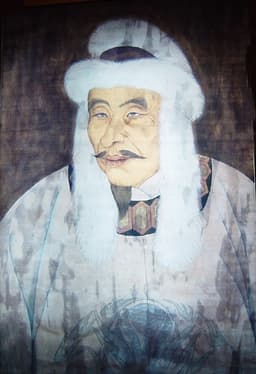
Emperor Taizu of Liao
Emperor · Medieval
66.8Total

Julius Caesar
General · Ancient
82.8Total
Basic Information
Born
872
-100
Died
926
-44
Era
Medieval
Ancient
Nationality
China
Roman Republic
Occupation
Emperor
General
Civilization
Eastern
Western
Score Comparison
Military (10%)
76.0
88.0
Political (20%)
78.0
78.0
Influence (20%)
72.0
85.0
Legacy (20%)
40.0
82.0
Leadership (15%)
80.0
80.0
Strategy (15%)
75.0
85.0
TOTAL
66.8
82.8
Emperor Taizu of Liao — Complete Timeline
907 AD
Founding of the Liao DynastyPolitical Action
Abaoji, a Khitan chieftain, unified the Khitan tribes and proclaimed himself emperor, founding the Liao dynasty. This established the first major steppe-based dynasty to rule parts of northern China.
Dynasty FoundingUnification
Impact: regionalconstructive
916 AD
Establishment of the Dual Administration SystemReform◆ Major
Emperor Taizu established a dual administration system, with separate institutions for Khitan and Chinese subjects. This allowed the Liao to effectively govern both nomadic and agricultural populations, a model later adopted by other conquest dynasties.
Government ReformAdministration
Impact: regionalconstructive
920 AD
Creation of the Khitan ScriptCultural◆ Major
Emperor Taizu ordered the creation of a Khitan script, based on Chinese characters, to write the Khitan language. This script was used for official documents and inscriptions, promoting Khitan culture and administration.
Writing SystemCultural Development
Impact: regionalconstructive
926 AD
Conquest of the Bohai KingdomWar◆ Major
Emperor Taizu led a campaign that conquered the Bohai Kingdom in Manchuria. This victory expanded Liao territory eastward and eliminated a rival state, securing the Liao's eastern frontier.
ConquestExpansion
Impact: regionalconstructive
Death of Emperor TaizuPolitical Action
Emperor Taizu died during a campaign against the Bohai Kingdom. His death led to a succession struggle among his sons, but his son Yel
DeathSuccession
Impact: national
Julius Caesar — Complete Timeline
58 BC
Gallic WarsWar◆ Major
Caesar, as proconsul of Gaul, launched a series of campaigns that conquered all of Gaul (modern France, Belgium, and parts of Switzerland). He fought numerous battles, including against the Helvetii, the Belgae, and the Gallic chieftain Vercingetorix. The wars brought immense wealth and a loyal army to Caesar.
Gallic WarsConquestRoman Expansion
Impact: regional
49 BC
Crossing the RubiconPolitical Action◆ Major
Caesar led Legio XIII across the Rubicon River into Italy, defying the Roman Senate's order to disband his army. This act triggered a civil war against Pompey and the Optimates, ultimately leading to Caesar's dictatorship and the end of the Roman Republic.
Roman Civil WarEnd of RepublicPower Struggle
Impact: global
48 BC
Battle of PharsalusWar◆ Major
Caesar's outnumbered army defeated the larger forces of Pompey the Great at Pharsalus in Greece. Caesar's tactical use of a reserve line to counter Pompey's cavalry charge proved decisive. Pompey fled to Egypt, where he was assassinated, leaving Caesar as the undisputed master of the Roman world.
Roman Civil WarBattleDecisive Victory
Impact: regional
44 BC
Appointment as Dictator for LifePolitical Action◆ Major
The Roman Senate appointed Caesar dictator perpetuo (dictator for life), granting him unprecedented personal power. This move concentrated military, legislative, and judicial authority in one person, effectively ending the Roman Republic's traditional system of checks and balances and alarming many senators.
DictatorshipEnd of RepublicPower Consolidation
Impact: regionaldestructive
Assassination on the Ides of MarchPolitical Action◆ Major
A group of Roman senators, led by Marcus Junius Brutus and Gaius Cassius Longinus, stabbed Caesar to death at a meeting of the Senate in the Theatre of Pompey. The assassination was intended to restore the Republic, but instead triggered another civil war that led to the rise of the Roman Empire.
AssassinationRoman PoliticsEnd of Republic
Impact: globaldestructive
Expert Analysis
emperor-taizu-of-liao-vs-julius-caesar
# The General and the Unifier
On the Ides of March, 44 BCE, a Roman dictator fell beneath twenty-three dagger blows in the Senate chamber. Half a world away and nearly a millennium later, in 926 CE, a Khitan emperor died on campaign against the Bohai Kingdom, his body cooling in a tent while succession struggles simmered among his sons. Julius Caesar and Yelü Abaoji—Emperor Taizu of Liao—never met, never knew of each other's worlds. Yet both faced the same fundamental question: how does one man transform a fractured people into an empire? Their answers, forged in radically different circumstances, created legacies that still echo across civilizations.
Origins
Caesar was born into the twilight of the Roman Republic, a world of senatorial intrigue, civil wars, and crumbling traditions. His patrician family, the Julii, claimed descent from the goddess Venus, but their political fortunes had waned. Young Caesar learned early that in Rome, prestige was a currency that could be spent, borrowed, or stolen. His uncle Marius and his rival Sulla taught him that the Republic's institutions were hollow shells—real power lay in armies and alliances.
Abaoji emerged from the steppes of Inner Mongolia, where the Khitan tribes lived as nomadic herders and horsemen. Born in 872 CE, he inherited a world of tribal rivalries, Chinese influence, and the eternal tension between the open grasslands and the settled farmlands to the south. Unlike Caesar, who grew up surrounded by marble temples and legal arguments, Abaoji learned leadership around campfires, where a chieftain's authority depended on his ability to hunt, fight, and negotiate with neighboring clans. The Khitan had no Senate, no written laws—only the shifting loyalties of warriors who could ride away if displeased.
Rise to Power
Caesar's path was a masterclass in calculated risk. He climbed the Roman political ladder—quaestor, aedile, praetor—borrowing vast sums to fund games and bribes. His appointment as governor of Gaul in 58 BCE gave him the weapon he needed: a legion. Over eight years, he conquered modern France and Belgium, amassing wealth, fame, and a veteran army loyal to him personally. When the Senate ordered him to disband, Caesar crossed the Rubicon River in 49 BCE, igniting a civil war that ended with him as dictator. His rise was a story of ambition exploiting a decaying system.
Abaoji's ascent was more organic, rooted in tribal politics. He became chieftain of the Khitan in 907, not by conquest but by consensus—the tribes elected him, a tradition that reflected their nomadic equality. Yet Abaoji saw that unity required more than charisma. He systematically absorbed neighboring tribes, offering them positions in his growing confederation. By 916, he had consolidated enough power to declare himself emperor, founding the Liao dynasty. His turning point came not with a river crossing but with a series of alliances that turned scattered horsemen into a nation.
Leadership & Governance
Caesar governed as a revolutionary. He reformed the calendar, granted citizenship to provincials, initiated public works, and centralized authority in his own hands. His military genius—the sieges of Alesia, the lightning campaigns in Gaul—was matched by a political instinct for propaganda. He wrote his own commentaries, turning military reports into enduring literature. Yet his rule remained personal, not institutional. When he was gone, the Republic he had shattered could not be rebuilt, and his adopted heir Octavian had to fight another civil war to establish the Empire.
Abaoji's genius was institutional. Facing a dual population—nomadic Khitan and sedentary Chinese subjects—he created a dual administration system in 916. Khitan tribes were governed by traditional tribal chiefs under a northern administration; Chinese farmers and towns were ruled by a Chinese-style bureaucracy under a southern administration. This pragmatic solution allowed the Liao dynasty to straddle two worlds. He also ordered the creation of a Khitan script in 920, giving his people a written language that could record their laws and legends. Where Caesar imposed his will on a single system, Abaoji built a bridge between two.
Triumph & Tragedy
Caesar's greatest triumph was Gaul—the conquest of a million square kilometers, the subjugation of hundreds of tribes, the transformation of a provincial command into a personal empire. His tragedy was the Ides of March. He had centralized power but not loyalty; he had won the Republic but lost its heart. The senators who killed him were not barbarians but his own colleagues, men who feared his ambition even as they benefited from his reforms.
Abaoji's triumph was the conquest of the Bohai Kingdom in 926, a sophisticated state in Manchuria that had resisted Khitan expansion for decades. This victory extended Liao territory eastward and brought valuable agricultural lands under his control. His tragedy came immediately after: he died on the return journey, leaving no clear succession plan. His sons fought for power, and the dynasty he had built nearly collapsed before it could stabilize. Unlike Caesar, who was murdered by his peers, Abaoji was taken by nature at the peak of his success—a reminder that even empire-builders cannot command the seasons.
Character & Destiny
Caesar was a gambler who believed in his own luck. He pardoned enemies, seduced allies, and trusted that his brilliance would always find a way. This confidence made him magnetic but blind—he dismissed warnings of the conspiracy, walked unarmed into the Senate, and fell. His character was his destiny: the man who could conquer Gaul could not imagine being hated by his own city.
Abaoji was a pragmatist who built for permanence. He did not seek personal glory but institutional survival. His dual administration, his script, his careful absorption of Chinese culture—all were designed to outlast him. Where Caesar lived for the moment of triumph, Abaoji lived for the dynasty. Yet his caution could not prevent the succession crisis that followed his death. In the end, both men discovered that no system can fully contain the chaos of human ambition.
Legacy
Caesar's legacy is the Roman Empire itself. His name became a title—Kaiser, Tsar—and his reforms laid the foundation for two millennia of European governance. He is remembered as a military genius, a political visionary, and a cautionary tale about the price of absolute power. His story is taught in every military academy, debated in every political science class.
Abaoji's legacy is quieter but no less profound. The Liao dynasty he founded lasted over two centuries, ruling northern China and influencing the Song dynasty to its south. His dual administration system became a model for later conquest dynasties, including the Yuan and Qing. Yet outside of China, he is barely known—a reminder that history's memory is shaped by the victors who write it. The Khitan script he created is now extinct, decipherable only by scholars.
Conclusion
Standing at their respective crossroads, Caesar and Abaoji chose different paths: one broke his world to remake it, the other built a new world alongside the old. The Roman general died in a pool of blood on the Senate floor, a martyr to his own ambition. The Khitan emperor died in a tent on the edge of a conquered kingdom, a father to a dynasty that would outlive him. Both were unifiers, both were conquerors, and both discovered that the hardest thing to hold is not power itself, but the peace that power is supposed to secure. In their triumphs and their tragedies, they ask us the same question: what are we willing to break, and what are we willing to build, in the name of something greater than ourselves?
Rankings
🥇
Julius CaesarLeader
Mil: 88.0Pol: 78.0Inf: 85.0
82.8
🥈
Emperor Taizu of Liao
Mil: 76.0Pol: 78.0Inf: 72.0
66.8
+16.0 behind
How This Comparison Works
Algorithm
Each figure is scored on 6 dimensions (0—100 scale) based on structured historical data: Military (10%), Political (20%), Influence (20%), Legacy (20%), Leadership (15%), Strategy (15%). The weighted total produces the final ranking.
Data Sources
Scores are computed from structured sub-indicators in the database. Scale factors adjust for era (Ancient ×0.85, Modern ×1.0) and civilization size (Eastern ×1.05, Other ×0.80) to account for differences in population and military scale.
Maximum 3 Figures
Comparisons are limited to 2—3 figures to ensure readability and statistical meaningfulness.
Error Margins
±5 points per dimension — Sub-scores are derived from historical records with inherent uncertainty. Two figures within 5 points on a dimension should be considered roughly equivalent in that area.
Total Score Accuracy
±3 points overall — The weighted combination of 6 dimensions produces a total score with approximately ±3 points of uncertainty. Differences of less than 3 points are not statistically significant— the figures are effectively tied.
Known Limitations
- Historical records are incomplete and uneven across civilizations
- Figures from oral-tradition societies may be underrepresented
- Occupation labels can misclassify multi-role figures
- Scores measure capability and impact, not moral character
- Quantitative scoring is a comparison tool, not absolute truth
Capability Radar
Military (10%) — Battles & Warfare
Battles
75
95
Win Rate
80
92
Expansion
85
97
Political (20%) — Governance & Reform
Reform
90
90
Diplomacy
80
85
Economy
75
82
Influence (20%) — Cultural & Global Reach
Cultural
65
88
Global
60
94
Legacy (20%) — Historical Impact
Historical
75
95
Longevity
70
96
Leadership (15%) — Power & Stability
Tenure
85
75
Stability
70
60
Strategy (15%) — Tactics & Innovation
Strategy
85
94
Tactics
70
96
Reform
90
88
Similar Comparisons
Comments & Discussion
AveAbbati6/17/2026
Caesar was a political animal who understood that Rome’s soul was in the Forum, not the battlefield. Abaoji’s genius lay in blending tribal shamanism with Chinese bureaucracy—he invented two scripts for the Khitan language and built temples to Confucius. One seduced senators, the other bribed nomadic chieftains with silk. Who actually “unified” more? The man who bribed his own tribe, clearly. Rome already had a state; Caesar just hijacked it. The Khitan were scattered dust before Abaoji swept th
草原之狼6/17/2026
说凯撒比阿保机伟大?可笑。罗马有元老院、有道路、有拉丁文,凯撒不过是踩着共和国的尸体上位。阿保机面对的是散沙般的部落,从零造出契丹大字与小字,设南北面官制统治汉人与牧人。你们的“雄主”死在元老院的地板上,我们的“天皇帝”死在征战中——谁更像个真正的皇帝?不用我多说了吧。
SkepticalScipio6/17/2026
Stop fetishizing “unifiers.” Caesar’s Gaul campaign butchered a million people—that’s not unification, that’s genocide with a side of slavery. Abaoji’s conquest of the Bohai Kingdom was equally brutal, but at least he integrated Khitan and Chinese systems afterward. The real irony? Both men’s empires shattered within a century of their deaths. The Roman Empire limped on as a zombie state; the Liao dynasty actually lasted 218 years. Caesar’s a better story, Abaoji’s a better builder.
冷眼读史6/17/2026
拿军事能力比?凯撒的高卢战争和阿保机的渤海国征伐,都是冷兵器时代的血腥扩张,难分伯仲。真正该问的是:谁留下的制度更持久?凯撒死后屋大维改元首制,本质还是个人独裁;阿保机的斡鲁朵制度——宫卫骑军直接效忠皇帝——让辽朝皇权稳定了二百年。别被莎士比亚骗了,剧作家笔下的英雄,和历史教科书里的改革家,从来不是同一个人。
PraetorianPolyglot6/17/2026
Caesar’s greatest achievement wasn’t crossing the Rubicon—it was standardizing Latin across the Mediterranean. Abaoji couldn’t do that; the Khitan language died out by the Ming dynasty. But here’s the twist: Caesar’s calendar, the one we still use? Stolen from Egyptian astronomers. Abaoji’s dual-administration system, with Khitan north and Chinese south? That was genuine innovation no one copied. They both borrowed, but one borrowed from people who were already dead. I’ll take