Loading...
This comparison has not been analyzed yet.
One-time AI generation (~1 minute). Scores and timeline are already available below.
Emperor Tenmu vs Frederick II of Hohenstaufen
Frederick II of Hohenstaufen leads by 0.2 pts · 2 figures compared
…
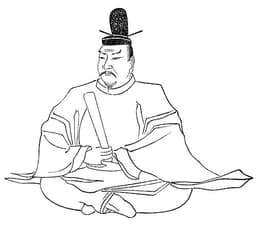
Emperor Tenmu
Emperor · Medieval
59.1Total
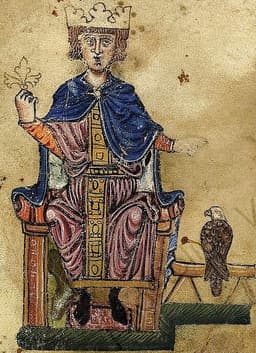
Frederick II of Hohenstaufen
Emperor · Medieval
59.3Total
Basic Information
Born
631
1194
Died
686
1250
Era
Medieval
Medieval
Nationality
Japan
Holy Roman Empire
Occupation
Emperor
Emperor
Civilization
Eastern
Western
Score Comparison
Military (10%)
55.0
40.0
Political (20%)
60.0
72.0
Influence (20%)
58.3
72.0
Legacy (20%)
55.0
52.0
Leadership (15%)
72.0
53.2
Strategy (15%)
55.0
55.0
TOTAL
59.1
59.3
Emperor Tenmu — Complete Timeline
672 AD
Jinshin WarWar
Prince Ōama, later Emperor Tenmu, led a rebellion against his nephew Emperor Kōbun after a succession dispute. The Jinshin War lasted a year and ended with Ōama's victory at the Battle of Sekigahara (not the later one). Tenmu then ascended the throne, consolidating imperial power.
Civil WarSuccessionImperial Power
Impact: national
680 AD
Promotion of Buddhism as State ReligionCultural◆ Major
Emperor Tenmu actively promoted Buddhism, ordering the construction of temples and the copying of sutras. He established the position of s
BuddhismState ReligionImperial Legitimacy
Impact: nationalconstructive
681 AD
Establishment of the Ritsuryō SystemReform
Emperor Tenmu initiated the codification of the ritsury
Legal CodeCentralizationTang Model
Impact: nationalconstructive
Compilation of the Kojiki and Nihon ShokiCultural◆ Major
Emperor Tenmu ordered the compilation of the Kojiki (Records of Ancient Matters) and the Nihon Shoki (Chronicles of Japan), though the Kojiki was completed after his death. These texts recorded Japanese mythology, history, and the imperial lineage, establishing a national narrative.
HistoriographyMythologyImperial Lineage
Impact: nationalconstructive
684 AD
Reform of the Imperial Court HierarchyReform
Emperor Tenmu reorganized the imperial court hierarchy, creating new ranks and titles to strengthen his control over the nobility. He reduced the power of powerful clans and promoted officials based on merit, further centralizing authority under the emperor.
Court ReformMeritocracyNobility
Impact: nationalconstructive
Frederick II of Hohenstaufen — Complete Timeline
1220 AD
Coronation as Holy Roman EmperorPolitical Action◆ Major
Frederick II was crowned Holy Roman Emperor by Pope Honorius III in Rome. This coronation confirmed his authority over Germany and Italy, but also set the stage for a long conflict with the papacy over imperial power in Italy.
CoronationHoly Roman EmpirePapacy
Impact: global
1229 AD
Sixth Crusade and Treaty of JaffaWar◆ Major
Frederick II led the Sixth Crusade, negotiating the Treaty of Jaffa with Sultan al-Kamil. Through diplomacy, he regained control of Jerusalem, Bethlehem, and Nazareth without battle, but was excommunicated by the Pope for negotiating with Muslims.
CrusadeDiplomacyJerusalemExcommunication
Impact: globalconstructive
1231 AD
Promulgation of the Constitutions of MelfiReform◆ Major
Frederick II issued the Constitutions of Melfi, a comprehensive legal code for the Kingdom of Sicily. This code centralized royal authority, reformed the administration, and established a modern state based on Roman law.
LawReformSicily
Impact: regionalconstructive
1237 AD
Conflict with the Lombard LeagueWar◆ Major
Frederick II defeated the Lombard League at the Battle of Cortenuova, aiming to assert imperial control over northern Italy. His victory was followed by harsh reprisals, which alienated many Italian cities and strengthened papal opposition.
BattleItalyLombard League
Impact: regionaldestructive
1245 AD
Excommunication by Pope Innocent IV at the Council of LyonPolitical Action◆ Major
Pope Innocent IV declared Frederick II deposed at the First Council of Lyon, accusing him of heresy, sacrilege, and tyranny. This excommunication intensified the conflict between the Empire and the Papacy, leading to a war of propaganda.
ExcommunicationPapacyConflict
Impact: globaldestructive
1250 AD
Death and end of the Hohenstaufen dynastyOther◆ Major
Frederick II died of dysentery at Castel Fiorentino. His death marked the beginning of the end for the Hohenstaufen dynasty, as his sons were unable to maintain control, leading to the Great Interregnum in the Holy Roman Empire.
DeathHohenstaufenInterregnum
Impact: globaltragic
This comparison has not been analyzed yet.
One-time AI generation (~1 minute). Scores and timeline are already available below.
Rankings
🥇
Frederick II of HohenstaufenLeader
Mil: 40.0Pol: 72.0Inf: 72.0
59.3
🥈
Emperor Tenmu
Mil: 55.0Pol: 60.0Inf: 58.3
59.1
+0.2 behind
How This Comparison Works
Algorithm
Each figure is scored on 6 dimensions (0—100 scale) based on structured historical data: Military (10%), Political (20%), Influence (20%), Legacy (20%), Leadership (15%), Strategy (15%). The weighted total produces the final ranking.
Data Sources
Scores are computed from structured sub-indicators in the database. Scale factors adjust for era (Ancient ×0.85, Modern ×1.0) and civilization size (Eastern ×1.05, Other ×0.80) to account for differences in population and military scale.
Maximum 3 Figures
Comparisons are limited to 2—3 figures to ensure readability and statistical meaningfulness.
Error Margins
±5 points per dimension — Sub-scores are derived from historical records with inherent uncertainty. Two figures within 5 points on a dimension should be considered roughly equivalent in that area.
Total Score Accuracy
±3 points overall — The weighted combination of 6 dimensions produces a total score with approximately ±3 points of uncertainty. Differences of less than 3 points are not statistically significant— the figures are effectively tied.
Known Limitations
- Historical records are incomplete and uneven across civilizations
- Figures from oral-tradition societies may be underrepresented
- Occupation labels can misclassify multi-role figures
- Scores measure capability and impact, not moral character
- Quantitative scoring is a comparison tool, not absolute truth
Capability Radar
Military (10%) — Battles & Warfare
Battles
35
45
Win Rate
40
40
Expansion
30
50
Political (20%) — Governance & Reform
Reform
85
85
Diplomacy
65
80
Economy
60
75
Influence (20%) — Cultural & Global Reach
Cultural
65
75
Global
45
60
Legacy (20%) — Historical Impact
Historical
75
70
Longevity
70
65
Leadership (15%) — Power & Stability
Tenure
60
65
Stability
70
55
Strategy (15%) — Tactics & Innovation
Strategy
50
55
Tactics
45
60
Reform
55
70
Similar Comparisons
Comments & Discussion
No comments yet. Be the first to share your thoughts!