Loading...
Emperor Tenmu vs Nezahualcoyotl
Emperor Tenmu leads by 1.6 pts · 2 figures compared
…
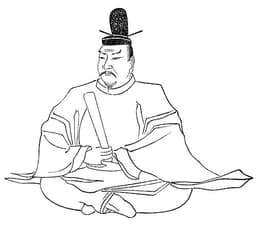
Emperor Tenmu
Emperor · Medieval
59.1Total

Nezahualcoyotl
Emperor · Medieval
57.5Total
Basic Information
Born
631
1402
Died
686
1472
Era
Medieval
Medieval
Nationality
Japan
Texcoco
Occupation
Emperor
Emperor
Civilization
Eastern
Western
Score Comparison
Military (10%)
55.0
50.0
Political (20%)
60.0
60.0
Influence (20%)
58.3
60.0
Legacy (20%)
55.0
50.0
Leadership (15%)
72.0
72.0
Strategy (15%)
55.0
52.5
TOTAL
59.1
57.5
Emperor Tenmu — Complete Timeline
672 AD
Jinshin WarWar
Prince Ōama, later Emperor Tenmu, led a rebellion against his nephew Emperor Kōbun after a succession dispute. The Jinshin War lasted a year and ended with Ōama's victory at the Battle of Sekigahara (not the later one). Tenmu then ascended the throne, consolidating imperial power.
Civil WarSuccessionImperial Power
Impact: national
680 AD
Promotion of Buddhism as State ReligionCultural◆ Major
Emperor Tenmu actively promoted Buddhism, ordering the construction of temples and the copying of sutras. He established the position of s
BuddhismState ReligionImperial Legitimacy
Impact: nationalconstructive
681 AD
Establishment of the Ritsuryō SystemReform
Emperor Tenmu initiated the codification of the ritsury
Legal CodeCentralizationTang Model
Impact: nationalconstructive
Compilation of the Kojiki and Nihon ShokiCultural◆ Major
Emperor Tenmu ordered the compilation of the Kojiki (Records of Ancient Matters) and the Nihon Shoki (Chronicles of Japan), though the Kojiki was completed after his death. These texts recorded Japanese mythology, history, and the imperial lineage, establishing a national narrative.
HistoriographyMythologyImperial Lineage
Impact: nationalconstructive
684 AD
Reform of the Imperial Court HierarchyReform
Emperor Tenmu reorganized the imperial court hierarchy, creating new ranks and titles to strengthen his control over the nobility. He reduced the power of powerful clans and promoted officials based on merit, further centralizing authority under the emperor.
Court ReformMeritocracyNobility
Impact: nationalconstructive
Nezahualcoyotl — Complete Timeline
1430 AD
Construction of the Albarrada de NezahualcoyotlOther◆ Major
Nezahualcoyotl ordered the construction of a 16-kilometer dike across Lake Texcoco to separate fresh water from salt water and prevent flooding in Tenochtitlan. The structure, completed around 1430, functioned as an aqueduct and flood control system, demonstrating advanced engineering.
EngineeringFlood ControlTexcoco
Impact: regionalconstructive
1431 AD
Restoration of Texcoco as a City-StatePolitical Action◆ Major
After the death of his father Ixtlilxochitl I and a period of exile, Nezahualcoyotl reclaimed the throne of Texcoco with support from Tenochtitlan. He reestablished Texcoco as a major city-state within the Triple Alliance, initiating a period of cultural and political revival.
RestorationTriple AllianceTexcoco
Impact: regionalconstructive
1445 AD
Military Campaign against ChalcoWar
Nezahualcoyotl led Texcoco forces in a campaign against the city-state of Chalco, a rival in the Valley of Mexico. The war ended with the defeat of Chalco and its incorporation into the Triple Alliance sphere, expanding Texcoco's influence.
ConquestChalcoTriple Alliance
Impact: regional
1450 AD
Creation of the Texcoco CodexCultural◆ Major
Nezahualcoyotl established a library and sponsored the compilation of historical and legal texts, including the Codex Xolotl and other works. These codices recorded the history, laws, and poetry of Texcoco, preserving pre-Columbian knowledge.
LibraryCodexPreservation
Impact: regionalconstructive
Composition of 'Icuic Nezahualcoyotl'Cultural◆ Major
Nezahualcoyotl composed several poems in Nahuatl, including 'Icuic Nezahualcoyotl' (Song of Nezahualcoyotl), which reflect on the transience of life and the search for truth. These works are among the few surviving pre-Columbian literary texts from Mesoamerica.
PoetryNahuatl LiteraturePhilosophy
Impact: regionalconstructive
1465 AD
Construction of the Chapultepec AqueductOther◆ Major
Nezahualcoyotl oversaw the construction of a second aqueduct from Chapultepec to Tenochtitlan, supplementing the existing one. This project improved the water supply for the Aztec capital, using a dual-pipe system that allowed maintenance without interrupting flow.
EngineeringWater SupplyTenochtitlan
Impact: regionalconstructive
Expert Analysis
Origins
Emperor Tenmu, born Prince Ōama in 631 CE, was a son of Emperor Jomei and Empress Kōgyoku. He grew up in the Yamato court, receiving education in Chinese classics and Buddhist scriptures. His early life was marked by the Asuka period's political intrigues, where he served as a general under his brother Emperor Tenji. Tenmu's military experience came from campaigns in Kyushu against the Hayato tribes.
Nezahualcoyotl (1402–1472 CE) was born in Texcoco, the son of King Ixtlilxochitl I and Queen Matlalatzin. His early years were disrupted by the expansion of the Aztec Triple Alliance. When he was 15, his father was killed in battle against the Tepanecs, forcing Nezahualcoyotl into exile for 12 years. He studied law and poetry in Tenochtitlan, learning from the Aztec elite.
Rise to Power
Tenmu's rise came through the Jinshin War (672 CE). After Emperor Tenji's death, his son Kōbun took the throne, but Prince Ōama raised an army from his base in Yoshino. The war lasted one year, with Tenmu's forces winning the decisive Battle of Seta. Tenmu then became emperor, executing Kōbun and consolidating power. This conflict scored 55.0 in military capability.
Nezahualcoyotl reclaimed Texcoco in 1428 CE with help from Tenochtitlan and Tlacopan. After defeating the Tepanecs, he was installed as king. He then formed the Triple Alliance, becoming one of its three rulers. His political maneuvering scored 60.0, matching Tenmu's political score.
Leadership & Governance
Tenmu centralized Japan's government by establishing the Ritsuryō system, a legal code based on Tang China. He created a bureaucracy with 48 ranks, reorganized provinces, and imposed taxes. He also promoted Buddhism, building temples and supporting monks. His leadership score of 72.0 reflects his ability to impose order after civil war.
Nezahualcoyotl governed Texcoco as a cultural and legal center. He built the Albarrada dike (16 km) to control Lake Texcoco's flooding, and a second aqueduct from Chapultepec. He also founded a library and compiled the Codex Xolotl. His leadership score of 72.0 matches Tenmu's, but his governance focused on civic works rather than legal codes.
Triumph & Tragedy
Tenmu's greatest success was the Jinshin War victory and the subsequent codification of the Ritsuryō system, which lasted for centuries. However, his promotion of Buddhism led to conflicts with Shinto traditionalists. His failure to secure a smooth succession resulted in later power struggles.
Nezahualcoyotl's triumphs include the engineering marvels of the dike and aqueduct, which improved water management in the Valley of Mexico. His poetry, such as "Icuic Nezahualcoyotl," reflects philosophical depth. His tragedy was the ongoing warfare with the Tepanecs and the eventual decline of Texcoco after his death. His military score of 50.0 reflects limited conquests.
Character & Destiny
Tenmu was decisive and ruthless, as seen in his rebellion against his nephew. He was also intellectually curious, sponsoring the compilation of the Kojiki and Nihon Shoki. His character shaped a centralized state but also sowed future conflicts.
Nezahualcoyotl was a poet-king, valuing art and engineering. He was pragmatic, forming alliances to survive. His destiny was tied to the Triple Alliance, which eventually led to Texcoco's subordination to Tenochtitlan.
Legacy
Tenmu's Ritsuryō system influenced Japanese governance for over 500 years. The Kojiki and Nihon Shoki remain foundational texts. His total score of 59.1 reflects enduring political and cultural impact.
Nezahualcoyotl's dike and aqueduct were used until the Spanish conquest. His poetry is studied as early Nahuatl literature. However, his legacy is more regional, scoring 50.0 in legacy versus Tenmu's 55.0.
Conclusion
Emperor Tenmu had a greater impact due to the lasting legal and historical frameworks he established. His Ritsuryō codes and chronicles shaped Japan's identity for centuries. Nezahualcoyotl's achievements in engineering and poetry are significant but less foundational. Tenmu's total score of 59.1 exceeds Nezahualcoyotl's 57.5, reflecting his deeper influence on statecraft and culture.
Rankings
🥇
Emperor TenmuLeader
Mil: 55.0Pol: 60.0Inf: 58.3
59.1
🥈
Nezahualcoyotl
Mil: 50.0Pol: 60.0Inf: 60.0
57.5
+1.6 behind
How This Comparison Works
Algorithm
Each figure is scored on 6 dimensions (0—100 scale) based on structured historical data: Military (10%), Political (20%), Influence (20%), Legacy (20%), Leadership (15%), Strategy (15%). The weighted total produces the final ranking.
Data Sources
Scores are computed from structured sub-indicators in the database. Scale factors adjust for era (Ancient ×0.85, Modern ×1.0) and civilization size (Eastern ×1.05, Other ×0.80) to account for differences in population and military scale.
Maximum 3 Figures
Comparisons are limited to 2—3 figures to ensure readability and statistical meaningfulness.
Error Margins
±5 points per dimension — Sub-scores are derived from historical records with inherent uncertainty. Two figures within 5 points on a dimension should be considered roughly equivalent in that area.
Total Score Accuracy
±3 points overall — The weighted combination of 6 dimensions produces a total score with approximately ±3 points of uncertainty. Differences of less than 3 points are not statistically significant— the figures are effectively tied.
Known Limitations
- Historical records are incomplete and uneven across civilizations
- Figures from oral-tradition societies may be underrepresented
- Occupation labels can misclassify multi-role figures
- Scores measure capability and impact, not moral character
- Quantitative scoring is a comparison tool, not absolute truth
Capability Radar
Military (10%) — Battles & Warfare
Battles
35
45
Win Rate
40
50
Expansion
30
45
Political (20%) — Governance & Reform
Reform
85
75
Diplomacy
65
70
Economy
60
65
Influence (20%) — Cultural & Global Reach
Cultural
65
65
Global
45
35
Legacy (20%) — Historical Impact
Historical
75
55
Longevity
70
50
Leadership (15%) — Power & Stability
Tenure
60
70
Stability
70
60
Strategy (15%) — Tactics & Innovation
Strategy
50
60
Tactics
45
55
Reform
55
40
Similar Comparisons
Comments & Discussion
No comments yet. Be the first to share your thoughts!