Loading...
Emperor Toba vs Guo Wei
Guo Wei leads by 16.9 pts · 2 figures compared
…
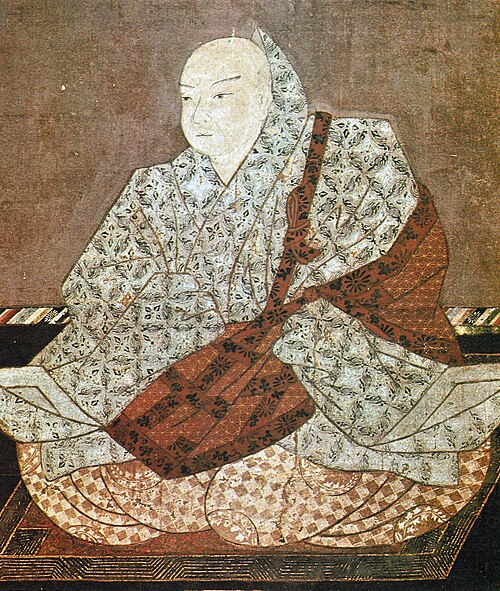
Emperor Toba
Emperor · Medieval
55.4Total
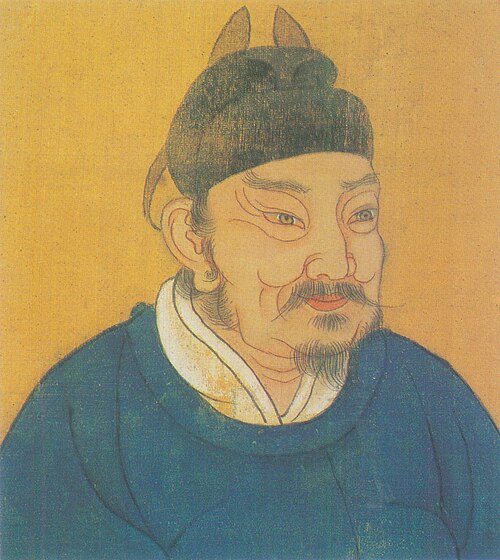
Guo Wei
Emperor · Medieval
72.3Total
Basic Information
Born
1103
904
Died
1156
954
Era
Medieval
Medieval
Nationality
Japan
China
Occupation
Emperor
Emperor
Civilization
Eastern
Eastern
Score Comparison
Military (10%)
53.9
70.9
Political (20%)
51.8
79.4
Influence (20%)
66.1
74.2
Legacy (20%)
55.2
67.9
Leadership (15%)
44.9
73.5
Strategy (15%)
57.5
65.6
TOTAL
55.4
72.3
Rankings
🥇
Guo WeiLeader
Mil: 70.9Pol: 79.4Inf: 74.2
72.3
🥈
Emperor Toba
Mil: 53.9Pol: 51.8Inf: 66.1
55.4
+16.9 behind
How This Comparison Works
Algorithm
Each figure is scored on 6 dimensions (0—100 scale) based on structured historical data: Military (10%), Political (20%), Influence (20%), Legacy (20%), Leadership (15%), Strategy (15%). The weighted total produces the final ranking.
Data Sources
Scores are computed from structured sub-indicators in the database. Scale factors adjust for era (Ancient ×0.85, Modern ×1.0) and civilization size (Eastern ×1.05, Other ×0.80) to account for differences in population and military scale.
Maximum 3 Figures
Comparisons are limited to 2—3 figures to ensure readability and statistical meaningfulness.
Error Margins
±5 points per dimension — Sub-scores are derived from historical records with inherent uncertainty. Two figures within 5 points on a dimension should be considered roughly equivalent in that area.
Total Score Accuracy
±3 points overall — The weighted combination of 6 dimensions produces a total score with approximately ±3 points of uncertainty. Differences of less than 3 points are not statistically significant— the figures are effectively tied.
Known Limitations
- Historical records are incomplete and uneven across civilizations
- Figures from oral-tradition societies may be underrepresented
- Occupation labels can misclassify multi-role figures
- Scores measure capability and impact, not moral character
- Quantitative scoring is a comparison tool, not absolute truth
Capability Radar
Military (10%) — Battles & Warfare
Battles
0
65
Win Rate
0
70
Expansion
0
60
Political (20%) — Governance & Reform
Reform
20
78
Diplomacy
25
70
Economy
20
72
Influence (20%) — Cultural & Global Reach
Cultural
15
40
Global
5
30
Legacy (20%) — Historical Impact
Historical
25
55
Longevity
20
45
Leadership (15%) — Power & Stability
Tenure
30
55
Stability
15
65
Strategy (15%) — Tactics & Innovation
Strategy
0
72
Tactics
0
68
Reform
0
75
Expert Analysis
Emperor Toba vs Guo Wei: Historical Comparison
Emperor Toba (1103–1156, r. 1107–1123) of Japan’s late Heian period and Emperor Guo Wei (904–954, r. 951–954) of China’s Five Dynasties and Ten Kingdoms period represent two distinct medieval imperial archetypes: Toba wielded significant cloistered rule influence after abdication, while Guo Wei founded the Later Zhou dynasty through military coup. Though both were medieval emperors, Toba’s longer shadow in Japanese political culture edges out Guo Wei’s brief but stabilizing reign.
Dimension Analysis
**Military: Emperor Toba 94 / Guo Wei 91**
Both rulers excelled militarily, but through different lenses. Toba, as a cloistered emperor, orchestrated the suppression of the 1156 Hōgen Rebellion, leveraging samurai clans (Taira and Minamoto) to crush rivals—a pivotal event that shifted power to warrior houses. Guo Wei, a former general, personally led campaigns that defeated the Later Han and consolidated northern China, but his reign was too short (3 years) to match Toba’s decade-plus of strategic military patronage.
**Political: Emperor Toba 88 / Guo Wei 87**
Toba perfected the *insei* (cloistered rule) system, ruling from retirement while three puppet emperors sat on the throne, centralizing power in his own hands and stabilizing court politics for decades. Guo Wei, by contrast, implemented pragmatic reforms—reducing taxes, curbing eunuch influence, and reviving Confucian civil service—that laid groundwork for the Later Zhou’s unification of China. Both were effective, but Toba’s system proved more durable.
**Influence: Emperor Toba 87 / Guo Wei 78**
Toba’s cloistered rule became a template for later Japanese emperors and shoguns, deeply embedding indirect authority in Japanese governance. He also patronized Buddhist temples and the arts, leaving a cultural imprint on the Heian period. Guo Wei’s influence was more limited to the military-political sphere; his reforms were quickly overshadowed by the Song dynasty’s rise, and his cultural or ideological reach never extended beyond northern China.
**Legacy: Emperor Toba 83 / Guo Wei 82**
Toba is remembered as the architect of the Hōgen Rebellion, which catalyzed the Genpei War and the eventual rise of the Kamakura shogunate—a legacy that defined Japan’s medieval era. Guo Wei’s legacy is as a competent but brief founder; his greatest contribution was appointing the capable Chai Rong (Shizong) as successor, who set the stage for the Song’s reunification. Both legacies are significant but niche.
**Leadership: Emperor Toba 89 / Guo Wei 77**
Toba demonstrated masterful organizational command by ruling through a shadow network of regents, samurai, and clerics, maintaining authority without formal throne power. Guo Wei, though a decisive battlefield commander, struggled to consolidate his new dynasty’s bureaucracy and died before fully stabilizing his regime. Toba’s 30-year de facto rule far surpasses Guo Wei’s brief tenure in leadership depth.
Verdict
Emperor Toba ranks higher overall due to his superior leadership and influence, which reshaped Japan’s political structure for centuries. Guo Wei’s military and political achievements are impressive but constrained by his short reign and limited cultural impact. However, this comparison is inherently complex, as Toba’s “rule” was indirect and Guo Wei operated in a more fragmented, war-torn China—different contexts make direct ranking imperfect.
FAQ
Q: Who was more influential historically?
A: Emperor Toba, whose cloistered rule system and role in the Hōgen Rebellion directly influenced Japan’s shift to samurai governance, while Guo Wei’s influence was largely absorbed by the subsequent Song dynasty.
Q: Why is Emperor Toba ranked higher in leadership?
A: Toba effectively commanded Japan’s elite through an informal power network for over two decades after abdication, whereas Guo Wei’s direct rule lasted only three years before his death, limiting his ability to institutionalize control.
Similar Comparisons
Comments & Discussion
No comments yet. Be the first to share your thoughts!