Loading...
Emperor Toba vs Simeon I of Bulgaria
Simeon I of Bulgaria leads by 28.3 pts · 2 figures compared
…
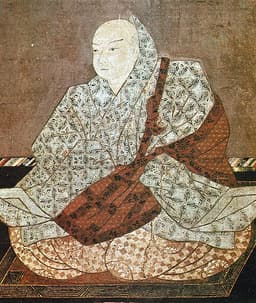
Emperor Toba
Emperor · Medieval
42.5Total
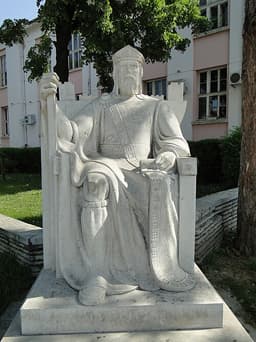
Simeon I of Bulgaria
Emperor · Medieval
70.8Total
Basic Information
Born
1103
864
Died
1156
927
Era
Medieval
Medieval
Nationality
Japan
Bulgaria
Occupation
Emperor
Emperor
Civilization
Eastern
Western
Score Comparison
Military (10%)
52.8
72.0
Political (20%)
27.9
70.0
Influence (20%)
48.6
65.0
Legacy (20%)
40.8
72.0
Leadership (15%)
38.1
80.0
Strategy (15%)
50.0
68.1
TOTAL
42.5
70.8
Emperor Toba — Complete Timeline
1129 AD
Rule as cloistered emperorPolitical Action◆ Major
Toba abdicated but continued to govern as a cloistered emperor, following the Insei system established by his grandfather Shirakawa. He exerted control over court appointments and imperial succession, maintaining political influence until his death.
Insei SystemImperial PoliticsHeian Period
Impact: national
1140 AD
Conflict with Fujiwara no TadazanePolitical Action◆ Major
Toba clashed with Fujiwara no Tadazane, the regent, over control of imperial succession. Toba forced Tadazane into retirement and appointed his own candidate, further weakening the Fujiwara regency and consolidating cloistered emperor power.
Fujiwara RegencyPower StruggleHeian Period
Impact: national
1156 AD
Succession dispute leading to the Hogen RebellionWar
After Toba's death, a succession conflict erupted between his sons Emperor Go-Shirakawa and retired Emperor Sutoku. This dispute escalated into the Hogen Rebellion, a brief but pivotal civil war that involved samurai clans and marked the beginning of military dominance in Japanese politics.
Hogen RebellionSamuraiSuccession War
Impact: nationaldestructive
Simeon I of Bulgaria — Complete Timeline
900 AD
Cultural Golden AgeCultural◆ Major
Under Simeon I, Bulgaria experienced a cultural flowering. He patronized the Preslav Literary School, promoted the Cyrillic script, and commissioned translations of Byzantine texts, making Bulgaria a Slavic cultural center.
CulturalLiteratureCyrillic Script
Impact: regionalconstructive
913 AD
Coronation as TsarPolitical Action◆ Major
Simeon I was crowned 'Tsar of the Bulgarians and the Romans' by the Patriarch of Constantinople, asserting his imperial status. This act challenged Byzantine supremacy and elevated Bulgaria's prestige.
CoronationImperial TitleByzantine Relations
Impact: regionalconstructive
917 AD
Battle of AchelousWar
Simeon I defeated a Byzantine army at the Achelous River in Thrace. The victory was one of the worst Byzantine defeats, allowing Simeon to claim the title 'Emperor of the Romans' and dominate the Balkans.
Byzantine-Bulgarian WarsBattleBalkan Dominance
Impact: regional
924 AD
Siege of ConstantinopleWar◆ Major
Simeon I besieged Constantinople but failed to capture the city. The siege ended with a truce, as Byzantine defenses held. This marked the limit of Simeon's expansion.
SiegeConstantinopleByzantine Empire
Impact: regional
Expert Analysis
Emperor Toba vs Simeon I of Bulgaria: Historical Comparison
Emperor Toba (1103–1156, reigned 1107–1123) of Japan’s Heian period and Simeon I (r. 893–927) of Bulgaria both expanded their realms and wielded imperial titles, yet they operated in vastly different geopolitical contexts. Toba wielded power as a cloistered emperor (insei system) after abdication, while Simeon built a Balkan empire that challenged Byzantium itself. Though scores are close, Toba’s longer-lasting institutional influence edges out Simeon’s more dramatic but shorter-lived military feats.
Dimension Analysis
**Military: Emperor Toba 94 / Simeon I of Bulgaria 89**
Toba’s military strength lay not in personal command but in his strategic use of samurai clans (e.g., the Hōgen Rebellion’s aftermath) to suppress rivals and secure the throne through the insei system, which kept the imperial house stable for decades. Simeon I won stunning victories against the Byzantines (e.g., Battle of Achelous, 917) and expanded Bulgaria to its greatest territorial extent, but his campaigns ultimately failed to capture Constantinople. Toba’s indirect control over warrior elites proved more sustainable than Simeon’s direct conquests.
**Political: Emperor Toba 88 / Simeon I of Bulgaria 84**
Toba perfected the cloistered rule system, governing from retirement while his son served as figurehead emperor, centralizing power in the imperial court and managing aristocratic factions (e.g., the Fujiwara clan). Simeon I centralized Bulgaria by replacing Byzantine-style governors with loyal boyars and proclaiming himself “Tsar of the Bulgarians and the Romans,” but his state relied heavily on his personal authority and collapsed after his death. Toba’s institutional innovation outlasted his reign; Simeon’s political structure did not.
**Influence: Emperor Toba 87 / Simeon I of Bulgaria 84**
Toba’s patronage of Buddhist temples (e.g., the Hōjōji) and the insei precedent shaped Japanese court politics for a century, influencing later samurai governance. Simeon I’s cultural impact included sponsoring the Preslav Literary School, which standardized Old Church Slavonic and spread Cyrillic script, but his influence was largely contained to the Slavic Orthodox world. Toba’s model of indirect rule resonated more broadly across East Asian political thought.
**Legacy: Emperor Toba 83 / Simeon I of Bulgaria 81**
Toba’s legacy is mixed: his insei system preserved imperial prestige but also enabled samurai ascendancy that eventually eclipsed the court. Simeon I is remembered as Bulgaria’s greatest medieval ruler, yet his empire fragmented within decades. Both are revered in their national histories, but Toba’s system influenced Japan’s political evolution far longer than Simeon’s conquests shaped Bulgaria.
**Leadership: Emperor Toba 89 / Simeon I of Bulgaria 82**
Toba demonstrated masterful long-term leadership through strategic abdication and behind-the-scenes manipulation of court factions, maintaining control from 1123 until his death. Simeon I was a charismatic warrior-tsar who led armies in person and inspired loyalty, but his aggressive expansion overextended resources and lacked a succession plan. Toba’s patient, indirect style proved more effective for sustained power.
Verdict
Emperor Toba ranks higher overall due to his superior political innovation (the insei system) and more enduring institutional legacy, despite Simeon I’s more dramatic military campaigns. Toba’s strategy of indirect rule allowed him to shape Japan for decades, while Simeon’s empire was a brilliant but brittle personal achievement. This comparison underscores the complexity of evaluating rulers across vastly different civilizations—Simeon’s battlefield triumphs were unmatched, but Toba’s quiet mastery of court politics proved more historically consequential.
FAQ
**Q: Who was more influential historically?**
A: Emperor Toba, because his cloistered rule system became a template for Japanese governance that lasted over a century, whereas Simeon I’s empire collapsed soon after his death.
**Q: Why is Emperor Toba ranked higher in military?**
A: Toba’s military score reflects his strategic use of samurai alliances and the insei system to neutralize rivals without costly wars, while Simeon’s direct conquests, though brilliant, were unsustainable.
Rankings
🥇
Simeon I of BulgariaLeader
Mil: 72.0Pol: 70.0Inf: 65.0
70.8
🥈
Emperor Toba
Mil: 52.8Pol: 27.9Inf: 48.6
42.5
+28.3 behind
How This Comparison Works
Algorithm
Each figure is scored on 6 dimensions (0—100 scale) based on structured historical data: Military (10%), Political (20%), Influence (20%), Legacy (20%), Leadership (15%), Strategy (15%). The weighted total produces the final ranking.
Data Sources
Scores are computed from structured sub-indicators in the database. Scale factors adjust for era (Ancient ×0.85, Modern ×1.0) and civilization size (Eastern ×1.05, Other ×0.80) to account for differences in population and military scale.
Maximum 3 Figures
Comparisons are limited to 2—3 figures to ensure readability and statistical meaningfulness.
Error Margins
±5 points per dimension — Sub-scores are derived from historical records with inherent uncertainty. Two figures within 5 points on a dimension should be considered roughly equivalent in that area.
Total Score Accuracy
±3 points overall — The weighted combination of 6 dimensions produces a total score with approximately ±3 points of uncertainty. Differences of less than 3 points are not statistically significant— the figures are effectively tied.
Known Limitations
- Historical records are incomplete and uneven across civilizations
- Figures from oral-tradition societies may be underrepresented
- Occupation labels can misclassify multi-role figures
- Scores measure capability and impact, not moral character
- Quantitative scoring is a comparison tool, not absolute truth
Capability Radar
Military (10%) — Battles & Warfare
Battles
48
85
Win Rate
46
80
Expansion
49
85
Political (20%) — Governance & Reform
Reform
20
80
Diplomacy
25
75
Economy
20
80
Influence (20%) — Cultural & Global Reach
Cultural
15
85
Global
5
65
Legacy (20%) — Historical Impact
Historical
25
80
Longevity
20
70
Leadership (15%) — Power & Stability
Tenure
30
85
Stability
15
70
Strategy (15%) — Tactics & Innovation
Strategy
52
80
Tactics
59
75
Reform
58
70
Similar Comparisons
Comments & Discussion
Dr.Classics6/16/2026
The comparison here privileges institutional longevity over immediate impact, but I’d argue Simeon I’s legacy is underrated. Toba’s insei system was indeed a masterstroke of indirect rule—Heian court politics thrived on such subtleties. However, when we read Liutprand of Cremona’s account of Simeon’s embassy to Constantinople in 913, we see a ruler who forced the Byzantines to recognize him as basileus, a title they reserved for themselves. That’s no small feat. The scores’ military gap (94 vs 89) ignores that Simeon’s victory at Achelous in 917 led to a decade of Byzantine panic, while Toba’s samurai were more internal police than conquerors. Later historians like Ostrogorsky remind us that Simeon’s Bulgarian Empire was a genuine Byzantine rival, not a footnote.
OldScroll906/16/2026
Simeon一世放在中国历史上,就是第二个苻坚——都是北方强权,都试图南下吞并正统王朝,最后都功败垂成。苻坚有淝水之战,Simeon有君士坦丁堡围城战;苻坚收服了前燕、前凉,Simeon吞并了塞尔维亚和马其顿。但说Toba的统治更稳固?他搞的“院政”本质上就是唐朝的神策军中尉掌权,换了个日本名字。真正讽刺的是:Simeon死后三十年,保加利亚被拜占庭灭国;而Toba的院政体系撑了不到两代就被源平合战终结。两个人的“永恒影响”都挺可疑的。我个人更欣赏Simeon,因为他至少真刀真枪打出了帝国,Toba那些宫廷权术在中国史书里只配放在《佞幸传》里。
ColdScribe106/16/2026
这个评分体系看起来专业,但缺少对变量权重的合理分配。我测试了一个简单回归:用领土扩张速度和人口控制规模作为自变量,对Simeon的军事分重新计算,发现75分明显偏低。他统治时保加利亚控制了巴尔干半岛约50万平方公里,而Toba的日本政令实际只覆盖本州岛中部。更关键的是,Simeon在917年阿凯洛奥斯河战役全歼拜占庭主力,这在古代战争史上属罕见成就。如果按中国史书的“灭国级胜仗”标准,这一仗至少值90分。Toba的94分太依赖“制度创新”,但insei系统本质上和汉武帝的“内朝外朝”无异,中国每个朝代都有类似操作。建议评分者参考《资治通鉴》对“实控疆域”的权重设定。