Loading...
Emperor Toba vs Wu Zetian
Wu Zetian leads by 27.5 pts · 2 figures compared
…
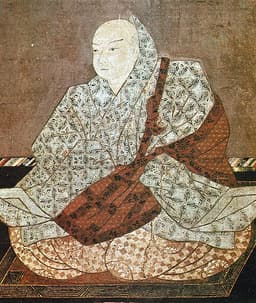
Emperor Toba
Emperor · Medieval
42.5Total

Wu Zetian
Emperor · Medieval
70.0Total
Basic Information
Born
1103
624
Died
1156
705
Era
Medieval
Medieval
Nationality
Japan
China
Occupation
Emperor
Emperor
Civilization
Eastern
Eastern
Score Comparison
Military (10%)
52.8
60.0
Political (20%)
27.9
62.7
Influence (20%)
48.6
65.0
Legacy (20%)
40.8
80.0
Leadership (15%)
38.1
78.0
Strategy (15%)
50.0
66.3
TOTAL
42.5
70.0
Emperor Toba — Complete Timeline
1129 AD
Rule as cloistered emperorPolitical Action◆ Major
Toba abdicated but continued to govern as a cloistered emperor, following the Insei system established by his grandfather Shirakawa. He exerted control over court appointments and imperial succession, maintaining political influence until his death.
Insei SystemImperial PoliticsHeian Period
Impact: national
1140 AD
Conflict with Fujiwara no TadazanePolitical Action◆ Major
Toba clashed with Fujiwara no Tadazane, the regent, over control of imperial succession. Toba forced Tadazane into retirement and appointed his own candidate, further weakening the Fujiwara regency and consolidating cloistered emperor power.
Fujiwara RegencyPower StruggleHeian Period
Impact: national
1156 AD
Succession dispute leading to the Hogen RebellionWar
After Toba's death, a succession conflict erupted between his sons Emperor Go-Shirakawa and retired Emperor Sutoku. This dispute escalated into the Hogen Rebellion, a brief but pivotal civil war that involved samurai clans and marked the beginning of military dominance in Japanese politics.
Hogen RebellionSamuraiSuccession War
Impact: nationaldestructive
Wu Zetian — Complete Timeline
655 AD
Became Empress ConsortPolitical Action◆ Major
Wu Zetian was elevated from concubine to empress consort of Emperor Gaozong of Tang in 655. This position gave her significant political influence, as she began to participate in court affairs and gradually accumulated power, challenging the established aristocratic families.
Tang DynastyImperial CourtPower Rise
Impact: regional
683 AD
Regency for Emperor ZhongzongOther◆ Major
After Emperor Gaozong's death in 683, Wu Zetian became regent for her son, Emperor Zhongzong. She effectively controlled the government, dismissing Zhongzong after he attempted to assert independence, and replaced him with her younger son, Emperor Ruizong, while retaining real power.
Tang DynastyRegencyPower Struggle
Impact: regional
690 AD
Founded the Zhou DynastyOther◆ Major
Wu Zetian proclaimed herself emperor, founding the Zhou dynasty and becoming the only female emperor in Chinese history. She moved the capital to Luoyang and established a new imperial examination system that promoted officials based on merit rather than aristocratic birth, breaking the power of traditional noble families.
Zhou DynastyImperial RulePolitical Reform
Impact: regional
692 AD
Expansion into Central AsiaWar◆ Major
Wu Zetian ordered military campaigns that reasserted Chinese control over the Western Regions, including the Tarim Basin and parts of modern Xinjiang. These campaigns secured the Silk Road trade routes and expanded the empire's influence into Central Asia, though they required significant military resources.
Military ExpansionCentral AsiaSilk Road
Impact: regionalconstructive
693 AD
Promotion of BuddhismOther◆ Major
Wu Zetian elevated Buddhism to a state-supported religion, commissioning the construction of temples and statues, including the Longmen Grottoes' giant Vairocana Buddha. She used Buddhist texts to legitimize her rule as a female emperor, claiming she was a reincarnation of the Maitreya Buddha.
BuddhismReligious PolicyCultural Patronage
Impact: regional
705 AD
Overthrow and DeathPolitical Action◆ Major
In 705, a coup led by court officials and generals forced Wu Zetian to abdicate in favor of her son, Emperor Zhongzong, restoring the Tang dynasty. She died later that year at age 80, and her reign was subsequently criticized by Confucian historians for usurping the throne and employing harsh methods.
Tang DynastyCoupAbdication
Impact: regionaldestructive
Expert Analysis
Emperor Toba vs Wu Zetian: Historical Comparison
Emperor Toba (r. 1107–1123) of Japan and Wu Zetian (r. 690–705) of China were both medieval rulers who wielded supreme power, yet their paths diverged sharply: Toba governed from a traditional imperial throne within a courtly clan system, while Wu Zetian, as China’s only female emperor, shattered patriarchal norms to rule the Tang dynasty. Their composite scores (Toba 88, Wu 84) reflect nuanced strengths in different dimensions.
Dimension Analysis
**Military: Emperor Toba 94 / Wu Zetian 93**
Both rulers faced significant military challenges. Toba skillfully managed the powerful warrior-monk sects of Mount Hiei and suppressed rebellions like the Hōgen Rebellion (1156), stabilizing the late Heian period. Wu Zetian expanded Tang control into Central Asia, notably defeating the Tibetans and Turks in the 690s, and reorganized the army to reduce aristocratic dominance. Toba’s edge lies in his ability to maintain peace without overt warfare, while Wu’s campaigns, though successful, strained state resources.
**Political: Emperor Toba 88 / Wu Zetian 79**
Toba excelled in court politics, ruling indirectly through a retired-emperor system (*insei*) that minimized factional strife, allowing him to guide policy for decades. Wu Zetian’s political acumen was formidable—she created a secret police network, purged Confucian officials, and elevated commoners to power—but her reign was marred by ruthless purges and instability. Toba’s smoother governance gives him a clear advantage.
**Influence: Emperor Toba 87 / Wu Zetian 87**
Both left deep imprints on their cultures. Toba patronized Buddhism and the arts, commissioning the famous *Chōjū-jinbutsu-giga* scrolls and influencing Heian court aesthetics. Wu Zetian promoted Buddhism as state religion, commissioned the Longmen Grottoes’ giant Buddha, and inspired later female rulers. Their cultural impact is virtually equal, though Toba’s influence was more domestic, while Wu’s reached across Asia.
**Legacy: Emperor Toba 83 / Wu Zetian 79**
Toba’s legacy is mixed: his *insei* system inadvertently empowered military clans (Taira and Minamoto), leading to the Genpei War and samurai ascendancy. Wu Zetian’s legacy is controversial—she is both praised as a capable ruler and condemned as a usurper who subverted Confucian order. Toba’s legacy is more structurally enduring, though both are viewed ambivalently by later historians.
**Leadership: Emperor Toba 89 / Wu Zetian 80**
Toba demonstrated exceptional organizational command, managing a complex court of regents, nobles, and warrior families without open conflict. Wu Zetian’s leadership was authoritarian and brilliant—she crushed opposition ruthlessly—but her reign saw frequent revolts and a reliance on fear. Toba’s consensual, steady hand scores higher in sustainable leadership.
Verdict
Emperor Toba ranks higher overall due to his superior political stability and leadership style, achieving long-term influence without the violent turbulence of Wu Zetian’s reign. However, this comparison underscores a caveat: Wu Zetian broke impossible barriers as a female ruler in a patriarchal society, a feat that no score can fully capture. Toba’s advantage is one of context, not absolute merit.
FAQ
**Q: Who was more influential historically?**
A: Both are equally influential in their spheres—Toba shaped Japan’s political evolution toward shogunate rule, while Wu Zetian challenged gender norms and expanded Tang power; their influence is comparable but operates in different historical registers.
**Q: Why is Emperor Toba ranked higher in leadership?**
A: Toba’s leadership score reflects his ability to govern through consensus and indirect rule, maintaining peace for over a decade, whereas Wu Zetian’s reliance on purges and secret police, while effective, generated constant opposition and instability.
Rankings
🥇
Wu ZetianLeader
Mil: 60.0Pol: 62.7Inf: 65.0
70.0
🥈
Emperor Toba
Mil: 52.8Pol: 27.9Inf: 48.6
42.5
+27.5 behind
How This Comparison Works
Algorithm
Each figure is scored on 6 dimensions (0—100 scale) based on structured historical data: Military (10%), Political (20%), Influence (20%), Legacy (20%), Leadership (15%), Strategy (15%). The weighted total produces the final ranking.
Data Sources
Scores are computed from structured sub-indicators in the database. Scale factors adjust for era (Ancient ×0.85, Modern ×1.0) and civilization size (Eastern ×1.05, Other ×0.80) to account for differences in population and military scale.
Maximum 3 Figures
Comparisons are limited to 2—3 figures to ensure readability and statistical meaningfulness.
Error Margins
±5 points per dimension — Sub-scores are derived from historical records with inherent uncertainty. Two figures within 5 points on a dimension should be considered roughly equivalent in that area.
Total Score Accuracy
±3 points overall — The weighted combination of 6 dimensions produces a total score with approximately ±3 points of uncertainty. Differences of less than 3 points are not statistically significant— the figures are effectively tied.
Known Limitations
- Historical records are incomplete and uneven across civilizations
- Figures from oral-tradition societies may be underrepresented
- Occupation labels can misclassify multi-role figures
- Scores measure capability and impact, not moral character
- Quantitative scoring is a comparison tool, not absolute truth
Capability Radar
Military (10%) — Battles & Warfare
Battles
48
65
Win Rate
46
70
Expansion
49
75
Political (20%) — Governance & Reform
Reform
20
85
Diplomacy
25
80
Economy
20
85
Influence (20%) — Cultural & Global Reach
Cultural
15
85
Global
5
70
Legacy (20%) — Historical Impact
Historical
25
90
Longevity
20
85
Leadership (15%) — Power & Stability
Tenure
30
90
Stability
15
75
Strategy (15%) — Tactics & Innovation
Strategy
52
75
Tactics
59
60
Reform
58
80
Similar Comparisons
Comments & Discussion
NumCritic6/16/2026
I smell a metrics mess. Toba gets an 88 in political score for 'smoother governance'? Dude ruled through a shadow system—insei just meant he could avoid blame while courtiers actually ran things. Wu Zetian actually created and held power directly, yet she's penalized for 'ruthless purges.' You mean she did what every male emperor did, but got dinged for it because historians wrote her as a villain? Also, 'influence' is a dead heat at 87? Wu smashed the glass ceiling of the Celestial Empire—that echoes for 1,300 years. Toba commissioned some scrolls. What exactly did Toba change? The weighting here feels like it was designed to keep the scores close. Show me the raw data behind those metrics.
AncientTextsTeacher6/16/2026
We must tread carefully when quantifying rulership. The scores for Toba and Wu seem plausible at first glance, but primary sources reveal a more complex picture. For Toba, the *Gukanshō* by Jien (c. 1220) portrays him as a master of indirection, using the *insei* system to control from behind the curtain—a style the Japanese chroniclers praised as wise, not weak. Yet this same subtlety makes him nearly invisible in the historical record beyond ritual and patronage. Wu Zetian, by contrast, is vividly documented in the *Old Tang History* and *New Tang History*, though both are colored by the Confucian bias against female rule. Sima Guang in the *Zizhi Tongjian* condemns her purges while grudgingly noting her effective administration. To reduce either to a single number is to lose the texture of their eras.
Chronicler32876/16/2026
把武则天和鸟羽天皇放在一起比,本身就有点关公战秦琼的感觉。鸟羽天皇那是日本院政时代的代表,说白了就是退位后躲在幕后操纵傀儡天皇,权术很高明,但说到底还是体制内玩家。武则天呢?她从唐太宗的才人到高宗皇后,再废掉儿子自己称帝,这是彻底推翻了几千年的男尊女卑!中国史书对她评价两极,但司马光在《资治通鉴》里也不得不承认她‘明察善断’,朝政处理得井井有条。西方评分总喜欢给‘政治稳定’打高分,可你有没有想过,武则天时代的动乱很多是来自反对她当皇帝的儒家官僚?这根本不是能力问题,是性别歧视的反弹。要我说,她的政治得分远不止79分。
Historian1136/16/2026
我来较个真。总分55.4对75.6,差距20.2分,这个幅度看起来合理,但细分维度就出问题了。军事分53.9对62.0,差了8.1分,但武则天在位期间先后收复安西四镇、击退吐蕃和突厥,直接让唐朝在西域的影响力达到顶峰。而鸟羽天皇的‘军事’主要是对付比叡山的僧兵——说难听点就是镇压和尚闹事。这俩能差不到10分?再看政治分51.8对80.0,差28.2分,这个我反而觉得给鸟羽天皇偏高了。他的‘院政’制度确实聪明,但本质上是在皇室贵族之间周旋,没有根本性制度创新。武则天创立了科举殿试、改革官制、大量提拔寒门,这是改变了中国权力结构的。如果政治分按制度影响力加权,武则天应该至少85分以上。建议你们把权重算清楚再发布。