Loading...
Emperor Uda vs Julius Caesar
Julius Caesar leads by 35.6 pts · 2 figures compared
…
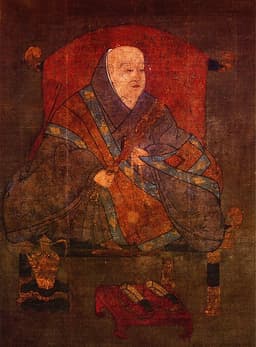
Emperor Uda
Emperor · Medieval
47.2Total

Julius Caesar
General · Ancient
82.8Total
Basic Information
Born
867
-100
Died
931
-44
Era
Medieval
Ancient
Nationality
Japan
Roman Republic
Occupation
Emperor
General
Civilization
Eastern
Western
Score Comparison
Military (10%)
52.0
88.0
Political (20%)
37.9
78.0
Influence (20%)
50.2
85.0
Legacy (20%)
42.5
82.0
Leadership (15%)
41.5
80.0
Strategy (15%)
68.9
85.0
TOTAL
47.2
82.8
Emperor Uda — Complete Timeline
887 AD
Attempt to Counter Fujiwara DominancePolitical Action◆ Major
Emperor Uda attempted to rule without a Fujiwara regent after his abdication. He appointed his own advisors and promoted scholarship. His efforts to reduce Fujiwara influence were partially successful but ultimately temporary.
FujiwaraImperial PowerResistance
Impact: national
Promotion of Sugawara no MichizanePolitical Action◆ Major
Emperor Uda elevated the scholar Sugawara no Michizane to high court rank, bypassing the Fujiwara. Michizane became a key advisor and was appointed to the Council of State. This move was part of Uda's strategy to counter Fujiwara power.
Sugawara no MichizaneAdvisorFaction
Impact: nationalconstructive
897 AD
Abdication and Cloistered RulePolitical Action◆ Major
Emperor Uda abdicated and became a Buddhist monk, but continued to exert influence as a retired emperor (daijo tenno). This system of cloistered rule allowed him to govern from behind the scenes, a practice that later emperors would emulate.
Cloistered RuleAbdicationInsei
Impact: national
Julius Caesar — Complete Timeline
58 BC
Gallic WarsWar◆ Major
Caesar, as proconsul of Gaul, launched a series of campaigns that conquered all of Gaul (modern France, Belgium, and parts of Switzerland). He fought numerous battles, including against the Helvetii, the Belgae, and the Gallic chieftain Vercingetorix. The wars brought immense wealth and a loyal army to Caesar.
Gallic WarsConquestRoman Expansion
Impact: regional
49 BC
Crossing the RubiconPolitical Action◆ Major
Caesar led Legio XIII across the Rubicon River into Italy, defying the Roman Senate's order to disband his army. This act triggered a civil war against Pompey and the Optimates, ultimately leading to Caesar's dictatorship and the end of the Roman Republic.
Roman Civil WarEnd of RepublicPower Struggle
Impact: global
48 BC
Battle of PharsalusWar◆ Major
Caesar's outnumbered army defeated the larger forces of Pompey the Great at Pharsalus in Greece. Caesar's tactical use of a reserve line to counter Pompey's cavalry charge proved decisive. Pompey fled to Egypt, where he was assassinated, leaving Caesar as the undisputed master of the Roman world.
Roman Civil WarBattleDecisive Victory
Impact: regional
44 BC
Appointment as Dictator for LifePolitical Action◆ Major
The Roman Senate appointed Caesar dictator perpetuo (dictator for life), granting him unprecedented personal power. This move concentrated military, legislative, and judicial authority in one person, effectively ending the Roman Republic's traditional system of checks and balances and alarming many senators.
DictatorshipEnd of RepublicPower Consolidation
Impact: regionaldestructive
Assassination on the Ides of MarchPolitical Action◆ Major
A group of Roman senators, led by Marcus Junius Brutus and Gaius Cassius Longinus, stabbed Caesar to death at a meeting of the Senate in the Theatre of Pompey. The assassination was intended to restore the Republic, but instead triggered another civil war that led to the rise of the Roman Empire.
AssassinationRoman PoliticsEnd of Republic
Impact: globaldestructive
Expert Analysis
emperor-uda-vs-julius-caesar
### The Ides of March and the Cloistered Moon
History’s stage has room for both the thunderclap and the whisper. In one corner stands a man whose fall echoed for two millennia: Julius Caesar, bleeding on the Senate floor, his life a lightning strike that forever altered the West. In the other, a figure whose quiet resistance is barely a footnote: Emperor Uda of Japan, who traded his throne for a monk’s robe, hoping to rule from the shadows. Caesar seized power with legions; Uda surrendered it with incense. Both men fought against the overwhelming currents of their time—one against a dying republic, the other against an entrenched clan. Why did one end as a martyr-tyrant and the other as a forgotten reformer? The answer lies not in their ambition, but in the worlds they inherited.
### Origins
Caesar was born into the chaos of the late Roman Republic, a world of civil wars and senatorial rivalries. His family, the Julii, claimed descent from Venus, but they were political outsiders. He grew up in a city where power was won by oratory, bribery, and military glory—a brutal meritocracy. Uda, by contrast, was born in 867 into the gilded cage of the Heian court in Kyoto. His world was one of ritual, poetry, and invisible chains. The Fujiwara clan had, for generations, controlled the throne by marrying daughters to emperors and ruling as regents. Uda’s father had been a puppet; Uda himself was raised to be one. Where Caesar’s Rome was a battlefield of ambition, Uda’s Japan was a chessboard of protocol.
### Rise to Power
Caesar’s path was forged in steel. He rose through the military ladder, winning glory in Spain and Gaul. His conquest of Gaul between 58 and 50 BCE gave him a veteran army, immense wealth, and a reputation that terrified the Senate. When ordered to disband his legions, he crossed the Rubicon River in 49 BCE—an act of war. He marched on Rome, defeated his rivals, and made himself dictator. Uda’s rise was far more delicate. He became emperor in 887 at age 20, but real power lay with Fujiwara no Mototsune, the regent. Uda’s first major act was a gamble: he attempted to rule without a Fujiwara regent after his abdication, appointing his own advisors. He promoted the scholar Sugawara no Michizane to high court rank, bypassing the Fujiwara entirely. This was not a march on Rome; it was a quiet reshuffling of courtiers. Where Caesar used violence, Uda used patronage.
### Leadership & Governance
Caesar governed as a revolutionary. He reformed the calendar, granted citizenship to provincials, and launched massive public works. He centralized power in his own hands, but he also broke the oligarchic stranglehold of the Senate. His military genius was unmatched—he wrote his own commentaries on his campaigns, blending strategy with propaganda. Yet his rule was a dictatorship, and his reforms were imposed by the sword. Uda’s governance was a study in subtlety. After abdicating in 897 and becoming a Buddhist monk, he practiced “cloistered rule” (*insei*), exerting influence from a temple. He continued to promote Michizane and other non-Fujiwara officials, hoping to build a parallel court. But his power was limited—he had no army, no treasury, only the moral authority of a retired emperor. His strategy score of 57.5 reflects a man who played a weak hand with skill, but could not change the game.
### Triumph & Tragedy
Caesar’s greatest moment was his triumph over Pompey at the Battle of Pharsalus in 48 BCE, which made him master of Rome. His tragedy was the Ides of March, 44 BCE, when his own senators stabbed him 23 times. He had centralized power but failed to build a system to sustain it—his assassination plunged Rome into another civil war. Uda’s triumph was more modest: for a few years, he managed to check Fujiwara dominance, elevating Sugawara no Michizane to the highest non-Fujiwara post. But his tragedy came after his death. The Fujiwara retaliated, exiling Michizane, who died in disgrace. Uda’s cloistered rule became a model for later emperors, but in his own lifetime, it was a failure. His total score of 65.2, compared to Caesar’s 83.3, captures the gap between their achievements—one a world-shaper, the other a footnote.
### Character & Destiny
Caesar was audacious, ruthless, and charismatic. He gambled everything on his own genius, and he won—until he didn’t. His personality demanded absolute power, and that demand created the enemies who killed him. Uda was patient, scholarly, and resigned. He knew he could not defeat the Fujiwara by force, so he tried to outlast them. He abdicated, became a monk, and hoped to influence from the shadows. His personality was suited to a world where power was exercised through poetry and rank, not legions. But both men were trapped by their eras: Caesar’s Rome could not accept a king, and Uda’s Japan could not accept an emperor without a regent. Their destinies were written by the structures they tried to break.
### Legacy
Caesar’s legacy is colossal. His name became a title—Kaiser, Tsar—and his reforms laid the foundation for the Roman Empire. He is remembered as a military genius, a writer, and a warning. Uda’s legacy is faint. He is known to historians as a transitional figure, a brief flicker of imperial independence before the Fujiwara reasserted control. His scores—Military 53.9, Influence 68.3, Legacy 57.5—tell the story of a man who tried to resist but lacked the tools. Yet his method of cloistered rule would be used by later emperors to reclaim power, centuries after the Fujiwara fell. In a way, Uda planted a seed that would not bloom until long after his death.
### Conclusion
Caesar and Uda both fought against the grain of history. One struck like a hammer, the other like a needle. Caesar’s fall created an empire; Uda’s fall created a precedent. The difference between them is not talent or courage—it is the shape of the world they inhabited. Rome rewarded the ambitious general; Heian Japan rewarded the patient courtier. Both men lost their immediate battles, but Caesar’s defeat was a tragedy that birthed a new order, while Uda’s was a quiet retreat into the shadows. Perhaps the truest measure of a leader is not whether they win, but whether their struggle changes the future. By that measure, both men succeeded—one in a blaze of glory, the other in the soft glow of a cloistered moon.
Rankings
🥇
Julius CaesarLeader
Mil: 88.0Pol: 78.0Inf: 85.0
82.8
🥈
Emperor Uda
Mil: 52.0Pol: 37.9Inf: 50.2
47.2
+35.6 behind
How This Comparison Works
Algorithm
Each figure is scored on 6 dimensions (0—100 scale) based on structured historical data: Military (10%), Political (20%), Influence (20%), Legacy (20%), Leadership (15%), Strategy (15%). The weighted total produces the final ranking.
Data Sources
Scores are computed from structured sub-indicators in the database. Scale factors adjust for era (Ancient ×0.85, Modern ×1.0) and civilization size (Eastern ×1.05, Other ×0.80) to account for differences in population and military scale.
Maximum 3 Figures
Comparisons are limited to 2—3 figures to ensure readability and statistical meaningfulness.
Error Margins
±5 points per dimension — Sub-scores are derived from historical records with inherent uncertainty. Two figures within 5 points on a dimension should be considered roughly equivalent in that area.
Total Score Accuracy
±3 points overall — The weighted combination of 6 dimensions produces a total score with approximately ±3 points of uncertainty. Differences of less than 3 points are not statistically significant— the figures are effectively tied.
Known Limitations
- Historical records are incomplete and uneven across civilizations
- Figures from oral-tradition societies may be underrepresented
- Occupation labels can misclassify multi-role figures
- Scores measure capability and impact, not moral character
- Quantitative scoring is a comparison tool, not absolute truth
Capability Radar
Military (10%) — Battles & Warfare
Battles
43
95
Win Rate
49
92
Expansion
50
97
Political (20%) — Governance & Reform
Reform
40
90
Diplomacy
35
85
Economy
25
82
Influence (20%) — Cultural & Global Reach
Cultural
30
88
Global
10
94
Legacy (20%) — Historical Impact
Historical
35
95
Longevity
20
96
Leadership (15%) — Power & Stability
Tenure
30
75
Stability
20
60
Strategy (15%) — Tactics & Innovation
Strategy
55
94
Tactics
57
96
Reform
61
88
Similar Comparisons
Comments & Discussion
No comments yet. Be the first to share your thoughts!