Loading...
Emperor Wen of Han vs Nynetjer
Emperor Wen of Han leads by 13.9 pts · 2 figures compared
…
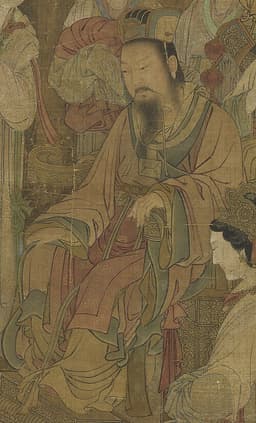
Emperor Wen of Han
Emperor · Ancient
57.1Total

Nynetjer
Emperor · Ancient
43.2Total
Basic Information
Born
-202
-2830
Died
-157
-2790
Era
Ancient
Ancient
Nationality
China
Early Egypt
Occupation
Emperor
Emperor
Civilization
Eastern
Middle Eastern
Score Comparison
Military (10%)
22.6
25.9
Political (20%)
72.0
35.1
Influence (20%)
62.0
45.5
Legacy (20%)
52.0
36.7
Leadership (15%)
80.0
74.0
Strategy (15%)
35.7
36.8
TOTAL
57.1
43.2
Emperor Wen of Han — Complete Timeline
180 BC
Promotion of Frugality and SimplicityCultural
Emperor Wen personally practiced frugality, wearing simple clothes and refusing to build extravagant palaces. He set an example for officials and the court, reducing government spending and corruption. This austerity helped restore the economy after the Qin dynasty's excesses.
FrugalityGovernanceEconomic Recovery
Impact: nationalconstructive
179 BC
Abolition of Collective Punishment LawsReform◆ Major
Emperor Wen abolished the Qin-era laws that punished entire families for crimes committed by one member. This reform reduced the harshness of the legal code and was part of his broader effort to restore stability and win popular support after the Qin collapse.
Legal ReformHumanitarianismHan Dynasty
Impact: nationalprogressive
168 BC
Reduction of Tax RatesReform◆ Major
Emperor Wen reduced the agricultural tax from one-fifteenth to one-thirtieth of crop yields, and later temporarily abolished it entirely. This policy stimulated agricultural production, increased state revenue through voluntary contributions, and alleviated peasant burdens.
Tax ReformAgricultureEconomic Policy
Impact: nationalconstructive
167 BC
Abolition of Corporal PunishmentsReform◆ Major
Emperor Wen abolished the mutilation punishments of tattooing, nose-cutting, and foot-cutting, replacing them with beatings and hard labor. This reform was prompted by a filial daughter's plea and marked a significant step toward a more humane legal system.
Legal ReformHumanitarianismPunishment
Impact: nationalprogressive
Nynetjer — Complete Timeline
2810 BC
Established the Sed Festival (Heb Sed)Other◆ Major
Nynetjer celebrated the Sed Festival, a royal jubilee ritual intended to renew the pharaoh's strength and legitimacy. This event is attested by inscriptions on stone vessels from his reign, indicating a long period of stable rule and the continuation of early dynastic traditions.
Ancient EgyptRoyal RitualJubilee
Impact: regionalconstructive
2805 BC
Recorded in the Palermo StoneOther◆ Major
Nynetjer's reign is recorded on the Palermo Stone, a fragment of the Royal Annals of the Old Kingdom. The stone lists annual events such as cattle counts and religious festivals, providing the primary chronological evidence for his rule and the administrative structure of early Egypt.
Historical RecordPalermo StoneChronology
Impact: regional
2800 BC
Divided the Cult of Horus and SetOther◆ Major
Nynetjer is recorded as having ordered the division of the cults of Horus and Set, two major deities in Egyptian religion. This administrative action may have reflected theological shifts or political needs, and is documented in later king lists and temple records.
Religious ReformDynasty IICult Administration
Impact: regional
2795 BC
Constructed the Tomb at SaqqaraOther◆ Major
Nynetjer built a large mastaba tomb at Saqqara, near the Step Pyramid complex. The tomb contained multiple chambers and was part of the evolving royal burial practices of the Second Dynasty. Its size and complexity indicate his wealth and the resources available to the crown.
ArchitectureBurialSaqqara Necropolis
Impact: regional
Expert Analysis
Origins
Emperor Wen of Han (born 203 BCE, personal name Liu Heng) was the fifth son of Emperor Gao of Han, the dynasty's founder. His mother, Consort Bo, was a low-ranking concubine, and Liu Heng was sent to the remote Dai region as its king at age seven. This isolation kept him away from the deadly power struggles in the capital. He received a Confucian education focused on frugality and benevolence.
Nynetjer (reigned c. 2850-2760 BCE) was the third pharaoh of the Second Dynasty of Egypt. His origins are obscure; he likely inherited the throne from his father, possibly Raneb. He ruled from Memphis and is attested through inscriptions on stone vessels and the Palermo Stone. His name means "divine one of the god Neith."
Rise to Power
Emperor Wen rose to power after the Lü Clan Disturbance (180 BCE). After Empress Dowager Lü's death, the Han court conspired to eliminate her clan. The officials invited Liu Heng to become emperor, viewing him as weak and controllable. However, he showed caution: he sent his uncle to assess the situation before entering the capital. He was proclaimed emperor in 180 BCE at age 23.
Nynetjer's rise was likely peaceful as a hereditary successor. He is known for celebrating the Sed Festival, a ritual that renewed the pharaoh's rule after 30 years. This suggests a long reign, possibly 40-45 years, one of the longest in the Early Dynastic Period. The festival is first attested for him, indicating he formalized or expanded this tradition.
Leadership & Governance
Emperor Wen's leadership was defined by restraint and reform. He abolished collective punishment laws (178 BCE), a Qin practice that punished entire families for one person's crime. He reduced the agricultural tax from 1/15 to 1/30 of crop yields, and later abolished it for several years. He also abolished corporal punishments like tattooing and nose-cutting, replacing them with beatings. He personally wore simple silk, refused to build palaces, and cut government spending. His political score of 72.0 reflects these effective, humane policies.
Nynetjer's governance is less documented but focused on religious and administrative consolidation. He divided the cults of Horus and Set, two major deities, possibly to balance power between their priesthoods. He built a large mastaba tomb at Saqqara, with multiple chambers and a complex substructure. His leadership score of 74.0 is high for his era, indicating effective rule, but his political score of 35.1 is low due to limited evidence of broad reforms.
Triumph & Tragedy
Emperor Wen's triumph was the "Rule of Wen and Jing," a period of peace and prosperity. His tax cuts and punishment reforms improved life for millions. His tragedy was his inability to fully centralize power; he had to tolerate powerful vassal kings and the Xiongnu threat. He died in 157 BCE, leaving his son Emperor Jing to continue reforms.
Nynetjer's triumph was the Sed Festival, which became a key ritual for later pharaohs, and his long reign that stabilized the dynasty. His tragedy is the lack of clear records; his achievements are only fragmentarily known. The division of cults may have caused religious tension, but evidence is scarce.
Character & Destiny
Emperor Wen was cautious, frugal, and compassionate. He avoided extravagance and listened to advisors. His character shaped a stable, humane rule. His destiny was to be remembered as a model Confucian ruler.
Nynetjer was likely a traditionalist and ritualist. His focus on religious festivals and tomb construction suggests a ruler concerned with legitimacy and the afterlife. His destiny was to be a transitional figure between the early dynasties, but his long reign ensured continuity.
Legacy
Emperor Wen's legacy is immense: his reforms influenced Chinese governance for centuries. The abolition of collective punishment and corporal punishments set a precedent for human rights. His tax policies became a model for later benevolent rulers. His legacy score is 52.0, lower than his political score because his reign was short and some reforms were later reversed.
Nynetjer's legacy is more limited. He is known primarily through the Palermo Stone and his tomb. The Sed Festival continued but his specific innovations are obscure. His influence score is 45.5, reflecting his role in early Egyptian history but minor global impact.
Conclusion
Emperor Wen of Han had greater impact. His political score of 72.0 vs. Nynetjer's 35.1, and total score of 57.1 vs. 43.2, reflect his concrete reforms that shaped Chinese civilization. Wen's policies reduced suffering and set standards for governance. Nynetjer, while a stable pharaoh, left no comparable legacy beyond ritual. Emperor Wen is the clear choice for greater historical significance.
Rankings
🥇
Emperor Wen of HanLeader
Mil: 22.6Pol: 72.0Inf: 62.0
57.1
🥈
Nynetjer
Mil: 25.9Pol: 35.1Inf: 45.5
43.2
+13.9 behind
How This Comparison Works
Algorithm
Each figure is scored on 6 dimensions (0—100 scale) based on structured historical data: Military (10%), Political (20%), Influence (20%), Legacy (20%), Leadership (15%), Strategy (15%). The weighted total produces the final ranking.
Data Sources
Scores are computed from structured sub-indicators in the database. Scale factors adjust for era (Ancient ×0.85, Modern ×1.0) and civilization size (Eastern ×1.05, Other ×0.80) to account for differences in population and military scale.
Maximum 3 Figures
Comparisons are limited to 2—3 figures to ensure readability and statistical meaningfulness.
Error Margins
±5 points per dimension — Sub-scores are derived from historical records with inherent uncertainty. Two figures within 5 points on a dimension should be considered roughly equivalent in that area.
Total Score Accuracy
±3 points overall — The weighted combination of 6 dimensions produces a total score with approximately ±3 points of uncertainty. Differences of less than 3 points are not statistically significant— the figures are effectively tied.
Known Limitations
- Historical records are incomplete and uneven across civilizations
- Figures from oral-tradition societies may be underrepresented
- Occupation labels can misclassify multi-role figures
- Scores measure capability and impact, not moral character
- Quantitative scoring is a comparison tool, not absolute truth
Capability Radar
Military (10%) — Battles & Warfare
Battles
10
10
Win Rate
10
10
Expansion
5
10
Political (20%) — Governance & Reform
Reform
80
30
Diplomacy
75
30
Economy
85
30
Influence (20%) — Cultural & Global Reach
Cultural
70
20
Global
60
10
Legacy (20%) — Historical Impact
Historical
75
20
Longevity
80
20
Leadership (15%) — Power & Stability
Tenure
85
60
Stability
90
50
Strategy (15%) — Tactics & Innovation
Strategy
15
10
Tactics
10
10
Reform
20
10
Similar Comparisons
Comments & Discussion
No comments yet. Be the first to share your thoughts!