Loading...
Emperor Wen of Han vs Napoleon Bonaparte
Napoleon Bonaparte leads by 13.8 pts · 2 figures compared
…
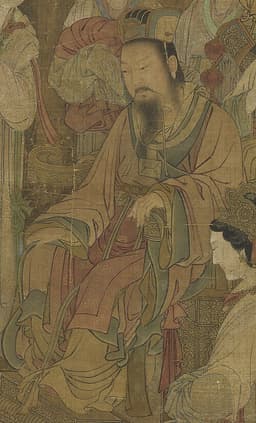
Emperor Wen of Han
Emperor · Ancient
57.1Total

Napoleon Bonaparte
General · Modern
70.9Total
Basic Information
Born
-202
1769
Died
-157
1821
Era
Ancient
Modern
Nationality
China
France
Occupation
Emperor
General
Civilization
Eastern
Western
Score Comparison
Military (10%)
22.6
94.0
Political (20%)
72.0
72.0
Influence (20%)
62.0
40.0
Legacy (20%)
52.0
80.0
Leadership (15%)
80.0
78.0
Strategy (15%)
35.7
90.0
TOTAL
57.1
70.9
Emperor Wen of Han — Complete Timeline
180 BC
Promotion of Frugality and SimplicityCultural
Emperor Wen personally practiced frugality, wearing simple clothes and refusing to build extravagant palaces. He set an example for officials and the court, reducing government spending and corruption. This austerity helped restore the economy after the Qin dynasty's excesses.
FrugalityGovernanceEconomic Recovery
Impact: nationalconstructive
179 BC
Abolition of Collective Punishment LawsReform◆ Major
Emperor Wen abolished the Qin-era laws that punished entire families for crimes committed by one member. This reform reduced the harshness of the legal code and was part of his broader effort to restore stability and win popular support after the Qin collapse.
Legal ReformHumanitarianismHan Dynasty
Impact: nationalprogressive
168 BC
Reduction of Tax RatesReform◆ Major
Emperor Wen reduced the agricultural tax from one-fifteenth to one-thirtieth of crop yields, and later temporarily abolished it entirely. This policy stimulated agricultural production, increased state revenue through voluntary contributions, and alleviated peasant burdens.
Tax ReformAgricultureEconomic Policy
Impact: nationalconstructive
167 BC
Abolition of Corporal PunishmentsReform◆ Major
Emperor Wen abolished the mutilation punishments of tattooing, nose-cutting, and foot-cutting, replacing them with beatings and hard labor. This reform was prompted by a filial daughter's plea and marked a significant step toward a more humane legal system.
Legal ReformHumanitarianismPunishment
Impact: nationalprogressive
Napoleon Bonaparte — Complete Timeline
1799 AD
Coup of 18 BrumaireOther◆ Major
Napoleon Bonaparte, with support from his brother Lucien and key political figures, overthrew the Directory in a bloodless coup. He established the Consulate with himself as First Consul, effectively becoming the ruler of France. This event ended the French Revolution's most unstable period.
French RevolutionCoupRise to Power
Impact: regional
1804 AD
Promulgation of the Napoleonic CodeOther◆ Major
Napoleon enacted the Civil Code of the French, known as the Napoleonic Code, a comprehensive set of laws that replaced the fragmented feudal legal systems. The code established legal equality, protected property rights, and secularized law. It became the basis for legal systems in many European and world countries.
Legal ReformNapoleonic CodeCivil Law
Impact: globalconstructive
1805 AD
Battle of AusterlitzWar◆ Major
Napoleon's Grande Arm
Napoleonic WarsBattleDecisive Victory
Impact: global
1812 AD
Invasion of RussiaWar◆ Major
Napoleon led the Grande Arm
Napoleonic WarsInvasionDisaster
Impact: globaldestructive
1815 AD
Battle of WaterlooWar◆ Major
Napoleon's French army was defeated by the combined forces of the Duke of Wellington's Anglo-Allied army and Gebhard Leberecht von Bl
Napoleonic WarsBattleFinal Defeat
Impact: globaldestructive
Expert Analysis
emperor-wen-of-han-vs-napoleon-bonaparte
# The Conqueror and the Cultivator
On a frozen December morning in 1805, Napoleon Bonaparte stood among the muddy fields of Austerlitz, watching his Grand Army crush the combined forces of Russia and Austria. The sun, which he had called "the Sun of Austerlitz," broke through the mist just as his artillery began its deadly work. Three thousand miles away, nearly two thousand years earlier, a Chinese emperor in simple hemp robes sat in a drafty palace, personally reviewing tax records by lamplight, determined to lighten the burden on peasants he would never meet. One man sought to reshape the world through fire and steel; the other through patience and restraint. What drove these two figures—both among history's most consequential rulers—to such radically different paths?
Origins
Napoleon was born in 1769 on the Mediterranean island of Corsica, a place that had been conquered by France only the year before. His family were minor nobles, poor and resentful of French domination. Young Napoleon spoke Corsican Italian, not French, and was mocked at military school for his accent and provincial manners. This outsider status forged an ambition that burned like a furnace: he would prove himself not merely equal to the French aristocracy, but superior to them all.
Emperor Wen of Han, born Liu Heng in 202 BCE, arrived into a world still bleeding from the wars that had united China under the Qin dynasty. His father, Liu Bang, had risen from a peasant village to found the Han dynasty, but the empire remained fragile. Wen was not the eldest son, nor the most favored. He was sent away to govern a distant border region, a posting that might have been a quiet exile. Instead, it became his education in the realities of governance—the weight of taxes, the cost of war, the quiet suffering of ordinary people.
Rise to Power
Napoleon’s ascent was a masterpiece of opportunism. The French Revolution had shattered the old order, and a young artillery officer with talent and ambition could climb faster than any aristocrat. In 1795, when royalist rebels marched on the revolutionary government, Napoleon cleared the streets of Paris with a "whiff of grapeshot"—a brutal, efficient solution that announced his arrival. By 1799, at age thirty, he had seized control of France in a coup d'état. Within five years, he crowned himself emperor.
Emperor Wen’s rise was quieter, but no less dramatic. In 180 BCE, the powerful Empress Dowager Lü had nearly extinguished the Han imperial family. When she died, the nobles and generals who had survived her reign looked for a new emperor—someone who would not threaten their power. They found Liu Heng, the forgotten prince in his remote province. He was summoned to the capital, but he did not rush. He sent spies ahead, waited for confirmation that the offer was genuine, and only then accepted the throne. Where Napoleon seized power, Wen received it—and only after making certain he would not be assassinated on the road.
Leadership & Governance
Napoleon governed through energy and genius. He personally led his armies across Europe, from the pyramids of Egypt to the frozen plains of Russia. He rewrote French law with the Napoleonic Code, creating a system of civil rights and legal equality that influenced nations for centuries. But his governance was built on war: each victory brought tribute, territory, and glory that sustained his regime. When peace came, he did not know what to do with it.
Emperor Wen governed through subtraction. His military score of 23.2 reflects a ruler who actively avoided war, preferring diplomacy and marriage alliances with the nomadic Xiongnu confederation. His real achievements were negative: he abolished the Qin dynasty’s collective punishment laws in 179 BCE, which had punished entire families for one member’s crime. In 167 BCE, he ended the mutilation punishments of tattooing, nose-cutting, and foot-cutting—replacing them with beatings. Most radically, he reduced the agricultural tax from one-fifteenth of crop yields to one-thirtieth in 168 BCE, and later abolished it entirely for a time. He wore simple clothes, refused to build palaces, and personally inspected the imperial granaries to prevent waste.
Triumph & Tragedy
Napoleon’s greatest triumph was Austerlitz in 1805, where he destroyed a larger enemy army through deception, speed, and perfect timing. It was the masterpiece of a military genius with a strategy score of 93. His greatest tragedy was the invasion of Russia in 1812: 600,000 men marched east; fewer than 100,000 returned. The disaster broke his invincible image, and within three years he was exiled to Elba.
Emperor Wen’s triumph was invisible. There was no great battle, no dramatic conquest. Instead, his reign saw the population of China recover from war, granaries fill to overflowing, and the people begin to trust their government again. His tragedy was personal: he died in 157 BCE, knowing that his beloved son and heir, Emperor Jing, would have to continue the work alone. There is no record of a dramatic last stand—only a quiet emperor, surrounded by simple furniture, leaving behind a realm at peace.
Character & Destiny
Napoleon’s character was a forge of contradictions. He was brilliant, tireless, and capable of inspiring fierce loyalty, but also paranoid, egomaniacal, and unable to stop. "Power is my mistress," he once said, and he meant it. His personality drove him to conquer, but the same hunger that lifted him to glory pushed him past the point of wisdom. He could not rest, because he could not imagine a world that did not revolve around his will.
Emperor Wen’s character was shaped by a different philosophy: the Daoist principle of *wu wei*—action through non-action. He believed that a wise ruler does not impose his will on the world, but removes obstacles so that people can flourish naturally. His leadership score of 81 reflects a man who led by example, not by command. Where Napoleon saw the world as something to be conquered, Wen saw it as something to be cultivated.
Legacy
Napoleon left behind a transformed Europe: the Napoleonic Code, the spread of nationalism, the redrawing of borders, and the seeds of modern warfare. His legacy score of 78 and influence of 82 reflect a man whose shadow still falls across the continent. But he also left behind hundreds of thousands of corpses, a France exhausted by war, and a reputation that oscillates between hero and tyrant.
Emperor Wen left behind a stable, prosperous China that would become the Han golden age. His legacy score of 71.6 and influence of 67.4 are lower, but they measure a different kind of achievement: not the explosion of a supernova, but the slow accumulation of soil. His reforms became the foundation of Chinese governance for centuries. The Han dynasty, which he helped secure, would last four hundred years—longer than Napoleon’s empire lasted decades.
Conclusion
Standing on the battlefield of Waterloo in 1815, watching his dreams collapse into mud and blood, Napoleon might have envied Emperor Wen’s quiet death in a simple palace, surrounded by a grateful people. But Wen, for his part, could never have understood Napoleon’s hunger. The Corsican conqueror and the Han emperor represent two poles of human ambition: the desire to dominate, and the wisdom to cultivate. One changed the world in a generation; the other changed it over centuries. Which path is greater depends on what we value—the flash of lightning, or the slow growth of a tree.
Rankings
🥇
Napoleon BonaparteLeader
Mil: 94.0Pol: 72.0Inf: 40.0
70.9
🥈
Emperor Wen of Han
Mil: 22.6Pol: 72.0Inf: 62.0
57.1
+13.8 behind
How This Comparison Works
Algorithm
Each figure is scored on 6 dimensions (0—100 scale) based on structured historical data: Military (10%), Political (20%), Influence (20%), Legacy (20%), Leadership (15%), Strategy (15%). The weighted total produces the final ranking.
Data Sources
Scores are computed from structured sub-indicators in the database. Scale factors adjust for era (Ancient ×0.85, Modern ×1.0) and civilization size (Eastern ×1.05, Other ×0.80) to account for differences in population and military scale.
Maximum 3 Figures
Comparisons are limited to 2—3 figures to ensure readability and statistical meaningfulness.
Error Margins
±5 points per dimension — Sub-scores are derived from historical records with inherent uncertainty. Two figures within 5 points on a dimension should be considered roughly equivalent in that area.
Total Score Accuracy
±3 points overall — The weighted combination of 6 dimensions produces a total score with approximately ±3 points of uncertainty. Differences of less than 3 points are not statistically significant— the figures are effectively tied.
Known Limitations
- Historical records are incomplete and uneven across civilizations
- Figures from oral-tradition societies may be underrepresented
- Occupation labels can misclassify multi-role figures
- Scores measure capability and impact, not moral character
- Quantitative scoring is a comparison tool, not absolute truth
Capability Radar
Military (10%) — Battles & Warfare
Battles
10
95
Win Rate
10
90
Expansion
5
95
Political (20%) — Governance & Reform
Reform
80
95
Diplomacy
75
80
Economy
85
85
Influence (20%) — Cultural & Global Reach
Cultural
70
85
Global
60
90
Legacy (20%) — Historical Impact
Historical
75
95
Longevity
80
90
Leadership (15%) — Power & Stability
Tenure
85
85
Stability
90
70
Strategy (15%) — Tactics & Innovation
Strategy
15
95
Tactics
10
98
Reform
20
92
Similar Comparisons
Comments & Discussion
AusterlitzEagle6/17/2026
Napoleon's brilliance at Austerlitz (60,000 French defeated 85,000 Allies with just 2,000 casualties) proves tactical genius beats bureaucratic plodding. Wen never commanded a major battle—he just collected taxes and wrote essays on modesty. One man reshaped Europe in a decade; the other tweaked grain levies for 23 years. Give me the Corsican who burned through thrones over the hemp-robed accountant any day.
BambooPencilSkeptic6/17/2026
数据不会说谎:文帝在位期间减免田租达十一次,国库却积粟数千万石;拿破仑连年征战,法国国债从1799年的5.3亿法郎飙升至1815年的12亿。证明什么?卓越不等于可持续。古代粮仓比欧洲战场更懂长期主义——你选哪个?我押稻谷。
DecembristClassicist6/17/2026
You're comparing Plutarch's Lycurgus to a side character in a frontier epic. Wen's "Restoration of Peace" pacified a society where 70% of Qin-era texts had been burned—he rebuilt civilization from ash. Napoleon? He codified laws and called it a day. The Han Annals record Wen abolishing collective punishment, a reform that took Europe until 1848. Scale matters: one ruled 60 million, the other 130 million. Who really managed "grand strategy"?
汉简猎人6/17/2026
别被太阳光环骗了。拿破仑在西班牙战场死了30万法军,还说是“战略撤退”;文帝对匈奴的和亲政策维持了六十年的边境低烈度,成本只是每年几匹绸缎和一位宫女。谁更懂止损?抄《盐铁论》的人比读《战争论》的清醒——你管这叫“平庸”?这叫活着的智慧。
BastilleBreaker6/17/2026
Every Napoleon fanboy forgets his own brother Joseph begging him to stop the Spanish ulcer. Wen never appointed relatives to high posts—his own uncle was exiled for corruption. The Querelle: one man's 1812 retreat lost 500,000 soldiers; the other's "negligence" saw Han population double from 15 to 30 million. You pick the dead emporer over the living commonwealth?