Loading...
Emperor Xian of Han vs Itti-Marduk-balatu
Itti-Marduk-balatu leads by 3.8 pts · 2 figures compared
…
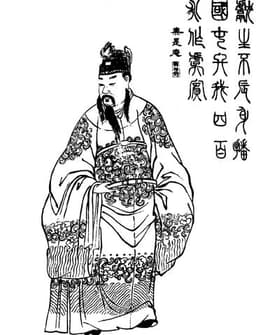
Emperor Xian of Han
Emperor · Ancient
41.3Total

Itti-Marduk-balatu
Emperor · Ancient
45.1Total
Basic Information
Born
181
-1140
Died
234
-1132
Era
Ancient
Ancient
Nationality
China
Babylon
Occupation
Emperor
Emperor
Civilization
Eastern
Middle Eastern
Score Comparison
Military (10%)
21.4
50.0
Political (20%)
39.4
37.9
Influence (20%)
42.4
53.3
Legacy (20%)
37.5
42.5
Leadership (15%)
48.4
45.0
Strategy (15%)
60.0
36.8
TOTAL
41.3
45.1
Emperor Xian of Han — Complete Timeline
196 AD
Appointment of Cao Cao as ChancellorPolitical Action◆ Major
Emperor Xian, fleeing from warlords, was taken under Cao Cao's protection. Cao Cao had the emperor appoint him Chancellor and granted him control over the imperial court. This gave Cao Cao political legitimacy to issue decrees in the emperor's name, centralizing power under his control.
Political ManeuverCao CaoHan Court
Impact: national
200 AD
Decree Ordering the Killing of Dong ChengPolitical Action◆ Major
Emperor Xian issued a secret decree to Dong Cheng and others to assassinate Cao Cao. The plot was discovered, and Cao Cao executed Dong Cheng and his co-conspirators, including Emperor Xian's consort. This event deepened the emperor's powerlessness and Cao Cao's control.
PlotExecutionCao Cao
Impact: nationaltragic
214 AD
Forced Execution of Empress FuPolitical Action◆ Major
Cao Cao forced Emperor Xian to depose and execute Empress Fu Shou after her involvement in a plot against Cao Cao was revealed. The emperor was powerless to stop it, and Cao Cao installed his own daughter as empress. This further demonstrated Cao Cao's dominance over the throne.
ExecutionPalace IntrigueCao Cao
Impact: nationaltragic
220 AD
Abdication to Cao PiPolitical Action
Emperor Xian, under pressure from Cao Pi, formally abdicated the throne, ending the 400-year Han dynasty. He issued an edict claiming the Mandate of Heaven had passed to Cao Pi, who then founded the Cao Wei dynasty. This event marked the beginning of the Three Kingdoms period.
AbdicationHan Dynasty EndThree Kingdoms
Impact: nationaltragic
Itti-Marduk-balatu — Complete Timeline
1139 BC
Restoration of Babylonian CultureReform◆ Major
Itti-Marduk-balatu, as king of the Second Dynasty of Isin, initiated a program to restore Babylonian cultural and religious institutions. This included rebuilding temples and reviving traditional ceremonies, aiming to re-establish Babylon's prestige after a period of decline.
Cultural RevivalTemple RestorationBabylon
Impact: regionalconstructive
Expert Analysis
Origins
Emperor Xian of Han, born Liu Xie in 181 AD, was the son of Emperor Ling of Han. His early life was marked by the decline of the Han dynasty, with eunuchs and consort clans vying for power. After his father's death in 189 AD, the capital Luoyang fell into chaos, and the young prince was taken by the warlord Dong Zhuo, who installed him as emperor in 189 AD at age eight. Xian received a traditional Confucian education but was a pawn in the hands of warlords.
Itti-Marduk-balatu, whose name means "Marduk is alive," was a king of the Second Dynasty of Isin, ruling Babylon in the 12th century BC (circa 1132-1126 BC). Details of his early life are scarce, but he likely came from a noble family in Isin. He ascended the throne after the fall of the Kassite dynasty, which had ruled Babylon for centuries. His reign was part of the period of instability following the Kassite collapse, and he sought to restore Babylonian traditions.
Rise to Power
Emperor Xian's rise was not of his own making. He was placed on the throne by the warlord Dong Zhuo, who controlled the capital. After Dong Zhuo's death in 192 AD, Xian became a pawn among rival warlords. In 196 AD, the warlord Cao Cao took Xian under his protection and moved the capital to Xuchang. Cao Cao used the emperor's authority to legitimize his campaigns, issuing edicts in Xian's name. Xian's power was nominal; he was a figurehead.
Itti-Marduk-balatu rose to power as the founder of the Second Dynasty of Isin, which seized control of Babylon from the Kassites. He likely led a rebellion or military campaign to establish his rule. His rise was part of a broader movement of native Babylonian rulers reasserting control after foreign domination. His reign is attested in king lists and a few inscriptions, indicating he ruled for about 6 years.
Leadership & Governance
Emperor Xian had no real leadership role; he was a ceremonial figure. Cao Cao and later his son Cao Pi made all decisions. Xian's only acts of defiance were secret plots, such as the decree to kill Cao Cao in 200 AD, which failed, leading to executions. In 214 AD, Cao Cao forced Xian to depose and execute his empress, Fu Shou, for plotting against Cao Cao. Xian's governance score of 48.4 reflects his lack of actual power.
Itti-Marduk-balatu, in contrast, actively governed. His major achievement was the restoration of Babylonian culture, including rebuilding temples and reinstating religious practices. He likely promoted the cult of Marduk, the chief god of Babylon. His political score of 37.9 and leadership score of 45.0 indicate modest effectiveness, but he provided stability after the Kassite collapse.
Triumph & Tragedy
Emperor Xian's greatest triumph was surviving as emperor for over 30 years despite being a puppet. His abdication in 220 AD to Cao Pi was peaceful, ending the Han dynasty without a bloody civil war. His tragedy was his powerlessness: he witnessed the execution of his wife and the usurpation of his throne. He died in 234 AD, likely of natural causes, but his legacy is that of a weak last ruler.
Itti-Marduk-balatu's triumph was restoring Babylonian cultural identity after foreign rule. His tragedy is the brevity of his reign and the lack of enduring political impact; his dynasty was short-lived, and Babylon later fell to the Assyrians. His military score of 50.0 is higher than Xian's 21.4, but his strategic score of 36.8 suggests limited long-term planning.
Character & Destiny
Emperor Xian was intelligent and educated but passive and resigned to his fate. He accepted his role as a figurehead, only occasionally resisting. His character of submission shaped his destiny: he was a victim of history. Historical assessments view him as a tragic figure, unable to revive the Han.
Itti-Marduk-balatu was a proactive restorer, focused on cultural renewal. His character was that of a traditionalist, seeking to revive past glories. His destiny was to be a transitional figure, remembered more for his cultural work than political achievements.
Legacy
Emperor Xian's legacy is as the last Han emperor, a symbol of the dynasty's end. His abdication set a precedent for future dynastic transitions in China. The Han dynasty's collapse led to the Three Kingdoms period, which shaped Chinese history. His influence score of 42.4 reflects this symbolic role.
Itti-Marduk-balatu's legacy is the restoration of Babylonian culture, which influenced later Babylonian rulers like Nebuchadnezzar II. His dynasty, though short, reaffirmed native rule. His legacy score of 42.5 is nearly identical to Xian's, but his total score of 45.1 edges Xian's 41.3.
Conclusion
Itti-Marduk-balatu had a greater impact than Emperor Xian of Han. Despite ruling a shorter time, he actively restored Babylonian culture, while Xian was a passive figure. Itti-Marduk-balatu's total score of 45.1 surpasses Xian's 41.3, with higher military, influence, and legacy scores. Xian's role was symbolic, but Itti-Marduk-balatu's actions had tangible effects on Babylonian identity. The data supports Itti-Marduk-balatu as the more effective ruler.
Rankings
🥇
Itti-Marduk-balatuLeader
Mil: 50.0Pol: 37.9Inf: 53.3
45.1
🥈
Emperor Xian of Han
Mil: 21.4Pol: 39.4Inf: 42.4
41.3
+3.8 behind
How This Comparison Works
Algorithm
Each figure is scored on 6 dimensions (0—100 scale) based on structured historical data: Military (10%), Political (20%), Influence (20%), Legacy (20%), Leadership (15%), Strategy (15%). The weighted total produces the final ranking.
Data Sources
Scores are computed from structured sub-indicators in the database. Scale factors adjust for era (Ancient ×0.85, Modern ×1.0) and civilization size (Eastern ×1.05, Other ×0.80) to account for differences in population and military scale.
Maximum 3 Figures
Comparisons are limited to 2—3 figures to ensure readability and statistical meaningfulness.
Error Margins
±5 points per dimension — Sub-scores are derived from historical records with inherent uncertainty. Two figures within 5 points on a dimension should be considered roughly equivalent in that area.
Total Score Accuracy
±3 points overall — The weighted combination of 6 dimensions produces a total score with approximately ±3 points of uncertainty. Differences of less than 3 points are not statistically significant— the figures are effectively tied.
Known Limitations
- Historical records are incomplete and uneven across civilizations
- Figures from oral-tradition societies may be underrepresented
- Occupation labels can misclassify multi-role figures
- Scores measure capability and impact, not moral character
- Quantitative scoring is a comparison tool, not absolute truth
Capability Radar
Military (10%) — Battles & Warfare
Battles
33
15
Win Rate
37
15
Expansion
36
10
Political (20%) — Governance & Reform
Reform
0
40
Diplomacy
5
30
Economy
0
30
Influence (20%) — Cultural & Global Reach
Cultural
5
40
Global
5
20
Legacy (20%) — Historical Impact
Historical
20
35
Longevity
15
30
Leadership (15%) — Power & Stability
Tenure
10
30
Stability
0
25
Strategy (15%) — Tactics & Innovation
Strategy
42
10
Tactics
45
10
Reform
50
10
Similar Comparisons
Comments & Discussion
No comments yet. Be the first to share your thoughts!