Loading...
Emperor Xian of Han vs Napoleon Bonaparte
Napoleon Bonaparte leads by 29.6 pts · 2 figures compared
…
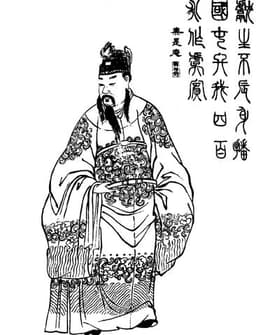
Emperor Xian of Han
Emperor · Ancient
41.3Total

Napoleon Bonaparte
General · Modern
70.9Total
Basic Information
Born
181
1769
Died
234
1821
Era
Ancient
Modern
Nationality
China
France
Occupation
Emperor
General
Civilization
Eastern
Western
Score Comparison
Military (10%)
21.4
94.0
Political (20%)
39.4
72.0
Influence (20%)
42.4
40.0
Legacy (20%)
37.5
80.0
Leadership (15%)
48.4
78.0
Strategy (15%)
60.0
90.0
TOTAL
41.3
70.9
Emperor Xian of Han — Complete Timeline
196 AD
Appointment of Cao Cao as ChancellorPolitical Action◆ Major
Emperor Xian, fleeing from warlords, was taken under Cao Cao's protection. Cao Cao had the emperor appoint him Chancellor and granted him control over the imperial court. This gave Cao Cao political legitimacy to issue decrees in the emperor's name, centralizing power under his control.
Political ManeuverCao CaoHan Court
Impact: national
200 AD
Decree Ordering the Killing of Dong ChengPolitical Action◆ Major
Emperor Xian issued a secret decree to Dong Cheng and others to assassinate Cao Cao. The plot was discovered, and Cao Cao executed Dong Cheng and his co-conspirators, including Emperor Xian's consort. This event deepened the emperor's powerlessness and Cao Cao's control.
PlotExecutionCao Cao
Impact: nationaltragic
214 AD
Forced Execution of Empress FuPolitical Action◆ Major
Cao Cao forced Emperor Xian to depose and execute Empress Fu Shou after her involvement in a plot against Cao Cao was revealed. The emperor was powerless to stop it, and Cao Cao installed his own daughter as empress. This further demonstrated Cao Cao's dominance over the throne.
ExecutionPalace IntrigueCao Cao
Impact: nationaltragic
220 AD
Abdication to Cao PiPolitical Action
Emperor Xian, under pressure from Cao Pi, formally abdicated the throne, ending the 400-year Han dynasty. He issued an edict claiming the Mandate of Heaven had passed to Cao Pi, who then founded the Cao Wei dynasty. This event marked the beginning of the Three Kingdoms period.
AbdicationHan Dynasty EndThree Kingdoms
Impact: nationaltragic
Napoleon Bonaparte — Complete Timeline
1799 AD
Coup of 18 BrumaireOther◆ Major
Napoleon Bonaparte, with support from his brother Lucien and key political figures, overthrew the Directory in a bloodless coup. He established the Consulate with himself as First Consul, effectively becoming the ruler of France. This event ended the French Revolution's most unstable period.
French RevolutionCoupRise to Power
Impact: regional
1804 AD
Promulgation of the Napoleonic CodeOther◆ Major
Napoleon enacted the Civil Code of the French, known as the Napoleonic Code, a comprehensive set of laws that replaced the fragmented feudal legal systems. The code established legal equality, protected property rights, and secularized law. It became the basis for legal systems in many European and world countries.
Legal ReformNapoleonic CodeCivil Law
Impact: globalconstructive
1805 AD
Battle of AusterlitzWar◆ Major
Napoleon's Grande Arm
Napoleonic WarsBattleDecisive Victory
Impact: global
1812 AD
Invasion of RussiaWar◆ Major
Napoleon led the Grande Arm
Napoleonic WarsInvasionDisaster
Impact: globaldestructive
1815 AD
Battle of WaterlooWar◆ Major
Napoleon's French army was defeated by the combined forces of the Duke of Wellington's Anglo-Allied army and Gebhard Leberecht von Bl
Napoleonic WarsBattleFinal Defeat
Impact: globaldestructive
Expert Analysis
emperor-xian-of-han-vs-napoleon-bonaparte
# The Emperor and the General: Two Men Who Shaped Their Ages
In the summer of 196, a frightened teenage boy in tattered imperial robes rode into the camp of a warlord named Cao Cao. Two thousand miles away and fifteen hundred years later, a young artillery officer stood on the ramparts of Toulon, watching the British fleet retreat from his cannons. Emperor Xian of Han and Napoleon Bonaparte could not have been more different—one born to rule but powerless, the other born to obscurity but destined to conquer. Yet both stood at the crossroads of history, and their stories reveal something profound about the nature of power itself.
Origins
Emperor Xian of Han entered the world in 181, the son of a dynasty that had ruled China for four centuries. The Han Empire was already crumbling—eunuchs controlled the court, rebellions swept the provinces, and the central government had become a hollow shell. Young Liu Xie, as he was then known, was raised in a palace where power was a rumor and survival a daily struggle. He was educated in the classics, taught to revere the Confucian order, and trained to rule—but the empire he inherited was a fiction.
Napoleon Bonaparte was born twelve years before the French Revolution, on the Mediterranean island of Corsica, in 1769. His family were minor nobility, poor and ambitious. He spoke French with an Italian accent, and his schoolmates mocked him for his provincial ways. But France in the 1780s was a society in flux, where talent could vault a man from obscurity to command. Napoleon devoured military history, studied the great captains of antiquity, and learned to think in terms of artillery trajectories and troop movements—not Confucian maxims and ritual propriety.
Rise to Power
Emperor Xian’s path was not a climb but a descent. At age eight, he watched his brother, the emperor, be deposed and poisoned. At nine, he was placed on the throne by a warlord who controlled him like a puppet. For years, he was shuttled between rival camps, a pawn in a game of chess played by men who had no loyalty to the dynasty. In 196, he made a desperate choice: he placed himself under the protection of Cao Cao, a brilliant general who promised to restore order. Cao Cao had the emperor appoint him Chancellor, and from that moment, Xian’s fate was sealed. He was a prisoner in his own palace, a figurehead whose seal was used to legitimize every decree Cao Cao wished to issue.
Napoleon’s rise was the opposite. He seized opportunity with both hands. At 24, he drove the British from Toulon and was promoted to brigadier general. At 26, he saved the revolutionary government from a royalist uprising with a "whiff of grapeshot." At 27, he took command of an army in Italy—starving, unpaid, and mutinous—and turned it into a conquering force that humbled Austria. By 1799, at age 30, he had made himself First Consul. By 1804, he was Emperor of the French. Every step was a gamble, every promotion earned through victory.
Leadership & Governance
The contrast in their ruling styles is stark. Napoleon governed through energy, direct command, and constant movement. He personally led his armies into battle, slept on the ground with his soldiers, and rewrote French law with his own hand. The Napoleonic Code, enacted in 1804, standardized legal systems across Europe, abolishing feudalism and establishing principles of equality before the law. He built roads, founded banks, reformed education, and centralized the state into an efficient machine. His military genius—rated 94 in strategy and 93 in overall command—was matched by his political ambition, which earned him a score of 75.
Emperor Xian, by contrast, governed through symbolism. His power was not the power to command but the power to legitimize. When Cao Cao wanted to attack a rival, he had the emperor issue a decree. When Cao Cao wanted to execute an enemy, he had the emperor sign the order. Xian’s political score of 60.4 reflects not his ability to rule but his capacity to endure. In 200, he issued a secret decree ordering the assassination of Cao Cao. The plot was discovered; the conspirators were executed. In 214, Cao Cao forced him to depose and execute his own empress, Fu Shou, for her involvement in another conspiracy. Xian could only comply.
Triumph & Tragedy
Napoleon’s greatest moment came on December 2, 1805, at Austerlitz, where he destroyed the combined armies of Russia and Austria. It was his masterpiece—a battle of perfect timing, deception, and courage. His worst moment came ten years later, on June 18, 1815, at Waterloo, when a combination of Prussian reinforcements and his own mistakes ended his reign forever. He died in exile on Saint Helena in 1821, a prisoner of the British, at age 51.
Emperor Xian’s triumph was survival. He outlasted the warlords who used him—Cao Cao died in 220, and his son Cao Pi demanded the throne. Xian’s tragedy was that his survival meant the end of his dynasty. In 220, he formally abdicated, issuing an edict that praised Cao Pi as the rightful ruler and blamed himself for the dynasty’s fall. He lived another fourteen years as a duke, dying in 234 at age 53, the last Han emperor, the symbol of a civilization that had passed away.
Character & Destiny
Napoleon was driven by ambition, genius, and an insatiable hunger for glory. He believed he could shape history through will and force. He was ruthless, brilliant, and ultimately hubristic—he could not stop, could not compromise, could not accept limits. His leadership score of 80 reflects a man who inspired devotion but also provoked fear, who built an empire but could not sustain it.
Emperor Xian was shaped by patience, endurance, and the weight of tradition. He understood that his role was not to fight but to endure, to be the vessel through which legitimacy flowed until the moment it was taken from him. His leadership score of 78 is remarkable—not for action but for acceptance. He knew he could not win, so he chose to survive.
Legacy
Napoleon’s legacy is written across Europe—in law codes, in national borders, in the very idea of the modern state. His military innovations are still studied. His influence score of 82 and legacy score of 78 place him among the most consequential figures in Western history. He is remembered as both liberator and tyrant, builder and destroyer.
Emperor Xian’s legacy is more subtle. He is remembered as the last Han emperor, a tragic figure who presided over the end of an era. His influence score of 60.9 and legacy score of 53.5 reflect a man who was more symbol than actor. Yet the Han dynasty’s fall opened the Three Kingdoms period, one of the richest epochs in Chinese history, filled with heroes and villains that still populate novels, operas, and films. Xian was not a great ruler, but his story is essential to understanding how power passes from one age to the next.
Conclusion
One man seized power and lost it. Another was given power and surrendered it. Napoleon Bonaparte and Emperor Xian of Han lived worlds apart, but both faced the same question: what do you do when history demands more than you can give? Napoleon answered with ambition, conquest, and glory—and died in exile. Xian answered with patience, endurance, and acceptance—and died in peace. Neither choice was wrong. Neither was fully right. They stand as two faces of leadership, two paths through the storm of history, reminding us that the measure of a life is not only what you achieve but what you are willing to let go.
Rankings
🥇
Napoleon BonaparteLeader
Mil: 94.0Pol: 72.0Inf: 40.0
70.9
🥈
Emperor Xian of Han
Mil: 21.4Pol: 39.4Inf: 42.4
41.3
+29.6 behind
How This Comparison Works
Algorithm
Each figure is scored on 6 dimensions (0—100 scale) based on structured historical data: Military (10%), Political (20%), Influence (20%), Legacy (20%), Leadership (15%), Strategy (15%). The weighted total produces the final ranking.
Data Sources
Scores are computed from structured sub-indicators in the database. Scale factors adjust for era (Ancient ×0.85, Modern ×1.0) and civilization size (Eastern ×1.05, Other ×0.80) to account for differences in population and military scale.
Maximum 3 Figures
Comparisons are limited to 2—3 figures to ensure readability and statistical meaningfulness.
Error Margins
±5 points per dimension — Sub-scores are derived from historical records with inherent uncertainty. Two figures within 5 points on a dimension should be considered roughly equivalent in that area.
Total Score Accuracy
±3 points overall — The weighted combination of 6 dimensions produces a total score with approximately ±3 points of uncertainty. Differences of less than 3 points are not statistically significant— the figures are effectively tied.
Known Limitations
- Historical records are incomplete and uneven across civilizations
- Figures from oral-tradition societies may be underrepresented
- Occupation labels can misclassify multi-role figures
- Scores measure capability and impact, not moral character
- Quantitative scoring is a comparison tool, not absolute truth
Capability Radar
Military (10%) — Battles & Warfare
Battles
33
95
Win Rate
37
90
Expansion
36
95
Political (20%) — Governance & Reform
Reform
0
95
Diplomacy
5
80
Economy
0
85
Influence (20%) — Cultural & Global Reach
Cultural
5
85
Global
5
90
Legacy (20%) — Historical Impact
Historical
20
95
Longevity
15
90
Leadership (15%) — Power & Stability
Tenure
10
85
Stability
0
70
Strategy (15%) — Tactics & Innovation
Strategy
42
95
Tactics
45
98
Reform
50
92
Similar Comparisons
Comments & Discussion
大数据侦探6/17/2026
数据不会骗人:拿破仑统治了欧洲近二十年,巅峰时控制七千多万人口;献帝连自己爹的葬礼都没权力决定。但等等——我们比较的是人,不是疆域。拿破仑的失败率(最终失去一切)是100%,而献帝虽然亡国,至少善终活到53岁。谁的人生赢家?看你怎么定义“赢”了。
TOULONGAZER6/17/2026
Power isn't inherited—it's taken with cannon smoke. Napoleon proved that at Toulon in 1793: a 24-year-old artillery captain who didn't just repulse the British but orchestrated the *entire siege plan*. Emperor Xian spent 31 years as Cao Cao’s puppet, writing edicts from a gilded cage. Bonaparte would've laughed at that—and then conquered the warlord.
汉宫遗恨6/17/2026
说穿了,献帝就是个被曹操捏在手里的橡皮图章。他在位三十一年,连个暗杀计划都搞不成功——看看刘协逃出长安后又被曹操半路截回的窝囊样。拿破仑要是在1802年就面对这种情况?早把奥地利打趴下了,哪会等到滑铁卢。两个时代的象征,一个真强者,一个真傀儡。
THE_GOLDEN_CAGE6/17/2026
Here's what the comparison misses: Emperor Xian's power was *legitimacy*, not action. For two decades, Cao Cao needed the Han emperor's seal to justify his campaigns. Napoleon, by contrast, craved titles but couldn't birth a stable dynasty. Xian's *name* outlived his reign; Napoleon's *legacy* was his own downfall at Waterloo. Who really had the last word?
CLASSICS_SNARK6/17/2026
Comparing a Confucian figurehead to a revolutionary emperor is like pitting a teacup against a tidal wave. Emperor Xian represents filial piety taken to absurdity: he deferred to Cao Cao's every whim, even sacrificing his own wife for political expediency. Napoleon? He'd have fed Cao Cao to his sisters. One's tragedy is inaction; the other's is overaction. Historical nuance matters.
法兰西之剑vs汉室圭臬6/17/2026
我看两人都是历史的戏剧性牺牲品。献帝从出生就被关进东汉的体制牢笼里,连选择死法都身不由己;拿破仑则是被自己的野心喂大的怪物。但一个关键区别:拿破仑至少亲手改变了欧洲地图,而献帝连洛阳城的风水都改不了。说穿了,一个是被绑在龙椅上的木偶,一个是立在自己墓碑上的鹰。