Loading...
Emperor Xian of Han vs Puzur-Ashur I
Puzur-Ashur I leads by 2.9 pts · 2 figures compared
…
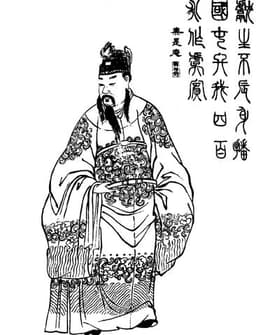
Emperor Xian of Han
Emperor · Ancient
41.3Total

Puzur-Ashur I
Emperor · Ancient
44.2Total
Basic Information
Born
181
-2020
Died
234
-2000
Era
Ancient
Ancient
Nationality
China
Assyria
Occupation
Emperor
Emperor
Civilization
Eastern
Middle Eastern
Score Comparison
Military (10%)
21.4
50.0
Political (20%)
39.4
36.5
Influence (20%)
42.4
46.3
Legacy (20%)
37.5
39.2
Leadership (15%)
48.4
57.6
Strategy (15%)
60.0
36.8
TOTAL
41.3
44.2
Emperor Xian of Han — Complete Timeline
196 AD
Appointment of Cao Cao as ChancellorPolitical Action◆ Major
Emperor Xian, fleeing from warlords, was taken under Cao Cao's protection. Cao Cao had the emperor appoint him Chancellor and granted him control over the imperial court. This gave Cao Cao political legitimacy to issue decrees in the emperor's name, centralizing power under his control.
Political ManeuverCao CaoHan Court
Impact: national
200 AD
Decree Ordering the Killing of Dong ChengPolitical Action◆ Major
Emperor Xian issued a secret decree to Dong Cheng and others to assassinate Cao Cao. The plot was discovered, and Cao Cao executed Dong Cheng and his co-conspirators, including Emperor Xian's consort. This event deepened the emperor's powerlessness and Cao Cao's control.
PlotExecutionCao Cao
Impact: nationaltragic
214 AD
Forced Execution of Empress FuPolitical Action◆ Major
Cao Cao forced Emperor Xian to depose and execute Empress Fu Shou after her involvement in a plot against Cao Cao was revealed. The emperor was powerless to stop it, and Cao Cao installed his own daughter as empress. This further demonstrated Cao Cao's dominance over the throne.
ExecutionPalace IntrigueCao Cao
Impact: nationaltragic
220 AD
Abdication to Cao PiPolitical Action
Emperor Xian, under pressure from Cao Pi, formally abdicated the throne, ending the 400-year Han dynasty. He issued an edict claiming the Mandate of Heaven had passed to Cao Pi, who then founded the Cao Wei dynasty. This event marked the beginning of the Three Kingdoms period.
AbdicationHan Dynasty EndThree Kingdoms
Impact: nationaltragic
Puzur-Ashur I — Complete Timeline
2020 BC
Foundation of the Old Assyrian KingdomPolitical Action
Puzur-Ashur I established the independent Old Assyrian kingdom, breaking away from the declining Ur III Empire. He built the first city wall of Ashur and initiated the Assyrian dynastic tradition.
IndependenceState Foundation
Impact: regionalconstructive
2015 BC
Construction of Ashur's City WallCultural◆ Major
Puzur-Ashur I ordered the construction of the first fortification wall around the city of Ashur, protecting the nascent kingdom from external threats and symbolizing Assyrian sovereignty.
Urban DevelopmentDefense
constructive
Expert Analysis
Origins
Emperor Xian of Han, born Liu Xie in 181 CE, was the last emperor of the Han dynasty. He was the son of Emperor Ling, but his early life was marked by the turbulence of eunuch factions and the Yellow Turban Rebellion. After his father's death, he was placed on the throne by the warlord Dong Zhuo in 189 CE, but he remained a puppet ruler throughout his reign. His formative years were spent under the control of various warlords, which shaped his passive and cautious character.
Puzur-Ashur I, active around 2025 BCE, emerged from the collapse of the Ur III Empire. He was likely a local ruler in the city of Ashur, which had been under Sumerian domination. His origins are obscure, but he capitalized on the power vacuum to declare independence. He is considered the founder of the Old Assyrian period, establishing a dynasty that would last for centuries. His early life is not well-documented, but his actions show a decisive and ambitious leader.
Rise to Power
Emperor Xian's rise was accidental. He became emperor at age eight when Dong Zhuo deposed his half-brother. For most of his reign, he was a figurehead. In 196 CE, Cao Cao took control of the emperor and used his authority to legitimize his campaigns. Xian's only real attempt to regain power was in 200 CE when he issued a secret decree to Dong Cheng to kill Cao Cao. The plot failed, and Dong Cheng was executed. After that, Xian remained largely passive, leading to his forced abdication in 220 CE.
Puzur-Ashur I rose to power by breaking away from Ur III suzerainty. He declared himself king (Išši'ak Aššur) and built the first city wall of Ashur, symbolizing his independence. His rise was a direct challenge to the declining empire, and he established a kingdom that would control trade routes and expand. He scored 50.0 in military and 36.5 in political, reflecting his ability to carve out a state but with limited administrative records.
Leadership & Governance
Emperor Xian's leadership was constrained. He had no real authority; Cao Cao and later Cao Pi made all decisions. Xian's governance was symbolic: he performed rituals and issued edicts as directed. He did appoint Cao Cao as Chancellor in 196 CE, but this was under duress. His leadership score of 48.4 reflects his minimal actual power. He was a ceremonial figurehead in a period of transition.
Puzur-Ashur I's leadership was foundational. He established the institutions of the Old Assyrian state: the city assembly, the eponym system, and trade networks. He built the city wall, which protected Ashur and allowed it to become a commercial hub. His leadership score of 57.6 is higher because he actively built a kingdom. He governed with a mix of military and commercial acumen, securing independence through fortification and diplomacy.
Triumph & Tragedy
Emperor Xian's greatest triumph was surviving 31 years as a puppet emperor, maintaining the Han dynasty's nominal existence until 220 CE. He also managed to abdicate peacefully, living until 234 CE as a duke. His tragedy was his utter powerlessness: he was forced to execute his own empress, Fu Shou, in 214 CE after her plot against Cao Cao failed. He witnessed the extinction of the Han dynasty and the rise of the Three Kingdoms.
Puzur-Ashur I's triumph was founding the Old Assyrian kingdom, which lasted from 2025 to 1378 BCE. His construction of the city wall and establishment of independence were lasting achievements. His tragedy is that little is known about his later reign or how he died. His legacy was overshadowed by later Assyrian kings, but he laid the groundwork for Assyria's future power.
Character & Destiny
Emperor Xian was cautious, passive, and resigned. He accepted his fate as a figurehead, only once attempting to assert control. His character was shaped by his early loss of autonomy. His destiny was to be the last Han emperor, a symbol of a dynasty's decline. Historians view him as a tragic figure, unable to change his circumstances.
Puzur-Ashur I was decisive, ambitious, and strategic. He seized the moment of Ur III's collapse to create a new state. His character is inferred from his actions: building walls, declaring kingship, and establishing a dynasty. His destiny was to be a founder, remembered for initiating Assyria's independence. He scored 57.6 in leadership and 36.8 in strategy, showing his strength in execution over planning.
Legacy
Emperor Xian's legacy is negative: he presided over the end of the Han dynasty, one of China's golden ages. He is often seen as a weak ruler. His abdication set a precedent for future transitions, but his influence score of 42.4 is modest. The Han dynasty's fall led to centuries of division, but Xian himself had little impact.
Puzur-Ashur I's legacy is foundational. He established Assyria as an independent state, which later became an empire. His construction of the city wall and the eponym system influenced later Assyrian governance. His influence score of 46.3 and legacy score of 39.2 reflect his role as a founder, though his direct impact is less than later kings.
Conclusion
Puzur-Ashur I had a greater impact than Emperor Xian of Han. While both scored similarly overall (44.2 vs 41.3), Puzur-Ashur I's founding of the Old Assyrian kingdom created a state that lasted centuries and influenced the ancient Near East. Emperor Xian, by contrast, was a passive figure whose reign marked the end of a dynasty without any personal achievement. Puzur-Ashur I's leadership score of 57.6 and military score of 50.0 reflect his active role, while Xian's scores show his powerlessness. Therefore, Puzur-Ashur I is the more significant historical figure.
Rankings
🥇
Puzur-Ashur ILeader
Mil: 50.0Pol: 36.5Inf: 46.3
44.2
🥈
Emperor Xian of Han
Mil: 21.4Pol: 39.4Inf: 42.4
41.3
+2.9 behind
How This Comparison Works
Algorithm
Each figure is scored on 6 dimensions (0—100 scale) based on structured historical data: Military (10%), Political (20%), Influence (20%), Legacy (20%), Leadership (15%), Strategy (15%). The weighted total produces the final ranking.
Data Sources
Scores are computed from structured sub-indicators in the database. Scale factors adjust for era (Ancient ×0.85, Modern ×1.0) and civilization size (Eastern ×1.05, Other ×0.80) to account for differences in population and military scale.
Maximum 3 Figures
Comparisons are limited to 2—3 figures to ensure readability and statistical meaningfulness.
Error Margins
±5 points per dimension — Sub-scores are derived from historical records with inherent uncertainty. Two figures within 5 points on a dimension should be considered roughly equivalent in that area.
Total Score Accuracy
±3 points overall — The weighted combination of 6 dimensions produces a total score with approximately ±3 points of uncertainty. Differences of less than 3 points are not statistically significant— the figures are effectively tied.
Known Limitations
- Historical records are incomplete and uneven across civilizations
- Figures from oral-tradition societies may be underrepresented
- Occupation labels can misclassify multi-role figures
- Scores measure capability and impact, not moral character
- Quantitative scoring is a comparison tool, not absolute truth
Capability Radar
Military (10%) — Battles & Warfare
Battles
33
10
Win Rate
37
10
Expansion
36
15
Political (20%) — Governance & Reform
Reform
0
30
Diplomacy
5
25
Economy
0
25
Influence (20%) — Cultural & Global Reach
Cultural
5
20
Global
5
15
Legacy (20%) — Historical Impact
Historical
20
25
Longevity
15
20
Leadership (15%) — Power & Stability
Tenure
10
30
Stability
0
30
Strategy (15%) — Tactics & Innovation
Strategy
42
10
Tactics
45
10
Reform
50
10
Similar Comparisons
Comments & Discussion
No comments yet. Be the first to share your thoughts!