Loading...
Emperor Xianzong of Tang vs Julius Caesar
Julius Caesar leads by 22.1 pts · 2 figures compared
…
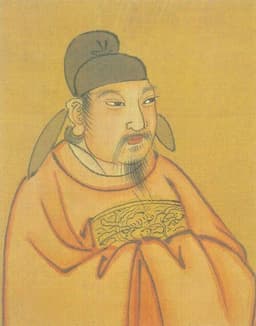
Emperor Xianzong of Tang
Emperor · Medieval
60.7Total

Julius Caesar
General · Ancient
82.8Total
Basic Information
Born
778
-100
Died
820
-44
Era
Medieval
Ancient
Nationality
China
Roman Republic
Occupation
Emperor
General
Civilization
Eastern
Western
Score Comparison
Military (10%)
70.0
88.0
Political (20%)
65.0
78.0
Influence (20%)
59.0
85.0
Legacy (20%)
54.0
82.0
Leadership (15%)
68.0
80.0
Strategy (15%)
55.0
85.0
TOTAL
60.7
82.8
Emperor Xianzong of Tang — Complete Timeline
805 AD
Yuanhe RestorationPolitical Action
Emperor Xianzong initiated the Yuanhe Restoration, a series of reforms aimed at centralizing power and curbing the autonomy of military governors (jiedushi). He reasserted imperial authority over several rebellious provinces, strengthening the Tang state.
ReformCentralization
Impact: regionalconstructive
810 AD
Campaign against the Chengde CircuitWar◆ Major
Emperor Xianzong launched a military campaign against the Chengde Circuit, a rebellious province in Hebei. After initial setbacks, the Tang forces secured a victory, forcing the Chengde governor to submit to imperial authority.
Military CampaignRebellion Suppression
Impact: nationalconstructive
812 AD
Campaign against the Zhaoyi CircuitWar◆ Major
Emperor Xianzong's forces conquered the Zhaoyi Circuit, a rebellious province in modern Shanxi. This victory further reduced the power of the military governors and strengthened imperial control.
Military CampaignRebellion Suppression
Impact: nationalconstructive
818 AD
Campaign against the Pinglu CircuitWar◆ Major
Emperor Xianzong launched a campaign against the Pinglu Circuit in Shandong. The Tang forces defeated the rebel governor, bringing the province back under imperial control and completing the Yuanhe Restoration's military successes.
Military CampaignRebellion Suppression
Impact: nationalconstructive
820 AD
Death of Emperor XianzongPolitical Action◆ Major
Emperor Xianzong died suddenly, possibly poisoned by eunuchs. His death ended the Yuanhe Restoration, and subsequent emperors were unable to maintain the centralization he achieved, leading to the Tang dynasty's further decline.
DeathSuccession Crisis
Impact: regionaltragic
Julius Caesar — Complete Timeline
58 BC
Gallic WarsWar◆ Major
Caesar, as proconsul of Gaul, launched a series of campaigns that conquered all of Gaul (modern France, Belgium, and parts of Switzerland). He fought numerous battles, including against the Helvetii, the Belgae, and the Gallic chieftain Vercingetorix. The wars brought immense wealth and a loyal army to Caesar.
Gallic WarsConquestRoman Expansion
Impact: regional
49 BC
Crossing the RubiconPolitical Action◆ Major
Caesar led Legio XIII across the Rubicon River into Italy, defying the Roman Senate's order to disband his army. This act triggered a civil war against Pompey and the Optimates, ultimately leading to Caesar's dictatorship and the end of the Roman Republic.
Roman Civil WarEnd of RepublicPower Struggle
Impact: global
48 BC
Battle of PharsalusWar◆ Major
Caesar's outnumbered army defeated the larger forces of Pompey the Great at Pharsalus in Greece. Caesar's tactical use of a reserve line to counter Pompey's cavalry charge proved decisive. Pompey fled to Egypt, where he was assassinated, leaving Caesar as the undisputed master of the Roman world.
Roman Civil WarBattleDecisive Victory
Impact: regional
44 BC
Appointment as Dictator for LifePolitical Action◆ Major
The Roman Senate appointed Caesar dictator perpetuo (dictator for life), granting him unprecedented personal power. This move concentrated military, legislative, and judicial authority in one person, effectively ending the Roman Republic's traditional system of checks and balances and alarming many senators.
DictatorshipEnd of RepublicPower Consolidation
Impact: regionaldestructive
Assassination on the Ides of MarchPolitical Action◆ Major
A group of Roman senators, led by Marcus Junius Brutus and Gaius Cassius Longinus, stabbed Caesar to death at a meeting of the Senate in the Theatre of Pompey. The assassination was intended to restore the Republic, but instead triggered another civil war that led to the rise of the Roman Empire.
AssassinationRoman PoliticsEnd of Republic
Impact: globaldestructive
Expert Analysis
emperor-xianzong-of-tang-vs-julius-caesar
# The Dictator and the Restorer: Caesar and Xianzong's Divergent Paths
On a March morning in 44 BCE, Julius Caesar walked into the Senate chamber, ignoring a soothsayer's warning and a colleague's desperate note pressed into his hand. Moments later, he lay bleeding on the marble floor, stabbed twenty-three times by men he had pardoned. In 820 CE, Emperor Xianzong of Tang died suddenly in his palace, likely poisoned by the very eunuchs he had empowered to help him rule. Both men sought to centralize power and reshape their worlds. One gave birth to an empire; the other saw his life's work crumble within a generation. Why did the conqueror of Gaul succeed where the Yuanhe Restorer ultimately failed?
Origins
Caesar was born into a patrician family that had fallen on hard times, both politically and financially. The Roman Republic of the first century BCE was tearing itself apart—civil wars, slave revolts, and a Senate paralyzed by factionalism. Young Caesar learned early that in such a world, only audacity and brilliance could overcome humble beginnings. He fled Sulla's proscriptions, built his reputation in the law courts, and wept before a statue of Alexander the Great, lamenting that at thirty-three he had done nothing while Alexander had conquered the world.
Xianzong, born Li Chun in 778 CE, entered a very different world. The Tang Dynasty had passed its golden age under Xuanzong; by the late eighth century, it was fragmenting. Military governors known as *jiedushi* ruled their provinces like independent kingdoms, passing power to their sons. The imperial treasury was hollow, and the bureaucracy was rife with corruption. As the son of a relatively weak emperor, Xianzong grew up watching power slip from the throne. He understood that the Tang's survival depended on reclaiming what had been lost.
Rise to Power
Caesar rose through the traditional Roman *cursus honorum*, but he did so with breathtaking speed and cunning. As governor of Further Spain, he conquered tribes and paid off debts. Then came the First Triumvirate with Pompey and Crassus—a backroom deal that gave him the command in Gaul. That command became his springboard. Over eight years, he conquered a territory larger than Italy itself, built a veteran army personally loyal to him, and crossed the Rubicon River in 49 BCE with a single legion, triggering a civil war that ended with him as dictator.
Xianzong's rise was simpler in form but no less dramatic. He became emperor in 805 at age twenty-seven, inheriting a throne that had lost most of its authority. His first act was to purge the palace eunuchs who had dominated his father's court. Then he turned to the *jiedushi*. Unlike Caesar, Xianzong did not have the luxury of conquering new lands—he had to reconquer his own.
Leadership & Governance
Caesar governed with a blend of clemency and iron will. He pardoned his enemies, including Brutus and Cassius, and extended Roman citizenship to Gauls and Spaniards. He reformed the calendar, launched massive public works, and centralized tax collection. Yet his genius was also his flaw: he could not resist accumulating power. He was made dictator for ten years, then for life. He minted coins with his image, sat on a golden throne, and allowed his statue to be placed among the gods. He saw himself as a monarch in all but name.
Xianzong governed differently. He understood that the Tang emperor was not a conqueror but a unifier. His Yuanhe Restoration, launched in 805, was a patient campaign of administrative reform. He rotated military governors to prevent them from building local power bases, reasserted imperial control over tax collection, and appointed capable civil officials rather than eunuchs to key posts. His military campaigns were targeted and strategic: against the Chengde Circuit in 810, the Zhaoyi Circuit in 812, and the Pinglu Circuit in 818. Each victory brought another province back under imperial control. By 819, Xianzong had restored Tang authority over most of northern China.
Triumph & Tragedy
Caesar's greatest moment came in 46 BCE when he returned to Rome after defeating his last major rival, Cato the Younger, at Thapsus. He celebrated four triumphs in one month, showcasing Gauls, Egyptians, and Pontic kings. But his tragedy was that he could not stop. He planned campaigns against Parthia and Germany, reforms that would have dismantled the Republic entirely. The Ides of March was not a surprise—it was an inevitability.
Xianzong's triumph was the reunification of the Tang heartland. For a brief moment, the empire was whole again. But his tragedy was that he trusted the wrong people. To counter the military governors, he relied on eunuchs to command the imperial armies. They grew powerful, corrupt, and resentful. When Xianzong died suddenly in 820—almost certainly poisoned—the eunuchs placed his son on the throne and effectively ruled through him. Within fifteen years, the *jiedushi* had reasserted their independence, and the Yuanhe Restoration was undone.
Character & Destiny
Caesar was a gambler. He crossed the Rubicon with a single legion, fought at Alesia against overwhelming odds, and pardoned his assassins-to-be. He believed that fortune favored the bold, and for most of his life, it did. But his fatal flaw was arrogance—he could not imagine that the Republic's traditions mattered more than his genius. He was killed not by enemies but by friends who believed they were saving Rome.
Xianzong was a builder, not a gambler. He moved slowly, methodically, and pragmatically. He understood that the Tang could not be saved by one man alone—it needed institutions. Yet his fatal flaw was delegation. He gave power to eunuchs because they were useful, never realizing that they would become his masters. His death was not a dramatic assassination in the Senate but a quiet poisoning in his own bed.
Legacy
Caesar's legacy is one of the most contested in history. His assassins thought they had saved the Republic; instead, they triggered another civil war that ended with Augustus as emperor. Caesar's name became synonymous with autocracy—"Kaiser," "Tsar," "Caesar." He transformed the Western world, for better and worse.
Xianzong's legacy is more ambiguous. In China, he is remembered as a capable emperor who almost saved the Tang. But "almost" is the word that haunts him. The Yuanhe Restoration is studied as a model of what could have been, a reminder that even the best reforms can be undone by a single moment of weakness. Unlike Caesar, Xianzong did not found a dynasty—he merely delayed the collapse.
Conclusion
Caesar and Xianzong faced the same problem: how to centralize power in a fractured state. Caesar chose speed, audacity, and personal charisma; Xianzong chose patience, administration, and institutional reform. Caesar succeeded in the short term because he could command armies and inspire loyalty; Xianzong failed in the long term because he could not control the eunuchs he relied upon. But Caesar's success was also his failure—he died at the peak of his power, and his empire was built on sand. Xianzong's failure was also his success—he died in bed, his reforms intact, if only for a moment.
Perhaps the difference is not in what they achieved but in what they left behind. Caesar gave the world a name; Xianzong gave it a lesson. Both are worth remembering.
Rankings
🥇
Julius CaesarLeader
Mil: 88.0Pol: 78.0Inf: 85.0
82.8
🥈
Emperor Xianzong of Tang
Mil: 70.0Pol: 65.0Inf: 59.0
60.7
+22.1 behind
How This Comparison Works
Algorithm
Each figure is scored on 6 dimensions (0—100 scale) based on structured historical data: Military (10%), Political (20%), Influence (20%), Legacy (20%), Leadership (15%), Strategy (15%). The weighted total produces the final ranking.
Data Sources
Scores are computed from structured sub-indicators in the database. Scale factors adjust for era (Ancient ×0.85, Modern ×1.0) and civilization size (Eastern ×1.05, Other ×0.80) to account for differences in population and military scale.
Maximum 3 Figures
Comparisons are limited to 2—3 figures to ensure readability and statistical meaningfulness.
Error Margins
±5 points per dimension — Sub-scores are derived from historical records with inherent uncertainty. Two figures within 5 points on a dimension should be considered roughly equivalent in that area.
Total Score Accuracy
±3 points overall — The weighted combination of 6 dimensions produces a total score with approximately ±3 points of uncertainty. Differences of less than 3 points are not statistically significant— the figures are effectively tied.
Known Limitations
- Historical records are incomplete and uneven across civilizations
- Figures from oral-tradition societies may be underrepresented
- Occupation labels can misclassify multi-role figures
- Scores measure capability and impact, not moral character
- Quantitative scoring is a comparison tool, not absolute truth
Capability Radar
Military (10%) — Battles & Warfare
Battles
60
95
Win Rate
65
92
Expansion
50
97
Political (20%) — Governance & Reform
Reform
80
90
Diplomacy
70
85
Economy
70
82
Influence (20%) — Cultural & Global Reach
Cultural
55
88
Global
40
94
Legacy (20%) — Historical Impact
Historical
65
95
Longevity
50
96
Leadership (15%) — Power & Stability
Tenure
65
75
Stability
60
60
Strategy (15%) — Tactics & Innovation
Strategy
70
94
Tactics
55
96
Reform
75
88
Similar Comparisons
Comments & Discussion
Sulla's Revenge6/17/2026
Comparing these two is like comparing house cats to lions. Caesar didn't just centralize power—he fundamentally rewrote Rome's DNA. Xianzong's "Yuanhe Restoration" was a temporary Band-Aid on a hemorrhaging Tang. Caesar crossed the Rubicon with legions personally loyal to him; Xianzong's military victories relied on eunuch-controlled armies that turned on him. One man built an institution; the other merely propped up a crumbling facade. The poison that killed Xianzong had been brewing for decade
历史解剖师6/17/2026
拿东汉末年军阀割据下的罗马和安史之乱后的唐朝硬比,根本是驴唇不对马嘴。恺撒的军事改革让罗马军团成了职业化战争机器,而宪宗面对的河朔三镇节度使个个手握私兵,比屋大维时代的安东尼还难啃。你告诉我一个靠宦官监军打天下的人,怎么跟横扫高卢、在法萨卢斯决战的军事天才相提并论?这对比就像拿地方保安队挑战斯巴达克斯——根本不在一个量级。
Latinitas Maximus6/17/2026
The key difference isn't military but cultural-legal: Caesar operated within a Republican system where constitutional reform was theoretically possible, however corrupt. Xianzong faced Confucian bureaucratic inertia that made his "strengthening the center" efforts essentially cosmetic. Caesar could appoint himself dictator for life because Rome had a precedent for emergency powers. Xianzong's Tang had rigid succession laws and eunuch power structures that had metastasized for generations. One ma
数据打假师6/17/2026
说宪宗"成功"是历史最大的忽悠之一。他登基时唐朝还有税收控制区,死后十年藩镇割据全面反弹,宦官彻底架空皇权。这叫中兴?我拿《旧唐书》和剑桥中国史数据说话:他统治期间中央实际控制的县数从巅峰时期的1,238个降到不足700个。对比恺撒死后屋大维继承并建立帝国体系,宪宗的"改革"连他儿子都保不住。历史学家该醒醒了,拿150%的通货膨胀复原率当政绩,荒唐!
Homo Sapiens Incompetentiae6/17/2026
Both men fundamentally misunderstood succession, but in opposite ways. Caesar's fatal flaw was assuming his charisma and power could be inherited, leaving the unprepared Octavian to fight a civil war for Rome's soul. Xianzong's tragedy was elevating eunuchs as power brokers, creating a political class that butchered his sons. The dictator of the Mediterranean and the Son of Heaven both died at the hands of their own courtiers. Power centralized without institutionalized transmission