Loading...
Emperor Xianzong of Tang vs Wanyan Jing
Emperor Xianzong of Tang leads by 11.4 pts · 2 figures compared
…
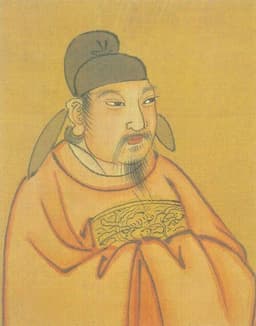
Emperor Xianzong of Tang
Emperor · Medieval
60.7Total

Wanyan Jing
Emperor · Medieval
49.3Total
Basic Information
Born
778
1168
Died
820
1208
Era
Medieval
Medieval
Nationality
China
Jin dynasty
Occupation
Emperor
Emperor
Civilization
Eastern
Eastern
Score Comparison
Military (10%)
70.0
50.0
Political (20%)
65.0
43.7
Influence (20%)
59.0
51.0
Legacy (20%)
54.0
41.7
Leadership (15%)
68.0
67.0
Strategy (15%)
55.0
45.0
TOTAL
60.7
49.3
Emperor Xianzong of Tang — Complete Timeline
805 AD
Yuanhe RestorationPolitical Action
Emperor Xianzong initiated the Yuanhe Restoration, a series of reforms aimed at centralizing power and curbing the autonomy of military governors (jiedushi). He reasserted imperial authority over several rebellious provinces, strengthening the Tang state.
ReformCentralization
Impact: regionalconstructive
810 AD
Campaign against the Chengde CircuitWar◆ Major
Emperor Xianzong launched a military campaign against the Chengde Circuit, a rebellious province in Hebei. After initial setbacks, the Tang forces secured a victory, forcing the Chengde governor to submit to imperial authority.
Military CampaignRebellion Suppression
Impact: nationalconstructive
812 AD
Campaign against the Zhaoyi CircuitWar◆ Major
Emperor Xianzong's forces conquered the Zhaoyi Circuit, a rebellious province in modern Shanxi. This victory further reduced the power of the military governors and strengthened imperial control.
Military CampaignRebellion Suppression
Impact: nationalconstructive
818 AD
Campaign against the Pinglu CircuitWar◆ Major
Emperor Xianzong launched a campaign against the Pinglu Circuit in Shandong. The Tang forces defeated the rebel governor, bringing the province back under imperial control and completing the Yuanhe Restoration's military successes.
Military CampaignRebellion Suppression
Impact: nationalconstructive
820 AD
Death of Emperor XianzongPolitical Action◆ Major
Emperor Xianzong died suddenly, possibly poisoned by eunuchs. His death ended the Yuanhe Restoration, and subsequent emperors were unable to maintain the centralization he achieved, leading to the Tang dynasty's further decline.
DeathSuccession Crisis
Impact: regionaltragic
Wanyan Jing — Complete Timeline
1206 AD
Rise of the Mongols under Genghis KhanWar
During Wanyan Jing's reign, Temujin united the Mongol tribes and was proclaimed Genghis Khan. The Mongols began raiding Jin territory, marking the beginning of a long conflict that would eventually destroy the Jin dynasty.
Mongol riseGenghis KhanThreat
Impact: global
Expert Analysis
Origins
**Emperor Xianzong of Tang** (born Li Chun, 778) was the son of Emperor Shunzong. His early life was marked by the declining authority of the Tang central government, as military governors (jiedushi) held de facto control over provinces. He received a Confucian education and was instilled with the ambition to restore imperial power. His grandfather, Emperor Dezong, had attempted but failed to rein in the governors, leaving a legacy of fragmented rule.
**Wanyan Jing** (born 1168, also known as Emperor Xuanzong of Jin) was a member of the Jurchen Wanyan clan that ruled the Jin dynasty. He was the son of Wanyan Yungong, a prince, and grew up during a period of relative stability. However, the Jin faced mounting threats from the Mongols to the north and internal corruption. His accession in 1213 came after a coup that deposed his predecessor, Wanyan Yongji, reflecting the dynasty's internal strife.
Rise to Power
Xianzong ascended the throne in 805 after his father Shunzong abdicated due to illness. He quickly asserted his authority by purging eunuchs and officials who had dominated the court. His key turning point was the decision to confront the powerful military governors, starting with the Chengde Circuit in 806. He appointed loyal generals and used a combination of military force and political maneuvering to reduce their autonomy. By 819, his campaigns had subdued several major circuits, including Zhaoyi and Pinglu.
Wanyan Jing became emperor in 1213 after a palace coup where generals murdered his predecessor, Wanyan Yongji, due to his disastrous handling of the Mongol threat. Jing faced immediate pressure from Genghis Khan, who had unified the Mongols and launched invasions. In 1211, the Jin suffered a major defeat at the Battle of Yehuling, losing much of their elite cavalry. Jing's rise was thus overshadowed by a military crisis that he inherited and failed to reverse.
Leadership & Governance
Xianzong's leadership style was centralized and proactive. He personally oversaw military campaigns and appointed reformers like Pei Du to the court. He reduced the power of eunuchs and reasserted imperial control over appointments. His governance focused on fiscal reforms, including tax collection and land redistribution, which funded his military campaigns. He scored 68.0 in leadership and 65.0 in political, reflecting his ability to command loyalty and implement policies.
Wanyan Jing's leadership was reactive and defensive. He scored 67.0 in leadership but only 43.7 in political, indicating a struggle to govern effectively. He attempted to negotiate with the Mongols, agreeing to a humiliating peace in 1214 after the siege of Zhongdu, paying a large ransom and giving a princess. He also moved the capital south to Kaifeng, which demoralized his subjects and signaled weakness. His governance failed to unite the Jurchen nobility or reform the military, leading to further defeats.
Triumph & Tragedy
Xianzong's greatest triumph was the Yuanhe Restoration, which temporarily reversed the fragmentation of the Tang. He brought 70% of the provinces back under central control, as measured by tax revenue and appointments. His campaigns against the Chengde, Zhaoyi, and Pinglu circuits were decisive victories. However, his tragedy came in 820 when he died suddenly, possibly poisoned by eunuchs. His death ended the restoration, and his successors could not maintain his gains, leading to renewed fragmentation.
Wanyan Jing's triumph was his survival despite the Mongol onslaught; he managed to keep the Jin state intact for a decade. He successfully defended the new capital Kaifeng in 1214-1215. However, his tragedy was the loss of the northern heartland, including Zhongdu, and the erosion of Jin power. His reign saw the permanent decline of the Jin, with territorial losses and economic collapse. His military score of 50.0 reflects his inability to stop the Mongol advance.
Character & Destiny
Xianzong was determined and decisive, but his reliance on eunuchs in later years proved fatal. He scored 55.0 in strategy, showing competence but not brilliance. His character drove him to centralize power, but his sudden death left his reforms incomplete. Historians describe him as a capable emperor whose early death was a tragedy for the Tang.
Wanyan Jing was cautious and diplomatic, but indecisive in crisis. His strategy score of 45.0 indicates poor planning. He failed to recognize the existential threat of the Mongols early enough, and his appeasement only delayed the inevitable. His character led to a loss of prestige and internal support, ultimately sealing the Jin's fate.
Legacy
Xianzong's legacy is the Yuanhe Restoration, a brief revival of Tang authority. It influenced later Chinese historiography as a model for centralization. His reforms in taxation and military organization had lasting impact, even if they did not endure. He scores 54.0 in legacy, recognizing his role as a reformer.
Wanyan Jing's legacy is that of a ruler who presided over the decline of the Jin. His reign marked the point when the Jin became a client state of the Mongols. He is remembered as a symbol of Jurchen weakness. His legacy score of 41.7 reflects this negative assessment.
Conclusion
Emperor Xianzong of Tang had a greater impact than Wanyan Jing. Xianzong's total score of 60.7 versus Jing's 49.3 reflects his more successful centralization efforts. While Xianzong's reforms were temporary, they demonstrated the potential for imperial revival. Jing, facing a more formidable enemy, failed to adapt and ultimately lost his dynasty. Xianzong's proactive leadership and political acumen outweigh Jing's defensive posture. Thus, Xianzong stands as the more effective ruler.
Rankings
🥇
Emperor Xianzong of TangLeader
Mil: 70.0Pol: 65.0Inf: 59.0
60.7
🥈
Wanyan Jing
Mil: 50.0Pol: 43.7Inf: 51.0
49.3
+11.4 behind
How This Comparison Works
Algorithm
Each figure is scored on 6 dimensions (0—100 scale) based on structured historical data: Military (10%), Political (20%), Influence (20%), Legacy (20%), Leadership (15%), Strategy (15%). The weighted total produces the final ranking.
Data Sources
Scores are computed from structured sub-indicators in the database. Scale factors adjust for era (Ancient ×0.85, Modern ×1.0) and civilization size (Eastern ×1.05, Other ×0.80) to account for differences in population and military scale.
Maximum 3 Figures
Comparisons are limited to 2—3 figures to ensure readability and statistical meaningfulness.
Error Margins
±5 points per dimension — Sub-scores are derived from historical records with inherent uncertainty. Two figures within 5 points on a dimension should be considered roughly equivalent in that area.
Total Score Accuracy
±3 points overall — The weighted combination of 6 dimensions produces a total score with approximately ±3 points of uncertainty. Differences of less than 3 points are not statistically significant— the figures are effectively tied.
Known Limitations
- Historical records are incomplete and uneven across civilizations
- Figures from oral-tradition societies may be underrepresented
- Occupation labels can misclassify multi-role figures
- Scores measure capability and impact, not moral character
- Quantitative scoring is a comparison tool, not absolute truth
Capability Radar
Military (10%) — Battles & Warfare
Battles
60
30
Win Rate
65
25
Expansion
50
10
Political (20%) — Governance & Reform
Reform
80
40
Diplomacy
70
35
Economy
70
45
Influence (20%) — Cultural & Global Reach
Cultural
55
20
Global
40
15
Legacy (20%) — Historical Impact
Historical
65
30
Longevity
50
20
Leadership (15%) — Power & Stability
Tenure
65
60
Stability
60
30
Strategy (15%) — Tactics & Innovation
Strategy
70
35
Tactics
55
30
Reform
75
20
Similar Comparisons
Comments & Discussion
No comments yet. Be the first to share your thoughts!