Loading...
Emperor Xianzong of Tang vs Wanyan Yong
Emperor Xianzong of Tang leads by 2.3 pts · 2 figures compared
…
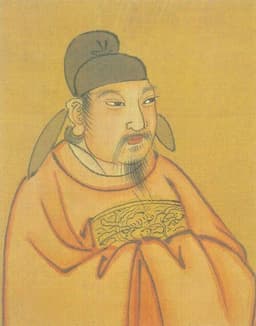
Emperor Xianzong of Tang
Emperor · Medieval
60.7Total
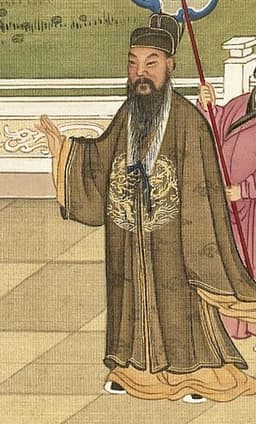
Wanyan Yong
Emperor · Medieval
58.4Total
Basic Information
Born
778
1123
Died
820
1189
Era
Medieval
Medieval
Nationality
China
Jin dynasty
Occupation
Emperor
Emperor
Civilization
Eastern
Eastern
Score Comparison
Military (10%)
70.0
55.0
Political (20%)
65.0
59.3
Influence (20%)
59.0
58.0
Legacy (20%)
54.0
49.2
Leadership (15%)
68.0
80.0
Strategy (15%)
55.0
52.5
TOTAL
60.7
58.4
Emperor Xianzong of Tang — Complete Timeline
805 AD
Yuanhe RestorationPolitical Action
Emperor Xianzong initiated the Yuanhe Restoration, a series of reforms aimed at centralizing power and curbing the autonomy of military governors (jiedushi). He reasserted imperial authority over several rebellious provinces, strengthening the Tang state.
ReformCentralization
Impact: regionalconstructive
810 AD
Campaign against the Chengde CircuitWar◆ Major
Emperor Xianzong launched a military campaign against the Chengde Circuit, a rebellious province in Hebei. After initial setbacks, the Tang forces secured a victory, forcing the Chengde governor to submit to imperial authority.
Military CampaignRebellion Suppression
Impact: nationalconstructive
812 AD
Campaign against the Zhaoyi CircuitWar◆ Major
Emperor Xianzong's forces conquered the Zhaoyi Circuit, a rebellious province in modern Shanxi. This victory further reduced the power of the military governors and strengthened imperial control.
Military CampaignRebellion Suppression
Impact: nationalconstructive
818 AD
Campaign against the Pinglu CircuitWar◆ Major
Emperor Xianzong launched a campaign against the Pinglu Circuit in Shandong. The Tang forces defeated the rebel governor, bringing the province back under imperial control and completing the Yuanhe Restoration's military successes.
Military CampaignRebellion Suppression
Impact: nationalconstructive
820 AD
Death of Emperor XianzongPolitical Action◆ Major
Emperor Xianzong died suddenly, possibly poisoned by eunuchs. His death ended the Yuanhe Restoration, and subsequent emperors were unable to maintain the centralization he achieved, leading to the Tang dynasty's further decline.
DeathSuccession Crisis
Impact: regionaltragic
Wanyan Yong — Complete Timeline
1162 AD
Restored traditional Jurchen customsReform◆ Major
After Wanyan Liang's death, Wanyan Yong reversed many of his predecessor's sinicization policies. He restored Jurchen tribal customs, revived the use of the Jurchen script, and promoted hunting and martial traditions among the nobility.
Cultural restorationJurchen identityReform
Impact: nationalconstructive
1165 AD
Peace treaty with the Southern SongPolitical Action◆ Major
Wanyan Yong negotiated the Longxing Peace Treaty with the Southern Song dynasty. The treaty ended the war started by Wanyan Liang, established fixed borders, and reduced tribute payments from the Song to the Jin.
Peace treatySong-Jin relationsDiplomacy
Impact: regionalconstructive
1170 AD
Economic recovery and tax reformReform◆ Major
Wanyan Yong implemented tax reductions and land reforms to revive the Jin economy after the costly wars of Wanyan Liang. He also standardized currency and promoted agriculture, leading to a period of stability and prosperity.
Economic reformTax policyStability
Impact: nationalconstructive
Expert Analysis
Origins
Emperor Xianzong of Tang, born Li Chun in 778, was the grandson of Emperor Daizong and son of Emperor Shunzong. He grew up during a period of severe decline for the Tang dynasty, with powerful military governors (jiedushi) effectively ruling their territories as independent kingdoms. His father's brief reign was cut short by illness, and Xianzong ascended the throne in 805 at age 27. His early exposure to the court's struggles against provincial autonomy shaped his centralizing ambitions.
Wanyan Yong, born in 1123, was a member of the Jurchen imperial clan of the Jin dynasty. His grandfather was Emperor Taizu, the founder of Jin, and his father was a prince. Wanyan Yong grew up during the reign of his cousin Wanyan Liang, a tyrant who pursued aggressive sinicization and costly wars against the Southern Song. After Wanyan Liang's assassination in 1161, Wanyan Yong was proclaimed emperor, inheriting a state exhausted by war and internal strife.
Rise to Power
Xianzong came to power through inheritance after his father abdicated due to paralysis. His early reign focused on consolidating authority. In 806, he suppressed a rebellion in the Xichuan Circuit, signaling his intent to reassert central control. The key turning point came in 807 when he launched the Yuanhe Restoration, a coordinated campaign to reduce the power of jiedushi. Over the next decade, he achieved notable victories against the Chengde, Zhaoyi, and Pinglu circuits, bringing provinces back under direct imperial rule.
Wanyan Yong's rise was more abrupt. After Wanyan Liang's death during a failed invasion of the Southern Song, the Jin court was in chaos. Wanyan Yong, then a regional governor, was acclaimed emperor by his troops. He quickly moved to stabilize the regime, purging Wanyan Liang's loyalists and reversing his policies. His first major act was to negotiate the Longxing Peace Treaty with the Song in 1164, ending the war and establishing fixed borders and tribute payments.
Leadership & Governance
Xianzong's leadership was characterized by aggressive centralization. He appointed capable officials like Du Huangchang and Pei Du to oversee military campaigns and fiscal reforms. He reorganized the bureaucracy to reduce eunuch influence, though eunuchs remained powerful. His governance scored 65.0 in political metrics, reflecting his ability to assert authority but also his failure to fully eliminate provincial resistance. The Yuanhe Restoration temporarily strengthened the Tang, but heavy military spending strained the treasury.
Wanyan Yong, with a leadership score of 80.0, focused on reconciliation and tradition. He restored Jurchen customs, revived the use of the Jurchen script, and promoted tribal assemblies. His tax reforms reduced burdens on peasants and standardized currency, spurring economic recovery. He maintained peace with the Song through diplomacy, avoiding costly wars. His political score of 59.3 reflects a cautious, stabilizing approach rather than transformative change.
Triumph & Tragedy
Xianzong's greatest triumph was the Yuanhe Restoration, which temporarily reasserted Tang authority over rebellious provinces. His campaigns against the Chengde and Zhaoyi circuits succeeded in bringing them under control. He also reformed the tax system and improved the transport of grain to the capital. However, his greatest failure was his inability to permanently solve the jiedushi problem. After his sudden death in 820—possibly poisoned by eunuchs—the restoration collapsed, and subsequent emperors could not maintain the gains. His military score of 70.0 reflects his successes on the battlefield, but his strategy score of 55.0 indicates flawed long-term planning.
Wanyan Yong's triumph was stabilizing the Jin dynasty after Wanyan Liang's ruinous reign. The Longxing Peace Treaty ensured 40 years of peace with the Song, allowing economic recovery. His tax and land reforms improved living standards and revived the economy. However, his greatest failure was his reversal of sinicization, which alienated Chinese subjects and weakened the state's administrative efficiency. His military score of 55.0 reflects his preference for peace over conquest, and his legacy score of 49.2 shows limited enduring impact.
Character & Destiny
Xianzong was determined and ambitious, driven by a vision of a strong central government. He was willing to take risks, as seen in his military campaigns. However, his distrust of eunuchs and powerful officials created enemies. His sudden death, likely by poisoning, was a direct result of court intrigue. His character—bold but politically naive—led to his downfall.
Wanyan Yong was cautious and pragmatic. He prioritized stability over glory, reversing his predecessor's aggressive policies. His restoration of Jurchen customs was a strategic move to consolidate his base among the tribal elite. He was patient and diplomatic, but his reluctance to fully adopt Chinese governance models limited the Jin's long-term development. His character ensured a stable reign but not a transformative one.
Legacy
Xianzong's legacy is mixed. The Yuanhe Restoration is remembered as a brief revival of Tang power, but it did not prevent the dynasty's eventual decline. His efforts influenced later centralization attempts, but his failure to uproot the jiedushi system meant that the Tang continued to weaken. His score of 54.0 in legacy reflects this limited impact.
Wanyan Yong's legacy is more enduring in terms of stability. He is remembered as a restorer who saved the Jin from collapse. The Longxing Peace Treaty set the pattern for Song-Jin relations for decades. However, his reversal of sinicization contributed to the Jin's inability to effectively rule its Chinese population, a factor in its later decline. His legacy score of 49.2 is lower than Xianzong's, as his achievements were mostly temporary.
Conclusion
Emperor Xianzong of Tang, with a total score of 60.7, had a greater impact than Wanyan Yong (58.4). While both rulers restored stability after periods of decline, Xianzong's Yuanhe Restoration was a more ambitious attempt to solve the Tang's fundamental problem of provincial autonomy. Even though it ultimately failed, his efforts left a deeper mark on Chinese history as a model of centralization. Wanyan Yong's stabilization was effective but conservative, preserving the status quo rather than transforming the Jin. The 2.3-point gap reflects Xianzong's higher military and political scores, which underscore his more aggressive and consequential reign.
Rankings
🥇
Emperor Xianzong of TangLeader
Mil: 70.0Pol: 65.0Inf: 59.0
60.7
🥈
Wanyan Yong
Mil: 55.0Pol: 59.3Inf: 58.0
58.4
+2.3 behind
How This Comparison Works
Algorithm
Each figure is scored on 6 dimensions (0—100 scale) based on structured historical data: Military (10%), Political (20%), Influence (20%), Legacy (20%), Leadership (15%), Strategy (15%). The weighted total produces the final ranking.
Data Sources
Scores are computed from structured sub-indicators in the database. Scale factors adjust for era (Ancient ×0.85, Modern ×1.0) and civilization size (Eastern ×1.05, Other ×0.80) to account for differences in population and military scale.
Maximum 3 Figures
Comparisons are limited to 2—3 figures to ensure readability and statistical meaningfulness.
Error Margins
±5 points per dimension — Sub-scores are derived from historical records with inherent uncertainty. Two figures within 5 points on a dimension should be considered roughly equivalent in that area.
Total Score Accuracy
±3 points overall — The weighted combination of 6 dimensions produces a total score with approximately ±3 points of uncertainty. Differences of less than 3 points are not statistically significant— the figures are effectively tied.
Known Limitations
- Historical records are incomplete and uneven across civilizations
- Figures from oral-tradition societies may be underrepresented
- Occupation labels can misclassify multi-role figures
- Scores measure capability and impact, not moral character
- Quantitative scoring is a comparison tool, not absolute truth
Capability Radar
Military (10%) — Battles & Warfare
Battles
60
35
Win Rate
65
40
Expansion
50
30
Political (20%) — Governance & Reform
Reform
80
75
Diplomacy
70
80
Economy
70
70
Influence (20%) — Cultural & Global Reach
Cultural
55
50
Global
40
30
Legacy (20%) — Historical Impact
Historical
65
55
Longevity
50
40
Leadership (15%) — Power & Stability
Tenure
65
70
Stability
60
85
Strategy (15%) — Tactics & Innovation
Strategy
70
50
Tactics
55
45
Reform
75
60
Similar Comparisons
Comments & Discussion
No comments yet. Be the first to share your thoughts!