Loading...
Emperor Xuanzong of Tang vs Julius Caesar
Julius Caesar leads by 22.0 pts · 2 figures compared
…
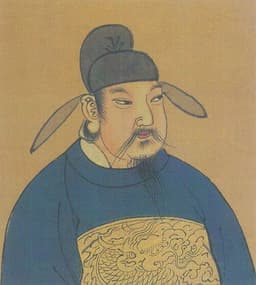
Emperor Xuanzong of Tang
Emperor · Medieval
60.8Total

Julius Caesar
General · Ancient
82.8Total
Basic Information
Born
685
-100
Died
762
-44
Era
Medieval
Ancient
Nationality
China
Roman Republic
Occupation
Emperor
General
Civilization
Eastern
Western
Score Comparison
Military (10%)
65.0
88.0
Political (20%)
82.0
78.0
Influence (20%)
40.0
85.0
Legacy (20%)
65.0
82.0
Leadership (15%)
68.0
80.0
Strategy (15%)
55.0
85.0
TOTAL
60.8
82.8
Emperor Xuanzong of Tang — Complete Timeline
713 AD
Kaiyuan Golden AgeCultural
Emperor Xuanzong initiated the Kaiyuan era, a period of political stability, economic prosperity, and cultural flourishing. He appointed capable ministers, reformed the bureaucracy, and promoted the arts. This era is considered the peak of the Tang dynasty.
Golden AgeProsperity
Impact: globalconstructive
720 AD
Reform of the Equal-Field SystemReform
Emperor Xuanzong implemented reforms to the Equal-Field System to address land concentration and tax evasion. These reforms temporarily stabilized the agrarian economy and increased state revenue, but they could not reverse the long-term decline of the system.
Land ReformEconomic Policy
Impact: nationalconstructive
755 AD
An Lushan RebellionWar
The general An Lushan launched a rebellion against Emperor Xuanzong, capturing the capital Chang'an. Xuanzong fled to Sichuan and was forced to abdicate. The rebellion lasted eight years, devastating the Tang empire and leading to its decline.
RebellionCivil War
Impact: globaltragic
756 AD
Abdication and Death of Yang GuifeiPolitical Action◆ Major
During the flight from Chang'an, Emperor Xuanzong's troops mutinied and forced him to order the execution of his beloved consort Yang Guifei, whom they blamed for the rebellion. Xuanzong then abdicated in favor of his son, Emperor Suzong.
AbdicationExecution
Impact: nationaltragic
Julius Caesar — Complete Timeline
58 BC
Gallic WarsWar◆ Major
Caesar, as proconsul of Gaul, launched a series of campaigns that conquered all of Gaul (modern France, Belgium, and parts of Switzerland). He fought numerous battles, including against the Helvetii, the Belgae, and the Gallic chieftain Vercingetorix. The wars brought immense wealth and a loyal army to Caesar.
Gallic WarsConquestRoman Expansion
Impact: regional
49 BC
Crossing the RubiconPolitical Action◆ Major
Caesar led Legio XIII across the Rubicon River into Italy, defying the Roman Senate's order to disband his army. This act triggered a civil war against Pompey and the Optimates, ultimately leading to Caesar's dictatorship and the end of the Roman Republic.
Roman Civil WarEnd of RepublicPower Struggle
Impact: global
48 BC
Battle of PharsalusWar◆ Major
Caesar's outnumbered army defeated the larger forces of Pompey the Great at Pharsalus in Greece. Caesar's tactical use of a reserve line to counter Pompey's cavalry charge proved decisive. Pompey fled to Egypt, where he was assassinated, leaving Caesar as the undisputed master of the Roman world.
Roman Civil WarBattleDecisive Victory
Impact: regional
44 BC
Appointment as Dictator for LifePolitical Action◆ Major
The Roman Senate appointed Caesar dictator perpetuo (dictator for life), granting him unprecedented personal power. This move concentrated military, legislative, and judicial authority in one person, effectively ending the Roman Republic's traditional system of checks and balances and alarming many senators.
DictatorshipEnd of RepublicPower Consolidation
Impact: regionaldestructive
Assassination on the Ides of MarchPolitical Action◆ Major
A group of Roman senators, led by Marcus Junius Brutus and Gaius Cassius Longinus, stabbed Caesar to death at a meeting of the Senate in the Theatre of Pompey. The assassination was intended to restore the Republic, but instead triggered another civil war that led to the rise of the Roman Empire.
AssassinationRoman PoliticsEnd of Republic
Impact: globaldestructive
Expert Analysis
emperor-xuanzong-of-tang-vs-julius-caesar
# The Two Halves of History: Julius Caesar and Emperor Xuanzong
The Ides of March, 44 BCE. A dictator lies bleeding on the floor of the Roman Senate, stabbed twenty-three times by men he once called friends. Seven hundred years later and half a world away, an aging emperor flees his own capital as his favorite concubine is strangled to death at the insistence of his mutinous troops. Julius Caesar and Emperor Xuanzong of Tang never met, never knew of each other’s existence. Yet their stories mirror each other in ways that reveal something profound about the nature of power, ambition, and the cruel arc of history. Both men rose to dizzying heights, presided over golden ages, and then fell—one to daggers, the other to the slow poison of a rebellion that shattered everything he had built.
Origins
Caesar was born into the twilight of the Roman Republic, a world of senatorial intrigue, civil wars, and a political system buckling under the weight of empire. His family, the Julii, claimed descent from the goddess Venus, but they were not among the wealthiest or most powerful. Young Caesar learned early that in Rome, survival meant alliances, debts, and a willingness to break rules. His uncle Marius had been a populist general; his father-in-law Cinna was a radical reformer. From the start, Caesar breathed the air of crisis and opportunity.
Xuanzong, born Li Longji in 685 CE, came from the opposite end of the spectrum. He was a prince of the Tang dynasty, China’s most cosmopolitan and powerful imperial house. The Tang had already unified China, expanded its borders, and established a civil service system that would last a millennium. Xuanzong’s challenge was not to seize power from nothing but to reclaim it from his grandmother, Empress Wu Zetian, who had usurped the throne and declared her own Zhou dynasty. Where Caesar climbed, Xuanzong had to rescue.
Rise to Power
Caesar’s path was a masterclass in calculated risk. He borrowed fortunes to fund lavish games, charmed the masses, and maneuvered through a series of military commands that built his reputation. In 58 BCE, he secured the governorship of Gaul, a province that would become his launching pad. Over the next eight years, he conquered all of Gaul, crossed the Rhine, landed in Britain, and forged an army loyal not to Rome but to him personally. When the Senate ordered him to disband his legions, he crossed the Rubicon River in 49 BCE, igniting a civil war. “The die is cast,” he reportedly said. Within four years, he was dictator for life.
Xuanzong’s rise was more delicate. After Empress Wu’s death in 705, the Tang court descended into chaos, with weak emperors, palace coups, and the meddling of Wu’s surviving relatives. In 710, Xuanzong staged a coup of his own, killing the Empress Wei and her faction. He placed his father on the throne, then waited. By 712, he was emperor. His ascent was not a thunderbolt but a surgical strike—a palace revolution, not a conquest.
Leadership & Governance
Here the two men diverge most sharply. Caesar was a military genius with a political score of 78 and a strategy score of 88. He reformed the Roman calendar, expanded citizenship to provincials, and centralized power in his own hands. But his governance was improvisational, driven by war and personal ambition. He pardoned his enemies, only to be killed by them. He never built a stable system—only a cult of personality.
Xuanzong, with a political score of 80 and a strategy score of only 58.9, was the opposite. He presided over the Kaiyuan Golden Age, beginning in 713, a period of peace, prosperity, and cultural flowering. He reformed the Equal-Field System in 720 to address land concentration and tax evasion, stabilized the currency, and patronized poets, painters, and musicians. His court in Chang’an was the most sophisticated city on earth. He did not conquer; he cultivated.
But Xuanzong’s weakness was strategic: he trusted the wrong general. In 755, An Lushan, a favored frontier commander, launched a rebellion that captured the capital. Xuanzong fled to Sichuan. On the road, his own troops mutinied and forced him to order the execution of his beloved consort, Yang Guifei. He abdicated in 756. The golden age was over.
Triumph & Tragedy
Caesar’s greatest moment was his triumph: the conquest of Gaul, the defeat of Pompey, the dictatorship that seemed to promise a new order. His tragedy was that he could not see the knives. On March 15, 44 BCE, he was surrounded in the Senate and killed. His last words, according to tradition, were to his friend Brutus: “Et tu, Brute?”
Xuanzong’s triumph was the Kaiyuan era itself—decades of peace and prosperity that made Tang China the envy of the world. His tragedy was the An Lushan Rebellion, which killed millions, destroyed the capital, and ended his reign in disgrace. He died in 762, a broken man in exile, haunted by the ghost of Yang Guifei.
Character & Destiny
Caesar was bold, charismatic, and ruthless. He took risks because he believed in his own star. His personality—arrogant, generous, calculating—shaped the Republic’s collapse. He could have been a reformer; he chose to be a conqueror.
Xuanzong was intelligent, cultured, and ultimately complacent. He enjoyed the fruits of empire but neglected its defenses. His love for Yang Guifei became a political liability. His personality—indulgent, trusting, passive in crisis—allowed the rebellion to grow. He was a great emperor undone by his own humanity.
Legacy
Caesar’s legacy is the Roman Empire. His adopted heir, Octavian, became Augustus, the first emperor. Caesar’s name became a title: Kaiser, Tsar. He is remembered as a military genius, a political revolutionary, and a warning.
Xuanzong’s legacy is the Tang dynasty’s golden age—a cultural zenith that influenced all of East Asia. But he is also remembered as the emperor who lost it all. In Chinese history, he is both a model and a cautionary tale.
Conclusion
Caesar and Xuanzong represent two faces of power: the conqueror and the cultivator. One built an empire through war; the other nurtured a civilization through peace. Both fell because they could not control what they had unleashed—Caesar, the envy of his peers; Xuanzong, the ambition of his general. Their stories remind us that greatness is fragile, that golden ages end, and that the same ambition that lifts a leader can also destroy them. The Ides of March and the road to Sichuan are, in the end, the same road.
Rankings
🥇
Julius CaesarLeader
Mil: 88.0Pol: 78.0Inf: 85.0
82.8
🥈
Emperor Xuanzong of Tang
Mil: 65.0Pol: 82.0Inf: 40.0
60.8
+22.0 behind
How This Comparison Works
Algorithm
Each figure is scored on 6 dimensions (0—100 scale) based on structured historical data: Military (10%), Political (20%), Influence (20%), Legacy (20%), Leadership (15%), Strategy (15%). The weighted total produces the final ranking.
Data Sources
Scores are computed from structured sub-indicators in the database. Scale factors adjust for era (Ancient ×0.85, Modern ×1.0) and civilization size (Eastern ×1.05, Other ×0.80) to account for differences in population and military scale.
Maximum 3 Figures
Comparisons are limited to 2—3 figures to ensure readability and statistical meaningfulness.
Error Margins
±5 points per dimension — Sub-scores are derived from historical records with inherent uncertainty. Two figures within 5 points on a dimension should be considered roughly equivalent in that area.
Total Score Accuracy
±3 points overall — The weighted combination of 6 dimensions produces a total score with approximately ±3 points of uncertainty. Differences of less than 3 points are not statistically significant— the figures are effectively tied.
Known Limitations
- Historical records are incomplete and uneven across civilizations
- Figures from oral-tradition societies may be underrepresented
- Occupation labels can misclassify multi-role figures
- Scores measure capability and impact, not moral character
- Quantitative scoring is a comparison tool, not absolute truth
Capability Radar
Military (10%) — Battles & Warfare
Battles
65
95
Win Rate
60
92
Expansion
70
97
Political (20%) — Governance & Reform
Reform
90
90
Diplomacy
80
85
Economy
95
82
Influence (20%) — Cultural & Global Reach
Cultural
90
88
Global
75
94
Legacy (20%) — Historical Impact
Historical
85
95
Longevity
80
96
Leadership (15%) — Power & Stability
Tenure
85
75
Stability
40
60
Strategy (15%) — Tactics & Innovation
Strategy
70
94
Tactics
55
96
Reform
75
88
Similar Comparisons
Comments & Discussion
CAESAR'S GHOSTWRITER6/17/2026
Caesar was a master of propaganda; Xuanzong was a slave to it. Caesar wrote his own commentaries to shape his legacy, controlling the narrative from the Gallic Wars to the civil war. Xuanzong let poets like Li Bai flatter him while eunuchs ran the state. One man engineered his myth; the other floated on borrowed glory. Show me a Tang military manual—I’ll take Caesar’s "De Bello Gallico" any day.
历史矩阵师6/17/2026
数据不会说谎。唐玄宗统治初期,开元盛世人均寿命从58岁跃至63岁,耕地面积增加40%。恺撒呢?他引发内战,罗马城人口从100万跌至75万。治理数字说话:玄宗养活更多百姓,恺撒只会砍人。别被西方中心论忽悠了,东亚王朝的组织力碾压罗马部落联盟。
THE CLASSICIST'S SCORN6/17/2026
Compare a proper Roman to a Chinese hedonist? Preposterous. Caesar was a man of action, writing elegant Latin in between conquering Gaul. Xuanzong retired to indulge in music and his son’s wife—Yang Guifei. Pathetic. Caesar’s commentaries define Western civilization; Xuanzong’s legacy is a love story and a rebellion. Which man would you trust with an empire? Caesar, of course—until the Senate got him.
宫斗考古学家6/17/2026
别只看巅峰,要看结局。玄宗活到77岁,死在软禁里,孤独但全尸。恺撒44岁就被人捅成筛子,血溅元老院。谁更懂权力轮回?玄宗至少活了后半段,知道荣誉够用就退场。恺撒太贪,非要做dictator perpetuus,结果连葬礼都没办完。权力游戏,活得久才是真赢家。