Loading...
This comparison has not been analyzed yet.
One-time AI generation (~1 minute). Scores and timeline are already available below.
Enrico De Nicola vs Khalid Bahah
Enrico De Nicola leads by 13.7 pts · 2 figures compared
…

Enrico De Nicola
Politician · Modern
54.2Total
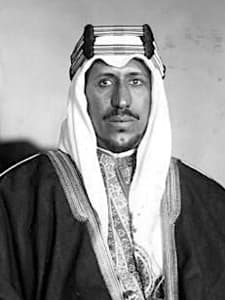
Khalid Bahah
Politician · Modern
40.5Total
Basic Information
Born
1877
1965
Died
1959
—
Era
Modern
Modern
Nationality
Italy
Yemen
Occupation
Politician
Politician
Civilization
Western
Middle Eastern
Score Comparison
Military (10%)
50.0
10.5
Political (20%)
55.0
40.8
Influence (20%)
54.9
47.1
Legacy (20%)
45.8
37.5
Leadership (15%)
78.0
51.9
Strategy (15%)
41.0
43.6
TOTAL
54.2
40.5
Enrico De Nicola — Complete Timeline
1946 AD
Elected Provisional Head of StatePolitical Action
De Nicola was elected by the Constituent Assembly as the provisional head of state of Italy, serving as the first President of the Italian Republic. He oversaw the transition from monarchy to republic after the 1946 institutional referendum.
Italian RepublicPresidencyTransition
Impact: nationalconstructive
1947 AD
Promulgated the Constitution of ItalyPolitical Action
As head of state, De Nicola promulgated the new Constitution of the Italian Republic on December 27, 1947, which came into effect on January 1, 1948. The constitution established a parliamentary republic with democratic institutions.
ConstitutionItalian RepublicLaw
Impact: nationalconstructive
1948 AD
Elected First President of the RepublicPolitical Action◆ Major
De Nicola was elected as the first President of the Italian Republic by the Parliament in joint session. He served until May 1948, when he was succeeded by Luigi Einaudi, having established the presidency as a stable institution.
PresidencyItalian RepublicPolitics
Impact: nationalconstructive
Khalid Bahah — Complete Timeline
2014 AD
Appointed Prime Minister of YemenPolitical Action◆ Major
Khalid Bahah was appointed Prime Minister by President Hadi after the Houthi takeover of Sanaa. He led a government in exile in Aden and later in Saudi Arabia, attempting to maintain international recognition.
AppointmentYemenExile Government
Impact: national
2015 AD
Appointed Vice President of YemenPolitical Action◆ Major
President Hadi appointed Khalid Bahah as Vice President, making him second-in-command of the internationally recognized government. Bahah also served as Prime Minister until 2016, when he was replaced.
AppointmentYemenVice President
Impact: national
2017 AD
Resigned as Vice PresidentPolitical Action◆ Major
Khalid Bahah resigned as Vice President, citing frustration with the lack of progress in the peace process and internal divisions within the anti-Houthi coalition. His resignation weakened the legitimacy of the Hadi government.
ResignationYemenPeace Process
Impact: nationaltragic
This comparison has not been analyzed yet.
One-time AI generation (~1 minute). Scores and timeline are already available below.
Rankings
🥇
Enrico De NicolaLeader
Mil: 50.0Pol: 55.0Inf: 54.9
54.2
🥈
Khalid Bahah
Mil: 10.5Pol: 40.8Inf: 47.1
40.5
+13.7 behind
How This Comparison Works
Algorithm
Each figure is scored on 6 dimensions (0—100 scale) based on structured historical data: Military (10%), Political (20%), Influence (20%), Legacy (20%), Leadership (15%), Strategy (15%). The weighted total produces the final ranking.
Data Sources
Scores are computed from structured sub-indicators in the database. Scale factors adjust for era (Ancient ×0.85, Modern ×1.0) and civilization size (Eastern ×1.05, Other ×0.80) to account for differences in population and military scale.
Maximum 3 Figures
Comparisons are limited to 2—3 figures to ensure readability and statistical meaningfulness.
Error Margins
±5 points per dimension — Sub-scores are derived from historical records with inherent uncertainty. Two figures within 5 points on a dimension should be considered roughly equivalent in that area.
Total Score Accuracy
±3 points overall — The weighted combination of 6 dimensions produces a total score with approximately ±3 points of uncertainty. Differences of less than 3 points are not statistically significant— the figures are effectively tied.
Known Limitations
- Historical records are incomplete and uneven across civilizations
- Figures from oral-tradition societies may be underrepresented
- Occupation labels can misclassify multi-role figures
- Scores measure capability and impact, not moral character
- Quantitative scoring is a comparison tool, not absolute truth
Capability Radar
Military (10%) — Battles & Warfare
Battles
29
19
Win Rate
31
23
Expansion
35
25
Political (20%) — Governance & Reform
Reform
55
25
Diplomacy
65
35
Economy
50
20
Influence (20%) — Cultural & Global Reach
Cultural
30
10
Global
30
10
Legacy (20%) — Historical Impact
Historical
40
15
Longevity
35
10
Leadership (15%) — Power & Stability
Tenure
60
30
Stability
70
15
Strategy (15%) — Tactics & Innovation
Strategy
36
31
Tactics
40
31
Reform
41
38
Similar Comparisons
Comments & Discussion
No comments yet. Be the first to share your thoughts!