Loading...
Khalid Bahah vs Napoleon Bonaparte
Napoleon Bonaparte leads by 30.4 pts · 2 figures compared
…
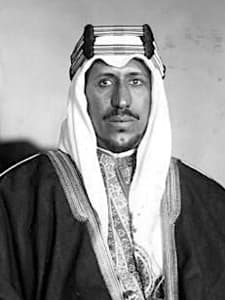
Khalid Bahah
Politician · Modern
40.5Total

Napoleon Bonaparte
General · Modern
70.9Total
Basic Information
Born
1965
1769
Died
—
1821
Era
Modern
Modern
Nationality
Yemen
France
Occupation
Politician
General
Civilization
Middle Eastern
Western
Score Comparison
Military (10%)
10.5
94.0
Political (20%)
40.8
72.0
Influence (20%)
47.1
40.0
Legacy (20%)
37.5
80.0
Leadership (15%)
51.9
78.0
Strategy (15%)
43.6
90.0
TOTAL
40.5
70.9
Khalid Bahah — Complete Timeline
2014 AD
Appointed Prime Minister of YemenPolitical Action◆ Major
Khalid Bahah was appointed Prime Minister by President Hadi after the Houthi takeover of Sanaa. He led a government in exile in Aden and later in Saudi Arabia, attempting to maintain international recognition.
AppointmentYemenExile Government
Impact: national
2015 AD
Appointed Vice President of YemenPolitical Action◆ Major
President Hadi appointed Khalid Bahah as Vice President, making him second-in-command of the internationally recognized government. Bahah also served as Prime Minister until 2016, when he was replaced.
AppointmentYemenVice President
Impact: national
2017 AD
Resigned as Vice PresidentPolitical Action◆ Major
Khalid Bahah resigned as Vice President, citing frustration with the lack of progress in the peace process and internal divisions within the anti-Houthi coalition. His resignation weakened the legitimacy of the Hadi government.
ResignationYemenPeace Process
Impact: nationaltragic
Napoleon Bonaparte — Complete Timeline
1799 AD
Coup of 18 BrumaireOther◆ Major
Napoleon Bonaparte, with support from his brother Lucien and key political figures, overthrew the Directory in a bloodless coup. He established the Consulate with himself as First Consul, effectively becoming the ruler of France. This event ended the French Revolution's most unstable period.
French RevolutionCoupRise to Power
Impact: regional
1804 AD
Promulgation of the Napoleonic CodeOther◆ Major
Napoleon enacted the Civil Code of the French, known as the Napoleonic Code, a comprehensive set of laws that replaced the fragmented feudal legal systems. The code established legal equality, protected property rights, and secularized law. It became the basis for legal systems in many European and world countries.
Legal ReformNapoleonic CodeCivil Law
Impact: globalconstructive
1805 AD
Battle of AusterlitzWar◆ Major
Napoleon's Grande Arm
Napoleonic WarsBattleDecisive Victory
Impact: global
1812 AD
Invasion of RussiaWar◆ Major
Napoleon led the Grande Arm
Napoleonic WarsInvasionDisaster
Impact: globaldestructive
1815 AD
Battle of WaterlooWar◆ Major
Napoleon's French army was defeated by the combined forces of the Duke of Wellington's Anglo-Allied army and Gebhard Leberecht von Bl
Napoleonic WarsBattleFinal Defeat
Impact: globaldestructive
Expert Analysis
khalid-bahah-vs-napoleon-bonaparte
# The Conqueror and the Caretaker
In 1815, Napoleon Bonaparte stood on a muddy field in Belgium, watching his Imperial Guard march into the cannon fire that would end an era. Two centuries later, in 2014, Khalid Bahah sat in a government office in Sanaa, watching the Houthi militia take control of his capital city. One man commanded armies that shook continents; the other commanded a government in exile, struggling to hold together a crumbling state. The difference between them is not simply one of scale—it is a difference of historical possibility itself.
Origins
Napoleon Bonaparte was born in 1769 on the island of Corsica, a year after its annexation by France. His family was minor nobility, but his world was one of revolution. The French Revolution of 1789 shattered the old order, and a young artillery officer with a talent for mathematics and ambition found himself in a society where merit could outrank birth. The revolution created a vacuum, and Napoleon filled it.
Khalid Bahah was born in 1965 in Yemen, a land of ancient kingdoms and modern fractures. He grew up under the rule of military strongmen, in a country divided by tribal loyalties and regional rivalries. Where Napoleon’s France was ascending, Bahah’s Yemen was descending—a poor nation on the periphery of the Arab world, struggling with unification, corruption, and the creeping influence of extremist movements. Bahah studied in the United States, earning a doctorate in business administration, and returned to a country where political order was a fragile fiction.
Rise to Power
Napoleon’s rise was meteoric. At age 24, he drove the British out of Toulon; at 27, he crushed a royalist uprising in Paris with a "whiff of grapeshot." By 30, he was First Consul of France, and by 35, Emperor. His path was paved with victories—the Italian campaign, the Battle of Austerlitz in 1805, the dissolution of the Holy Roman Empire. Each triumph was a stepping stone, and each stepping stone was built on the bodies of his enemies.
Khalid Bahah’s rise was quieter, more bureaucratic. He served as Yemen’s ambassador to the United Nations, a diplomat in a nation that had little diplomatic leverage. In 2014, President Hadi appointed him Prime Minister after the Houthi takeover of Sanaa. It was not a promotion born of conquest but of desperation. Bahah’s task was not to conquer but to survive—to lead a government that had lost its capital, its treasury, and much of its credibility. His rise was not a charge up a hill but a retreat to a hotel in Riyadh.
Leadership & Governance
Napoleon governed with the energy of a man who believed he could remake the world. He reformed French law through the Napoleonic Code, a system that enshrined equality before the law, protected property rights, and centralized administration. He built roads, established the Bank of France, and reorganized education. His military genius—scored at 94—was matched by a political acumen that scored 75. He understood that power required not just armies but institutions.
Bahah governed in a state of siege. As Vice President from 2015, he was second-in-command of a government recognized by the United Nations but unable to control its own territory. His leadership score of 81.4 suggests a man of genuine skill, but his political score of 54.9 reflects the impossibility of his situation. He negotiated with Houthis who did not trust him, Saudi allies who did not respect him, and internal rivals who saw him as a placeholder. Where Napoleon issued decrees from the Tuileries Palace, Bahah issued statements from hotel rooms.
Triumph & Tragedy
Napoleon’s greatest moment was likely Austerlitz in 1805, where he destroyed the combined armies of Russia and Austria, cementing his control over Europe. His worst was the invasion of Russia in 1812, a catastrophe that cost half a million men and shattered the myth of his invincibility. He recovered briefly, but Waterloo in 1815 was the final blow. He died in exile on Saint Helena in 1821, a prisoner of the British.
Bahah’s greatest moment was perhaps his appointment as Vice President in 2015, a sign that the international community still believed in a political solution. His worst was his resignation in 2017, citing frustration with the lack of progress in the peace process. He did not die in exile; he simply faded from relevance. There was no grand battle, no dramatic fall—just the slow erosion of hope.
Character & Destiny
Napoleon was driven by an unshakable belief in his own destiny. "Impossible is a word to be found only in the dictionary of fools," he once said. His ambition was boundless, his energy inexhaustible, and his ego monumental. He believed he could shape history, and for a time, he did.
Bahah, by contrast, seems to have been a man of moderation in an immoderate age. He was a technocrat, not a visionary; a diplomat, not a conqueror. His character was shaped by the limits of his situation. Where Napoleon’s personality expanded to fill the vacuum left by revolution, Bahah’s personality contracted to fit the narrow space allowed by war.
Legacy
Napoleon’s legacy is immense. He is remembered as a military genius, a reformer, and a tyrant. The Napoleonic Code influences legal systems across Europe and the world. His campaigns are studied in military academies. His score of 82.4 reflects a figure who changed the course of history.
Khalid Bahah’s legacy is smaller, more ambiguous. He is remembered, if at all, as a figure in Yemen’s tragic civil war—a man who tried to govern a country that had already been lost. His score of 56.8 reflects a life spent in the shadow of larger forces. He did not shape his era; his era shaped him.
Conclusion
Napoleon and Bahah lived in the same modern era, but they inhabited different worlds. One was a conqueror who bent history to his will; the other was a caretaker who could only watch as history swept past him. Their differences are not merely personal—they are structural. Napoleon rose in a Europe of nation-states and empires, where a single man could change the map. Bahah struggled in a Middle East of failed states and proxy wars, where no individual could hold the pieces together.
In the end, both men faced the same question: what can one person do against the currents of history? Napoleon’s answer was to ride the current and try to steer it. Bahah’s answer was to hold on and hope not to drown. Both answers, in their own way, tell us something about the limits of human agency—and about the courage it takes to act, even when the odds are impossible.
Rankings
🥇
Napoleon BonaparteLeader
Mil: 94.0Pol: 72.0Inf: 40.0
70.9
🥈
Khalid Bahah
Mil: 10.5Pol: 40.8Inf: 47.1
40.5
+30.4 behind
How This Comparison Works
Algorithm
Each figure is scored on 6 dimensions (0—100 scale) based on structured historical data: Military (10%), Political (20%), Influence (20%), Legacy (20%), Leadership (15%), Strategy (15%). The weighted total produces the final ranking.
Data Sources
Scores are computed from structured sub-indicators in the database. Scale factors adjust for era (Ancient ×0.85, Modern ×1.0) and civilization size (Eastern ×1.05, Other ×0.80) to account for differences in population and military scale.
Maximum 3 Figures
Comparisons are limited to 2—3 figures to ensure readability and statistical meaningfulness.
Error Margins
±5 points per dimension — Sub-scores are derived from historical records with inherent uncertainty. Two figures within 5 points on a dimension should be considered roughly equivalent in that area.
Total Score Accuracy
±3 points overall — The weighted combination of 6 dimensions produces a total score with approximately ±3 points of uncertainty. Differences of less than 3 points are not statistically significant— the figures are effectively tied.
Known Limitations
- Historical records are incomplete and uneven across civilizations
- Figures from oral-tradition societies may be underrepresented
- Occupation labels can misclassify multi-role figures
- Scores measure capability and impact, not moral character
- Quantitative scoring is a comparison tool, not absolute truth
Capability Radar
Military (10%) — Battles & Warfare
Battles
19
95
Win Rate
23
90
Expansion
25
95
Political (20%) — Governance & Reform
Reform
25
95
Diplomacy
35
80
Economy
20
85
Influence (20%) — Cultural & Global Reach
Cultural
10
85
Global
10
90
Legacy (20%) — Historical Impact
Historical
15
95
Longevity
10
90
Leadership (15%) — Power & Stability
Tenure
30
85
Stability
15
70
Strategy (15%) — Tactics & Innovation
Strategy
31
95
Tactics
31
98
Reform
38
92
Similar Comparisons
Comments & Discussion
No comments yet. Be the first to share your thoughts!