Loading...
Enriquillo vs Ho Chi Minh
Ho Chi Minh leads by 19.6 pts · 2 figures compared
…
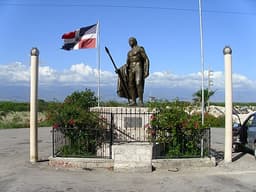
Enriquillo
Revolutionary · Medieval
43.3Total
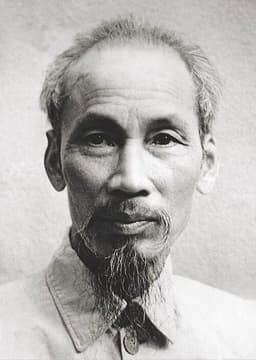
Ho Chi Minh
Revolutionary · Modern
62.9Total
Basic Information
Born
1498
1890
Died
1535
1969
Era
Medieval
Modern
Nationality
Taino
Vietnam
Occupation
Revolutionary
Revolutionary
Civilization
Other
Eastern
Score Comparison
Military (10%)
50.0
55.0
Political (20%)
29.3
72.0
Influence (20%)
47.9
62.0
Legacy (20%)
41.7
58.0
Leadership (15%)
47.3
72.0
Strategy (15%)
43.7
58.0
TOTAL
43.3
62.9
Enriquillo — Complete Timeline
1519 AD
Led Taino Rebellion on HispaniolaWar◆ Major
Enriquillo organized and led a rebellion of Taino people against Spanish colonial rule in the Bahoruco Mountains of Hispaniola. The rebellion lasted 14 years, with Enriquillo using guerrilla tactics to resist Spanish attempts to suppress the uprising.
Taino RebellionGuerrilla WarfareResistance
Impact: regional
1533 AD
Negotiated Peace Treaty with SpanishPolitical Action
After 14 years of rebellion, Enriquillo negotiated a peace treaty with Spanish authorities. The treaty granted the Taino rebels land and freedom from forced labor, though it required them to settle in a designated area. This was a rare negotiated settlement in the Spanish colonies.
TreatyDiplomacyTaino Rights
Impact: regionalconstructive
Received Royal Pardon from Spanish CrownPolitical Action◆ Major
As part of the peace agreement, Enriquillo received a royal pardon from the Spanish crown. He was granted the title of 'Don' and allowed to govern his community, though under Spanish oversight. This marked the end of his armed resistance.
PardonSpanish CrownTaino Leadership
Impact: regional
Ho Chi Minh — Complete Timeline
1941 AD
Establishment of the Viet MinhPolitical Action◆ Major
Ho Chi Minh founded the Viet Minh (League for the Independence of Vietnam) in southern China. This coalition of nationalist and communist groups became the primary force for Vietnamese independence, fighting both Japanese occupation and French colonialism.
Viet MinhIndependence MovementWorld War II
Impact: nationalconstructive
1945 AD
Declaration of Independence of VietnamPolitical Action
Ho Chi Minh proclaimed the Democratic Republic of Vietnam in Hanoi's Ba Dinh Square, citing the US Declaration of Independence. This established the Viet Minh government and began the struggle for independence from French colonial rule.
IndependenceVietnamDecolonization
Impact: nationalconstructive
1954 AD
Battle of Dien Bien PhuWar
Ho Chi Minh's Viet Minh forces, under General Giap, defeated the French garrison at Dien Bien Phu. This victory ended French colonial rule in Indochina and led to the Geneva Accords dividing Vietnam at the 17th parallel.
Vietnam WarDecolonizationFrench Indochina
Impact: regional
Geneva AccordsPolitical Action◆ Major
Ho Chi Minh's delegation signed the Geneva Accords, temporarily dividing Vietnam at the 17th parallel. The agreement promised nationwide elections in 1956, which were never held, leading to the permanent division of Vietnam.
Geneva ConferenceDivision of VietnamDiplomacy
Impact: regional
1959 AD
Start of the Vietnam WarWar
Ho Chi Minh's government in North Vietnam authorized armed struggle against the US-backed South Vietnamese regime. This escalated into the Vietnam War, a prolonged conflict that resulted in millions of deaths and US withdrawal in 1973.
Vietnam WarCold WarCommunism
Impact: globaldestructive
Expert Analysis
Ho Chi Minh vs Enriquillo
# The Revolutionary’s Two Paths: Ho Chi Minh and Enriquillo
In the winter of 1954, a frail, bearded man in Hanoi read aloud a declaration of independence, his voice carrying the weight of a century of colonial suffering. Four hundred years earlier, in the dense forests of Hispaniola, another man—muscular, scarred, and crowned with feathers—watched Spanish soldiers march into his mountain stronghold, ready to negotiate a peace he knew would not last. Both men were revolutionaries. Both led their people against overwhelming empires. Yet one became the father of a modern nation, while the other faded into a footnote of history. What made the difference? The answer lies not in their courage, but in the worlds they inhabited.
Origins
Ho Chi Minh was born Nguyen Sinh Cung in 1890 in central Vietnam, a land of rice paddies and French rubber plantations. His father, a Confucian scholar, taught him the classics of Chinese philosophy while French officials collected taxes at gunpoint. This dual education—steeped in Eastern tradition yet exposed to Western cruelty—shaped a mind that could navigate both worlds. He left Vietnam at 21 as a cook’s assistant on a French steamer, traveling to London, New York, and Paris, where he read Marx and Lenin under gas lamps. By 1920, he was a founding member of the French Communist Party, a Vietnamese peasant’s son who had become a cosmopolitan revolutionary.
Enriquillo, born around 1498, knew no such journey. He was a Taino cacique—a hereditary chief—on the island of Hispaniola, where Spanish colonists had already reduced his people from perhaps 300,000 to fewer than 30,000 through disease, enslavement, and massacre. He was raised in a Franciscan monastery, baptized as Enrique, and taught to read Spanish law. This education was meant to make him a docile subject. Instead, it gave him the tools to understand the legal system that was destroying his people. When Spanish authorities refused to return his stolen wife, he fled to the mountains with a handful of followers.
Rise to Power
Ho Chi Minh’s rise was a slow accretion of networks and timing. For two decades, he moved between Moscow, Guangzhou, and Bangkok, organizing Vietnamese exiles and training future cadres. His breakthrough came in 1941, when he crossed into southern China to establish the Viet Minh—a coalition of nationalists and communists united against French and Japanese occupation. The timing was perfect: World War II had crippled French power, and Japan’s surrender in 1945 created a vacuum. On September 2, 1945, Ho Chi Minh stood in Ba Dinh Square and declared Vietnam independent, borrowing phrases from the American Declaration of Independence. He was 55 years old, and his moment had arrived.
Enriquillo’s rise was more desperate. In 1519, after years of abuse on a Spanish encomienda, he led a dozen followers into the Bahoruco Mountains of southwestern Hispaniola. For 14 years, he waged a guerrilla war against Spanish forces—ambushing supply caravans, burning plantations, and sheltering escaped Taino and African slaves. He never commanded more than a few hundred fighters, but he knew the terrain: the limestone caves, the hidden springs, the paths that only a native could see. The Spanish sent hundreds of soldiers after him, but he slipped through their nets like water through fingers.
Leadership & Governance
Ho Chi Minh governed with a blend of iron discipline and folk wisdom. He was not a military commander—General Vo Nguyen Giap won the battles—but a political architect who held together a coalition of communists, nationalists, and peasants. His leadership score of 84.8 reflects his ability to inspire loyalty through simplicity: he lived in a modest stilt house, wore rubber sandals, and addressed his followers as “children.” He was ruthless when necessary—land reforms in the 1950s killed thousands—but his vision of a unified Vietnam gave his people a cause that outlasted his life.
Enriquillo’s leadership was more limited, but no less effective within its scope. His military score of 24.0 and political score of 35.7 reflect a man who fought a defensive war, not a campaign of conquest. He could not build a state; there was no territory to hold, no capital to defend. Instead, he governed his mountain community through traditional Taino councils, combining resistance with survival. When Spanish authorities finally offered peace in 1533, he negotiated a treaty that granted the Taino self-rule in the mountains and a royal pardon from Charles V. It was a remarkable achievement for a man with no army, no allies, and no modern weapons.
Triumph & Tragedy
Ho Chi Minh’s greatest triumph was the Battle of Dien Bien Phu in 1954, where Giap’s forces besieged and destroyed a French fortress in the jungle. The victory ended 80 years of French rule and forced the Geneva Accords, which temporarily divided Vietnam at the 17th parallel. But Ho Chi Minh’s tragedy was that the division became permanent. The United States stepped into the vacuum, and the Vietnam War—authorized by his government in 1959—would kill millions and devastate his country. He died in 1969, six years before his dream of unification was realized.
Enriquillo’s triumph was survival itself. For 14 years, he kept his people alive in a world that wanted them dead. His tragedy was the peace treaty itself. The Spanish granted the Taino a reservation in the mountains, but the land was poor, and the population never recovered. By 1535, the year of Enriquillo’s death, the Taino of Hispaniola had been reduced to a few thousand souls. His rebellion delayed extinction but could not prevent it.
Character & Destiny
Ho Chi Minh was a man of masks. To Western journalists, he was a charming ascetic who quoted Jefferson and Lenin in the same sentence. To his followers, he was “Uncle Ho,” a father figure who embodied the nation. To his enemies, he was a communist puppet. Yet beneath the masks was a ruthless pragmatist who understood that revolution required patience, propaganda, and the willingness to sacrifice generations. His strategy score of 60.0 suggests a man who knew when to fight and when to wait.
Enriquillo was a man of honor in a world that had none. He fought not for an ideology but for his wife, his people, and his dignity. When he negotiated peace, he insisted on terms that protected Taino families from forced labor and separation. He was a cacique who ruled by consensus, not command. His character was his destiny: he could not become a Ho Chi Minh because he could not imagine a world beyond the mountains.
Legacy
Ho Chi Minh’s legacy is monumental but contested. In Vietnam, he is revered as the father of the nation—his embalmed body lies in a mausoleum in Hanoi, and his image adorns every currency. Globally, his influence score of 70.6 places him among the 20th century’s great anti-colonial leaders. Yet his legacy is also one of war: the Vietnam War killed 3 million Vietnamese and 58,000 Americans, and the country he unified remains a one-party state.
Enriquillo’s legacy is quieter but no less significant. In the Dominican Republic and Haiti, he is a symbol of indigenous resistance—his name adorns streets, schools, and a national park. His legacy score of 52.4 reflects a man who, though defeated, gave his people a story to tell. The Taino are not extinct; their DNA survives in millions of Caribbean people, and their memory lives in the mountains where Enriquillo once hid.
Conclusion
What drove the different outcomes? Ho Chi Minh lived in a world of nation-states, mass media, and global ideologies. He could travel, write, and build a party that spanned continents. Enriquillo lived in a world of iron and fire, where one disease could erase a civilization and one betrayal could end a rebellion. Ho Chi Minh’s enemy was France and America—empires that could be fought and defeated. Enriquillo’s enemy was history itself—the Columbian exchange that had already doomed his people before he was born.
The two men share a common thread: they fought against impossible odds for the freedom of their people. One succeeded in founding a nation; the other succeeded in preserving a memory. Both, in their own ways, won.
Rankings
🥇
Ho Chi MinhLeader
Mil: 55.0Pol: 72.0Inf: 62.0
62.9
🥈
Enriquillo
Mil: 50.0Pol: 29.3Inf: 47.9
43.3
+19.6 behind
How This Comparison Works
Algorithm
Each figure is scored on 6 dimensions (0—100 scale) based on structured historical data: Military (10%), Political (20%), Influence (20%), Legacy (20%), Leadership (15%), Strategy (15%). The weighted total produces the final ranking.
Data Sources
Scores are computed from structured sub-indicators in the database. Scale factors adjust for era (Ancient ×0.85, Modern ×1.0) and civilization size (Eastern ×1.05, Other ×0.80) to account for differences in population and military scale.
Maximum 3 Figures
Comparisons are limited to 2—3 figures to ensure readability and statistical meaningfulness.
Error Margins
±5 points per dimension — Sub-scores are derived from historical records with inherent uncertainty. Two figures within 5 points on a dimension should be considered roughly equivalent in that area.
Total Score Accuracy
±3 points overall — The weighted combination of 6 dimensions produces a total score with approximately ±3 points of uncertainty. Differences of less than 3 points are not statistically significant— the figures are effectively tied.
Known Limitations
- Historical records are incomplete and uneven across civilizations
- Figures from oral-tradition societies may be underrepresented
- Occupation labels can misclassify multi-role figures
- Scores measure capability and impact, not moral character
- Quantitative scoring is a comparison tool, not absolute truth
Capability Radar
Military (10%) — Battles & Warfare
Battles
25
65
Win Rate
30
60
Expansion
10
55
Political (20%) — Governance & Reform
Reform
15
85
Diplomacy
30
90
Economy
10
40
Influence (20%) — Cultural & Global Reach
Cultural
35
75
Global
20
75
Legacy (20%) — Historical Impact
Historical
40
85
Longevity
30
70
Leadership (15%) — Power & Stability
Tenure
40
70
Stability
25
50
Strategy (15%) — Tactics & Innovation
Strategy
40
80
Tactics
35
70
Reform
10
75
Similar Comparisons
Comments & Discussion
Tactical Taino6/16/2026
Enriquillo's mountain guerrilla campaign was brilliant but strategically limited—no external allies, no supply lines, no global propaganda machine. Ho Chi Minh had the Viet Minh's iron discipline AND Soviet/Chinese backing. One man led a regional uprising, the other engineered a multinational war. That's not courage difference, it's logistics. Enriquillo couldn't even get muskets. Game over before it started.
数字殖民者6/16/2026
说Ho Chi Minh比Enriquillo更成功?这完全是殖民者视角的胜利叙事!Enriquillo在1520年领导了美洲最早的土著反抗之一,迫使西班牙人谈判讲和——而Ho Chi Minh到1954年才做到同样的事。你把时间、技术和人口规模都算进去了吗?1550年他的Taino战士不到300人,面对的是骑马的征服者。这叫失败?这叫奇迹。
Classico Erudito6/16/2026
The real irony? Enriquillo's rebellion actually achieved a formal peace treaty—recognized by Spanish authorities—while Ho Chi Minh's Geneva Accords were immediately broken by both sides. Enriquillo secured a reservation for his surviving people; Ho Chi Minh got a partitioned Vietnam that bled for twenty more years. Who judges "success"? The man who dies in his bed after negotiating, or the one who lives to see his country torn apart?
历史辩证者6/16/2026
你们忽略了最关键的时间纵深。Enriquillo的抗争是前现代反抗的绝唱——无从获取工业武器,无从建立政党结构,无从利用国际舆论。Ho Chi Minh的胜利取决于二十世纪的地缘政治:二战削弱了法国,冷战制造了空档。若把两人互换,Enriquillo会把越南带入丛林游击战,而Ho会在加勒比海创建个微型社会主义共和国。历史不评价人的勇气,只计算他们的时代配额。
Rising Tide Realist6/16/2026
The only similarity is they both lost. Enriquillo's Tainos were extinct within a generation of his treaty. Ho Chi Minh's Vietnam became a Soviet client state that killed millions of its own citizens in re-education camps. "Father of a nation"? He's the father of a police state. "Hero of resistance"? Enriquillo bought his people a few years of dwindling existence. Both fought empires. Both got crushed by history's machinery. Stop romanticizing failure.