Loading...
Enriquillo vs Gulbuddin Hekmatyar
Enriquillo leads by 5.0 pts · 2 figures compared
…
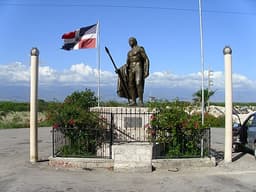
Enriquillo
Revolutionary · Medieval
43.3Total
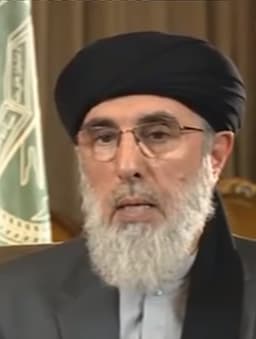
Gulbuddin Hekmatyar
Revolutionary · Modern
38.3Total
Basic Information
Born
1498
1947
Died
1535
—
Era
Medieval
Modern
Nationality
Taino
Afghanistan
Occupation
Revolutionary
Revolutionary
Civilization
Other
Middle Eastern
Score Comparison
Military (10%)
50.0
35.0
Political (20%)
29.3
26.4
Influence (20%)
47.9
47.1
Legacy (20%)
41.7
36.7
Leadership (15%)
47.3
40.4
Strategy (15%)
43.7
38.3
TOTAL
43.3
38.3
Enriquillo — Complete Timeline
1519 AD
Led Taino Rebellion on HispaniolaWar◆ Major
Enriquillo organized and led a rebellion of Taino people against Spanish colonial rule in the Bahoruco Mountains of Hispaniola. The rebellion lasted 14 years, with Enriquillo using guerrilla tactics to resist Spanish attempts to suppress the uprising.
Taino RebellionGuerrilla WarfareResistance
Impact: regional
1533 AD
Negotiated Peace Treaty with SpanishPolitical Action
After 14 years of rebellion, Enriquillo negotiated a peace treaty with Spanish authorities. The treaty granted the Taino rebels land and freedom from forced labor, though it required them to settle in a designated area. This was a rare negotiated settlement in the Spanish colonies.
TreatyDiplomacyTaino Rights
Impact: regionalconstructive
Received Royal Pardon from Spanish CrownPolitical Action◆ Major
As part of the peace agreement, Enriquillo received a royal pardon from the Spanish crown. He was granted the title of 'Don' and allowed to govern his community, though under Spanish oversight. This marked the end of his armed resistance.
PardonSpanish CrownTaino Leadership
Impact: regional
Gulbuddin Hekmatyar — Complete Timeline
1975 AD
Founding of Hezb-e Islami (1975)Political Action◆ Major
Gulbuddin Hekmatyar founded the Hezb-e Islami political party, an Islamist faction that became one of the most powerful mujahideen groups during the Soviet-Afghan War. The party received significant support from Pakistan's ISI and foreign Islamist donors.
MujahideenIslamist PartyCold War
Impact: national
1993 AD
Prime Minister during Civil War (1993-1994)Political Action◆ Major
Hekmatyar served as Prime Minister of Afghanistan from 1993 to 1994 under President Burhanuddin Rabbani. His tenure was marked by intense factional fighting, including rocket attacks on Kabul that caused thousands of civilian casualties, contributing to the devastation of the city.
Civil WarKabulRocket Attacks
Impact: nationaldestructive
1996 AD
Alliance with Taliban (1996-2001)Political Action
After the Taliban captured Kabul in 1996, Hekmatyar initially fled to Iran. He later aligned with the Taliban regime, though his influence waned. He remained in Afghanistan until the US-led invasion in 2001, after which he fled to Pakistan.
TalibanExileAlliance
Impact: national
2016 AD
Peace Agreement with Afghan Government (2016)Political Action◆ Major
Hekmatyar signed a peace agreement with the Afghan government of President Ashraf Ghani in 2016. The deal allowed him to return to Afghanistan from exile, with his party recognized as a political entity and his fighters integrated into state security forces.
Peace DealReconciliationGhani
Impact: nationalconstructive
Expert Analysis
Gulbuddin Hekmatyar vs Enriquillo
# The Rebel's Bargain: Two Paths from the Mountain
On a winter morning in 2016, an old man with a white beard and a Kalashnikov slung across his shoulder stepped into a Kabul hotel to shake hands with the president of Afghanistan. Gulbuddin Hekmatyar, once the most feared warlord of the civil war, had signed a peace deal. Four hundred years earlier, on the other side of the world, a Taino cacique named Enriquillo descended from the Bahoruco Mountains of Hispaniola to accept a royal pardon from the Spanish crown. Both men had fought empires from the highlands. Both had eventually bargained for peace. But the mountains they came from, and the worlds they left behind, could not have been more different.
Origins
Gulbuddin Hekmatyar was born in 1947 in the northern Afghan province of Kunduz, the son of a landowner. He studied engineering at Kabul University, but the classroom was never his true arena. The 1970s were a furnace of ideological ferment in Afghanistan, where Marxism, nationalism, and Islamism clashed in the streets. Hekmatyar found his fire in the Muslim Youth Organization, a student group that preached political Islam. When the Afghan communist coup came in 1978, he was already in Pakistan, organizing a resistance. He founded Hezb-e Islami in 1975, a party that married religious fervor with ruthless ambition. His Afghanistan was a land of shifting alliances, foreign meddling, and endless war.
Enriquillo belonged to a world already dying. Born around 1498 on Hispaniola, he was a Taino cacique—a hereditary chief—raised in the shadow of Spanish conquest. His people had been decimated by disease, enslavement, and violence. As a young man, he was educated by Franciscan friars, learning Spanish and Christian doctrine. But that education did not save him. Enriquillo witnessed the destruction of his civilization firsthand. His own wife was reportedly abused by a Spanish encomendero. The Taino world was not one of ideological competition but of existential collapse.
Rise to Power
Hekmatyar’s ascent was forged in the crucible of the Soviet-Afghan War. Between 1979 and 1989, Hezb-e Islami received millions of dollars from the CIA and Pakistan’s ISI, becoming one of the most powerful mujahideen factions. Hekmatyar was not a battlefield commander in the classic sense—his military score of 46.8 reflects that—but he was a master of political maneuvering. He used foreign aid to build a network of loyalty and fear, often targeting rival mujahideen groups as fiercely as the Soviets. His strategy score of 63.7 hints at a man who thought in terms of patronage and leverage, not tactics.
Enriquillo’s rise was different. In 1519, after years of suffering, he led a band of Taino into the Bahoruco Mountains, a rugged limestone fortress that the Spanish could not easily penetrate. His military score of 24.0 is low, but it misses the point. Enriquillo did not seek to destroy the Spanish army; he sought to survive. His rebellion was a war of evasion, using the mountains as a shield. For fourteen years, he held out, raiding plantations and freeing slaves, while Spanish governors sent expeditions that failed to catch him.
Leadership & Governance
As a leader, Hekmatyar was a polarizer. His leadership score of 41.3 reflects a man who inspired intense loyalty in his followers but also deep enmity in others. When he became Prime Minister of Afghanistan in 1993 under President Burhanuddin Rabbani, his tenure was catastrophic. Hekmatyar’s forces shelled Kabul repeatedly, reducing neighborhoods to rubble and killing thousands of civilians. He governed not by building institutions but by wielding violence as a bargaining chip. His political score of 45.9 suggests a man who understood power but not its responsibilities.
Enriquillo governed his mountain refuge as a cacique, not a revolutionary. He maintained order among his followers, negotiated with local friars, and eventually chose diplomacy over annihilation. In 1533, he negotiated a peace treaty that granted the Taino a land reservation and freedom from enslavement. The Spanish crown issued a royal pardon. Enriquillo accepted, becoming a symbol of what could be achieved through resistance and negotiation.
Triumph & Tragedy
Hekmatyar’s greatest moment may have been his return from exile in 2016. After years in Iran and Pakistan, he signed a peace agreement with President Ashraf Ghani, returning to Kabul as a political player. But the triumph was hollow. Hekmatyar’s legacy was already written in the rubble of Kabul. His alliance with the Taliban in 1996, after they captured the city, stained him further. He was a man who had fought everyone—the Soviets, the communists, the mujahideen, the Americans—and ended up making peace with the very governments he had tried to destroy.
Enriquillo’s tragedy was that his peace was temporary. The land reservation was small, the Spanish continued to encroach, and the Taino population continued to decline. He died in 1535, just two years after the treaty. His rebellion had bought a generation of freedom, but it could not stop the demographic catastrophe that had already overtaken his people.
Character & Destiny
Hekmatyar was driven by ambition and ideology, but also by a paranoid brilliance. He was called the “Engineer” for his engineering degree, but his real talent was for destruction. He could not build, only fight. His destiny was to be a permanent insurgent, a man who defined himself against every system, yet could never create one of his own.
Enriquillo was a survivor. He adapted to the Spanish world—learning its language, its religion, its politics—without losing his Taino identity. His destiny was to be a bridge between two worlds that could not be reconciled. He chose peace not because he had won, but because he understood that his people could not win a war of annihilation.
Legacy
Hekmatyar’s legacy score of 47.8 reflects a man remembered as a spoiler. In Afghanistan, he is a figure of the civil war’s darkest days. His name is synonymous with the rocket attacks that destroyed Kabul. The peace agreement of 2016 did not rehabilitate him; it merely acknowledged his stubborn survival.
Enriquillo’s legacy is more honored, with a score of 52.4. In the Dominican Republic, he is a national hero, a symbol of indigenous resistance. His name adorns streets and statues. But the Taino people are largely extinct, their culture erased. Enriquillo’s legacy is a monument to a loss, not a victory.
Conclusion
Both men led rebellions from mountains, but their mountains were different. Hekmatyar’s mountains were the Hindu Kush, a landscape of endless war where foreign powers fought proxy battles. Enriquillo’s mountains were the Bahoruco, a refuge for a dying people. Hekmatyar fought for power in a world where power was the only currency. Enriquillo fought for survival in a world where survival was the only victory.
In the end, both made peace. But one peace was a tactical retreat, the other a dignified surrender. Hekmatyar returned to Kabul to shake hands with a president. Enriquillo returned to his mountain to die among his people. The difference between them is not just in their scores, but in the worlds they tried to change—and the worlds that changed them.
Rankings
🥇
EnriquilloLeader
Mil: 50.0Pol: 29.3Inf: 47.9
43.3
🥈
Gulbuddin Hekmatyar
Mil: 35.0Pol: 26.4Inf: 47.1
38.3
+5.0 behind
How This Comparison Works
Algorithm
Each figure is scored on 6 dimensions (0—100 scale) based on structured historical data: Military (10%), Political (20%), Influence (20%), Legacy (20%), Leadership (15%), Strategy (15%). The weighted total produces the final ranking.
Data Sources
Scores are computed from structured sub-indicators in the database. Scale factors adjust for era (Ancient ×0.85, Modern ×1.0) and civilization size (Eastern ×1.05, Other ×0.80) to account for differences in population and military scale.
Maximum 3 Figures
Comparisons are limited to 2—3 figures to ensure readability and statistical meaningfulness.
Error Margins
±5 points per dimension — Sub-scores are derived from historical records with inherent uncertainty. Two figures within 5 points on a dimension should be considered roughly equivalent in that area.
Total Score Accuracy
±3 points overall — The weighted combination of 6 dimensions produces a total score with approximately ±3 points of uncertainty. Differences of less than 3 points are not statistically significant— the figures are effectively tied.
Known Limitations
- Historical records are incomplete and uneven across civilizations
- Figures from oral-tradition societies may be underrepresented
- Occupation labels can misclassify multi-role figures
- Scores measure capability and impact, not moral character
- Quantitative scoring is a comparison tool, not absolute truth
Capability Radar
Military (10%) — Battles & Warfare
Battles
25
45
Win Rate
30
30
Expansion
10
25
Political (20%) — Governance & Reform
Reform
15
15
Diplomacy
30
20
Economy
10
10
Influence (20%) — Cultural & Global Reach
Cultural
35
25
Global
20
25
Legacy (20%) — Historical Impact
Historical
40
30
Longevity
30
20
Leadership (15%) — Power & Stability
Tenure
40
30
Stability
25
5
Strategy (15%) — Tactics & Innovation
Strategy
40
35
Tactics
35
40
Reform
10
20
Similar Comparisons
Comments & Discussion
SACKS OF BLOOD6/16/2026
These two are nothing alike beyond "guy who hides in mountains." Hekmatyar was a Cold War jihadist with engineering textbooks and Saudi money—he'd fire rockets at Kabul schools just to prove a point. Enriquillo was fighting an extinction-level event. His people went from 3 million to 60,000 in 50 years. He accepted pardon after 13 years because his entire nation was being erased. Hekmatyar joined government. Enriquillo became a symbol. Context matters.
山丘之影6/16/2026
Hekmatyar不过是个换了三遍阵营的投机者:苏联入侵时他是美国资助的圣战者,九十年代他把喀布尔炸成废墟,最后又在和平协议里捞了个总理位子——这哪是"从山上走下来"的革命者?Enriquillo至少带着他的泰诺人在巴奥鲁科山区坚守了十四年,西班牙人被迫承认他的自治领。一个是拿人命换权力的政客,一个是为族人争取生存空间的酋长,放在一起比较纯粹是侮辱起义传统。
DATA DETECTIVE6/16/2026
The comparison breaks down when you check body counts. Hekmatyar's forces killed 30,000-50,000 in Kabul alone during the 1992-96 civil war—more than all Taino casualties in the entire Enriquillo rebellion. The Spanish estimated Enriquillo's force at 600-700 warriors with primitive weapons. Hekmatyar commanded tens of thousands with Stinger missiles, Scud rockets, and foreign intelligence backing. Scale matters. These aren't "two paths from the mountain," they're two completely different kinds of
火药与木棍6/16/2026
一个细节暴露差异:Hekmatyar在和平协议后照常住豪宅、有保镖、办政党,他的Hezb-e Islami直到今天还在阿富汗议会里有席位。Enriquillo接受赦免后在西班牙划给他的保留地活了几年就死了,死因至今成谜——有人说是西班牙人下毒。一个谈完条件继续当大佬,一个谈完条件就被系统消化了。这就是殖民战争和代理人战争的根本区别:前者要你的命,后者要你的票。
CLASSICS CORNER6/16/2026
Hekmatyar is the archetypal "tyrant in waiting" that Plato warned about—the man who uses popular unrest to seize power while denouncing the very system he longs to join. Enriquillo aligns more with the Roman idea of *dignitas*: he fought for recognition of his people's right to exist, not to become Caesar. Hekmatyar's 2016 return to Kabul was a political transaction. Enriquillo's 1533 peace was an existential compromise. One read Machiavelli; the other would have wept reading Virgil's Georgics a