Loading...
Enriquillo vs Pushpa Kamal Dahal
Pushpa Kamal Dahal leads by 6.7 pts · 2 figures compared
…
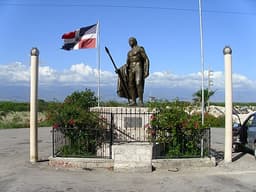
Enriquillo
Revolutionary · Medieval
43.3Total
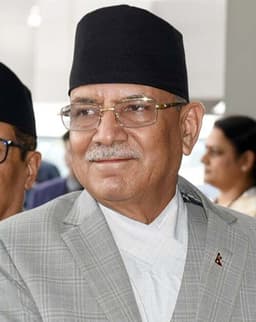
Pushpa Kamal Dahal
Revolutionary · Modern
50.0Total
Basic Information
Born
1498
1954
Died
1535
—
Era
Medieval
Modern
Nationality
Taino
Nepal
Occupation
Revolutionary
Revolutionary
Civilization
Other
Indian
Score Comparison
Military (10%)
50.0
35.0
Political (20%)
29.3
54.7
Influence (20%)
47.9
51.0
Legacy (20%)
41.7
40.8
Leadership (15%)
47.3
62.0
Strategy (15%)
43.7
60.0
TOTAL
43.3
50.0
Enriquillo — Complete Timeline
1519 AD
Led Taino Rebellion on HispaniolaWar◆ Major
Enriquillo organized and led a rebellion of Taino people against Spanish colonial rule in the Bahoruco Mountains of Hispaniola. The rebellion lasted 14 years, with Enriquillo using guerrilla tactics to resist Spanish attempts to suppress the uprising.
Taino RebellionGuerrilla WarfareResistance
Impact: regional
1533 AD
Negotiated Peace Treaty with SpanishPolitical Action
After 14 years of rebellion, Enriquillo negotiated a peace treaty with Spanish authorities. The treaty granted the Taino rebels land and freedom from forced labor, though it required them to settle in a designated area. This was a rare negotiated settlement in the Spanish colonies.
TreatyDiplomacyTaino Rights
Impact: regionalconstructive
Received Royal Pardon from Spanish CrownPolitical Action◆ Major
As part of the peace agreement, Enriquillo received a royal pardon from the Spanish crown. He was granted the title of 'Don' and allowed to govern his community, though under Spanish oversight. This marked the end of his armed resistance.
PardonSpanish CrownTaino Leadership
Impact: regional
Pushpa Kamal Dahal — Complete Timeline
1996 AD
Launch of People's WarWar
Prachanda, as leader of the Communist Party of Nepal (Maoist), initiated a armed insurgency against the Nepalese state. The People's War began with attacks on police posts and government offices, escalating into a decade-long civil war.
InsurgencyCivil WarMaoist
Impact: nationaldestructive
2006 AD
Signing of Comprehensive Peace AccordPolitical Action◆ Major
Prachanda signed the Comprehensive Peace Accord with Prime Minister Girija Prasad Koirala, ending the civil war. The agreement committed the Maoists to lay down arms and join mainstream politics in exchange for integration into state institutions.
Peace TreatyCivil WarNepal
Impact: nationalconstructive
2008 AD
Election as Prime MinisterPolitical Action◆ Major
Following the Maoist victory in the Constituent Assembly elections, Prachanda became the first prime minister of the Federal Democratic Republic of Nepal. His tenure focused on integrating former Maoist combatants into the national army.
ElectionGovernmentRepublic
Impact: national
2009 AD
Resignation as Prime MinisterPolitical Action
Prachanda resigned as prime minister after a dispute with President Ram Baran Yadav over the dismissal of the army chief. The crisis highlighted tensions between the Maoists and the established political order.
ResignationPoliticsCrisis
Impact: national
Expert Analysis
Pushpa Kamal Dahal vs Enriquillo
# The Revolutionary's Path: Prachanda and Enriquillo
In the year 1996, a former schoolteacher from a remote Nepali village gathered his followers in the hills of western Nepal and declared a "People's War" against the ancient Hindu monarchy. Four centuries earlier, on the island of Hispaniola, a young Taino cacique named Enriquillo watched his people being worked to death in Spanish gold mines and made a decision that would define his life—to fight back. Both men became revolutionaries, both led long insurgencies, and both ultimately sat down to negotiate with the very powers they had risen against. Yet their paths diverged in ways that reveal the profound difference between leading a rebellion and governing a nation.
Origins
Pushpa Kamal Dahal was born in 1954 in the hills of Kaski District, Nepal, into a family of modest means. The son of a Brahmin father who worked as a landless farmer, young Dahal grew up witnessing the grinding poverty and caste discrimination that pervaded Nepali society. He was drawn to the radical ideas of Maoism while studying agriculture at college, and by the 1970s he had joined the underground communist movement. The Nepal he came of age in was a feudal absolute monarchy, closed to the outside world, where the king ruled by divine right and the majority of people lived without electricity or roads.
Enriquillo, born in 1498, inhabited a different world entirely. He was a Taino, one of the indigenous peoples who first encountered Christopher Columbus. As a young nobleman, he was sent to be educated by Spanish Franciscan missionaries, learning to read and write Spanish and adopting Christianity. He was given the name "Enriquillo" by his Spanish masters—a diminutive of Enrique. But this education came at a terrible cost: he witnessed the systematic destruction of his people, who were forced into the encomienda system of virtual slavery. By the time he was twenty, the Taino population of Hispaniola had collapsed from perhaps 300,000 to fewer than 30,000.
Rise to Power
Prachanda's rise was the product of decades of clandestine organization. In the 1980s, he worked as a teacher while secretly building a Maoist faction within Nepal's fractured communist movement. His defining moment came in 1996, when he led the Communist Party of Nepal (Maoist) to launch the People's War. Over the next decade, he would transform a small band of ideologues into a formidable insurgency that controlled vast swaths of the country. His military score of 25.6 reflects not battlefield brilliance but the strategic patience of someone who understood that guerrilla warfare is a political act as much as a military one.
Enriquillo's path was more direct. In 1519, after enduring years of abuse under his Spanish overlord, he fled to the Bahoruco Mountains with a small group of followers. There, in the dense forests and limestone caves, he began organizing a rebellion that would last fourteen years. His military score of 24.0 is similar to Prachanda's, but for different reasons: Enriquillo was not a great general in the European sense, but he was a master of terrain and a leader who inspired fierce loyalty. He knew that his people could not defeat the Spanish in open battle, so he never gave them the chance.
Leadership & Governance
Here the two men diverge most sharply. Prachanda, with a leadership score of 75.7, proved himself a master of political maneuvering. When the Comprehensive Peace Accord was signed in 2006, ending the civil war, he did not disappear into the mountains—he entered the palace. In 2008, after the Maoists won the Constituent Assembly elections, he became Prime Minister of a federal republic. His political score of 61.5 reflects this remarkable transition from revolutionary to head of state.
Yet Prachanda's governance was turbulent. In 2009, he resigned after a dispute with the president over the dismissal of the army chief—a crisis that revealed the tension between his revolutionary instincts and the demands of constitutional democracy. He would serve as prime minister two more times, but each tenure was marked by coalition politics and compromise. The revolutionary who had once declared that "power grows from the barrel of a gun" found himself negotiating budgets and managing cabinet ministers.
Enriquillo, with a leadership score of 36.2, governed differently. In the Bahoruco Mountains, he established a Taino stronghold where Spanish law did not reach. He organized his people into self-sufficient communities, growing crops and raiding Spanish settlements for supplies. He maintained discipline and purpose among followers who had every reason to despair. But when he negotiated peace in 1533, receiving a royal pardon and the title of "Don," he did not become a governor or legislator. He returned to his people, accepted the Spanish terms, and died two years later, having never held the kind of power that Prachanda would grasp.
Triumph & Tragedy
Prachanda's greatest triumph was the 2008 election victory, which saw Maoists win 220 of 575 seats in the Constituent Assembly—a stunning validation of the People's War. His greatest tragedy was the realization that revolution does not end with taking power. The compromises of governance, the infighting among former comrades, the persistence of poverty and corruption—these proved more intractable enemies than the Royal Nepal Army ever was.
Enriquillo's triumph was survival itself. For fourteen years, he kept the Taino resistance alive against a Spanish empire that had conquered the Aztecs and Incas. His tragedy was that the peace treaty of 1533, while granting pardons and land rights, could not reverse the demographic catastrophe that had already befallen his people. By the time of his death in 1535, the Taino were a remnant, their civilization collapsing into memory.
Character & Destiny
Prachanda's character is that of the ideologue who becomes the pragmatist. His strategy score of 53.6 suggests a man who learned to adapt, to shift from armed struggle to parliamentary politics. He once said, "We are not dogmatic. We are ready to learn from history." This flexibility allowed him to survive where other revolutionaries perished, but it also earned him accusations of betrayal from former allies who saw his compromises as abandonment of principle.
Enriquillo's character is that of the noble who becomes the rebel. His strategy score of 49.4 reflects the wisdom of knowing his limits—he fought not to overthrow the Spanish empire but to carve out a space where his people could live with dignity. When he accepted the royal pardon, he did so not as a surrender but as a recognition that the war had run its course. He knew that some victories are measured not in territory but in the survival of a people.
Legacy
Prachanda's legacy is contested. With a total score of 59.0, he ranks as a significant but controversial figure in modern South Asian history. He ended a monarchy, brought Maoists into the democratic process, and served as prime minister of a federal republic. Yet Nepal remains one of Asia's poorest countries, and the promises of the People's War remain largely unfulfilled. He is remembered as both a liberator and a failed reformer.
Enriquillo's legacy, with a total score of 45.0, is more symbolic than political. He is remembered as a symbol of indigenous resistance across Latin America, his name given to parks, towns, and schools. The peace treaty he negotiated did not save the Taino as a people, but it preserved their memory. In the Dominican Republic, he is honored as a national hero, a reminder that even the mightiest empires can be challenged by those who refuse to submit.
Conclusion
What separates these two revolutionaries is not courage or conviction—both had those in abundance. What separates them is the nature of their victories. Prachanda won the state but lost the revolution. Enriquillo lost the war but saved his people's honor. One entered the halls of power and found them empty; the other retreated to the mountains and found them full of meaning. In the end, perhaps the most revolutionary act is not to seize power but to know what to do with it—a lesson that Prachanda is still learning, and that Enriquillo never had to face.
Rankings
🥇
Pushpa Kamal DahalLeader
Mil: 35.0Pol: 54.7Inf: 51.0
50.0
🥈
Enriquillo
Mil: 50.0Pol: 29.3Inf: 47.9
43.3
+6.7 behind
How This Comparison Works
Algorithm
Each figure is scored on 6 dimensions (0—100 scale) based on structured historical data: Military (10%), Political (20%), Influence (20%), Legacy (20%), Leadership (15%), Strategy (15%). The weighted total produces the final ranking.
Data Sources
Scores are computed from structured sub-indicators in the database. Scale factors adjust for era (Ancient ×0.85, Modern ×1.0) and civilization size (Eastern ×1.05, Other ×0.80) to account for differences in population and military scale.
Maximum 3 Figures
Comparisons are limited to 2—3 figures to ensure readability and statistical meaningfulness.
Error Margins
±5 points per dimension — Sub-scores are derived from historical records with inherent uncertainty. Two figures within 5 points on a dimension should be considered roughly equivalent in that area.
Total Score Accuracy
±3 points overall — The weighted combination of 6 dimensions produces a total score with approximately ±3 points of uncertainty. Differences of less than 3 points are not statistically significant— the figures are effectively tied.
Known Limitations
- Historical records are incomplete and uneven across civilizations
- Figures from oral-tradition societies may be underrepresented
- Occupation labels can misclassify multi-role figures
- Scores measure capability and impact, not moral character
- Quantitative scoring is a comparison tool, not absolute truth
Capability Radar
Military (10%) — Battles & Warfare
Battles
25
35
Win Rate
30
40
Expansion
10
25
Political (20%) — Governance & Reform
Reform
15
40
Diplomacy
30
50
Economy
10
35
Influence (20%) — Cultural & Global Reach
Cultural
35
40
Global
20
35
Legacy (20%) — Historical Impact
Historical
40
45
Longevity
30
30
Leadership (15%) — Power & Stability
Tenure
40
55
Stability
25
30
Strategy (15%) — Tactics & Innovation
Strategy
40
50
Tactics
35
45
Reform
10
30
Similar Comparisons
Comments & Discussion
PrachandaTheStrategist6/16/2026
People forget that Prachanda didn't just lead a ragtag peasant army—he orchestrated a textbook Maoist insurgency that ran parallel governance structures for a decade. The 2006 Comprehensive Peace Agreement wasn't a surrender; it was a calculated pivot. He traded guerrilla legitimacy for electoral victory, winning 2008's Constituent Assembly. Enriquillo, by comparison, secured a localized treaty that barely outlasted his death. One transformed a nation's constitution; the other merely paused the
数据解读者6/16/2026
数据不会说谎。普拉昌达领导了十年内战,造成超1.3万人死亡,最后却以总理身份与“敌人”握手言和。恩里基略的起义仅持续14年,影响范围不超过伊斯帕尼奥拉岛西南部。更关键的是,普拉昌达的毛主义至今仍是尼泊尔政治版图的一部分,而恩里基略的泰诺抵抗运动在1550年后就彻底消失了。所以从持久影响力看,普拉昌达完胜。
ClassicsScholar6/16/2026
Timing and context separate these two utterly. Enriquillo was a Taino cacique fighting a 16th-century colonial empire with stone tools and bows, against mounted steel-wielding conquistadors. He managed a 14-year guerrilla campaign and negotiated a settlement—the 1533 Treaty of Las Cabezas—that granted his people autonomy for the first time since Columbus. Prachanda faced a monarchy armed with Lee-Enfield rifles and Russian helicopters. Apples and oranges, honestly.
历史考据党6/16/2026
细节里藏着魔鬼。普拉昌达1996年发动“人民战争”时,尼泊尔军队还在用一战时期的李-恩菲尔德步枪。而恩里基略1519年起义时,西班牙人已经装备了火绳枪和战马。但恩里基略更厉害的是他打了14年游击,最终通过1533年《卡贝萨斯条约》为泰诺人争取到自治权——这是美洲原住民对抗殖民者最成功的案例之一。普拉昌达的和平协议?更像是权力分享的妥协。
RevisionistCritic6/16/2026
Let's stop romanticizing Enriquillo as some noble indigenous warrior. Sure, he fought the Spanish, but only after initially collaborating with them. He was baptized as a Christian, named "Enrique," and was literally raised in a Franciscan monastery. His rebellion was more about personal grievances—his wife was abused by a colonial official—than any anti-colonial ideology. Prachanda, whatever his flaws, had a coherent ideological framework rooted in Maoist theory. One was a freedom fighter; the o