Loading...
This comparison has not been analyzed yet.
One-time AI generation (~1 minute). Scores and timeline are already available below.
Eric XIV of Sweden vs Jaber al-Ahmad al-Sabah
Jaber al-Ahmad al-Sabah leads by 0.3 pts · 2 figures compared
…

Eric XIV of Sweden
Emperor · Modern
45.1Total
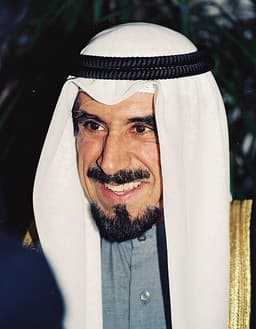
Jaber al-Ahmad al-Sabah
Emperor · Modern
45.4Total
Basic Information
Born
1533
1926
Died
1577
—
Era
Modern
Modern
Nationality
Sweden
Kuwait
Occupation
Emperor
Emperor
Civilization
Western
Middle Eastern
Score Comparison
Military (10%)
25.0
12.2
Political (20%)
45.1
68.0
Influence (20%)
49.4
56.4
Legacy (20%)
40.8
44.2
Leadership (15%)
48.4
40.0
Strategy (15%)
60.0
28.2
TOTAL
45.1
45.4
Eric XIV of Sweden — Complete Timeline
1561 AD
Coronation of Eric XIVPolitical Action◆ Major
Eric XIV was crowned King of Sweden in Uppsala, succeeding his father Gustav Vasa. His coronation marked the beginning of a reign characterized by centralization of power, expansion of the nobility's privileges, and increasing paranoia.
CoronationSuccession
Impact: national
1567 AD
Murder of the Sture FamilyPolitical Action◆ Major
In a paranoid rage, Eric XIV personally killed the nobleman Nils Sture and ordered the execution of several members of the Sture family, including the elderly Svante Sture. This act of violence against the aristocracy deepened his isolation and led to rebellion.
MurderNobilityParanoia
Impact: nationaltragic
1568 AD
Deposition of Eric XIVPolitical Action
Eric XIV was deposed by his half-brothers John and Charles, who led a rebellion against his increasingly erratic rule. He was imprisoned at Gripsholm Castle, and John III was proclaimed king.
DepositionRebellionImprisonment
Impact: nationaldestructive
1577 AD
Death by PoisoningOther
Eric XIV died in prison at
DeathPoisoningImprisonment
Impact: nationaltragic
Jaber al-Ahmad al-Sabah — Complete Timeline
1990 AD
Iraqi Invasion of KuwaitWar◆ Major
Iraqi forces invaded and occupied Kuwait under Saddam Hussein. Jaber al-Ahmad al-Sabah fled to Saudi Arabia and established a government-in-exile. The invasion led to the Gulf War and a seven-month occupation of Kuwait.
Gulf WarIraqi InvasionKuwaiti Occupation
Impact: globaltragic
1991 AD
Liberation of KuwaitWar◆ Major
A US-led coalition launched Operation Desert Storm, liberating Kuwait from Iraqi occupation. Jaber al-Ahmad al-Sabah returned to Kuwait as emir. The liberation restored Kuwaiti sovereignty but left the country with extensive damage and environmental destruction.
Gulf WarKuwaiti LiberationCoalition
Impact: globalconstructive
Reconstruction of Kuwait After Gulf WarReform◆ Major
Jaber al-Ahmad al-Sabah oversaw the massive reconstruction of Kuwait's infrastructure, oil fields, and economy after the Gulf War. The rebuilding cost billions of dollars and restored Kuwait's status as a major oil exporter. He also restored the National Assembly.
ReconstructionPost-War RecoveryKuwaiti Economy
Impact: nationalconstructive
This comparison has not been analyzed yet.
One-time AI generation (~1 minute). Scores and timeline are already available below.
Rankings
🥇
Jaber al-Ahmad al-SabahLeader
Mil: 12.2Pol: 68.0Inf: 56.4
45.4
🥈
Eric XIV of Sweden
Mil: 25.0Pol: 45.1Inf: 49.4
45.1
+0.3 behind
How This Comparison Works
Algorithm
Each figure is scored on 6 dimensions (0—100 scale) based on structured historical data: Military (10%), Political (20%), Influence (20%), Legacy (20%), Leadership (15%), Strategy (15%). The weighted total produces the final ranking.
Data Sources
Scores are computed from structured sub-indicators in the database. Scale factors adjust for era (Ancient ×0.85, Modern ×1.0) and civilization size (Eastern ×1.05, Other ×0.80) to account for differences in population and military scale.
Maximum 3 Figures
Comparisons are limited to 2—3 figures to ensure readability and statistical meaningfulness.
Error Margins
±5 points per dimension — Sub-scores are derived from historical records with inherent uncertainty. Two figures within 5 points on a dimension should be considered roughly equivalent in that area.
Total Score Accuracy
±3 points overall — The weighted combination of 6 dimensions produces a total score with approximately ±3 points of uncertainty. Differences of less than 3 points are not statistically significant— the figures are effectively tied.
Known Limitations
- Historical records are incomplete and uneven across civilizations
- Figures from oral-tradition societies may be underrepresented
- Occupation labels can misclassify multi-role figures
- Scores measure capability and impact, not moral character
- Quantitative scoring is a comparison tool, not absolute truth
Capability Radar
Military (10%) — Battles & Warfare
Battles
45
3
Win Rate
40
10
Expansion
40
13
Political (20%) — Governance & Reform
Reform
50
40
Diplomacy
25
55
Economy
35
50
Influence (20%) — Cultural & Global Reach
Cultural
30
30
Global
15
50
Legacy (20%) — Historical Impact
Historical
35
45
Longevity
20
30
Leadership (15%) — Power & Stability
Tenure
30
60
Stability
10
35
Strategy (15%) — Tactics & Innovation
Strategy
45
12
Tactics
50
18
Reform
55
23
Similar Comparisons
Comments & Discussion
No comments yet. Be the first to share your thoughts!