Loading...
Erishum I vs Senusret III
Senusret III leads by 16.3 pts · 2 figures compared
…

Erishum I
Emperor · Ancient
44.2Total
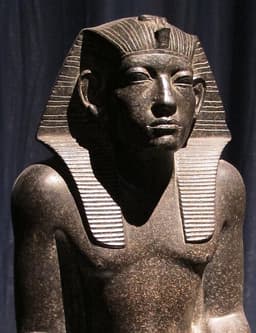
Senusret III
Emperor · Ancient
60.5Total
Basic Information
Born
-1939
-1878
Died
-1900
-1839
Era
Ancient
Ancient
Nationality
Assyria
Egypt
Occupation
Emperor
Emperor
Civilization
Middle Eastern
Middle Eastern
Score Comparison
Military (10%)
21.2
72.0
Political (20%)
43.7
45.0
Influence (20%)
48.6
59.0
Legacy (20%)
38.3
54.0
Leadership (15%)
62.2
78.0
Strategy (15%)
45.0
66.3
TOTAL
44.2
60.5
Erishum I — Complete Timeline
1930 BC
Establishment of Karum Kanesh Trade NetworkReform
Erishum I, as king of the Old Assyrian period, established the Karum Kanesh, a major trading colony in Anatolia. This network facilitated the exchange of tin, textiles, and other goods between Assyria and Anatolia, creating a prosperous trade system that lasted for decades.
Trade NetworkKarum KaneshEconomic Development
Impact: regionalconstructive
1925 BC
Construction of the Temple of AshurCultural
Erishum I oversaw the construction or renovation of the temple of the god Ashur in the city of Ashur. This religious building reinforced the centrality of Ashur in Assyrian religion and state identity.
Temple ConstructionReligious CenterAshur
Impact: nationalconstructive
Senusret III — Complete Timeline
1860 BC
Conquest of NubiaWar◆ Major
Senusret III led four military campaigns into Nubia, extending Egyptian control to the Second Cataract. He built a series of fortresses, such as Buhen and Semna, to secure the border and exploit Nubian gold and resources.
NubiaConquestFortresses
Impact: regional
1850 BC
Administrative ReformsReform◆ Major
Senusret III reorganized the Egyptian administration, centralizing power and reducing the influence of provincial nomarchs. He divided the country into three administrative regions (north, south, and head of the south) to improve tax collection and governance.
ReformAdministrationCentralization
Impact: nationalconstructive
Expert Analysis
Origins
Erishum I, born around 1974 BCE, was a king of the Old Assyrian period, ruling from the city of Ashur. Little is known of his early life, but he inherited a throne that was part of a nascent Assyrian state. His family background placed him in the lineage of Puzur-Ashur I, the founder of the Old Assyrian dynasty. Erishum I's formative experience likely involved learning the intricacies of trade and diplomacy, as Assyria's power rested on its merchant networks rather than military might.
Senusret III, born around 1880 BCE, was the fifth pharaoh of the 12th Dynasty of Egypt. He was the son of Senusret II and Queen Khenemetneferhedjet I. His upbringing was that of a royal prince, educated in administration, religion, and military strategy. The Middle Kingdom of Egypt was a period of reunification and strength, and Senusret III was groomed to maintain and expand that power. His early exposure to the Nubian frontier and the complexities of governance shaped his later policies.
Rise to Power
Erishum I ascended the throne around 1974 BCE, likely in his twenties. His rise was not marked by conquest but by economic strategy. He capitalized on Assyria's position as a hub between Mesopotamia and Anatolia. The key turning point was his establishment of the Karum Kanesh trade network, a colony in Kültepe, Anatolia, around 1920 BCE. This network allowed Assyrian merchants to trade tin, textiles, and other goods for silver and gold. Erishum I's allies were the merchant families of Ashur, and his opponents were rival trade routes from Ebla or Mari. His rise was peaceful, built on commercial agreements rather than battles.
Senusret III became pharaoh around 1878 BCE, inheriting a stable kingdom from his father. His rise was smooth, but he soon asserted his authority. He launched his first Nubian campaign in his 8th regnal year, around 1870 BCE. The turning point was his decision to push Egyptian control beyond the Second Cataract, where he built a series of fortresses like Buhen. His allies were the Egyptian army and bureaucracy; his opponents were the Nubian tribes and the provincial nomarchs who held local power. Unlike Erishum I, Senusret III's rise was marked by military aggression and administrative centralization.
Leadership & Governance
Erishum I's leadership style was that of a commercial administrator. He governed through the Karum system, where Assyrian merchants operated semi-autonomously under royal protection. His approach was decentralized: he granted tax exemptions and legal autonomy to the trading colonies. For example, the Karum Kanesh had its own assembly and courts. Erishum I focused on infrastructure, such as constructing the Temple of Ashur, which reinforced religious legitimacy. His governance was light-touch, relying on economic incentives rather than force.
Senusret III's leadership was authoritarian and militaristic. He reorganized Egypt into three administrative divisions: Lower Egypt, Upper Egypt, and Nubia, each under a vizier. He reduced the power of nomarchs by dividing their territories and appointing loyal officials. His military campaigns were precisely planned; he led four expeditions into Nubia, each recorded in stelae at the frontier. He also launched a campaign into Palestine, though details are sparse. His governance was top-down, with strict control over resources and labor. The fortresses he built, such as Buhen, were not only military outposts but also administrative centers.
Triumph & Tragedy
Erishum I's greatest success was the Karum Kanesh network, which operated for over 200 years and made Ashur a wealthy city. The trade brought silver, which became a standard of value. His failure was the limited scope of Assyrian power; the state remained a city-state, vulnerable to larger empires like Babylon. The Karum system did not translate into military dominance; Erishum I scored only 21.2 in military, reflecting his lack of conquest.
Senusret III's triumph was the conquest of Nubia up to the Second Cataract, securing access to gold, ivory, and slaves. His fortresses, like Buhen, were engineering marvels that protected Egypt for centuries. His administrative reforms centralized power, weakening provincial nobles. However, his tragedy was the brutal suppression of Nubia, leading to long-term resentment. His military campaigns also strained the economy; his later years saw a decline in building projects. His total score of 60.5 reflects a mixed legacy: strong military (72.0) but moderate political (45.0).
Character & Destiny
Erishum I was a pragmatist, focused on commerce and stability. He avoided war, preferring negotiation. His character shaped Assyria's destiny as a trading state, but also limited its expansion. Historians see him as a builder of institutions rather than a conqueror. His decisions created a network that outlasted his reign.
Senusret III was a determined, often harsh ruler. His inscriptions boast of his military prowess and his disdain for weakness. He was a micromanager, personally overseeing campaigns and reforms. His character led to a strong, centralized Egypt, but also to a rigid bureaucracy that could not adapt later. He was deified in Nubia as a god, but his repression sowed seeds of future conflict.
Legacy
Erishum I's legacy is the Karum Kanesh, which provides modern archaeologists with thousands of cuneiform tablets detailing trade. This network influenced later Assyrian economic practices. However, his political impact was small; Assyria remained a minor power until the Neo-Assyrian period. His influence score is 48.6, reflecting his niche but enduring contribution.
Senusret III's legacy is immense. He is remembered as a warrior pharaoh who secured Egypt's southern border. His fortresses and administrative reforms became models for later pharaohs. He was worshipped as a god in Nubia into the Ptolemaic period. His influence score of 59.0 and legacy score of 54.0 show his lasting impact. He is often considered one of the greatest pharaohs of the Middle Kingdom.
Conclusion
Senusret III had greater impact than Erishum I. His military conquests (72.0 vs 21.2) and leadership (78.0 vs 62.2) created a more powerful state. While Erishum I's trade network was impressive, it did not alter the balance of power in the ancient Near East. Senusret III's reforms and fortifications shaped Egypt for centuries. The 16.3-point total score gap reflects this: Senusret III's total of 60.5 dwarfs Erishum I's 44.2. In the contest between trade lord and warrior pharaoh, the warrior wins.
Rankings
🥇
Senusret IIILeader
Mil: 72.0Pol: 45.0Inf: 59.0
60.5
🥈
Erishum I
Mil: 21.2Pol: 43.7Inf: 48.6
44.2
+16.3 behind
How This Comparison Works
Algorithm
Each figure is scored on 6 dimensions (0—100 scale) based on structured historical data: Military (10%), Political (20%), Influence (20%), Legacy (20%), Leadership (15%), Strategy (15%). The weighted total produces the final ranking.
Data Sources
Scores are computed from structured sub-indicators in the database. Scale factors adjust for era (Ancient ×0.85, Modern ×1.0) and civilization size (Eastern ×1.05, Other ×0.80) to account for differences in population and military scale.
Maximum 3 Figures
Comparisons are limited to 2—3 figures to ensure readability and statistical meaningfulness.
Error Margins
±5 points per dimension — Sub-scores are derived from historical records with inherent uncertainty. Two figures within 5 points on a dimension should be considered roughly equivalent in that area.
Total Score Accuracy
±3 points overall — The weighted combination of 6 dimensions produces a total score with approximately ±3 points of uncertainty. Differences of less than 3 points are not statistically significant— the figures are effectively tied.
Known Limitations
- Historical records are incomplete and uneven across civilizations
- Figures from oral-tradition societies may be underrepresented
- Occupation labels can misclassify multi-role figures
- Scores measure capability and impact, not moral character
- Quantitative scoring is a comparison tool, not absolute truth
Capability Radar
Military (10%) — Battles & Warfare
Battles
5
75
Win Rate
5
85
Expansion
10
80
Political (20%) — Governance & Reform
Reform
30
70
Diplomacy
40
60
Economy
50
65
Influence (20%) — Cultural & Global Reach
Cultural
30
60
Global
20
55
Legacy (20%) — Historical Impact
Historical
30
70
Longevity
20
65
Leadership (15%) — Power & Stability
Tenure
40
85
Stability
40
75
Strategy (15%) — Tactics & Innovation
Strategy
5
80
Tactics
5
70
Reform
5
65
Similar Comparisons
Comments & Discussion
No comments yet. Be the first to share your thoughts!