Loading...
Mayurasharma vs Senusret III
Senusret III leads by 13.6 pts · 2 figures compared
…
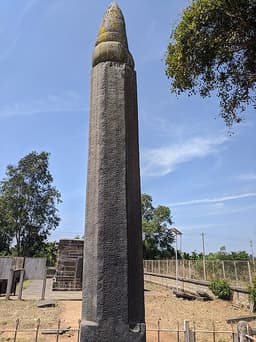
Mayurasharma
Emperor · Ancient
46.9Total
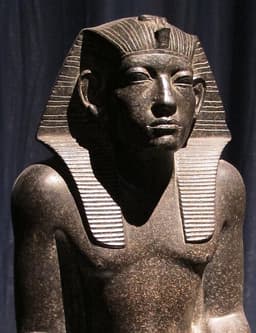
Senusret III
Emperor · Ancient
60.5Total
Basic Information
Born
325
-1878
Died
365
-1839
Era
Ancient
Ancient
Nationality
India
Egypt
Occupation
Emperor
Emperor
Civilization
Indian
Middle Eastern
Score Comparison
Military (10%)
46.7
72.0
Political (20%)
35.1
45.0
Influence (20%)
53.3
59.0
Legacy (20%)
45.8
54.0
Leadership (15%)
55.3
78.0
Strategy (15%)
38.6
66.3
TOTAL
46.9
60.5
Mayurasharma — Complete Timeline
345 AD
Foundation of the Kadamba dynastyPolitical Action◆ Major
Mayurasharma established the Kadamba dynasty, the first native kingdom in Karnataka. He broke away from the Pallava suzerainty and founded a kingdom that ruled from Banavasi, marking the beginning of Kannada political identity.
Dynasty FoundationKarnatakaKadamba
Impact: regionalconstructive
360 AD
Performance of the Ashvamedha sacrificeCultural◆ Major
Mayurasharma performed the Ashvamedha (horse sacrifice) to assert his imperial status. This Vedic ritual was a declaration of sovereignty and was recorded in the Talagunda inscription.
AshvamedhaImperial AuthorityVedic Ritual
Impact: regionalconstructive
Senusret III — Complete Timeline
1860 BC
Conquest of NubiaWar◆ Major
Senusret III led four military campaigns into Nubia, extending Egyptian control to the Second Cataract. He built a series of fortresses, such as Buhen and Semna, to secure the border and exploit Nubian gold and resources.
NubiaConquestFortresses
Impact: regional
1850 BC
Administrative ReformsReform◆ Major
Senusret III reorganized the Egyptian administration, centralizing power and reducing the influence of provincial nomarchs. He divided the country into three administrative regions (north, south, and head of the south) to improve tax collection and governance.
ReformAdministrationCentralization
Impact: nationalconstructive
Expert Analysis
Origins
**Mayurasharma** (c. 345–365 CE) was born into a Brahmin family in Talagunda, Karnataka, India. His ancestors were priests and scholars under the Pallava dynasty. He studied the Vedas and performed rituals, but his ambitions turned to kingship after a conflict with a Pallava guard. His early life was marked by a transition from religious to political pursuits.
**Senusret III** (c. 1878–1839 BCE) was the fifth pharaoh of the 12th Dynasty of Egypt. Born into the royal family, he was the son of Senusret II and Queen Khenemetneferhedjet. He received military training and administrative education typical for a crown prince. His upbringing prepared him for expansionist rule.
Rise to Power
Mayurasharma rose to prominence by leading a rebellion against the Pallava king Skandavarman. After a conflict over a horse—the Pallava guard insulted him—he abandoned his Brahminical duties and gathered a force. He defeated the Pallava armies and established the Kadamba dynasty in 345 CE. His coronation was marked by performing the Ashvamedha (horse sacrifice) to assert sovereignty.
Senusret III ascended the throne after his father's death. He quickly consolidated power by reducing the influence of regional nomarchs (governors). He launched his first Nubian campaign in his 8th regnal year, followed by three more over the next decade. His military successes solidified his authority and expanded Egypt's borders.
Leadership & Governance
Mayurasharma's leadership was characterized by establishing a native kingdom in a region dominated by the Pallavas. He adopted a decentralized administration, relying on local chieftains. His governance scored 35.1 in political acumen, reflecting limited systemic reforms. He focused on legitimizing his rule through Vedic rituals rather than bureaucratic institutions.
Senusret III was a centralizing reformer. He divided Egypt into three administrative regions—Lower Egypt, Upper Egypt, and Nubia—each overseen by officials directly answerable to him. He curbed the power of nomarchs, whose tombs became less lavish during his reign. His leadership score of 78.0 reflects his effective control and strategic governance.
Triumph & Tragedy
Mayurasharma's greatest triumph was founding the Kadamba dynasty, which lasted for centuries and became the first native Kannada kingdom. He performed the Ashvamedha, a ritual that declared imperial status. However, his failure was the lack of lasting territorial expansion; his kingdom remained small and was later absorbed by the Chalukyas. His military score of 46.7 indicates limited conquests.
Senusret III's triumphs include conquering Nubia up to the Second Cataract and constructing a series of fortresses like Buhen, Semna, and Kumma. These secured Egypt's southern border and controlled trade. His administrative reforms weakened provincial nobles, strengthening the central state. However, his aggressive expansion may have strained resources, and his later years saw less military activity. His military score of 72.0 reflects his effective campaigns.
Character & Destiny
Mayurasharma's character was defined by his transition from priest to king. He was ambitious but pragmatic, using religious rituals to legitimize his rule. His decision to rebel was personal, sparked by an insult, indicating a reactive nature. His fate was to establish a dynasty that would define Kannada identity, but his own reign was short-lived.
Senusret III was a determined and strategic ruler. He was known for his warrior ethos, often depicted as a sphinx trampling enemies. His character was authoritarian, centralizing power and reducing rivals. His destiny was to be remembered as a great pharaoh who expanded Egypt's borders and reformed its administration. He was deified in Nubia, a testament to his impact.
Legacy
Mayurasharma's legacy is foundational for Karnataka and Kannada culture. The Kadamba dynasty set the stage for later empires like the Chalukyas and Hoysalas. He is remembered as the first native king of the region, with an influence score of 53.3. However, his specific reforms and institutions did not endure beyond his dynasty.
Senusret III's legacy is more tangible. His fortresses remained operational for centuries, and his administrative divisions influenced later pharaohs. He was worshipped as a god in Nubia, and his military campaigns set a precedent for Egyptian imperialism. His legacy score of 54.0 reflects his enduring impact on Egyptian history and culture.
Conclusion
Senusret III had a greater impact than Mayurasharma. With a total score of 60.5 against 46.9, he excelled in military (72.0 vs 46.7), leadership (78.0 vs 55.3), and strategy (66.3 vs 38.6). While Mayurasharma founded a significant dynasty, Senusret's conquests and reforms shaped Egypt for centuries. Mayurasharma's influence was regional and culturally foundational, but Senusret's achievements were more expansive and lasting. Thus, Senusret III takes the edge in historical significance.
Rankings
🥇
Senusret IIILeader
Mil: 72.0Pol: 45.0Inf: 59.0
60.5
🥈
Mayurasharma
Mil: 46.7Pol: 35.1Inf: 53.3
46.9
+13.6 behind
How This Comparison Works
Algorithm
Each figure is scored on 6 dimensions (0—100 scale) based on structured historical data: Military (10%), Political (20%), Influence (20%), Legacy (20%), Leadership (15%), Strategy (15%). The weighted total produces the final ranking.
Data Sources
Scores are computed from structured sub-indicators in the database. Scale factors adjust for era (Ancient ×0.85, Modern ×1.0) and civilization size (Eastern ×1.05, Other ×0.80) to account for differences in population and military scale.
Maximum 3 Figures
Comparisons are limited to 2—3 figures to ensure readability and statistical meaningfulness.
Error Margins
±5 points per dimension — Sub-scores are derived from historical records with inherent uncertainty. Two figures within 5 points on a dimension should be considered roughly equivalent in that area.
Total Score Accuracy
±3 points overall — The weighted combination of 6 dimensions produces a total score with approximately ±3 points of uncertainty. Differences of less than 3 points are not statistically significant— the figures are effectively tied.
Known Limitations
- Historical records are incomplete and uneven across civilizations
- Figures from oral-tradition societies may be underrepresented
- Occupation labels can misclassify multi-role figures
- Scores measure capability and impact, not moral character
- Quantitative scoring is a comparison tool, not absolute truth
Capability Radar
Military (10%) — Battles & Warfare
Battles
25
75
Win Rate
30
85
Expansion
30
80
Political (20%) — Governance & Reform
Reform
35
70
Diplomacy
30
60
Economy
25
65
Influence (20%) — Cultural & Global Reach
Cultural
40
60
Global
20
55
Legacy (20%) — Historical Impact
Historical
45
70
Longevity
40
65
Leadership (15%) — Power & Stability
Tenure
40
85
Stability
30
75
Strategy (15%) — Tactics & Innovation
Strategy
25
80
Tactics
20
70
Reform
15
65
Similar Comparisons
Comments & Discussion
No comments yet. Be the first to share your thoughts!