Loading...
Ptolemy V Epiphanes vs Senusret III
Senusret III leads by 18.7 pts · 2 figures compared
…

Ptolemy V Epiphanes
Emperor · Ancient
41.8Total
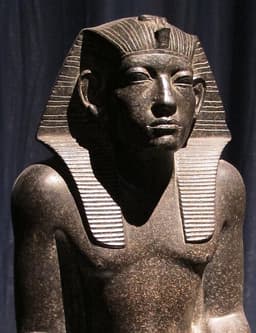
Senusret III
Emperor · Ancient
60.5Total
Basic Information
Born
-210
-1878
Died
-180
-1839
Era
Ancient
Ancient
Nationality
Ptolemaic Kingdom
Egypt
Occupation
Emperor
Emperor
Civilization
Middle Eastern
Middle Eastern
Score Comparison
Military (10%)
10.2
72.0
Political (20%)
29.3
45.0
Influence (20%)
54.9
59.0
Legacy (20%)
52.0
54.0
Leadership (15%)
34.6
78.0
Strategy (15%)
45.0
66.3
TOTAL
41.8
60.5
Ptolemy V Epiphanes — Complete Timeline
198 BC
Loss of Coele-Syria to the SeleucidsWar◆ Major
Ptolemy V lost the province of Coele-Syria to the Seleucid king Antiochus III after the Battle of Panium. This defeat marked the end of Ptolemaic control over the region and significantly reduced the kingdom's territory and influence.
Territorial LossSeleucid WarDecline
Impact: regionaltragic
196 BC
Inscription of the Rosetta StoneCultural
The Rosetta Stone was inscribed with a decree from the Council of Priests at Memphis, praising Ptolemy V. The text was written in hieroglyphic, demotic, and Greek scripts, later enabling the decipherment of Egyptian hieroglyphs by Jean-Fran
Rosetta StoneDeciphermentEgyptology
Impact: globalconstructive
193 BC
Marriage to Cleopatra I SyraPolitical Action
Ptolemy V married Cleopatra I, daughter of Antiochus III, as part of a peace treaty ending the Fifth Syrian War. The marriage temporarily stabilized relations between the Ptolemaic and Seleucid kingdoms, but Cleopatra later acted as regent for their son.
Diplomatic MarriagePeace TreatySeleucid Alliance
Impact: regionalconstructive
186 BC
Suppression of the Egyptian RevoltWar◆ Major
Ptolemy V's forces finally crushed the native Egyptian revolt that had begun under Ptolemy IV. The rebel leader Ankhmakis was captured and executed, restoring Ptolemaic control over Upper Egypt but at the cost of further alienating the Egyptian population.
Native RevoltSuppressionUpper Egypt
Impact: nationaldestructive
Senusret III — Complete Timeline
1860 BC
Conquest of NubiaWar◆ Major
Senusret III led four military campaigns into Nubia, extending Egyptian control to the Second Cataract. He built a series of fortresses, such as Buhen and Semna, to secure the border and exploit Nubian gold and resources.
NubiaConquestFortresses
Impact: regional
1850 BC
Administrative ReformsReform◆ Major
Senusret III reorganized the Egyptian administration, centralizing power and reducing the influence of provincial nomarchs. He divided the country into three administrative regions (north, south, and head of the south) to improve tax collection and governance.
ReformAdministrationCentralization
Impact: nationalconstructive
Expert Analysis
Origins
Ptolemy V Epiphanes (c. 210–180 BCE) was a member of the Ptolemaic dynasty of Macedonian Greek origin, ruling Egypt from Alexandria. He ascended as a child of about 5 after the death of his father Ptolemy IV. His early life was dominated by regents and court intrigue, with limited formal education in Egyptian traditions. In contrast, Senusret III (c. 1878–1839 BCE) was a native Egyptian pharaoh of the 12th Dynasty, born into a royal family that already emphasized military expansion. He received training in governance and warfare from a young age, and his upbringing reflected traditional Egyptian values of kingship.
Rise to Power
Ptolemy V became king in 204 BCE upon his father's death, but his reign was immediately contested. Regents Agathocles and Sosibius controlled the state, leading to internal instability. By 202 BCE, the native Egyptian revolt (begun under Ptolemy IV) intensified, and the Seleucid king Antiochus III invaded Coele-Syria. Ptolemy's rise was passive; he was a figurehead until he assumed personal rule around 196 BCE, when he was crowned in Memphis. Senusret III, however, actively rose through military campaigns. He launched his first Nubian expedition in his 8th regnal year (c. 1870 BCE), quickly establishing dominance. His administrative reforms, such as dividing Egypt into three departments (north, south, and head of the south), consolidated power and reduced the influence of regional nomarchs.
Leadership & Governance
Ptolemy V's leadership was marked by reliance on advisors and reactive policies. He failed to prevent the loss of Coele-Syria after the Battle of Panium (198 BCE), scoring a military score of only 10.2. His political score of 29.3 reflects his inability to maintain Ptolemaic possessions. He did, however, manage to suppress the Egyptian revolt by 186 BCE, capturing rebel leader Ankhmakis. The Rosetta Stone (196 BCE) was a decree that attempted to legitimize his rule by aligning with Egyptian priestly traditions, but it was more symbolic than effective. Senusret III, with a leadership score of 78.0, centralized Egypt's administration, curbed the power of nomarchs, and built fortresses like Buhen to secure Nubia. His governance was proactive and strategic, earning a strategy score of 66.3.
Triumph & Tragedy
Ptolemy V's greatest triumph was the suppression of the Egyptian revolt, restoring internal order. The Rosetta Stone remains his most famous legacy, enabling the decipherment of Egyptian hieroglyphs. However, his greatest tragedy was the loss of Coele-Syria and the decline of Ptolemaic influence in the Levant. He also failed to stabilize the economy, leading to inflation. Senusret III's triumphs include the conquest of Nubia, extending Egypt's border to the Second Cataract, and his administrative reforms that strengthened the central state. His tragedy was that his centralized system did not outlast his dynasty; the 12th Dynasty declined after his death. He also faced a potential succession crisis, as his son Amenemhat III had to continue his policies.
Character & Destiny
Ptolemy V was a weak ruler, easily manipulated by courtiers and foreign powers. His character was passive, leading to a total score of 41.8. He died under mysterious circumstances at age 30, possibly poisoned. Senusret III was a determined and aggressive leader, known for his personal involvement in campaigns. His military score of 72.0 reflects his effectiveness. He was also a shrewd administrator, reducing corruption. His destiny was to be remembered as a warrior pharaoh, but his centralized reforms created a system that was difficult to maintain.
Legacy
Ptolemy V's legacy is dominated by the Rosetta Stone, which has a cultural influence score of 54.9. The stone allowed scholars to unlock Egyptian writing, but his political legacy was negligible. Senusret III's legacy is more substantial: his Nubian fortresses and administrative divisions influenced Egyptian governance for centuries. His influence score of 59.0 reflects his lasting impact on Egyptian statecraft. He is also considered a model for later pharaohs.
Conclusion
Senusret III had a greater impact than Ptolemy V. With a total score of 60.5 versus Ptolemy's 41.8, Senusret's military conquests and administrative reforms reshaped Egypt. Ptolemy V's reign marked the decline of Ptolemaic power, and his only lasting contribution was the Rosetta Stone. Senusret III's achievements in expanding Egypt and centralizing government were more substantive and enduring.
Rankings
🥇
Senusret IIILeader
Mil: 72.0Pol: 45.0Inf: 59.0
60.5
🥈
Ptolemy V Epiphanes
Mil: 10.2Pol: 29.3Inf: 54.9
41.8
+18.7 behind
How This Comparison Works
Algorithm
Each figure is scored on 6 dimensions (0—100 scale) based on structured historical data: Military (10%), Political (20%), Influence (20%), Legacy (20%), Leadership (15%), Strategy (15%). The weighted total produces the final ranking.
Data Sources
Scores are computed from structured sub-indicators in the database. Scale factors adjust for era (Ancient ×0.85, Modern ×1.0) and civilization size (Eastern ×1.05, Other ×0.80) to account for differences in population and military scale.
Maximum 3 Figures
Comparisons are limited to 2—3 figures to ensure readability and statistical meaningfulness.
Error Margins
±5 points per dimension — Sub-scores are derived from historical records with inherent uncertainty. Two figures within 5 points on a dimension should be considered roughly equivalent in that area.
Total Score Accuracy
±3 points overall — The weighted combination of 6 dimensions produces a total score with approximately ±3 points of uncertainty. Differences of less than 3 points are not statistically significant— the figures are effectively tied.
Known Limitations
- Historical records are incomplete and uneven across civilizations
- Figures from oral-tradition societies may be underrepresented
- Occupation labels can misclassify multi-role figures
- Scores measure capability and impact, not moral character
- Quantitative scoring is a comparison tool, not absolute truth
Capability Radar
Military (10%) — Battles & Warfare
Battles
5
75
Win Rate
5
85
Expansion
5
80
Political (20%) — Governance & Reform
Reform
10
70
Diplomacy
20
60
Economy
10
65
Influence (20%) — Cultural & Global Reach
Cultural
40
60
Global
50
55
Legacy (20%) — Historical Impact
Historical
60
70
Longevity
70
65
Leadership (15%) — Power & Stability
Tenure
30
85
Stability
10
75
Strategy (15%) — Tactics & Innovation
Strategy
5
80
Tactics
5
70
Reform
5
65
Similar Comparisons
Comments & Discussion
No comments yet. Be the first to share your thoughts!