Loading...
This comparison has not been analyzed yet.
One-time AI generation (~1 minute). Scores and timeline are already available below.
Etienne Tshisekedi vs Gerard Batten
Etienne Tshisekedi leads by 6.2 pts · 2 figures compared
…
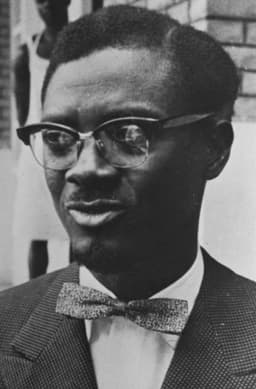
Etienne Tshisekedi
Politician · Modern
40.3Total

Gerard Batten
Politician · Modern
34.1Total
Basic Information
Born
1932
1954
Died
—
—
Era
Modern
Modern
Nationality
DR Congo
United Kingdom
Occupation
Politician
Politician
Civilization
Other
Western
Score Comparison
Military (10%)
11.5
11.9
Political (20%)
36.5
29.3
Influence (20%)
50.2
45.5
Legacy (20%)
41.7
33.3
Leadership (15%)
41.5
34.6
Strategy (15%)
44.5
36.0
TOTAL
40.3
34.1
Etienne Tshisekedi — Complete Timeline
1982 AD
Founded Union for Democracy and Social Progress (UDPS)Political Action◆ Major
Tshisekedi co-founded the UDPS, the main opposition party in DR Congo under Mobutu's dictatorship. The party advocated for democratic reforms and multi-party elections, facing severe repression from the regime.
Opposition PartyDemocracyMobutu
Impact: nationalprogressive
1991 AD
Appointed Prime Minister Multiple TimesPolitical Action◆ Major
Tshisekedi was appointed prime minister three times during the transition period (1991, 1992, 1997) but was each time dismissed or sidelined by Mobutu. His brief tenures were marked by political paralysis and conflict with the presidency.
Prime MinisterPolitical TransitionMobutu
Impact: national
1997 AD
Refused to Recognize Kabila GovernmentPolitical Action
After Laurent Kabila overthrew Mobutu, Tshisekedi refused to recognize the new government, calling for a national dialogue. He was placed under house arrest and later exiled, continuing his role as a persistent opposition figure.
OppositionKabilaPolitical Conflict
Impact: national
Gerard Batten — Complete Timeline
2004 AD
Served as UKIP MEP for LondonPolitical Action
Batten was elected as a Member of the European Parliament for London in 2004, serving until 2019. He was known for his eurosceptic views and opposition to the Lisbon Treaty, and was a vocal critic of the European Union.
MEPEuropean ParliamentEuroscepticism
Impact: regional
2018 AD
Elected leader of the UK Independence PartyPolitical Action◆ Major
Gerard Batten was elected leader of UKIP, succeeding Henry Bolton. His leadership marked a shift toward a more hardline anti-Islam stance, which led to internal splits and the departure of several senior party figures.
UKIPLeadershipFar-right
Impact: nationaldestructive
Appointed Tommy Robinson as advisorPolitical Action◆ Major
Batten appointed far-right activist Tommy Robinson as an advisor to UKIP, a move that was widely condemned and led to further internal party conflict. The decision was seen as an attempt to appeal to anti-Islam voters but alienated moderate members.
UKIPFar-rightControversy
Impact: nationaldestructive
2019 AD
Resigned as UKIP leaderPolitical Action◆ Major
Batten resigned as UKIP leader after a poor performance in the 2019 European Parliament elections, where UKIP lost all its seats. His tenure was marked by declining party membership and electoral collapse.
UKIPResignationElectoral defeat
Impact: nationaltragic
This comparison has not been analyzed yet.
One-time AI generation (~1 minute). Scores and timeline are already available below.
Rankings
🥇
Etienne TshisekediLeader
Mil: 11.5Pol: 36.5Inf: 50.2
40.3
🥈
Gerard Batten
Mil: 11.9Pol: 29.3Inf: 45.5
34.1
+6.2 behind
How This Comparison Works
Algorithm
Each figure is scored on 6 dimensions (0—100 scale) based on structured historical data: Military (10%), Political (20%), Influence (20%), Legacy (20%), Leadership (15%), Strategy (15%). The weighted total produces the final ranking.
Data Sources
Scores are computed from structured sub-indicators in the database. Scale factors adjust for era (Ancient ×0.85, Modern ×1.0) and civilization size (Eastern ×1.05, Other ×0.80) to account for differences in population and military scale.
Maximum 3 Figures
Comparisons are limited to 2—3 figures to ensure readability and statistical meaningfulness.
Error Margins
±5 points per dimension — Sub-scores are derived from historical records with inherent uncertainty. Two figures within 5 points on a dimension should be considered roughly equivalent in that area.
Total Score Accuracy
±3 points overall — The weighted combination of 6 dimensions produces a total score with approximately ±3 points of uncertainty. Differences of less than 3 points are not statistically significant— the figures are effectively tied.
Known Limitations
- Historical records are incomplete and uneven across civilizations
- Figures from oral-tradition societies may be underrepresented
- Occupation labels can misclassify multi-role figures
- Scores measure capability and impact, not moral character
- Quantitative scoring is a comparison tool, not absolute truth
Capability Radar
Military (10%) — Battles & Warfare
Battles
19
23
Win Rate
22
25
Expansion
25
26
Political (20%) — Governance & Reform
Reform
30
10
Diplomacy
40
10
Economy
10
5
Influence (20%) — Cultural & Global Reach
Cultural
20
5
Global
20
5
Legacy (20%) — Historical Impact
Historical
30
5
Longevity
20
5
Leadership (15%) — Power & Stability
Tenure
20
15
Stability
10
5
Strategy (15%) — Tactics & Innovation
Strategy
30
30
Tactics
31
36
Reform
38
39
Similar Comparisons
Comments & Discussion
No comments yet. Be the first to share your thoughts!