Loading...
Eumenes II of Pergamon vs Julius Caesar
Julius Caesar leads by 19.2 pts · 2 figures compared
…
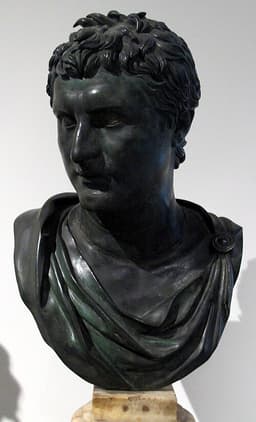
Eumenes II of Pergamon
Emperor · Ancient
63.6Total

Julius Caesar
General · Ancient
82.8Total
Basic Information
Born
-221
-100
Died
-159
-44
Era
Ancient
Ancient
Nationality
Pergamon
Roman Republic
Occupation
Emperor
General
Civilization
Western
Western
Score Comparison
Military (10%)
70.0
88.0
Political (20%)
60.0
78.0
Influence (20%)
72.0
85.0
Legacy (20%)
58.0
82.0
Leadership (15%)
66.0
80.0
Strategy (15%)
52.5
85.0
TOTAL
63.6
82.8
Eumenes II of Pergamon — Complete Timeline
190 BC
Battle of MagnesiaWar◆ Major
Eumenes II fought alongside the Romans at the Battle of Magnesia, where the Seleucid king Antiochus III was defeated. This victory secured Roman dominance in Asia Minor and expanded Pergamon's territory, making it a key Roman ally.
Roman-Seleucid WarAllianceTerritorial Expansion
Impact: regionalconstructive
188 BC
Treaty of ApameaPolitical Action◆ Major
Eumenes II benefited from the Treaty of Apamea, which ended the war with Antiochus III. Pergamon received large territories in Asia Minor, including Phrygia and Lydia, greatly increasing its wealth and influence.
TreatyTerritorial GainRoman Alliance
Impact: regionalconstructive
180 BC
Construction of the Pergamon AltarCultural◆ Major
Eumenes II commissioned the Great Altar of Pergamon, a monumental structure adorned with a frieze depicting the Gigantomachy. This masterpiece of Hellenistic art symbolized the Attalid dynasty's power and cultural patronage.
Hellenistic ArtArchitecturePatronage
Impact: regionalconstructive
Julius Caesar — Complete Timeline
58 BC
Gallic WarsWar◆ Major
Caesar, as proconsul of Gaul, launched a series of campaigns that conquered all of Gaul (modern France, Belgium, and parts of Switzerland). He fought numerous battles, including against the Helvetii, the Belgae, and the Gallic chieftain Vercingetorix. The wars brought immense wealth and a loyal army to Caesar.
Gallic WarsConquestRoman Expansion
Impact: regional
49 BC
Crossing the RubiconPolitical Action◆ Major
Caesar led Legio XIII across the Rubicon River into Italy, defying the Roman Senate's order to disband his army. This act triggered a civil war against Pompey and the Optimates, ultimately leading to Caesar's dictatorship and the end of the Roman Republic.
Roman Civil WarEnd of RepublicPower Struggle
Impact: global
48 BC
Battle of PharsalusWar◆ Major
Caesar's outnumbered army defeated the larger forces of Pompey the Great at Pharsalus in Greece. Caesar's tactical use of a reserve line to counter Pompey's cavalry charge proved decisive. Pompey fled to Egypt, where he was assassinated, leaving Caesar as the undisputed master of the Roman world.
Roman Civil WarBattleDecisive Victory
Impact: regional
44 BC
Appointment as Dictator for LifePolitical Action◆ Major
The Roman Senate appointed Caesar dictator perpetuo (dictator for life), granting him unprecedented personal power. This move concentrated military, legislative, and judicial authority in one person, effectively ending the Roman Republic's traditional system of checks and balances and alarming many senators.
DictatorshipEnd of RepublicPower Consolidation
Impact: regionaldestructive
Assassination on the Ides of MarchPolitical Action◆ Major
A group of Roman senators, led by Marcus Junius Brutus and Gaius Cassius Longinus, stabbed Caesar to death at a meeting of the Senate in the Theatre of Pompey. The assassination was intended to restore the Republic, but instead triggered another civil war that led to the rise of the Roman Empire.
AssassinationRoman PoliticsEnd of Republic
Impact: globaldestructive
Expert Analysis
eumenes-ii-of-pergamon-vs-julius-caesar
# The Art of Power: Caesar and Eumenes II
On a winter morning in January 49 BCE, Julius Caesar stood at the banks of the Rubicon River, a small stream that marked the boundary between his province and Italy proper. To cross with his army was treason—an act of civil war. He paused, then uttered the words that would echo through history: *"Alea iacta est"*—the die is cast. Some 150 years earlier, another ruler faced a very different kind of decision. Eumenes II of Pergamon, a king in a world dominated by giants, had to choose not between rebellion and loyalty, but between survival and annihilation. He chose alliance. Caesar gambled everything on his own genius and perished by the Senate's daggers. Eumenes wagered on the power of Rome and built a kingdom that would outlast him. Why did these two men, both brilliant strategists in their own right, walk such different paths?
Origins
Caesar was born into the chaos of the late Roman Republic, a world of crumbling institutions and ambitious warlords. His family, the Julii, claimed descent from the goddess Venus, but they were politically marginalized. His father died when Caesar was sixteen, leaving him to navigate a treacherous world of debt, exile, and patronage. The Republic was tearing itself apart—a perfect arena for a man with nothing to lose and everything to prove.
Eumenes II, by contrast, was born into a dynasty that understood the art of survival. His father Attalus I had turned Pergamon from a minor Greek city-state into a regional power by playing Rome and the Hellenistic kingdoms against one another. Eumenes inherited not a republic in crisis but a stable kingdom with clear traditions. He was educated in Greek philosophy, trained in diplomacy, and raised to see power not as a prize to be seized but as a responsibility to be managed. The difference in their upbringings—one forged in the crucible of civil strife, the other in the careful cultivation of a royal court—shaped everything that followed.
Rise to Power
Caesar’s ascent was a masterclass in audacity. He borrowed fortunes to fund public spectacles, climbed the political ladder through bribery and charisma, and formed the First Triumvirate with Pompey and Crassus. His conquest of Gaul (58–50 BCE) was a brutal, ten-year campaign that made him the richest and most powerful man in Rome. He wrote his own commentaries, turning military victories into propaganda. When the Senate ordered him to disband his army, he crossed the Rubicon instead. The path to power was a straight line of calculated risk.
Eumenes II rose far more quietly. He became king in 197 BCE, just as Rome emerged victorious from the Second Punic War and turned its attention east. His father had already positioned Pergamon as Rome’s faithful ally. Eumenes did not need to conquer; he needed to be useful. At the Battle of Magnesia in 190 BCE, he fought alongside the Roman legions against the Seleucid king Antiochus III. His military score of 52.4 reflects a commander who was competent but not brilliant—yet his political score of 87.5 reveals his true genius. He understood that in a world of empires, the smartest move was not to challenge Rome but to become its indispensable partner.
Leadership & Governance
Caesar ruled as a revolutionary. As dictator, he reformed the calendar, granted citizenship to provincials, initiated public works, and centralized power in his own hands. His military score of 88.0 and strategy score of 88.0 reflect a commander of rare brilliance—his siege of Alesia and the lightning campaigns in Gaul are still studied in war colleges. But his political score of 78.0 hints at a fatal flaw: he was a poor judge of how far he could push the Roman aristocracy. He accepted a lifetime dictatorship and deified honors, never realizing that the Republic’s elite would rather kill him than kneel.
Eumenes governed as a builder and diplomat. He used the Treaty of Apamea in 188 BCE to acquire vast territories, but he did not simply hoard power. He poured wealth into culture, commissioning the Great Altar of Pergamon—a masterpiece of Hellenistic art that depicted the gods fighting giants, a metaphor for civilization triumphing over barbarism. His leadership score of 81.0 reflects a ruler who inspired loyalty through patronage and stability rather than fear. He made Pergamon a center of learning, rivaling Alexandria, and cultivated the arts as a form of soft power that Rome itself would later admire.
Triumph & Tragedy
Caesar’s greatest moment was also the seed of his destruction. After defeating Pompey at Pharsalus in 48 BCE, he could have restored the Republic and retired with honor. Instead, he pushed further, declaring himself dictator for life in 44 BCE. The Ides of March brought twenty-three dagger wounds on the Senate floor. His tragedy was that he conquered the world but could not conquer the hatred of his peers.
Eumenes’ triumph was subtler but more enduring. The Treaty of Apamea gave Pergamon dominion over much of western Anatolia, transforming a small kingdom into a regional power. But his later years were shadowed by the growing arrogance of Rome and the rise of his brother Attalus, who eventually succeeded him. He died in 159 BCE, possibly poisoned, but his kingdom survived and thrived for another generation. His tragedy was that he built a monument to his own success—the Pergamon Altar—knowing that Rome would one day eclipse everything he created.
Character & Destiny
Caesar was reckless, charismatic, and possessed of an unshakable belief in his own destiny. He pardoned his enemies, promoted talent regardless of class, and wrote his own myth. But that very confidence blinded him. He could not imagine that the Senate would dare to strike, even as the omens piled up. His personality was a force of nature—magnificent and ultimately uncontrollable.
Eumenes was cautious, calculating, and deeply aware of his limitations. He knew that Pergamon could never match Rome in arms, so he outmatched Rome in culture and loyalty. He was a king who thought like a diplomat, not a conqueror. His strategy score of 50.6 suggests he was no battlefield genius, but his political score of 87.5 shows a man who understood that survival often requires bending the knee—and that bending can be a form of power.
Legacy
Caesar’s legacy is the Roman Empire itself. His adopted heir Octavian became Augustus, and the imperial system that followed was built on Caesar’s foundations. His name became a title: *Kaiser*, *Tsar*. He is remembered as the man who destroyed the Republic and created the world’s most enduring empire—a figure of both glory and warning.
Eumenes’ legacy is more fragile but equally profound. The Pergamon Altar was dismantled and moved to Berlin in the 19th century, where it now stands as a UNESCO World Heritage site. His kingdom was bequeathed to Rome by his successor, becoming the province of Asia. But in that act of peaceful transition, Eumenes achieved what Caesar could not: he ensured that his people would not be destroyed by the power they served.
Conclusion
Caesar and Eumenes faced the same fundamental question: how does a leader navigate a world dominated by a rising superpower? Caesar chose to become the superpower himself, challenging the system and dying for it. Eumenes chose to serve the superpower, building a kingdom within its shadow and dying in his bed. One left a legacy of ambition that reshaped the world; the other left a legacy of wisdom that preserved a civilization. Perhaps the deepest lesson is not that one path was right and the other wrong, but that history remembers both the conqueror and the builder—and that the choice between them is never just about power, but about what kind of world one wants to leave behind.
Rankings
🥇
Julius CaesarLeader
Mil: 88.0Pol: 78.0Inf: 85.0
82.8
🥈
Eumenes II of Pergamon
Mil: 70.0Pol: 60.0Inf: 72.0
63.6
+19.2 behind
How This Comparison Works
Algorithm
Each figure is scored on 6 dimensions (0—100 scale) based on structured historical data: Military (10%), Political (20%), Influence (20%), Legacy (20%), Leadership (15%), Strategy (15%). The weighted total produces the final ranking.
Data Sources
Scores are computed from structured sub-indicators in the database. Scale factors adjust for era (Ancient ×0.85, Modern ×1.0) and civilization size (Eastern ×1.05, Other ×0.80) to account for differences in population and military scale.
Maximum 3 Figures
Comparisons are limited to 2—3 figures to ensure readability and statistical meaningfulness.
Error Margins
±5 points per dimension — Sub-scores are derived from historical records with inherent uncertainty. Two figures within 5 points on a dimension should be considered roughly equivalent in that area.
Total Score Accuracy
±3 points overall — The weighted combination of 6 dimensions produces a total score with approximately ±3 points of uncertainty. Differences of less than 3 points are not statistically significant— the figures are effectively tied.
Known Limitations
- Historical records are incomplete and uneven across civilizations
- Figures from oral-tradition societies may be underrepresented
- Occupation labels can misclassify multi-role figures
- Scores measure capability and impact, not moral character
- Quantitative scoring is a comparison tool, not absolute truth
Capability Radar
Military (10%) — Battles & Warfare
Battles
55
95
Win Rate
60
92
Expansion
50
97
Political (20%) — Governance & Reform
Reform
65
90
Diplomacy
75
85
Economy
70
82
Influence (20%) — Cultural & Global Reach
Cultural
75
88
Global
60
94
Legacy (20%) — Historical Impact
Historical
70
95
Longevity
65
96
Leadership (15%) — Power & Stability
Tenure
70
75
Stability
65
60
Strategy (15%) — Tactics & Innovation
Strategy
60
94
Tactics
55
96
Reform
40
88
Similar Comparisons
Comments & Discussion
No comments yet. Be the first to share your thoughts!