Loading...
Ezana of Axum vs Julius Caesar
Julius Caesar leads by 25.8 pts · 2 figures compared
…
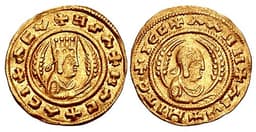
Ezana of Axum
Emperor · Ancient
57.0Total

Julius Caesar
General · Ancient
82.8Total
Basic Information
Born
325
-100
Died
356
-44
Era
Ancient
Ancient
Nationality
Axum
Roman Republic
Occupation
Emperor
General
Civilization
Other
Western
Score Comparison
Military (10%)
50.0
88.0
Political (20%)
68.0
78.0
Influence (20%)
61.0
85.0
Legacy (20%)
58.0
82.0
Leadership (15%)
40.0
80.0
Strategy (15%)
60.0
85.0
TOTAL
57.0
82.8
Ezana of Axum — Complete Timeline
330 AD
Conversion to ChristianityCultural
Ezana converted to Christianity under the influence of Frumentius, a Syrian Christian who became bishop of Axum. Ezana declared Christianity the state religion of Axum, making it one of the earliest Christian kingdoms.
ChristianizationState ReligionFrumentius
Impact: globalconstructive
Issuance of CoinageCultural◆ Major
Ezana introduced gold, silver, and bronze coins bearing Christian symbols, such as the cross. These coins facilitated trade across the Red Sea and Indian Ocean, and their inscriptions in Ge'ez and Greek reflect Axum's cultural connections.
CoinageTradeChristian Symbolism
Impact: regionalconstructive
Inscription at AxumCultural
Ezana erected a stone inscription in Ge'ez, Greek, and Sabaean at Axum, recording his military victories and his conversion to Christianity. The inscription invokes the Christian God instead of pagan deities, marking a religious shift.
InscriptionPropagandaReligious Shift
Impact: regional
340 AD
Campaign against the BejaWar
Ezana conducted a military campaign against the Beja people, who raided Axumite territory. He defeated them and imposed tribute, securing the northern borders of his kingdom and protecting trade routes to the Red Sea.
Military CampaignBejaBorder Security
Impact: regional
350 AD
Conquest of MeroëWar◆ Major
Ezana led a military campaign against the Kingdom of Kush, conquering its capital Mero
ConquestKushMeroë
Impact: regional
Julius Caesar — Complete Timeline
58 BC
Gallic WarsWar◆ Major
Caesar, as proconsul of Gaul, launched a series of campaigns that conquered all of Gaul (modern France, Belgium, and parts of Switzerland). He fought numerous battles, including against the Helvetii, the Belgae, and the Gallic chieftain Vercingetorix. The wars brought immense wealth and a loyal army to Caesar.
Gallic WarsConquestRoman Expansion
Impact: regional
49 BC
Crossing the RubiconPolitical Action◆ Major
Caesar led Legio XIII across the Rubicon River into Italy, defying the Roman Senate's order to disband his army. This act triggered a civil war against Pompey and the Optimates, ultimately leading to Caesar's dictatorship and the end of the Roman Republic.
Roman Civil WarEnd of RepublicPower Struggle
Impact: global
48 BC
Battle of PharsalusWar◆ Major
Caesar's outnumbered army defeated the larger forces of Pompey the Great at Pharsalus in Greece. Caesar's tactical use of a reserve line to counter Pompey's cavalry charge proved decisive. Pompey fled to Egypt, where he was assassinated, leaving Caesar as the undisputed master of the Roman world.
Roman Civil WarBattleDecisive Victory
Impact: regional
44 BC
Appointment as Dictator for LifePolitical Action◆ Major
The Roman Senate appointed Caesar dictator perpetuo (dictator for life), granting him unprecedented personal power. This move concentrated military, legislative, and judicial authority in one person, effectively ending the Roman Republic's traditional system of checks and balances and alarming many senators.
DictatorshipEnd of RepublicPower Consolidation
Impact: regionaldestructive
Assassination on the Ides of MarchPolitical Action◆ Major
A group of Roman senators, led by Marcus Junius Brutus and Gaius Cassius Longinus, stabbed Caesar to death at a meeting of the Senate in the Theatre of Pompey. The assassination was intended to restore the Republic, but instead triggered another civil war that led to the rise of the Roman Empire.
AssassinationRoman PoliticsEnd of Republic
Impact: globaldestructive
Expert Analysis
ezana-of-axum-vs-julius-caesar
# The Dictator and the Convert: Caesar and Ezana, Two Paths to Immortality
On the Ides of March, 44 BCE, a dictator fell to twenty-three dagger wounds in the Roman Senate. In 330 CE, an African king knelt before a Syrian bishop and rose a Christian. Julius Caesar died in a pool of blood, his last breath a political earthquake that shattered the Roman Republic. Ezana of Axum died peacefully in his bed, twenty-six years later, having transformed his kingdom into the world’s first Christian state. One man conquered the known world; the other conquered eternity. What drove these two ancient rulers to such different fates?
Origins
Caesar was born into the chaos of the late Roman Republic, a world of civil wars, senatorial corruption, and ambitious generals. His family, the Julii, claimed descent from the goddess Venus, but they were political outsiders. His father died when Caesar was sixteen, leaving him to navigate a violent world where survival meant alliances and audacity. The Republic was already dying; Caesar was its midwife.
Ezana came to power in a very different world. Axum, in modern-day Ethiopia and Eritrea, was a wealthy trading kingdom that linked the Mediterranean, Arabia, and India. It was a crossroads of cultures, where Egyptian gods, Arabian moon deities, and Jewish traders mingled. Ezana inherited a stable, prosperous state. His father had already begun minting coins and expanding trade. The boy-king had no need to tear down his world; he only needed to give it a soul.
Rise to Power
Caesar’s path was brutal and personal. Captured by pirates at twenty-five, he laughed at their ransom demand and promised to crucify them—which he did, after raising the money himself. He climbed the political ladder through bribery, military glory, and the patronage of the powerful. His conquest of Gaul (58–50 BCE) was a masterpiece of strategy and propaganda: he defeated a million enemies, wrote his own bestselling memoirs, and built an army loyal to him, not Rome.
When the Senate ordered him to disband his legions, Caesar crossed the Rubicon River in 49 BCE, declaring, “*Alea iacta est*”—the die is cast. This was treason, and it meant civil war.
Ezana’s rise was quieter. He became king as a child, probably in his early teens, with his mother acting as regent. There was no Rubicon, no civil war. His turning point came around 330 CE, when a Syrian Christian named Frumentius arrived at court. Frumentius had been shipwrecked on the Red Sea coast, enslaved, then freed. He taught the young king about a God who was not a stone idol or a distant star, but a man who died for love. Ezana listened.
Leadership & Governance
Caesar governed through sheer force of will. As dictator, he reformed the calendar, granted citizenship to Gauls, launched public works, and packed the Senate with his supporters. He was a military genius—his sieges at Alesia and his lightning campaigns in the East are still studied—but his political wisdom failed him. He centralized power, accepted divine honors, and refused to restore the Republic. “*I am not a king*,” he said, but he acted like one, and that cost him his life.
Ezana governed through transformation. After converting, he made Christianity the state religion—the first ruler in history to do so. He issued gold, silver, and bronze coins stamped with the cross, turning currency into a sermon. He erected trilingual inscriptions in Ge’ez, Greek, and Sabaean, recording his victories and his new faith. His military campaigns were not conquests for glory but for security: he crushed the Beja raiders in 340 CE and conquered the Kingdom of Kush, sacking Meroë in 350 CE. But unlike Caesar, Ezana did not destroy his enemies to aggrandize himself; he destroyed them to protect his Christian kingdom.
Triumph & Tragedy
Caesar’s greatest triumph was his greatest tragedy. He conquered Gaul, defeated Pompey, and became master of Rome. But his success bred fear. On the Ides of March, 44 BCE, senators who called themselves “liberators” stabbed him to death. His last words, according to legend, were “*Et tu, Brute?*”—“And you, Brutus?” He died believing his friend had betrayed him. The Republic died with him, replaced by the Empire he had unwittingly created.
Ezana’s triumph was quieter but deeper. He converted a kingdom, not a man. When he died around 356 CE, Axum was a Christian nation that would remain Christian for centuries, a beacon in a pagan world. His tragedy was obscurity: he conquered Meroë, but the kingdom faded into legend. He minted coins, but they were forgotten. He wrote inscriptions, but they crumbled. He succeeded in his own time, but history forgot his name—until modern archaeologists dug him up.
Character & Destiny
Caesar was ambition incarnate. He was brilliant, charismatic, and ruthless. He gambled everything on his own genius and won—until he lost. His personality drove him to destroy the Republic to save it, to seize power he could not hold, to trust men who would kill him. He was a man who could forgive his enemies but could not understand them.
Ezana was faith incarnate. He was a king who chose humility over glory, a conqueror who chose conversion over destruction. His personality drove him to seek not power but meaning. He did not need to be the greatest; he needed to be the first—the first Christian king, the first to stamp the cross on gold. He understood that empires die, but souls endure.
Legacy
Caesar’s legacy is the Roman Empire, the Latin language, the Julian calendar, and the word “kaiser” and “tsar.” He is remembered as a tyrant and a visionary, a man whose assassination changed the world. His name is a byword for ambition, for crossing Rubicons, for dying on the Ides of March.
Ezana’s legacy is Ethiopia, the only African nation never colonized, the land of the Ark of the Covenant, the kingdom that kept Christianity alive when Rome fell. He is remembered as a saint in the Ethiopian Orthodox Church, a king who chose God over gold. His name is a byword for faith, for quiet transformation, for a kingdom that did not fall.
Conclusion
Caesar and Ezana never met. They lived in different worlds, spoke different languages, worshipped different gods. But they both faced the same question: What do you do with power? Caesar answered by seizing more. Ezana answered by surrendering it to something greater. One died betrayed, the other died blessed. One built an empire that crumbled, the other built a faith that endured. Perhaps the difference is not in their abilities—Caesar was clearly the greater general, the greater politician—but in their souls. Caesar wanted to be remembered. Ezana wanted to be redeemed. History gave both what they asked for.
Rankings
🥇
Julius CaesarLeader
Mil: 88.0Pol: 78.0Inf: 85.0
82.8
🥈
Ezana of Axum
Mil: 50.0Pol: 68.0Inf: 61.0
57.0
+25.8 behind
How This Comparison Works
Algorithm
Each figure is scored on 6 dimensions (0—100 scale) based on structured historical data: Military (10%), Political (20%), Influence (20%), Legacy (20%), Leadership (15%), Strategy (15%). The weighted total produces the final ranking.
Data Sources
Scores are computed from structured sub-indicators in the database. Scale factors adjust for era (Ancient ×0.85, Modern ×1.0) and civilization size (Eastern ×1.05, Other ×0.80) to account for differences in population and military scale.
Maximum 3 Figures
Comparisons are limited to 2—3 figures to ensure readability and statistical meaningfulness.
Error Margins
±5 points per dimension — Sub-scores are derived from historical records with inherent uncertainty. Two figures within 5 points on a dimension should be considered roughly equivalent in that area.
Total Score Accuracy
±3 points overall — The weighted combination of 6 dimensions produces a total score with approximately ±3 points of uncertainty. Differences of less than 3 points are not statistically significant— the figures are effectively tied.
Known Limitations
- Historical records are incomplete and uneven across civilizations
- Figures from oral-tradition societies may be underrepresented
- Occupation labels can misclassify multi-role figures
- Scores measure capability and impact, not moral character
- Quantitative scoring is a comparison tool, not absolute truth
Capability Radar
Military (10%) — Battles & Warfare
Battles
45
95
Win Rate
50
92
Expansion
55
97
Political (20%) — Governance & Reform
Reform
65
90
Diplomacy
55
85
Economy
50
82
Influence (20%) — Cultural & Global Reach
Cultural
70
88
Global
55
94
Legacy (20%) — Historical Impact
Historical
70
95
Longevity
65
96
Leadership (15%) — Power & Stability
Tenure
60
75
Stability
55
60
Strategy (15%) — Tactics & Innovation
Strategy
50
94
Tactics
40
96
Reform
30
88
Similar Comparisons
Comments & Discussion
CarthagoDelendaEst6/17/2026
Caesar's military genius is overrated compared to Ezana's strategic vision. Caesar conquered Gaul through brutal massacres - 1 million dead, another million enslaved. That's not brilliance, that's genocide with good PR. Meanwhile, Ezana unified the Horn of Africa, conquered Kush (Meroë), and expanded Axumite trade networks from Alexandria to Sri Lanka without the body count. The "military historian" crowd romanticizes violence; Ezana shows that true strategic mastery means building empires that
数据真相帝6/17/2026
别被光环骗了,凯撒的财政就是一坨屎。他死时留给罗马4.5亿塞斯特斯的烂账,基本是靠高卢掠夺勉强填坑。而埃扎纳的铸币体系在330年就实现了金银铜三级标准化,出土的阿克苏姆金币含金量稳定在95%以上,直到7世纪都还在红海流通。凯撒是透支帝国信用搞个人膨胀,埃扎纳是给国家建了套能用300年的金融系统。谁是真经济大师?数据不说谎。
IvoryTowerHellenist6/17/2026
Seriously? Comparing Caesar's literary legacy to Ezana's? Caesar's Commentaries defined military history as a genre - read by schoolboys for two millennia. His reforms of the calendar gave us July (named after him, obviously) and the Julian calendar that governed Europe until 1582. What did Ezana write? A trilingual inscription on a stone throne in Ge'ez, Greek, and Sabaean, mostly bragging about conquering tribes nobody remembers. The Axumite language died, their empire's forgotten, while Caesa
冷门守护者6/17/2026
说我埃扎纳没文化?笑死。他那块“埃扎纳石碑”(现代埃塞俄比亚阿克苏姆)的三语铭文是整个东北非历史的罗塞塔石碑。没有它,你连古萨巴语都破译不了。而且阿克苏姆在4世纪就是基督教最早的国家教会之一,比罗马帝国正式确立基督教还要早几十年。凯撒的拉丁文是征服者的语言,埃扎纳的信仰却塑造了一个活到今天的民族。谁更接近永恒?问问现代埃塞俄比亚人吧。